I have a Solution that will reduce pressure on IIT aspirants but do not know how to get this across to HRD Minister of India. Suggestions are welcome. - Ram Krishnaswamy

Search This Blog

Showing posts with label 2017- Lokesh Meena IIT Kgp - Dalit. Show all posts

Friday, November 2, 2018

IIT Kharagpur student found hanging in hostel room - Hindustan Times


The body of Gangireddy Hanimi Reddy (24), a second year student of M Tech (electrical engineering), was found hanging in his room at the Madan Mohan Malavya Hall in institute’s campus.

INDIA Updated: Oct 25, 2018 19:06 Ist

HT Correspondent 

The body of Gangireddy Hanimi Reddy (24), a second year student of M Tech (electrical engineering), was found hanging in his room at the Madan Mohan Malavya Hall in institute’s campus. (Representative Photo)

An IIT-Kharagpur student, who hailed from Andhra Pradesh, was found hanging inside his room on Wednesday night although no suicide note was found immediately.

The body of Gangireddy Hanimi Reddy (24), a second year student of M Tech (electrical engineering), was found hanging in his room at the Madan Mohan Malavya Hall in institute’s campus.

“We have not found any suicide note. We are trying to open and examine his laptop and mobile phone to find out what led him to take his drastic step,” said East Midnapore district superintendent of police, Alok Rajoria.

“Primary investigation points at suicide though it can be confirmed only after the post-mortem examination is conducted,” he said.


Teachers and students at the premier institute said that no one saw him since Wednesday evening and the matter was reported with the administration.

“The incident is unfortunate. His family has been informed. We too are trying to find out what led to this suicide,” said IIT-Kgp deputy director S K Bhattacharya.

“He was a bright student,” said a student at electrical engineering department who did not want to be identified. “He betrayed no sense of depression.”

Last year, three deaths of IIT Kharagpur students were reported. In January 2017, Lokesh Meena from Rajasthan had thrown himself in front of a moving train while in March, the body of Sana Sreeraj, an electrical engineering student from Andhra Pradesh, was found along the railway tracks. In April that year, Nidhin N, a student from Kerala studying aerospace engineering, had killed himself inside the hostel room.
First Published: Oct 25, 2018 14:40 Ist

Monday, November 20, 2017

IIT’s breaking point - Hindu Businessline


Uneasy silence: Attracting the crème de la crème of engineering students since it was established in 1950, IIT Kharagpur has in recent years witnessed a spate of suicides. Photo: Arunangsu Roy Chowdhury

After five suicides rocked IIT Kharagpur this year, there is much soul-searching among its students and administrators alike on the reasons that are pushing bright and promising youngsters over the brink

According to his friends, Nikhil Bhatia could’ve been saved after he was found lying in a pool of blood minutes after he had jumped from the fourth floor of IIT Kharagpur’s Lal Bahadur Shastri building on October 21 this year. Aside from several broken bones, there was no head injury and he was still alive. The BC Roy Hospital on campus referred the injured final-year mining engineering student to Kolkata’s Westbank hospital, three hours away.

Fellow students allege that ultimately it wasn’t the suicide attempt that killed him, but an inefficient response system starting with a rundown ambulance and other medical equipment, and a medical staff ill-equipped to handle the emergency.

Bhatia, a bright mind and an introvert, had reportedly been showing signs of paranoia since July, upon entering his final year. “He thought people were out to get him. He would imagine that random people were following him. The things he said stopped making sense,” recalls his friend Satyam Jha, a final- year mathematics and computer engineering student. Jha helped set up a counselling session for Bhatia and he was admitted to the BC Roy hospital. But he was discharged a day later when his mother arrived to take him home to Mumbai. When Bhatia returned after a break, it had seemed to Jha as though his friend had finally left his demons behind. So the news of his suicide came as a shock. “He wasn’t the self-harming type,” Jha told BLink over phone.

Bhatia’s suicide is the fifth case this year at IIT Kharagpur, one of the country’s most prestigious engineering colleges. A video made by students and shared on the Facebook page ‘How Many More? — IIT Kharagpur’ lists the other four names — Lokesh Meena in January, Satish Mandava in February, Sreeraj Sana in March and Nidhin N in April.

What pushed these bright minds and others over the brink?

Help is not at hand
In the video, one of Bhatia’s friends, who was in the ambulance transporting the injured student to Westbank hospital, narrates the tragic sequence of events with his face silhouetted for anonymity. “The attendant inside the ambulance who was holding Nikhil’s hand, plugged with an IV, left it to answer a call on his mobile phone. It was then that the needle slipped out of his vein. When we pointed it to the attendant he seemed unconcerned and said, ‘Don’t worry, we’re reaching Calcutta in 10 minutes’.”

What followed was a series of misadventures nobody was prepared for. The ambulance took a wrong turn, broke down, and Bhatia’s friends had to flag down a lorry to continue the journey (still without any medication), only to stumble again after the lorry ran out of fuel midway. It took them an extra 35 minutes to complete the journey. Within minutes of arriving at Westbank, Bhatia was pronounced dead. “I stand by everything I said in that video,” the friend told BLink over phone, on condition of anonymity.

“The BC Roy hospital within campus is generally understaffed and ill-equipped. If you’re in a critical state you get referred to a better hospital in Kolkata, and you might not always survive the journey,” says Aradhana Kumar, a fourth-year chemical engineering student and editor of a campus newsletter.

Back in 2009, when another student, Rohit Kumar, lost consciousness after falling during a game of basketball, he was referred to a hospital in Medinipur, 45 minutes away, and died en route. The protests that had erupted on campus turned violent, leading to the resignation of the director Damodar Acharya. The administration had promised to improve conditions at the on-campus hospital, but eight years later little has changed.

Academic pressure cooker
When Amit Sachdeva (name changed), an undergraduate engineering student, approached the college’s counselling centre complaining of sleep deprivation and anxiety, he was immediately asked to reveal if he was homosexual. “The counsellor recommended mild shock therapy to cure me of homosexuality, even after I repeatedly told him that I wasn’t seeking any help for my sexual orientation. I have always been comfortable with my sexuality,” he recalls. When Sachdeva drew the counsellor’s attention to the American Psychiatric Association’s writ against any form of “treatment or corrective therapy” for homosexuality, the latter merely smiled and said, “This is India. It is okay here.”

There are four counsellors and one psychiatrist for the 10,000 students on campus. “The cases are handled so badly that students hesitate to even come forward with their issues in the first place,” Sachdeva says.

There have also been complaints of breaches in confidentiality. “In some cases where students had reached out for help to break free of substance addiction, the counsellors promptly called their parents to name and shame them,” a student said on condition of anonymity.

The campus recently tied up with Your Dost, an online counselling and emotional wellness service, for its students to report distress without having to reveal their identities. But can that be an adequate solution?
“Social media has taken a toll on relationships with the loss of interpersonal connections between individuals,” says Mayank Srivastava. A fourth-year student of mining engineering, he is also a student representative and the vice-president of Technology Students’ Gymkhana, helping organise technology, sports and cultural activities designed to act as stress-busters for the students.

“The pressure of living up to being an IITian is simply too much,” says Kumar, explaining that it is not just academic pressure but also the expectations of family and society at large — your placement, pay package, designation and even your lifestyle become mere displays to draw public envy.

“We try to tell students to not allow a sheet of paper to define their life” says Srivastava. But does the message sell in a system engineered to define you by your grade sheet? 

Addressing the different sources of anxiety for the students, he and his team explain to them that “life doesn’t end here”. “Suppose you don’t get placement, which is a very rare thing, there are still lots of options. The IIT tag itself can bail you out in any situation,” he says, trying to sound convincing.

A few months ago, as part of its efforts to de-stress students, the campus administration had, in consultation with students like Srivastava, decided to turn off the power supply in dorm rooms for a brief period, once a fortnight. This move was meant to coax students to step outdoors, where social activities were planned to give them a chance to interact more with peers, and break away from the isolation of their WiFi-enabled dens.

“But let’s face it, when one of your batchmates dies you don’t want to dance to Bollywood music,” says Kumar, who believes the problem calls for a more serious intervention than just enforced socialising.

At the same time, Srivastava blames the isolated environment of the gated campus for aggravating distress levels among the students, a point that was agreed on by all those this article had reached out to. “When your world shrinks to the size of your campus, which itself is a high-pressured environment, it is really important to make good friends,” agrees Jha, crediting such friendships with the power to help one get through the grind without losing sanity.

Cold silence
A letter purportedly signed by students of IIT-Kharagpur, posted on social media, alleges that during an open session held on October 27 at the college’s Netaji auditorium, the audience was “strongly warned and restricted to ask questions related to the counselling centre and hospital and nothing else”. The letter goes on to say, “It will be the fully orchestrated show of the administration. We wish that the IIT Teachers Association should not leave us alone and stand by us for truth (sic).”
All the college’s professors reached out to for this article declined to comment.

Registrar Pradip Pyne, the only official authorised to speak on the situation, termed the spate of suicides “unfortunate” and said it was “difficult to generalise the exact reason” before quickly adding that the university had taken several corrective measures. Asked to specify these, he requested “several hours to elaborate”. When pressed further, he talked about “the very good counselling mechanism and the wellness programme, which has a centre for happiness that promotes constant interaction and peer-to-peer connection”.

An email addressed to IIT Kharagpur’s Rekhi Centre for Excellence for the Science of Happiness went unanswered.
“We are initiating further steps. We want to do everything to fix the situation,” said Pyne, even as he declined to comment on the administrative lapses, if any, or the state of medical facilities on campus.

A lot of the anger on campus is directed at what the students see as the failure of the administration to improve the situation, but an equal share of that anger is also directed at society at large.

“As a society, we never want to confront mental illness. Perhaps Nikhil and the others could have been saved with more acceptance on the part of the families. It is as much a societal failure as it is of the campus administration,” says Kumar.

Sunday, April 23, 2017

What's Wrong With IIT-Kharagpur? Yet Another Student Commits Suicide This Month - India Times


INDIATIMES APRIL 22, 2017
18K SHARES


A fourth-year aerospace engineering student at IIT-Kharagpur was found hanging from the ceiling of his room on Friday.

FACEBOOK/NIDHIN N

"Let me sleep," was all that the suicide note, found in his room, said. While police sent Nidhin N's body for post-mortem, the institute authorities declined to comment.
This is the third IIT-Kharagpur student to end his life on the campus this year, second within a month.
The police said Nidhin (22), who had come from Kerala, would set his alarm clock at 2 am every night to wake up and study. Early on Friday, when the alarm did not stop ringing, the other students in the hostel suspected something was amiss.

FACEBOOK/NIDHIN N

They went up to his room, but the door was shut from inside and Nidhin reportedly did not respond. When he did not appear even on Friday, the hostel authorities were alerted.
Some of the students broke Nidhin's room's window panes to find him hanging from the ceiling. Cops at the nearby Hijli outpost was called; the OC and the additional SP of Kharagpur reached the IIT campus, broke open the door to recover Nidhin's body.

                                             ANI

West Midnapore SP Bharati Ghosh said a probe was on and that the police were examining the suicide note. The IIT campus saw the first suicide this year on January 16, when Lokesh Meena from Rajasthan jumped on the tracks and was hit by a train at Jakpur station.
The second death took place on March 30, when a youth from Andhra Pradesh, Sana Sree Raj, was found also on the train tracks, barely 500m from the IIT campus. Though the family claimed it was a murder, police called it a suicide.

IIT-Kharagpur student found hanging in hostel - TNN


TNN | Updated: Apr 22, 2017, 12.42 PM IST

HIGHLIGHTS
  • A fourth-year engineering student at IIT-Kharagpur was found hanging from the ceiling.
  • “Let me sleep,“ was all that the suicide note, found in his room, said.
  • This is the third IIT-Kharagpur student to end his life on the campus this year, second within a month.
KOLKATA: A fourth-year aerospace engineering student at IIT-Kharagpur was found hanging from the ceiling of his ground-floor room at Nehru Hall B Block on Friday. 

"Let me sleep," was all that the suicide note, found in his room, said. 

While police sent Nidhin N's body for post-mortem, the institute authorities declined to comment. 

This is the third IIT-Kharagpur student to end his life on the campus this year, second within a month. 

The police said Nidhin (22), who had come from Kerala, would set his alarm clock at 2am every night to wake up and study. 

Early on Friday, when the alarm did not stop ringing, the other students in the hostel suspected something was amiss. 

They went up to his room, but the door was shut from inside and Nidhin reportedly did not respond. When he did not appear even on Friday, the hostel authorities were alerted. 

Some of the students broke Nidhin's room's window panes to find him hanging from the ceiling.

Cops at the nearby Hijli outpost was called; the OC and the additional SP of Kharagpur reached the IIT campus, broke open the door to recover Nidhin's body.

West Midnapore SP Bharati Ghosh said a probe was on and that the police were examining the suicide note.

The IIT campus saw the first suicide this year on January 16, when Lokesh Meena from Rajasthan jumped on the tracks and was hit by a train at Jakpur station.

The second death took place on March 30, when a youth from Andhra Pradesh, Sana Sree Raj, was found also on the train tracks, barely 500m from the IIT campus. Though the family claimed it was a murder, police called it a suicide.

Sunday, January 22, 2017

IIT-Kharagpur Adivasi student kills himself on Rohith Shahadat Din - Indian Express

By Express News Service  |   Published: 20th January 2017 08:21 PM  |  

KOLKATA: The death anniversary of University of Hyderabad (UoH) research scholar Rohith Vemula was marred by another suicide of an Adivasi student of Indian Institute of Technology (IIT) Kharagpur who killed himself on railway tracks near industrial town Kharagpur in West Bengal on January 17.

“The body of Lokesh Meena, the 20-year-old third-year civil engineering student, was found mowed down by a locomotive engine on the railway tracks between Madpur and Jakpur stations, some 20 km from IIT Campus. Post mortem has been conducted and the body handed over to his father Rampal Meena, who identified his son,” a GRP official told Express.


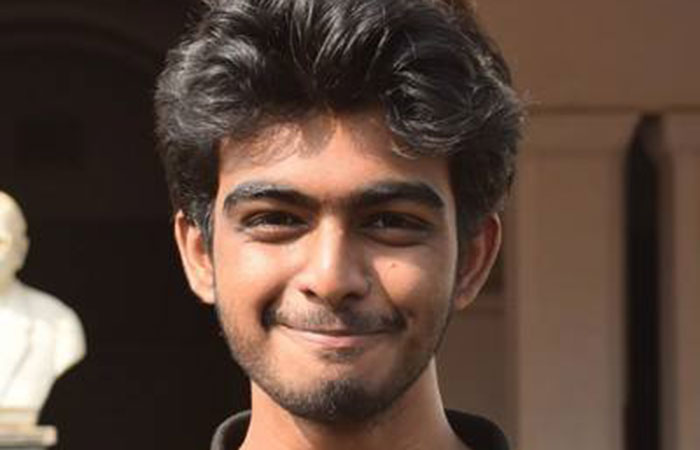
Picture of deceased IIT Kharagpur student Lokesh Meena. | EPS

A native of  Dausa , a district in Rajasthan was Lokesh had gone missing from his room in Radhakrishna Hall on the campus since Sunday morning. After the initial failed searches by Lokesh’s friends in various places he frequents, the students alerted the hostel warden about Lokesh and a missing diary was lodged in Hijli Police outpost inside the campus, sources revealed.
Though the cause of suicide is yet to be ascertained, sources revealed that the deceased was depressed for the past few months, which may be because of detection of a curable disease a few months back.


The locomotive driver had informed Jakpur railway station authorities of the suicide who in turn alerted the GRP officials. The GRP and Kharagpur police are separately conducting investigations into the suicide case to ascertain the exact reason behind the extreme step.

Friday, January 20, 2017

Another Adivasi Student Suicide Marks Rohith Vemula’s Death Anniversary - Counter Currents


in Annihilate Caste — by Samar — January 18, 2017

https://www.countercurrents.org/2017/01/18/another-adivasi-student-suicide-marks-rohith-vemulas-death-anniversary/


Rohith Vemula’s suicide a year ago shook the country. The circumstances of his death left no doubt that it was an institutional murder committed through continuous harassment, and not a simple suicide. It exposed how the culture of caste discrimination was alive and kicking in Indian campuses despite being outlawed by the Constitution. Though it was no secret even before Rohith killed himself, the violent end to his dreams opened up the pent up rage against caste-based discriminations quite in the same way as the notorious gang rape and murder of a girl in Delhi in 2012 unleashed an outpouring of anger against the culture of rape.

The past year without Rohith was marked with protests demanding a law criminalizing caste-based discrimination in campuses, i.e. a Rohith Act, for prosecution of those responsible for his death and so on. His first death anniversary was not going to be any different. Quite on the contrary, it was going to be a solemn moment of stopping for a moment, looking at what the protests had achieved, and charting a way forward. And, so it did, with countless protests across the country and virulent crackdowns by those responsible for pushing Rohith to the wall.

They left no stone unturned to suppress the voices seeking justice for him and denied permission for protests in the University of Hyderabad where continuous harassment by the authorities had forced Rohith to end his life. They did not think twice before apprehending his mother, brother, a leading journalist, and all others they could get their hands on when people defied the ban and protested. Hundreds of similar protests were broken down with brute force in many other towns, including Delhi, where around 300 peaceful protesters were arrested.

Alas, terrible news that emerged on the very day was lost in the chaos. Exactly a year after Rohith had killed himself, another student from a marginalized community had to end his life in another premier institution of the country. Not many seemed to even notice the death of Lokesh Meena, a third year student of IIT-Kharagpur.

The biting coincidence exposes the fact that nothing much has changed on the ground despite all the cacophony, chaos, claims, and counterclaims that ensued in the aftermath of Rohith’s suicide. Nothing much, despite the vehement protests seeking justice on one hand, and the entrenched system rewarding those behind pushing him to the extremes.

Take, for example, the fact that Prime Minister Narendra Modi, at the Indian Science Congress, 2017, presented the “Millennium Plaques Honour” to University of Hyderabad Vice-Chancellor Appa Rao Podile. He got the award despite, lo and behold, having admitted to plagiarism and having been booked for abetting Rohith’s suicide as well as under the provisions of the Scheduled Castes and Tribes (Prevention of Atrocities) Act, 1989.

Exact circumstances that led Lokesh Meena to take the extreme step are still unknown. A stinging reality stands out nonetheless: the reality that he came from a marginalized community just like Rohith. Lokesh was from an Adivasi (tribal) community, one of the few severely disadvantaged and marginalized communities of India.

That leads to the second stinging reality: students from marginalsied communities like Dalits and Adivasis account for the bulk of suicides committed in premier educational institutions of the country.

Why they are pushed to take their promising lives is also a giveaway. Thousands of articles, reports, and studies document the systemic and systematic harassment they face in these institutions. They elaborate upon the structures of violence – from emotional to physical –unleashed upon these students who have nothing to bank upon to. With the executive authorities having power to reward or punish every subordinate, in-house institutions earmarked to deal with discrimination often end up as their fiefdom and more often penalize the victims rather than support them.

In sum, the whole thing plays out in cycles. The students from marginalized communities get discriminated against. Then they have to make a choice between two equally distressing options. First is to suffer in silence, get depressed, and wish to make it out alive. Second is to stand up, approach Equal Opportunity Office, or whatever the local equivalent institutions are called, register a complaint, and continue to be even more victimized. This vicious cycle breaks many of the victims from within and, at times, forces them to commit suicide.

Further, tucked away in a single column snippet in the bottom left corner of newspapers or just below the main screens of the websites carrying them, if at all, these students are lost without even anyone registering this loss. The reason behind this is simple, as explained above; most of these struggles end up as being solitary ones waged inside the walled ghettoes that premier educational institutions have become in India. The victims have often to fight it out all alone without any support, without having anyone to even keep records if they fall.

They fail to make it to news in most cases, and some not even after they kill themselves. Take for instance, the struggle of eight Dalit students suspended by the Babasaheb Bhimrao Ambedkar University in September 2016 on the allegations of assaulting a teacher and vandalising his vehicle despite clear CCTV evidence rubbishing the same. Their suspensions arrived after they protested against attempts to dilute reservations for Dalit students in the University. Their struggle and suspension has not excited even those in civil society known for outraging.
Not all discrimination and suicide catch attention. Rohith Vemula’s suicide was not the first one by a Dalit scholar in the University of Hyderabad. He was ninth one to kill himself in a 10 year period and yet the authorities ‘failed’ to see the distressing trend at best and criminally ignored it at worst. Hyderabad University is not the sole offender or an aberration; similar reports have been received from across the country.

A documentary named ‘Death of Merit’ counted 18 suicides by Dalit students in premier educational institutions including AIIMS and IITs in a mere four years, from 2007 to 2011. The number rose to a staggering 22 by 2016; Rohith was the 23rd.
His case stirred the nation because there were people to take the case up, to fight for justice for him, and to hold those responsible accountable. But, what did even this struggle achieve? Nothing much would be the answer, if one goes by Lokesh’s suicide. Asking why and seeking answers would be natural corollary.

A simple answer to the question would be that no amount of outrage could be certain of getting justice in a system with flawed institutions to begin with. Even a cursory look at the valiant struggle of Irom Chanu Sharmila can bring this fact to the open. The Armed Forces Special Powers Act stays intact despite a 16-year long hunger strike by Sharmila and all the outrage it caused. To put it simply, outrage is no substitute for a functioning justice system that anyone and everyone, including those living on the bottom rungs of society, can approach and seek redress from.

Unfortunately that is where our struggles have failed. How many have asked and pursued the status of investigations against Vice Chancellor Appa Rao Podile and others booked for abetment of Rohith’s suicide. Where has the case reached? How many years would it take to conclude, provided it does? Would it not have created an example and deterrence had he indeed been found guilty and sentenced against future harassment of students from underprivileged communities?

Let us add to this a question over efficacy of any new law getting enacted in this fundamentally flawed system with entrenched vested interests. What if we indeed get a Rohith Act but those responsible for its implementation remain the same?

This is definitely not to say that there is anything wrong with outrage. In fact outraging can at times even help achieve justice; it did in the Jessica Lal case. However, it can only do that in an odd case or two. And India has over 3 crore cases pending. Outraging has a limit; it tires the ones outraging and sets in a fatigue unless it is the system that they are able to change.

There is an even more important question: why should a rule of law based justice system need outrage to deliver justice? Why cannot it operate as it does in a civilised world – so anyone who goes to the court is listened to? Of course, this is not to say that justice there is flawless, but then it is not a rarity like in our system, either.

Justice for Rohith would remain a distant dream until we add the struggle for justice institution reforms to all our struggles. Those who pushed him to death will keep getting rewarded despite the ongoing cases involving allegation as serious as abetment to suicide. We will keep losing Lokesh Meenas without even noticing, forget about outraging.

Samar  is Programme Coordinator – Right to Food Programme Asian Legal Resource Centre / Asian Human Rights Commission, Hong Kong

Wednesday, January 18, 2017

IIT Kharagpur boy commits suicide by jumping in front of train - News X

By
NewsX Bureau
| Tuesday, January 17, 2017 - 09:28

 Lokesh, a resident of Digheria village in Rajasthan's Dhasa district, was suffering from anxiety and depression

New Delhi: A student from the Indian Institute of Technology-Kharagpur committed suicide on Sunday morning by jumping in front of a train between Jakpur and Madpur station.
The incident came to light when Lokesh Meena, 20, went missing from Radha Krishnan Hall on Sunday morning. Wary of the alleged information that Lokesh was suffering from depression, his friends conducted a frantic search near the hostel campus but could not locate his whereabouts. The hostel warden then lodged a complaint with the police at Hijli police outpost.
Lokesh, a resident of Digheria village in Rajasthan's Dhasa district, was suffering from anxiety and depression, said officials. His body was handed over to his father after the autopsy was conducted.

“The accident took place around 8am on Sunday. We got information around 9.30. A loco engine which was moving on the middle line mowed Lokesh down as he jumped in front of it. The engine driver informed the railway staff at Jakpur station," officials investigating the case said.

‘Depressed’ IIT-Kharagpur boy ends life on railway tracks - TNN

‘Depressed’ IIT-Kharagpur boy ends life on railway tracks

TNN | Jan 17, 2017, 05.38 AM IST

KHARAGPUR/KOLKATA: A third-year civil engineering student of the Indian Institute of Technology-Kharagpur jumped in front of a train between Jakpur and Madpur, around 10km from the campus, on Sunday morning. It is believed that Lokesh Meena, the deceased, had health issues and was suffering from depression. 

Lokesh, 20, went missing from Radha Krishnan Hall, the campus hostel where he stayed, on Sunday morning. His friends launched a frantic search but failed to track him down. The hostel warden was informed and a complaint was lodged at Hijli police outpost. Police finally found the body on the tracks. Officials from the institure reached the Kharagpur sub-divisional hospital and identified the body. He was a resident of Digheria village, which is in Rajasthan's Dhasa district. 

After being informed by IIT officials, Lokesh's father Rammpal reached the campus on Monday. The body was handed over to him after the autopsy. 

"The accident took place around 8am on Sunday. "We got an information around 9.30. A loco engine which was moving on the middle line mowed Lokesh down as he jumped in front of it. The engine driver informed the railway staff at Jakpur station," said a senior Kharagpur GRP official.

A police team that interrogated friends of Lokesh were got to know that he was suffering from anxiety and depression. "We have been told that Lokesh was detected with tuberculosis and also had other health issues. We have also got information that he had spoken to someone at length just before committing suicide. We are now trying to speak to his father. We are trying to find out if any personal loss or family affair was the trigger for Lokesh to end his life," added an invesigating officer. 

Latest Comment
VERY BAD NEWS, DEPRESSION IS SPREADING, MUST BE CONTROLLED.
Azad Hind

"Kharagpur town police station has ended an investigation. The GRP is conducting a separate inquiry," said SP Bharati Ghosh.

According to IIT-Kharagpur director Partha Pratim Chakrabarty, it was a very sad day for the institute. "Lokesh was a good student and didn't have any issues related to studies. The friends never told us about his depression or anxiety. We have a counselling centre at IIT-Kharagpur. The centre has intervened many a times and ensured that students get back to their usual self, leaving all anxiety behind. Unfortunately, they couldn't get time to meet Lokesh," added the director.

IIT-Kharagpur student kills self on railway tracks - TNN


Somdatta Basu & Sujoy Khanra | TNN | Updated: Jan 17, 2017, 08.39 AM IST

HIGHLIGHTS
  • Lokesh Meena, a 3rd year student at IIT-Kharagpur committed suicide on Sunday
  • According to Lokesh's friends he was suffering from anxiety and depression
  • According to police, Lokesh was suffering from Tuberculosis and also had other health issues
A 3rd year civil engineering student at Indian Institute of Technology Kharagpur, Lokesh Meena aged 20 years committed suicide for no apparent reason by walking 20 kilometers from the campus and throwing himself before a moving train. Meena was missing from Radha Krishnan Hall since Sunday morning. After the matter was reported to the hostel warden in the evening by his friends a search ensued. 

Since morning however, friends of Meena had tried to locate him at various classrooms, hostels and even canteens. But after failing to find him out, the matter was reported to the warden. Immediately a complaint was lodged at Hijli police outpost. A team of team officials started a search operation. Around evening a body was recovered from the railway tracks between Jakpur and Madpur. 

The institute officials along with police reached the Kharagpur sub-divisional hospital and identified the body of Lokesh. The student was a resident of Dhasa district in Rajasthan, Digheria village. 

Father of Lokesh - Rammpal Meena was informed by the IIT officials. He took a flight to Kolkata and reached the campus on Monday morning. He identified his son. A post mortem was conducted on the body which was later handed over to the family. 

Kharagpur GRP informed that the incident had taken place on Sunday around 8am. "We got an information around 9:30. A loco engine which was moving on the middle line mowed him down as Lokesh jumped before the moving train. The engine driver informed the railway staff at Jakpur station. We then rushed to the spot," said a senior GRP official.

A police team who interrogated friends of Lokesh were informed that the student was suffering from anxiety and depression. "We have been told that Lokesh was detected with Tuberculosis and also had other health issues. We have also got the information that the student had spoken to someone at length just before committing suicide. We are now trying to speak to his father who has already arrived in the Kharagpur campus. Now we are trying to find out if any personal loss or family affair was the triggering point for Lokesh to end his life," added another senior police official.

Latest Comment
Sad .Parents should regularly talk to their child
And specially in such case friends should also help and definitely should . Inform such issue to parents as well as teachers
SAMYAK JAIN

SP Bharati Ghosh said that a student had committed suicide. "The local Kharagpur town police station has ended an investigation. The GRP is also conducting a separate inquiry," added SP Ghosh.

Director of IIT-Kharagpur, Partha Pratim Chakraorty said it was a very sad day for the institute. "Lokesh was a good student and didn't have any issue related to academics. Also the friends didn't inform us about any apparent depression or signs of anxiety," said Chakraborty. "We have a counselling centre at IIT-Kharagpur which is a first of its kind among the higher education institutes. The centre has intervened many a times and ensured that students get back to their usual self, leaving all anxiety behind. Unfortunately in this case they couldn't get time to meet Lokesh," added the director.