I have a Solution that will reduce pressure on IIT aspirants but do not know how to get this across to HRD Minister of India. Suggestions are welcome. - Ram Krishnaswamy

Search This Blog

Wednesday, July 17, 2019

IIT Student Who Died By Suicide Wrote A Searing Take On Indian Politics - Huffington Post India


LIFESTYLE
16/07/2019 7:22 AM IST | Updated 23 hours ago

IIT Student Who Died By Suicide Wrote A Searing Take On Indian Politics

In Mark Andrew Charles’s superhero graphic novel, four teenage vigilantes take on a corrupt, vengeful administration headed by a mystic religious figure.

By Nikhila Henry


In the graphic novel, The Superhero Journals, set in Varanasi, four teenagers-turned-superheroes take on a corrupt, vengeful state administration controlled by a masked, mystic religious figure.

HYDERABAD — In his final hours on 2 July, Mark Andrew Charles, an IIT-Hyderabad student, wrote an eight page-long suicide note. In it, he said, “I’m a loser… Two years away from home, at the best institute, with the best of people around me, I wasted it all”. 
But the 25-year-old left behind a compellingly original work, which he had planned to submit as part of his final-year dissertation for his Masters in Design (M. Des) course, that belied his words. 
In the graphic novel, The Superhero Journals, set in Charles’s hometown of Varanasi, four teenagers-turned-superheroes take on a corrupt, vengeful state administration controlled by a masked, mystic religious figure—a yogi of sorts—who brands them ‘terrorists’ and ‘anti-nationals’ and orchestrates a manhunt. 
Charles’s friends from the two design schools where he studied—Banaras Hindu University and IIT-Hyderabad—plan to get the novel published soon in memory of the talented student who, an IIT peer said, had a huge “fan following” on campus. 
Why did Charles take his life three days before he was supposed to submit his dissertation? His family says they noticed a change in him a few months into his second year at IIT. Was it the slump in his grades in the final year? The pressure of not getting a job through the campus recruitment programme? Could it have been the thought of struggling to pay back the loan his family took out to send him to IIT? 
As a rural police station in Sangareddy investigates Charles’s death “under circumstances raising a reasonable suspicion”, it may be difficult to conclude with certainty. 
But a peek into his dissertation gives a glimpse of a young man who thought deeply about what was happening in his country, someone who wanted to engage with politics through his writing.  

‘The Superhero Journals’ 

The first instalment of the eight-part series, that is inspired by DC superhero comics, opens with one of the teens, Ishaan, waking up from a nightmare “that has haunted him since he decided to fight for justice…” 
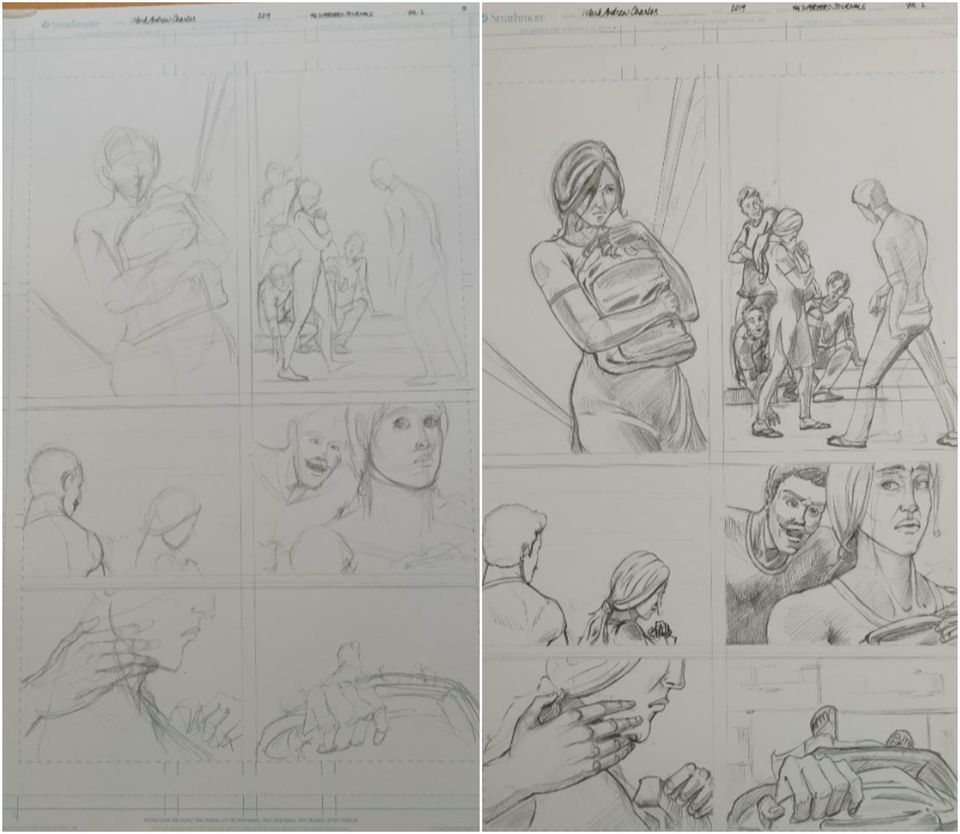


The eight-part series is inspired by DC superhero comics.
In a dystopian setting in temple town Varanasi, a corrupt cop, Inspector Vishwas Thakur, gangs up with an MLA, Batook Pandey ‘Kadak’, who was once a history sheeter infamous in Western Uttar Pradesh. The two are guided by a malicious sadhu, Vish-Rishi, whose face is hidden behind a dog’s skull, fused with a gas filter canister. As the trio, who seem to stand for the Uttar Pradesh government headed by Chief Minister Adityanath, wreak havoc in the city, four spunky teens—a girl, Vishakha Singh aka Violet, and three boys—Rishab Kumar aka Shortjam, Ravi Mishra aka Omega and Ishaan aka Metashok—decide to fight back. The teens, who are trained in martial arts, don’t just bust rowdy gangs, but also make a hitlist of the powerful figures who aid them. 
Soon, the wrath of Vish-Rishi and his coterie is trained on the teen vigilantes. Like the many students in Indian universities—from Rohith Vemula in University of Hyderabad to the students in Jawaharlal Nehru University, New Delhi—who were penalised for challenging the status quo, the four are accused of indulging in anti-national activities and cornered. 
As the colourful, dense plot thickens by the page, it is Charles’s journey as a young artist from Varanasi to Hyderabad which stands out in his final-year dissertation, titled The Superhero Journals: An original and indigenous work of fiction in the style of the Graphic Novel. 

Music, sketches and violence in Varanasi

Charles, who studied in Varanasi until he finished his Bachelors’ degree, was a “good student”—84% in Class X and 82% in class XII—said his parents Nirmalya Choudhury and Abrian David Charles, both school teachers. But it was not his academic performance which made him popular everywhere he studied. Since his childhood, Charles was a musician and an artist. A 2011 YouTube video of him singing the anthem he composed for his school is still online, having received a modest 2,562 views. 
All through his adolescence, Charles sketched, wrote stories and dreamt of becoming an illustrator. The idea of writing a graphic novel first came to him when he was doing his BA in Fine Arts at Banaras Hindu University, he writes in his dissertation. Echoing Joan Osborne’s Grammy-nominated rhythm and blues number, What if God was one of us?, Charles wrote in his Masters dissertation, explaining his journey as an artist, “I thought, ‘What if Superheroes were just people, normal human beings?’ 
The idea which came to him in 2014, as he took a walk on a stormy monsoon evening in Varanasi, became The Thunderstruck Boy, the story of a teenager who acquires superpowers after being struck by a lightning bolt. The draft included a prologue and one short action narrative.
His graphic novel quest did not stop there. He studied hard to crack the CEED (Common Entrance Examination for Design) for a year after he graduated from BHU with a CGPA of 8.4. In the test, written by around 10,000 students who vye for the 150 M. Design seats in the IITs, Charles scored the fourth rank, his mother recounted. He was happy to make the big move, but did not completely leave Varanasi behind. 
In June 2017, when he reached IIT-Hyderabad, his student experiences at the uber-political BHU still informed his creativity. When Charles was in BHU, he had witnessed clashes between warring student outfits of political parties which left two students dead and many injured. He adapted these memories to fit his teen hero narrative in The Superhero Journals.
“I chose the backdrop of Varanasi. Reason being the rich political influence in a land of religion…,” he wrote. The graphic universe he created was infused with a rebellious sense of justice, inspired mostly by V for Vendetta, Alan Moore’s dystopian political thriller with anarchist leanings. The lines of this illustrated world, however, stood out in the strict, non-political, academic atmosphere encouraged by IITs across the country. 

‘A jolly good fellow’

On campus, Charles was the guitarist for most jam sessions and music concerts on campus. He had many friends, and had the reputation of a “jolly good fellow”. But that kind of popularity does not always sit well in most IITs, said students who have spent some years of their academic life there. 
“The IITs are closed campuses. Though there are music clubs, literary clubs and other such bodies which are meant to promote activities, only a few students participate,” a student who has been in IIT-Hyderabad for the past five years told HuffPost India. 
Academic conservatism is the norm in most IITs, said some students who took on the administration of IIT-Madras in 2015. Students with worldviews that clash with norms which govern the premier academic institutions often face opposition, they said. 
K. Swaminathan, a member of the Ambedkar Periyar Study Circle in IIT-Madras, who graduated in 2018, said the institute, which was earlier the mentor institute of IIT-Hyderabad, clamps down on freedom of expression.  
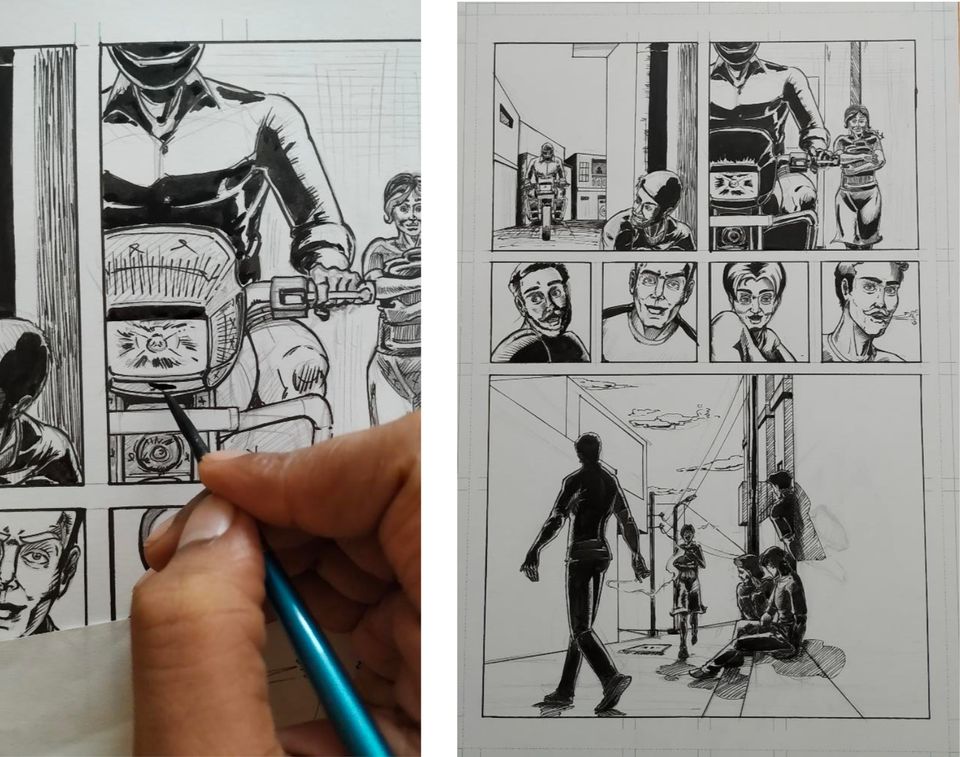


In the graphic novel, a corrupt cop gangs up with an MLA and the two are guided by a malicious sadhu, Vish-Rishi. As the trio wreaks havoc in the city, four spunky teens decide to fight back.
“To talk politics, hold discussions or even paste posters, we are expected to take permission. Permission can be denied on partisan grounds. Study circles including APSC are expected to renew permissions to function each year.” 
In 2015, IIT Madras decided to derecognise APSC, alleging the outfit of organising protests against Union government policies and advocating “hatred” against Prime Minister Narendra Modi. The institute also banned pamphleteering on campus. 
Representatives of IIT Hyderabad and IIT Madras did not reply to questions. 
Some IITs have started academic research which complements the policies of successive governments even as the institutes fail to critically study the Union’s policies, another APSC member, Arjun Jeyakumar pointed out. “You don’t find many academic projects which criticise the ruling government. On the other hand, IITs get funding to promote research which supports priorities of the government. Scientific validation and research of panchgavya (cow dung, cow urine milk, curd and ghee), which is in line with recent political pressure to protect the cow, is one example,” he said. 
In 2016, IIT Delhi held a ‘brainstorming workshop’ on panchgavya, after which it said it received 50 proposals from top research institutions on the topic.
The academic culture in IIT-Hyderabad is no different when it comes to imposing curbs on students. A student who joined IIT-H after completing his studies in a university where student politics was a common affair, said, “In IIT-H, not many student grievances reach the student body or the administration because most students internalise self-censorship”.  

An artist and the job market

Charles, however, was a student of the Design department, where creative freedom was not completely discouraged, according to accounts by faculty members and M. Des students at IIT-Hyderabad. In fact, until he reached his second and final year, he was pretty happy on the campus. 
For the latest news and more, follow HuffPost India on Twitter, Facebook, and subscribe to our newsletter.
“He enjoyed his first year and was fine for the first three months of his second year. I started noticing a change in him later and it only worsened in his final semester. He started worrying about his grades and job prospects, even though we constantly reassured him,” said his mother. 
While IIT-Hyderabad authorities did not answer queries about Charles’s grades, his family confirmed that they did slump in his final year. 
But a close friend of Charles said he would be surprised if a poor academic record affected him so much. “Some design studios and other companies do not look at grades. Some even provide grade margin to recruit good designers,” he said. 
Though that may be the case, in his final semester, Charles did not land a job, even though he sat through the recruitment drive set up by one of the three companies which participated in M Des campus placements. This was unexpected, given that just around 150 IIT post graduates enter a thriving visual design job market each year. 
An M. Des final year student, Charles’s friend, explained the trick behind getting an offer letter. 
“Getting a job is context-specific. A company may not like your work even if you are really talented because their requirement could be different from what you can offer.” 
The student hesitantly explained further, “Mark was a creative person interested in illustration and animation. A creative person needs creative freedom and he always believed in it.” 
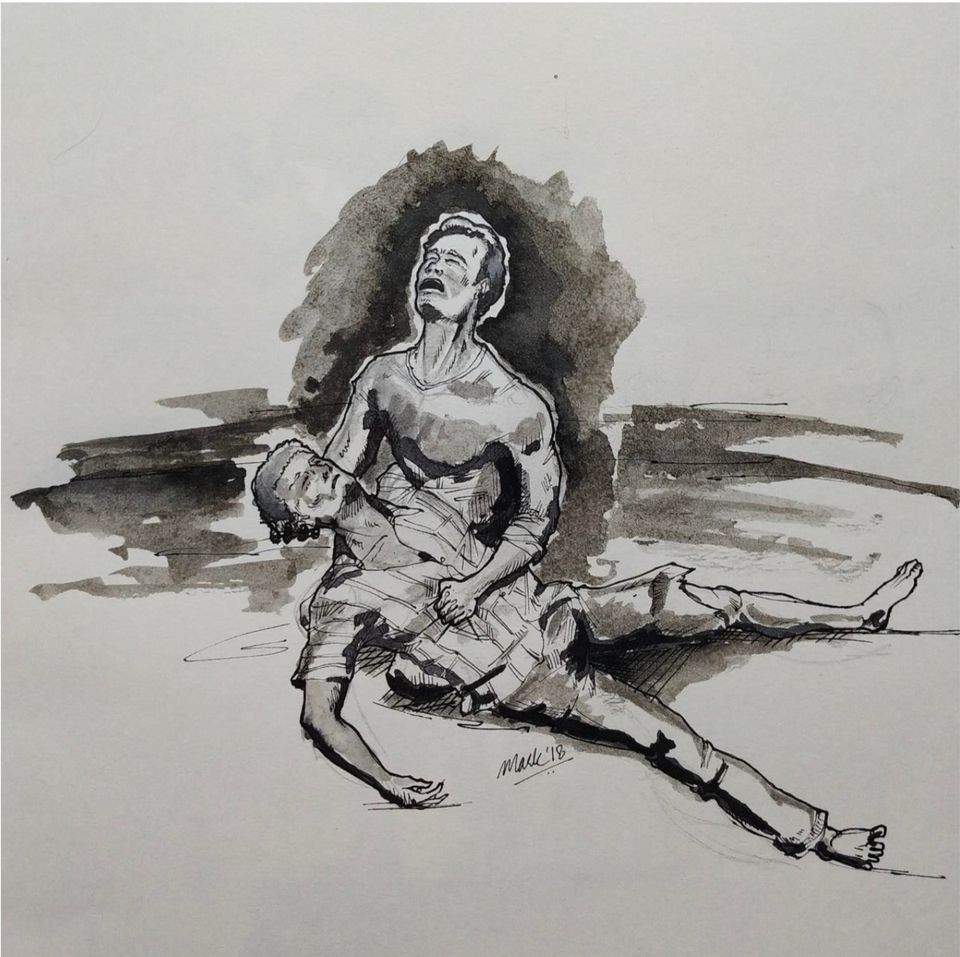
Did Charles’ interests and work, which includes The Superhero Journals, not suit the job profiles offered by MNCs and studios? His friends would not comment. But, they said, Charles did have a back-up plan—beginning a visual design start-up. 
Entrepreneurship, however, is not everyone’s cup of tea and could be beyond the reach of students from middle-income homes. 
“We took a student loan of Rs 2,54,000 to cover IIT expenses. The principal amount was supposed to be deducted from his first salary,” said his mother. 
When he did not get a job through the campus placement cell, Charles applied for a teaching job at a private university in Ujjain.  After two rounds of interviews, he did not hear from them, his mother said. Did he experience a conflict between the artist in him, who sketched a metaphysical political thriller, and the young man who wanted to secure a job to pay back his loan? 
“There are students who get placed in various companies under various salary slabs. Sometimes, one ends up yearning for a good pay package and a secure job,” said his friend.
Charles’s suicide note reads, “I don’t have a job, probably wouldn’t get one. No one hires losers! My grades suck…”. Moreover, he felt that he had failed his parents, who “made sacrifices for him”, indicates the note.
IIT-Hyderabad denied any drop in the number of placements in the institute. The M. Des department had logged 86% placements this year, though Charles did not make the cut. 
In a scorching Varanasi summer, Mark Andrew Charles, the young man who loved thunderstorms, was laid to rest at St. Paul’s Church on July 5, the day he had planned to submit his Superhero Diaries. The final page of his dissertation reads, “To conclude here, I would say… what would have been a project long rejected and forgotten, has come this far. Never lose hope.” 
If you or someone you know needs help, the International Association for Suicide Prevention has a list of resources here. You can also find a list of state-specific helplines on the Aasra website.

Thursday, July 11, 2019

Can a Student's Suicide Note Make Us Rethink the IIT Dream? - The Wire

Can a Student's Suicide Note Make Us Rethink the IIT Dream?

Unless we value qualities like kindness and empathy, we are looking at future generations of egotistic individuals.


“We notice that the mind is a restless bird; the more it gets the more it wants, and still remains unsatisfied.”
– M.K. Gandhi.

“Sorry, I turned out to be a waste,” wrote Mark Andrew Charles.

The suicide note of the boy who was pursuing a Masters in designing at the IIT Hyderabad disturbs me. It also makes me want to strike at the mythology of what IITs have grown to mean for the anxiety-ridden aspirations of the middle class. It means merit, success, mobility and achievement.

But at what point do we gain the maturity to reflect on the psychological, cultural and educational price we pay for this IIT dream?

When do we become sufficiently sensitive to hear the pain, agony and loneliness which students who enter this world of reckless speed, hyper-competitiveness and performance anxiety feel?

Mark’s suicide, I know, will be forgotten soon. The race will go on. And then, another suicide, another breakdown, another loss. Meanwhile, coaching centres will do their business. Traders, bankers and section officers will send their children to Kota, that notorious town in Rajasthan which symbolises all that is dark in Indian education.

Billboards in small towns and cities will display the faces of IIT toppers. Parents of the ‘lucky’ ones will boast of their children’s ‘placement and package’. And in our families, children will continue to be compared, praised, condemned, loved and hated on the basis of their academic performances.

Also read: Why Student Suicide Is Such A Sensitive Subject

With the standardisation of life’s pursuits, we will write the obituaries of those who wanted to be unique; or to use Nirendranath Chakraborty’s poetic metaphor, those who thought they could live like ‘sunlight’.

Roots of sickness

This is sickness in the name of education. It dehumanises the learner and makes her one-dimensional. As a teacher, I find that this is primarily for two reasons.

To begin with, the mode of preparation for the IIT entrance test needs to be critically scrutinised. For an average aspirant, it ends in complete burn out by the time she cracks the test. A careful look at the learning strategies that coaching centres — an integral component of this tedious journey — employ, indicates that students are essentially reduced into recklessly disciplined machines.

Writing mock tests endlessly kills the spirit of scientific enquiry which need wonder and curiosity. Instead, it reduces physics, mathematics and chemistry into a set of numerical problems, to be solved as quickly as possible.

As the exam strategy becomes dominant, aspirants tend to insulate themselves from the ‘softer’ domains of life. They no longer know the joys of a sunset, an old leaf falling from a tree, or an old woman with a wrinkled face walking slowly with her grandchild.

Even schools, particularly at higher classes, become irrelevant as interactive modes of socialisation because of the routines that coaching centres impose on students.

The system reduces your intelligence into something which is violent. It has no wonder, no poetry, no music. It is war. It cannot make sense of what William Wordsworth felt:

Sweet is the lore that Nature brings,
Our meddling intellect
Mis-shapes the beauteous forms of things;
We murder to dissect.

The second reason is related to the psychological transformation that the entire process leads you through. If you finally join an IIT, it becomes a heavy burden.

Your ‘success’ has to be continuously redefined. Society valorises and also pressurises you. You have to run faster. The path to ‘success’, you realise, does not seem to have an end.

Students are prepared to struggle from Class 8 to Class 12. In the process, they miss good cinema and good music and are told by parents, coaching centre ‘gurus’ and school principals that once they are in an IIT, they will be ‘settled’. But then they realise that the race would only get more aggressive.


Students, once they reach the IITs, realise that the path to success does not have an end. Photo: Harini Calamur/Flickr (CC BY-NC-ND 2.0)

Classes, tutorials, labs, exams, placement anxiety…this sort of life-killing routine transforms everyone into a competitor and has devastating consequences. There is no rest, no celebration of what Bertrand Russell would praise as ‘idleness’.

There is no listening to others, no friendship. Everything is instrumental and strategic. Failure is ugly. Mark’s suicide note speaks of it.

Should we rethink education and ambition?

Mark has killed himself. But the ‘survivors’ too are compelled to kill their souls. In this game, there is no winner.

I am aware of the harsh constraints of living in an over-populated country like ours. I know that for a middle-class person, education seems to be the only road to socio-economic mobility.

For many, there is no escape from ‘job anxiety’. No wonder, the appeal of job-oriented and technical education is always high. Yet, at this juncture, we ought to rethink the meaning of education.

First, we have to learn to run slow. We are always in a hurry. The reckless speed implicit in the neoliberal and technocratic era has made it impossible for us to live our lives peacefully at our own rhythm.

Also read: JNU Aspirants, I Feel Sorry For You

Imagine the horror. Even in a play school, a three-year-old kid is burdened with homework. Summer vacations are for meaningless projects and Saturdays and Sundays have to be ‘utilised’ properly at piano classes!

Second, we have to redefine ‘merit’ and ‘intelligence’. Unless we begin to value qualities like empathy, reflexivity, receptivity and spirit of communion, the cult of ‘meritocracy’ will further intensify violence in society.

This violence manifests itself through egotistic individualism, consumerism and brute indifference. Even ‘cultural evenings’ at educational institutions cannot stop students from feeling more and more lonely then.

Should we not wake up? Or should we continue to celebrate what Erich Fromm would have regarded as the ‘pathology of normalcy’, until our dearest ones, even after passing through the archways of celebrated tutorials and IIT itself, are found dead in their hostel rooms with suicide notes?

Avijit Pathak is a professor of sociology at Jawaharlal Nehru University.

Assembly Line - Telegraph India

Assembly Line

Much is said about Kota, the coaching hub. But what’s it like to be a student there...

By Manasi Shah

Published 9.07.19, 4:53 PM


A still from the Web-series Kota Factory, which portrays students’ lives in the city(Screengrab)

Every year, lakhs of students go to Kota, a city in Rajasthan, with a dream. A dream of being tutored at the best coaching institutes there and, thereafter, crack the competitive exam for entrance to the best engineering or medical colleges of India.

But what becomes of the dream after? Shakeel Ridwan Karim, 21, could not make it to the IIT league, but he considers his Kota chapter as the game-changer. Says the student of civil engineering at Aligarh Muslim University, “I couldn’t excel in studies, though I got into a decent college, but that doesn’t mean studying at Kota was a waste of time. It gave me extremely useful life lessons.”

According to Shakeel, at Kota, one is either a poster boy or just another face in the crowd. He says, “Either you are the successful one or you are the guy who is slowly descending into the depths of failure. Maybe you aren’t a failure in the strictest sense of the term, but society labels you thus.”

And it is this fear of a label that overwhelms students and drives them to extremes, the original point of the shift quite lost.

There is no denying that for some time now Kota is synonymous with student suicides. In 2018, reportedly 19 students committed suicide; seven in 2017; and 17 in 2016. 

“It’s not because of bad scores in the JEE Mains... It’s because I’ve started hating myself to the extent that I want to kill myself,” wrote 17-year-old Kriti Tripathi in a note before jumping to her death from a five-storey building this April. She had reportedly urged the government to shut down coaching institutes at the soonest. “They suck,” she wrote.

Ankit Shaw of Calcutta went to Kota after clearing his Class XII boards. He prepared for the IIT-JEE (Indian Institutes of Technology Joint Entrance Examination). He says, “Kota has a very systematic way of teaching. I was in batch 13 — the batch of gap-year students. Batches change every two to three months. If you do not perform well, not only do you not get a better batch, but also face family pressure. The result of every exam is sent to parents.”

Ankit talks about a frenzied pace of teaching, the trouble in keeping up, revising. He says, “I missed having someone I could speak to, who would understand why my performance was deteriorating. But then I think even if I had someone, I wouldn't have had the time to talk.”

Suvam Poddar was in Kota for two years to prepare for the NEET (National Eligibility cum Entrance Test). He says, “If a student has failed or taken that extreme step of committing suicide, the institutes are blamed. But it is you [the student or his or her family] who is seeking admission, agreeing to pay the hefty amount to the institutes. They aren’t the ones forcing you to do so.”

Suvam is not the only one who feels this way. Shakeel, too, says that if anything is to be blamed it is the larger education system in the country. Both Suvam and Shakeel feel blaming the place is unfair and list other reasons of failure — peer issues, smartphone addiction, difficulty in adjusting to hostel or paying guest accomodation diet.

During Suvam’s time there, someone he knew committed suicide in his hostel. Recalling that time he says, “Leaving the personal matters of individuals, it’s mainly because of fear and insecurity. External pressure doesn’t let the student breathe properly and somehow he or she falls into the trap of giving up.” Ankit says Kota has toughened him. “It taught me how to go ahead in life, without anyone’s support. Kota teaches one how to function under pressure and, most importantly, it teaches one how to survive.”
Not everyone who passes through Kota and succesfully at that look back with fondness or appreciation. In fact, Shristi Agarwal, who bagged a seat in IIT Kharagpur post Kota, has a caveat for parents. She says, “While the quality of education in Kota institutions is one of the finest in the country, the negatives surrounding the place often override the positives to a point where it may all become toxic. I remember one of my batchmates who was enrolled in a programme that helped students start early, right after primary school. That is the kind of marketing they’ve managed to pull off, the kind of thing parents should understand and stay away from.”

And then not every road to success passes through Kota. Ritesh Kumar Singh, 24, went there after his Plus Two hoping to realise his true potential. He says, “Somewhere along the way I lost my path and it didn’t turn out to be of much help. There was no one to guide me.” Singh is now working in Larsen & Toubro Infotech as a software developer. From all these testimonies one thing is clear — one must weigh the pros and cons before packing the bags for Kota.

‘Kota is not harsh, the competition is’

Kota Factory is a recent Web-series by The Viral Fever (TVF). It captures the life of IIT and medical aspirants as they face both competition and life. The episodes — Inventory, Assembly Line, Optimisation, Shutdown, Overhaul — throw light on what Kota does to its students. The maker of the series, Saurabh Khanna, talks to The Telegraph.

Khanna is a Kota factory product and an IIT Kanpur graduate. He says, “It was a subject we had in mind for years because most core team members have studied there.”

He points out that the series is India’s first black- and-white one. But why? According to Khanna, though the effect is used popularly for period dramas or flashbacks, in this series it is employed to portray a world of stark binaries. He says, “Kota is not harsh, the competition is. The characters were much thought through.” For instance, there is the bright Meena, who is from an underprivileged background and is devoted to books. Then there is Uday, who is intelligent but much too carefree, smoking and partying. Shivangi, Uday’s live-in girlfriend, is representative of the female population in the city — outnumbered by the males, yet significant. Finally, there is Vaibhav, who is the protagonist. Says Khanna, “He is an average guy, who wants to study but he struggles. He is not a genius and he is unable to sit for six hours at a stretch.”

Khanna says he consciously didn’t want the protagonist to be someone who wanted to do photography but ends up doing engineering. “Vaibhav wants to study but does not know how to. And it is difficult when you compete with the world for the first time.”

The monologues in this Web-series sum up the essence of Kota. But the greater aim is to focus on problems such as exam fear that will not let even a good student solve papers, ace an exam. Khanna says, “If you ask me why people go to Kota, I’d say it is for the training and the teachers.”

Tuesday, July 9, 2019

What’s killing our students? By Chandrima Pal, Pune Mirror |

What’s killing our students? By Chandrima Pal, Pune Mirror 


Read more at:
https://punemirror.indiatimes.com/others/you/whats-killing-our-students/articleshow/70119174.cms?utm_source=contentofinterest&utm_medium=text&utm_campaign=cppst


IIT graduate killed by gay partner who attempted suicide? New Indian Express

IIT graduate killed by gay partner who attempted suicide?

The housekeeping staff let themselves into the room with a duplicate key after the men did not leave the room when they were scheduled to check out.
Published: 08th July 2019 10:39 AM  |   Last Updated: 08th July 2019 03:50 PM  |  A+A A-
honour killing, death, murder, representational image, generic image, illustration
For representational purposes
By Express News Service
HYDERABAD: The 29-year-old man found murdered in a hotel room in SR Nagar on Thursday, along with another man who was unconscious, has been identified as an IIT Delhi graduate.

The two men were allegedly in a relationship. Cops suspect that the duo had a dispute over their relationship following which the IIT graduate was killed by his partner who later attempted suicide by slitting his throat.  
The housekeeping staff let themselves into the room with a duplicate key after the men did not leave the room when they were scheduled to check out. They informed the police after seeing the men lying in a pool of blood. The condition of the man who attempted suicide is stable, said police.

Monday, July 8, 2019

Food for thought - Sentinnel Assam

Food for thought

student community
 Share
 Tweet
 Pin
 Email
 Share

Something is dangerously wrong with the country’s student community when it comes to facing life, its allied risks and uncertainties. The precariousness of life is natural because one has seen just the present and faced just the past while he is absolutely unsure of what the future might look like. But that’s life, its totality, and its beauty too. But facing life entails a lot of inner courage – the courage to brave all odds and discover opportunities in challenges, and the will to profit from past experiences and deploy them in the present towards strengthening the pillars of an uncertain future. How capable are our students of when it comes to facing life that way?
The latest suicide by a student, Mark Andrew Charles, at IIT-Hyderabad is a case in point. He was pursuing a prestigious course – Master of Designing – and he was about to complete it in another three days when on Wednesday, just fearing he might not do well and not get a job as well, he hanged himself in his hostel room. He was suspected to be suffering from depression – all due to the examination-job factor, which has emerged as a 21st-century killer in the country. Charles has left behind an emotional six-page suicide note, though, saying, “I don’t have a job, probably I won’t get one. No one hires a loser. It’s amazing to look at my grade sheet. A few more letters and it’ll look like an alphabet chart.” He has also advised his friends at IIT-Hyderabad to live a happy life and not to waste it in the IT industry.
Happy life – that’s the crux of it all. In schools, students are not motivated to have happiness as their aim in life, nor are they told what it means to be happy and contented – beyond mere marks and grades. There is absolutely no stress on the making of a quality life, driven by hope and happiness, and by an innate urge to celebrate life in all its shades because life is a potential in itself and what matters far more is the right attitude to live amid the sufferings and uncertainties of the day. In fact, as modern psychology tells us, to be happy requires a skill. One may call it happiness skill culturing and development. This has to start right at the primary level of education so that students are capable of seeing life and its potential beyond the stereotype of marks and grades.
In the instant case, Charles should have had no reason at all to get so fed up with life just because of the grade-job factor that he should be driven to suicide. After all, he was pursuing a Master’s in a job-driven course at a very prestigious engineering college. What should prompt such promising youth to take such a drastic step, or why one should be so very depressed despite the potential available to be explored, psychiatrists would tell us better. But isn’t it a serious case that students, including in Northeast India, are beginning to take life so that they would have nothing to come to their aid as second thought before leaving this beautiful planet all of a sudden? Ponder, ponder, ponder. This deficit of inner courage will turn far more monstrous if the problem is not addressed at an early level. This must now form a very serious dimension of the education system itself.

‘Sorry I Turned Out to be a Waste’ IIT Student Commits Suicide And Leaves a Haunting Note - Pagal Parrot


A last year graduate degree student ended life at 
Indian Institute of Technology, Hyderabad (IIT-H) hostel and left a 
haunting suicide note.