IIT boy falls off hostel balcony, cops suspect suicide bid Kharagpur: A third-year mathematics student at IIT Kharagpur .. Read more at: http://timesofindia.indiatimes.com/articleshow/74326116.cms?utm_source=contentofinterest&utm_medium=text&utm_campaign=cppst |
Saturday, February 29, 2020
IIT boy falls off hostel balcony, cops suspect suicide bid

Wednesday, February 19, 2020
Why campuses are in need of well-trained counsellors to help students
Why campuses are in need of well-trained counsellors to help students
According to mental health experts, students require space to have a conversation rather than a medical diagnosis, which is where counsellors play a role.

NEWS HEALTH TUESDAY, FEBRUARY 18, 2020 - 13:51
Shiba Kurian Follow @shiba_kurian
In September 2019, a student of Amrita Institute of Medical Sciences (AIMS) in Kerala killed herself allegedly over not being able to score well in a subject. This death, according to students and alumni, is one of the many suicides by AIMS students that year stemming from difficulties in dealing with academic pressure, among other reasons.
An alumna of the college started an online petition to garner enough signatures to impel the AIMS Dean to improve student support on campus and save lives. “The student welfare committee clearly is not functioning properly and exists in a disciplinary rather than a supportive function. As proven by these unnecessary deaths, much more needs to be done,” read the statement.
A few months later, after Fathima Latheef, a first-year student at IIT Madras was found dead at the college hostel in November 2019, the students of the premier government institute protested to reiterate demands put forward by the student legislative committee in early 2019.
Apart from an internal probe in Fathima’s death, the students demanded that the college also conduct a holistic survey, along with professionals from outside — psychologists, psychiatrists, counsellors, sociologists and educationalists — to understand the mental health issues faced by the students.
“About six students took their own lives last year,” claimed a member of Chinta Bar, an independent student body of IIT-Madras. “We do not have a committee that probes these suicides to find out what led the students to take the extreme step. There is no scientific approach to address or even understand what are the actual problems students face. Currently, some professors give their opinion based on their understanding of the matter,” the student told TNM on the condition of anonymity.
Incidentally, according to the National Crime Records Bureau (NCRB) data, 10,159 students died by suicide in 2018, which is an increase of 254 from 2017.
The need of the hour — as expressed by students and mental health experts, and as mandated by the Mental Healthcare Act, 2017 — is a mental health support system at educational institutions.
Counselling, a solution-based approach
Experts say that many times, students just require a space to have a conversation rather than a diagnosis or medication, which can be given by a psychiatrist. That’s why counsellors or counselling psychologists have a major role to play in making mental healthcare systems in academic institutions robust to deal with students’ issues.
“Counsellors play the role of therapists. Clinical psychologists know if the patient has to be referred to a counsellor or a psychiatrist. Clinical psychologists infer if it is a medical problem and refer to a psychiatrist. A psychiatrist has the right to give medication that helps the patient cope with their mental health issues, if required. But what educational institutions really need, are counsellors,” explained Harish Bhuvan, a counsellor based in Bengaluru.
“Academics, peers, relationships and family-related problems are some of the issues that young adults face and come to us for,” said Shalini Rao, Consultant Counsellor, Azim Premji University in Bengaluru, which has a mental health centre on campus called Mind Space.
“Mental health is undervalued in Indian academics. The presence of a mental health support centre on campus helps students navigate their stress. Besides, students don’t come to get help only when there is a crisis. They also come because there is a culture of positive attitude towards mental health on the campus,” she added.
When there’s trust deficit
According to some students and experts TNM spoke to, lack of trust also discourages many students from approaching in-house counsellors.
Tina (name changed), a college student in Bengaluru, had once sought help from a counsellor at her school. However, a few details of the conversation were shared with the principal, teachers and then her parents. “We need the space to talk. But I do not go to the counsellors at my college due to that lack of trust,” she said.
Harish agreed that the practice of reporting back to the college administration makes students reluctant to approach the in-house counsellors.
“The institution, in an attempt to ensure quality, decides to allocate a person to supervise the counsellor when he/she is not qualified to do so. In fact, they may, directly or indirectly, be part of the problem the student is facing,” he said. “When the anonymity or confidentiality is compromised, students may prefer seeking help from counsellors outside.”
Letting an external chief counsellor supervise the campus counsellor instead will help keep personal biases at bay and lets the counsellor look at the case differently, he added.
Counsellors need rigorous training
The culture and systematic understanding of mental health is relatively new to the Indian education system. Besides giving solutions, understanding the problem itself is the first step in strengthening the mental support system on campuses, said Harish. He added that counsellors need to invest more time in one-on-one therapy sessions with students to learn more about their issues as well.
Further, to address the dearth of resources, it is important to have regulatory bodies or licensing practices to ensure there are well-trained counsellors, which is currently lacking in India, noted Shalini.
All the while practising, it is equally crucial that counsellors proactively seek additional education or courses. Shalini, for instance, recently took a queer affirmative counselling practising course. “It provides a solid framework to support queer individuals. It is affirmative to not just saying we are friendly but helps counsellors be a political ally to the community,” she said.
According to mental health experts, students require space to have a conversation rather than a medical diagnosis, which is where counsellors play a role.
NEWS HEALTH TUESDAY, FEBRUARY 18, 2020 - 13:51
Shiba Kurian Follow @shiba_kurian
In September 2019, a student of Amrita Institute of Medical Sciences (AIMS) in Kerala killed herself allegedly over not being able to score well in a subject. This death, according to students and alumni, is one of the many suicides by AIMS students that year stemming from difficulties in dealing with academic pressure, among other reasons.
An alumna of the college started an online petition to garner enough signatures to impel the AIMS Dean to improve student support on campus and save lives. “The student welfare committee clearly is not functioning properly and exists in a disciplinary rather than a supportive function. As proven by these unnecessary deaths, much more needs to be done,” read the statement.
A few months later, after Fathima Latheef, a first-year student at IIT Madras was found dead at the college hostel in November 2019, the students of the premier government institute protested to reiterate demands put forward by the student legislative committee in early 2019.
Apart from an internal probe in Fathima’s death, the students demanded that the college also conduct a holistic survey, along with professionals from outside — psychologists, psychiatrists, counsellors, sociologists and educationalists — to understand the mental health issues faced by the students.
“About six students took their own lives last year,” claimed a member of Chinta Bar, an independent student body of IIT-Madras. “We do not have a committee that probes these suicides to find out what led the students to take the extreme step. There is no scientific approach to address or even understand what are the actual problems students face. Currently, some professors give their opinion based on their understanding of the matter,” the student told TNM on the condition of anonymity.
Incidentally, according to the National Crime Records Bureau (NCRB) data, 10,159 students died by suicide in 2018, which is an increase of 254 from 2017.
The need of the hour — as expressed by students and mental health experts, and as mandated by the Mental Healthcare Act, 2017 — is a mental health support system at educational institutions.
Counselling, a solution-based approach
Experts say that many times, students just require a space to have a conversation rather than a diagnosis or medication, which can be given by a psychiatrist. That’s why counsellors or counselling psychologists have a major role to play in making mental healthcare systems in academic institutions robust to deal with students’ issues.
“Counsellors play the role of therapists. Clinical psychologists know if the patient has to be referred to a counsellor or a psychiatrist. Clinical psychologists infer if it is a medical problem and refer to a psychiatrist. A psychiatrist has the right to give medication that helps the patient cope with their mental health issues, if required. But what educational institutions really need, are counsellors,” explained Harish Bhuvan, a counsellor based in Bengaluru.
“Academics, peers, relationships and family-related problems are some of the issues that young adults face and come to us for,” said Shalini Rao, Consultant Counsellor, Azim Premji University in Bengaluru, which has a mental health centre on campus called Mind Space.
“Mental health is undervalued in Indian academics. The presence of a mental health support centre on campus helps students navigate their stress. Besides, students don’t come to get help only when there is a crisis. They also come because there is a culture of positive attitude towards mental health on the campus,” she added.
When there’s trust deficit
According to some students and experts TNM spoke to, lack of trust also discourages many students from approaching in-house counsellors.
Tina (name changed), a college student in Bengaluru, had once sought help from a counsellor at her school. However, a few details of the conversation were shared with the principal, teachers and then her parents. “We need the space to talk. But I do not go to the counsellors at my college due to that lack of trust,” she said.
Harish agreed that the practice of reporting back to the college administration makes students reluctant to approach the in-house counsellors.
“The institution, in an attempt to ensure quality, decides to allocate a person to supervise the counsellor when he/she is not qualified to do so. In fact, they may, directly or indirectly, be part of the problem the student is facing,” he said. “When the anonymity or confidentiality is compromised, students may prefer seeking help from counsellors outside.”
Letting an external chief counsellor supervise the campus counsellor instead will help keep personal biases at bay and lets the counsellor look at the case differently, he added.
Counsellors need rigorous training
The culture and systematic understanding of mental health is relatively new to the Indian education system. Besides giving solutions, understanding the problem itself is the first step in strengthening the mental support system on campuses, said Harish. He added that counsellors need to invest more time in one-on-one therapy sessions with students to learn more about their issues as well.
Further, to address the dearth of resources, it is important to have regulatory bodies or licensing practices to ensure there are well-trained counsellors, which is currently lacking in India, noted Shalini.
All the while practising, it is equally crucial that counsellors proactively seek additional education or courses. Shalini, for instance, recently took a queer affirmative counselling practising course. “It provides a solid framework to support queer individuals. It is affirmative to not just saying we are friendly but helps counsellors be a political ally to the community,” she said.
IIT Bombay: Being Political Amidst Changing Student Dynamics - YKA
IIT Bombay: Being Political Amidst Changing Student Dynamics
By priyank samagra in Activities on Campus, Campus Watch
18th February, 2020
In the last couple of months, IIT Bombay has witnessed a series of marches and protest sit-ins for various reasons including the MTech fee hike, suicide of Fathima Latheef at IIT Madras, CAA and pan-India NRC and, violence in academic spaces. The protests have stirred the campus so much, that recently an open forum was called with Director and Deans. But, there are some questions which are relevant beyond the context of IIT Bombay.
The first question is regarding the changing character of IIT Bombay as an institution. I have written here in detail about the transition which is going on at IIT-B. It is no longer, if I may use the word, a fiefdom of engineering and technology. The establishment of interdisciplinary centres at IIT Bombay has brought in faculty members and students on campus who are trained to critically think and write about society, politics, philosophical worldviews, etc.
It’s a welcome change and requires constant conversation among students and faculty members for the future of research, teaching, learning and the overall academic environment
on campus.

IIT Bombay.
The second question is regarding the formation of various students’ groups around various political worldviews. One may outrightly discard them by naming those groups as political. However, in my opinion, that is the consequence of uniformed and ill-informed thinking.
The demography of IIT Bombay has changed. First of all, postgraduate students now outnumber the undergraduate students. This brings diversity to the campus in all respects – economic, social, political.
Those coming for postgraduate degrees have studied at different universities before coming to IIT Bombay. They have grown up as adults have their own social and political experiences. They are going to mobilise and organise themselves.
The problem arises when these groups, read as political worldviews, become some sort of turfs to be protected or fought for. Albeit the purpose should be to have debates and conversations. The groups will not cease to exist. But, if dealt with heavy-handedly or by smear campaigns, polarisation is bound to get reinforced. And, the purpose of academic freedom is bound to get defeated.
The third question is regarding the access to spaces of higher education. The truth is that most of the higher education spaces in India do not reflect the reality of our society. Even a simple survey on social composition of such spaces – faculty members, students, non-teaching staff, contract workers, etc. will bring out the truth on our face.
In such a context, the attempts to de facto commercialise the public universities, are bound to face resistance.
The three questions regarding (i) transition from a technology focused institute to interdisciplinary world-class university; (ii) changing demography due to more and more inclusion; (iii) access to higher education and changing national policies in this regard are not limited to IIT Bombay alone.
Also Read: During An Internship At IIT Bombay, This Is How An Online Training Came To My Rescue
They can be used as a framework in context of any other institutes/universities as well. Therefore, the political/apolitical debate is farcical. Because, the questions before us are deeply political. The right debate is to ask what kind of politics, for whom, and to what end.
Featured image for representative purpose only.
Featured image source: Vinay Bavdekar/Flickr.
Tuesday, February 11, 2020
Meet Padma Shri HC Verma, who struggled to pass in school, teaches India Physics today - Hindustan GTimes
Meet Padma Shri HC Verma, who struggled to pass in school, teaches India Physics today
HC Verma said the reason why there were news reports of students committing suicide despite reaching IITs or even in coaching institutes while preparing for entrance exams was that they could not withstand the academic pressure despite scoring good marks in schools.
EDUCATION
Updated: Feb 10, 2020 16:44 IST

Arun Kumar
Hindustan Times, Patna
Arun Kumar
Hindustan Times, Patna
 The recipient of Bihar’s highest award in the field of education, Maulana Abul Kalam Azad Shiksha Puruskar, 2017, HC Verma said that shifting the blame by saying that the teachers or students are not of good quality would not serve the purpose.(hcverma.in )
A teacher must first fall in love with the subject he or she teaches before expecting the students to do the same. The schools are not the place to just score marks. They are the place to empower mind and improve capabilities. The target of education cannot be and should not be to clear board exams or IIT/NEET entrance.
When noted educator and retired IIT-Kanpur professor HC Verma says this, he means it, for he has lived that way right since his childhood, when he was a below average student and struggled to pass exams, to this day, when his entire life is devoted to developing scientific temper among students in the language they understand and enjoy.
Not the kind to shift blame for the education slide, especially in his home state Bihar, Verma feels that the biggest thing lacking in schools these days is the target and vision.
“Why do we study?
What for teachers teach?
It is the drift from the target that is creating the problems. If the vision is not clear, we should not expect positive results. Marks cannot be the target, capabilities and empowerment certainly is. If one is empowered, marks will automatically come. The central theme is that child is an empty bowl. Students must be given situations where they think. We need to catch them young,” he said.
Verma, the recipient of this year’s Padma Shri Award for his distinguished contribution in the field of science and technology, said the reason why there were news reports of students committing suicide despite reaching IITs or even in coaching institutes while preparing for entrance exams was that they could not withstand the academic pressure despite scoring good marks in schools.
“Isn’t it the moral duty of teachers to groom students in a way that they don’t wilt under academic pressure? What is the need to be happy with marks if students commit suicide? Education should be such that teaches students not to give up and be ready to face all situations. The society also needs to focus on this. Blaming coaching institutions is not the solution. It is the schools and the teachers who will have to strive to stay relevant, which will automatically shrink the space for parallel system and this requires emotional attachment with the profession,” he said.
The recipient of Bihar’s highest award in the field of education, Maulana Abul KalamAzad Shiksha Puruskar, 2017, Verma said that shifting the blame by saying that the teachers or students are not of good quality would not serve the purpose. “This is running away from the problem. If a person can be motivated, he can do anything. We can create quality, provided we honestly try and this has to begin from schools,” he added.
Verma, who studied in Patna Science College and also taught there before moving to IIT, Kanpur, is known for his famous book ‘Concepts of Physics’, which is the prize possession with all IIT aspirants. Now, almost three decades later, he has come up with another one ‘Bhoutiki ki Samajh’ in Hindi.
“In the last 28 years, my understanding has also developed. So, I came up with a new book. This time it is in Hindi instead of a revised edition in English for wider reach. In science, language should not be a barrier. I am also working on the second part. We have also developed B.Sc-level online interactive courses free of cost, which students can use with just mobile. The response has been good, though from my State Bihar it has been not satisfactory despite my letters to VCs and principals to popularize this free opportunity among students,” he said.
At the IIT-K, he has been instrumental in making a group of faculty members and students together with local youths to run an NGO called “Shiksha Sopan”, which maintains direct daily contact with students and their families to not only give educational help, but also inculcate Indian values and culture. It also runs scholarship programs and Pratibha Poshan Yojana to identify talent in the interiors and give them opportunity at the residential summer camps.
In 2011, Verma initiated a new project National Anveshika Network of India (NANI), which has become a flagship programme of the Indian Association of Physics Teachers (IAPT). Verma has developed more than 1000 ‘low cost’ physics experiments which can be used by teachers in their classrooms. Informal open-ended experimental activities have also been developed where students are initiated in a direction and they conceive, assemble and perform experiments on their own.
He earns huge amount through royalty from his best-selling books, but he spends all on his passion – to groom next generation. “What will I do with the money? Have a few houses here and there. It is better to spend on developing labs and improving teaching,” said Verma, who enjoys living a simple life.
In Kanpur, he has developed ‘Sopan Ashram’, which are equipped with classrooms, laboratories and a lot more to generate interest among students by acquainting them with dimensions of science.
“We are developing it as a place of science tourism. Children from government schools come here,” he said, adding the next in line is a project in Bihar to improve quality of science teaching in schools by training teachers. He has already trained thousands of teachers in other states, including Jammu & Kashmir where he spent several months.
The Bihar project is being developed with the help of IIT, Patna. “It was planned two years ago, when I was honoured by the Biahr government, but it got delayed. Now, I have got information from Manoranjan Kar, principal supervisor at IIT, Patna, that it will take off in the next 15-20 days.
“It is a three-year project to train government school teachers on understanding of physics and teaching methodology. The government also has a big role to play, as coordination is important. The teachers will be grouped in batches and trained at camps in Patna for making science teaching meaningful and entertaining through low-cost experiments, which can be performed at home. If teachers get involved and strive for self-renewal, quality will certainly come,” he added.
Sunday, February 9, 2020
2 Years Of Exile In Kota Broke Me Down So Much That I’m Still Recovering - Youth Ki Awaaz
2 Years Of Exile In Kota Broke Me Down So Much That I’m Still Recovering
By Tamoghna Ghosh in My Story
30th June, 2016
By Tamoghna Ghosh:
Recently, it was in the news that a girl from Kota had committed suicide after her failure in the JEE. The incident stirred up a whole lot of suppressed memories inside me. So I wanted to share the story of a girl, who almost met the same fate as her. Well, almost.
There’s a sarcastic remark that does the rounds in the engineering circles, “First do B. Tech. Then follow your actual passion.”
Yeah, right. Only that some people have to go through hell to do precisely that.
I had always been the topper of my class since I started schooling, much to the resentment of my classmates, and the pride of my parents and teachers. But I was never a model student. Quite the contrary. My grade sheet at the end of each academic year would be stained by a simple ‘B’ in bold letters in front of ‘DISCIPLINE & CONDUCT’. It was a matter of great concern to my mother, who’d been a quiet child, that her daughter would grow up to be a ‘lyaj-kata-bandor’ (a tailless monkey, for you). I was mortally afraid of her and her punishments. But in spite of all that, I continued to perform well in academics.
As with any good student in India, I was brainwashed into believing that ‘Science’ is the best thing out there. That being a bright student, I was ear-marked to be a student of science.
Nobody, however, cared to scrutinise my mark sheet and discover that my best marks were always inevitably in English. Nobody looked through my notebooks to find sweet little poems scribbled in the last pages. Nobody cared that I had a badge for being a cub reporter in TTIS (the student’s magazine in vogue back then).
By the time I was in Class IX and X, I already knew there were only two career choices in front of me – be a doctor or an engineer. Coming from a family background of doctor and engineer ‘mama’, ‘mami’, ‘mausi’, ‘mama-ki-beti’, ‘mausi-ki-beti’… I knew there was hardly a way out without being engulfed in the family circle, churning out doctors and engineers every year. Adding to that was my parent’s cliched idea of maintaining their ‘standing-in-society’, which would get an immense boost if they manage to produce a doctor beti or an IITian beti. Yeah, you heard me right. Not just any engineering college. That would be too mainstream. That would be lesser than that ‘IITian-cousin-you-have-got-in-your-family’. That would make them ‘lose their nose’, or whatever part of their face, in front of a gang of bloodthirsty relatives and society.
So, all my dreams of being a writer, or a journalist, or a fashion designer, or an interior decorator flushed down the gutter. I was plucked from my cosy life in Bengal and shipped off to the Mecca of IIT coaching: Kota.
In all my 22 years of life, I prefer to block out every memory of the two years of my exile to Kota. The struggle and hardships I went through broke me down to such a level that it took me all the years of my college life to ease back to my old style. I am still recovering.
Kota seemed to me a place from a different galaxy. The environment was so different from the nourished, caring way I was brought up back in Bengal. I got enrolled in a proxy school. I went for classes daily at the coaching institute I had joined and tried my best to cope with the piling pressure. Needless to say, I failed. The coaching institutes had a system of segregating students on the basis of marks in the monthly exams, into different batches.
The top-most elite batches would get the elite teachers, the best of everything, and be fuelled (or brainwashed, I should say) more and more to crack the JEE with flying colours. As we descend down the levels of the hierarchy, we find the competence diminishing, the skills of teachers lessening and the pressure of reaching the elite batches increasing. It was a circus, those coaching institutes. Once you fall, you’re lost for life. The competition is so damn high, that it’ll take you ages to climb back to your previous rung in the ladder, and that too if Lady Luck was benign enough.
Apart from academic pressure, life in Kota, in general, was excruciatingly painful. Being away from your parents, coping with your daily life all by yourself is not an easy thing. On top of it, you have no real friends. The friends are your competitors and it becomes hard to find a person to trust. You become all alone in this mad circus. I did too. I lost my capacity to make friends. I became quiet and introverted. I stuck out like a sore thumb. The girl who’d get a B in Conduct for being an incorrigible chatterbox had lost all zeal in life. She was just another face in the sea of countless students, struggling to reach the top for air and preventing the forces of nature from dragging her down.
By the time I was done with Kota, I was hardly recognisable. I had lost my creative enthusiasm. I couldn’t write a single good poem. That was coming from a girl who’d write poems by the dozen, every other week. I hadn’t read a good book in years. My ability to reason and logic, in short, my IQ, for which I had received many an accolade in life, had reached an all-time low. I was just a robot who’d been programmed with the essential commands to crack IIT-JEE and think no more.
A part of me dealt with all the academic information, which I must remember till the last second of the exam. The other part of me, which was still human, dealt with the pressure put on me by my family. Every second of my life, my dad would remind me the lakhs they were spending on my education, and how I must reimburse them by getting into IIT and getting a well-paying job. My mom would never stop to remind me of her sacrifices, and how I would ‘rub their faces in the mud’ if I didn’t crack JEE. It was a lot to take in. I was overwhelmed to say the very least.
And then the D-Day came. And I couldn’t crack JEE. Speculations and blame games started in my family. Mom and dad took it upon themselves, that it was their fault I couldn’t crack JEE. That they should have spent more money, they should have given more time, they should have fed me nutritious food to make my brain function, they should have changed coaching centres and all that crap. It never occurred to them that the real blame lay in forcing me into something I was disinterested in. Relatives tut-tutted and sighed in mock concern and gave advice that hardly seemed sincere enough. My grandparents snidely commented, “Not all people have the same IQ. There could be just one IITian in the family.” In short, my parent’s ‘standing-in-society’ plummeted to the depths because of their demented daughter. *Slow clap for the Indian society and education system*
It was a terrible thing to be caught in the crossfire that ensued my not getting into IIT. First of all, there was the burden of my failure. Then my low self-esteem, which sank even lower hearing those comments from my relatives, people I had always counted on. Then the stricken look on the faces of my parents and their incessant moaning about how much money they’d invested in me. The academic, financial and psychological loss was too much for me. I contemplated suicide many times. I started smoking stealthily. I had a nervous breakdown. And my parents knew nothing of that. They were busy licking their own wounds, the wounds inflicted on them by their own daughter, apparently.
Now, after three years, I don’t remember exactly how I managed to climb out of the pit of depression, if there was a turning point or not. I quit smoking, grew bolder and started nursing myself back to good health, figuratively. Then one fine day, after my admission to my college and only a fortnight away from joining college, I finally snapped and lashed out at my parents in the midst of a family argument. A few relatives were present too. They were stunned into silence. Something had broken inside me, that urged me to shout at my own parents and mouth things (the truth, obviously) that I would never have had the courage to say. The pent-up frustration of all those years was out in a matter of seconds. That incident is to go down in the history of my life as the day I stopped fearing my parents and what society would say and started concentrating on what I want, for a change.
I am now in my fourth year of civil engineering. Again it was a stream I wasn’t too keen on at first, but slowly with time I’ve grown to love it. My philosophy towards life has changed a lot and the meek submissive girl of high-school is no more. On that note, I stand vehemently against the whole system of education in Kota, where coaching centres have sprouted like mushrooms and against the orthodox practice of parents imposing their ambitious dreams on the naive shoulders of their children.
Like Tamoghna, lakhs of students in India face intense pressure because of a system that’s obsessed with marks over learning. This need to change. Tweet to the Education Minister and demand action now:
Why must students in India undergo so much pressure? Edu. Minister @PrakashJavdekar, #DoYourJob
Featured image for representation only. Credit: Anshuman Poyrekar/Hindustan Times via Getty Images.
Banner image credit: Ramesh Sharma/India Today Group/Getty Images.
“I Got Out Of Kota With Minimal Damage, But Not Everyone Is As Lucky” - Youth Ki Awaaz
“I Got Out Of Kota With Minimal Damage, But Not Everyone Is As Lucky”
By Avinash Pathak in Campus Watch, Mental Health, Society
8th February, 2020
Trigger Warning: suicide
Kota, India’s coaching hub, is a city located in Rajasthan, is in news for the last few years. Two major reasons behind these are the production of toppers in various competitive exams like IIT-JEE, NEET, etc. and the other being the suicide of students due to exams and academic pressure.
I had also spent a year in Kota preparing for IIT-JEE and witnessed the suicide of one of my classmates. We will come to these later. Kota had a good environment for studious students as well as for them who are good at science but for average or below-average students. Kota may not be the same place for toppers.
In the last few years, nearly all toppers of various competitive exams as mentioned above are from Kota. Nowadays, nearly 2 lakh students are enrolled in various courses in Kota for competitive exams and about only 10% (which is less than the national level of 13%) of them cleared their respective exams with satisfactory marks in previous years, according to a report by economics times. Let us come to my side of the story.

Students returning from coaching test in IL Colony, Kota. (Photo provided by author)
I took admission in Allen, Kota in May 2019 in the LEADER Course and had to submit a sum of ₹1,35000 as admission fee. After a few days of admission, I started feeling something negative about the place as there is a lot of study pressure there.
I started thinking of canceling my admission and refunding my money. But, after discussing it with my parents and friends, I withdrew the idea started focusing on my studies. Allen holds regular tests to check the preparation of their students and I had performed satisfactorily in a few of the initial tests.
After a few days, due to some personal and emotional issues, I started losing my concentration on studies and began bunking classes. Because of this, I started to score worse in my tests and it affected me adversely.
But after nearly three months, due to the support of my friends, I started feeling better about my emotional health and again started to focus on my studies. But, in the past three months, I had made enough mistakes and it made me score poorly in my first JEE-Main exam.
Just after that, I heard about one of my classmates dying by suicide. This shocked me, my friends, as well as my parents, when they found out through national media. Just a few days later, I heard about a student from Bangalore who had stopped attending classes and had not bathed for months due to a mental illness she was battling, which was caused by study pressure as well as loneliness here in Kota.
I remember the number of calls I received from my parents each day, who continuously told me to not to worry about studying and giving exams. They would assure me, saying that whatever the result would be, they are and will always be with me.
However, I got just fine (not good neither satisfactory) marks in my second attempt of JEE-Main but was unable to clear the JEE-Advance. I was devastated.
But due to the continuous support of my parents, I managed to come out of it and take admission in a government university in my state.
Let us take a moment to think about the situation of those middle-class students who were not able to clear the JEE, but had invested a lot of money in it, the parents whose child died by suicide due to exams pressure, about those whose mental health took a toll due to the high-pressure environment of exams.
It’s not just about Kota, it’s about the environment of our country when it comes to various competitive exams. A new Kota is rising in every big city in the country , yet all we need is to understand what is going on in the minds of those students who are going to appear in competitive exams and had to join coaching for the same.
Also Read: 2 Years Of Exile In Kota Broke Me Down So Much That I’m Still Recovering
Youths are the creator of the future and without a healthy creator, we will never be able to make a good and sustainable future. The authorities as well as parents, both need to understand the interest of the children and then decide whether they should be sent to Kota (or to anywhere for competitive exams) or not, because every child is not the same.
We, as responsible citizens in other spheres, are also responsible for the harmonious and healthy growth of our future generations and each of us should take measures to ensure the same at our level.
Featured image for representative purpose only.
Featured image source: Ramesh Sharma for India Today Group via Getty Images.
Friday, February 7, 2020
Is The Sharp Rise In Student Suicides Becoming An Epidemic For India?
Is The Sharp Rise In Student Suicides Becoming An Epidemic For India?
By Tanisha Venkani in Campus Watch, Education, Mental Health
6th February, 2020
Two periods in a student’s life prove crucial to them and the people surrounding them — examinations and results. Right from the very beginning, parents and teachers play a crucial part in putting students under tremendous pressure of performing well in academics and entrance examinations, in lieu of their better future, so much so that they often forget the internal battles and challenges that students fight almost every day to live up to those expectations.
The fear of not getting through IITs made me work hard during my 11th-12th; my anxiety hit the peak which is when I decided to change my stream altogether than succumbing to the pressure. But, how many students have had the same privilege?
This is that time of the year when results of the board and entrance examinations are announced, deciding the fate of millions of students; this has been going around for decades. But millennials are facing major problems coping with the burden. In this write-up, I will try to put across a few reasons that I have learned, which make things difficult for students.

Students attend class at the Bansal Classes in Kota, in India’s desert state of Rajasthan. (Photo: REUTERS/Ahmad Masood)
As many as 9,474 students died by suicide in 2016, which implies that almost 26 students died every day. That’s almost one student every hour; how devastating is this figure?! The magnitude of stress parents and society put on the students leads them to give up and take their own lives is an undeclared emergency in the country. Data by the NCRB shows an increase in student suicide rates by 240% in the last decade.
One of the major names that come up when we talk of entrance exams is Kota, a city in Rajasthan known for coaching students rigorously paralleling punishing schedules with one aim — academic glory and excellence. In interviews conducted by BBC and CNN, students reveal that their interests lie in fashion designing, dancing, music, etcetera; yet they spend months or years away from home, in Kota, and study for as many as fourteen hours every day hoping for a bright future.
What Are The Reasons For This?
Looking at the above-mentioned data, interacting with students, and listening to interviews and perception of various field experts, we can say that there is more than one reason behind students taking up such destructive measures.
Elders’ Expectations
A significant number of students admit that they study because their parents and teachers have made them feel that cracking these entrance or board examinations is the only way they can become successful in their respective lives. A lot of these students express their wish to study humanities and have explicitly mentioned that these examination preparations are in no way taking them where they want to be.
As parents, elder siblings, and educators, it becomes our prime duty to encourage students to follow the career path that they want. It is rather apparent that a government job or passing out of IIT would promise a more certain and secure career; but let’s face it, there are millions of applicants against only 23 IITs. The chances of someone getting through an IIT when they are not even interested in doing it is slim.
When parents of the students who had died by suicide out of exam pressure and stress were interviewed, they said they had only little idea about what was going on in their child’s mind. This indicates a huge communication gap in the parents wanting to be empathetic with their children.
Deteriorating Mental Health
India is the most depressed country, and the pressure students face is only a testimony to why we rank so high in the domain of poor mental health. According to a report, the country spends 0.06% of the total budget on mental health — which is not a very pleasant number, in my opinion. Students cannot handle pressure or seek aid when they feel depressed or anxious thus, gradually lose focus and attention.
I work as an author at an educational research wing. I remember suggesting the administration about introducing one module on mental health for the eighth grade. They turned me down by saying that students are too young to understand the concept of mental health. If this is the case of a company that deals in removing disparity in education, what can one possibly expect out of others?
Our lack of understanding of mental health and its direct link to student suicide is very harmful to our youth, which is an urgent call for action to all the educators, educational institutions, and teacher trainers.
If you want to torture students to study well so they can make your institute and its performance looks well, might as well teach them how to cope with the pressure, no?
 Students of IIT Bombay carrying out a solidarity march for Fathima Lateef, a first year MA student at IIT Madras, who died by suicide in November last year. Students across the country held similar gatherings, alleging Fathima’s death was no less than institutional murder. (Photo: Bhanu Prasad, YKA User)
Social Media
The main culprit behind emotional and mental disturbances and living up to societal expectations is the advent and the growing obsession with social media. How will I look in front of my parents and now, with social media, how will I look in front of my peers is another reason students feel immensely in turmoil.
The need for social acceptance and virtual validation is unforgiving and has made the entire situation no less than a virtual pressure cooker. Hence, in this age and time students are more vulnerable and susceptible to emotional disturbances and mental instability.
Someone I know of, who owns a chain of schools, puts up stories and posts on Instagram the very day results are announced, praising outstanding students with pride and not even acknowledging the rest of the class. Put yourself in this situation — you have not scored as you expected and are already upset and disturbed thinking of how you’ll confront your family and relatives (because they are an integral part when results are announced in India).
That very day — when you log on to your social media account — all you see is your principal and your facilitator praising the top scorers, portraying them as successful students with a bright future ahead of them. Can you be expected to stay calm and composed?
India has one of the world’s highest suicide rates and 25% of the total student suicides happen due to failure in examinations. Is it not high time for us to realise what we are losing our youth to? And how urgent this situation is?
What Can You Do?
As a parent, sibling, teacher, educator, or anyone who is directly related to a student, it is our responsibility to help them in this phase. This might seem like a catch-22 situation but we can play a significant part nevertheless.
1. Identify The Symptoms And Talk To Students
Try to identify the symptoms of ill mental health and talk to your child or student at regular intervals, especially before exams as to how they are handling things. Help ease their anxiety by telling them that an examination will not determine their future; it helps!
2. Refer Therapy To Them
Thankfully, most schools and coaching institutes now have a counsellor that the students can go to when in distress. However, most of them do not go. Encourage students to meet counsellors; and if possible, take them to one. It helps them cope with distress when they know someone’s there with them who understands and is willing to help.
Counsellors and therapists are trained professionals who can help students fight their emotional battles.
Also Read: Colleges Can Prevent Students From Committing Suicide If They Only Paid Attention
My only request to anyone who reads this is that please understand that examination pressure is a real thing, and so is depression. Nothing justifies a student giving up their life for marks. Life is much more than that and the onus also lies on us to be empathetic, aware, and helpful to the country’s student populace.
Note: this article was first published here.
Featured image for representative purpose only.
Featured image source: Pardeep Gaur for Mint via Getty.
By Tanisha Venkani in Campus Watch, Education, Mental Health
6th February, 2020
Two periods in a student’s life prove crucial to them and the people surrounding them — examinations and results. Right from the very beginning, parents and teachers play a crucial part in putting students under tremendous pressure of performing well in academics and entrance examinations, in lieu of their better future, so much so that they often forget the internal battles and challenges that students fight almost every day to live up to those expectations.
The fear of not getting through IITs made me work hard during my 11th-12th; my anxiety hit the peak which is when I decided to change my stream altogether than succumbing to the pressure. But, how many students have had the same privilege?
This is that time of the year when results of the board and entrance examinations are announced, deciding the fate of millions of students; this has been going around for decades. But millennials are facing major problems coping with the burden. In this write-up, I will try to put across a few reasons that I have learned, which make things difficult for students.
Students attend class at the Bansal Classes in Kota, in India’s desert state of Rajasthan. (Photo: REUTERS/Ahmad Masood)
As many as 9,474 students died by suicide in 2016, which implies that almost 26 students died every day. That’s almost one student every hour; how devastating is this figure?! The magnitude of stress parents and society put on the students leads them to give up and take their own lives is an undeclared emergency in the country. Data by the NCRB shows an increase in student suicide rates by 240% in the last decade.
One of the major names that come up when we talk of entrance exams is Kota, a city in Rajasthan known for coaching students rigorously paralleling punishing schedules with one aim — academic glory and excellence. In interviews conducted by BBC and CNN, students reveal that their interests lie in fashion designing, dancing, music, etcetera; yet they spend months or years away from home, in Kota, and study for as many as fourteen hours every day hoping for a bright future.
What Are The Reasons For This?
Looking at the above-mentioned data, interacting with students, and listening to interviews and perception of various field experts, we can say that there is more than one reason behind students taking up such destructive measures.
Elders’ Expectations
A significant number of students admit that they study because their parents and teachers have made them feel that cracking these entrance or board examinations is the only way they can become successful in their respective lives. A lot of these students express their wish to study humanities and have explicitly mentioned that these examination preparations are in no way taking them where they want to be.
As parents, elder siblings, and educators, it becomes our prime duty to encourage students to follow the career path that they want. It is rather apparent that a government job or passing out of IIT would promise a more certain and secure career; but let’s face it, there are millions of applicants against only 23 IITs. The chances of someone getting through an IIT when they are not even interested in doing it is slim.
When parents of the students who had died by suicide out of exam pressure and stress were interviewed, they said they had only little idea about what was going on in their child’s mind. This indicates a huge communication gap in the parents wanting to be empathetic with their children.
Deteriorating Mental Health
India is the most depressed country, and the pressure students face is only a testimony to why we rank so high in the domain of poor mental health. According to a report, the country spends 0.06% of the total budget on mental health — which is not a very pleasant number, in my opinion. Students cannot handle pressure or seek aid when they feel depressed or anxious thus, gradually lose focus and attention.
I work as an author at an educational research wing. I remember suggesting the administration about introducing one module on mental health for the eighth grade. They turned me down by saying that students are too young to understand the concept of mental health. If this is the case of a company that deals in removing disparity in education, what can one possibly expect out of others?
Our lack of understanding of mental health and its direct link to student suicide is very harmful to our youth, which is an urgent call for action to all the educators, educational institutions, and teacher trainers.
If you want to torture students to study well so they can make your institute and its performance looks well, might as well teach them how to cope with the pressure, no?
Students of IIT Bombay carrying out a solidarity march for Fathima Lateef, a first year MA student at IIT Madras, who died by suicide in November last year. Students across the country held similar gatherings, alleging Fathima’s death was no less than institutional murder. (Photo: Bhanu Prasad, YKA User)Social Media
The main culprit behind emotional and mental disturbances and living up to societal expectations is the advent and the growing obsession with social media. How will I look in front of my parents and now, with social media, how will I look in front of my peers is another reason students feel immensely in turmoil.
The need for social acceptance and virtual validation is unforgiving and has made the entire situation no less than a virtual pressure cooker. Hence, in this age and time students are more vulnerable and susceptible to emotional disturbances and mental instability.
Someone I know of, who owns a chain of schools, puts up stories and posts on Instagram the very day results are announced, praising outstanding students with pride and not even acknowledging the rest of the class. Put yourself in this situation — you have not scored as you expected and are already upset and disturbed thinking of how you’ll confront your family and relatives (because they are an integral part when results are announced in India).
That very day — when you log on to your social media account — all you see is your principal and your facilitator praising the top scorers, portraying them as successful students with a bright future ahead of them. Can you be expected to stay calm and composed?
India has one of the world’s highest suicide rates and 25% of the total student suicides happen due to failure in examinations. Is it not high time for us to realise what we are losing our youth to? And how urgent this situation is?
What Can You Do?
As a parent, sibling, teacher, educator, or anyone who is directly related to a student, it is our responsibility to help them in this phase. This might seem like a catch-22 situation but we can play a significant part nevertheless.
1. Identify The Symptoms And Talk To Students
Try to identify the symptoms of ill mental health and talk to your child or student at regular intervals, especially before exams as to how they are handling things. Help ease their anxiety by telling them that an examination will not determine their future; it helps!
2. Refer Therapy To Them
Thankfully, most schools and coaching institutes now have a counsellor that the students can go to when in distress. However, most of them do not go. Encourage students to meet counsellors; and if possible, take them to one. It helps them cope with distress when they know someone’s there with them who understands and is willing to help.
Counsellors and therapists are trained professionals who can help students fight their emotional battles.
Also Read: Colleges Can Prevent Students From Committing Suicide If They Only Paid Attention
My only request to anyone who reads this is that please understand that examination pressure is a real thing, and so is depression. Nothing justifies a student giving up their life for marks. Life is much more than that and the onus also lies on us to be empathetic, aware, and helpful to the country’s student populace.
Note: this article was first published here.
Featured image for representative purpose only.
Featured image source: Pardeep Gaur for Mint via Getty.
Wednesday, February 5, 2020
Rapacious coaching centres fly in the face of code of conduct
ANALYSIS
Tuesday, February 4, 2020, 7:18 AM IST
Rapacious coaching centres fly in the face of code of conduct
By Prof. Shiv Sethi

In a past few decades India has painfully witnessed a steep rise in the cases of farmer suicides. The statistics have jolted the nation badly. It is a lamentable state of affairs that needs immediate attention, but here the focus will be fixed on another equally vulnerable community - the members of which are unfortunately and unabatedly cutting their lives short with their own hands.
Ruefully referring to the aspirant community of the young students who harbour lofty dreams and when due to multiple reasons, which are present galore, they fail to achieve their goals and translate their dreams into reality.
Many of them, out of sheer desperation and despondency are driven to the deadly, dark dungeons of suicides. According to the latest available data from the National Crime Records Bureau, a student commits suicide every hour in India.
Erudite educationists put Kota (a city in the state of Rajasthan) on a high pedestal and call it a seat of learning. On the flip side, Kota is notoriously known as India’s suicide capital. Setting foot in the streets of the city, one marvels at the mushrooming growth of the IIT coaching centers in every nook and cranny.
The bustling town has more than one hundred and fifty coaching centers which are doing roaring business. First of all, the mind-boggling number of these institutes puts a big question mark on our educational system, which truly speaking, is in shambles. Kota is indeed a popular destination for those who are aspiring to secure their seats in some elite IITs and medical institutes.
Many of the aspirant students who take admissions in coaching classes have to undergo the rigorous study regime, for which all are neither prepared nor equipped with the needed set of skills. Much to our astonishment, the parent community has begun to pin very high hopes on their children.
It is the desire of almost every parent that his/her son or daughter must either become an engineer or a doctor. Afflicted with Peter principle, such parents are often unable to recognise the real aptitude and the latent potential of their children.
Blindfolded, they forcibly goad their children to tread the path of their own choice whereas the choice of the children is given the least consideration. Umpteen times, the consequences of such unwise decisions turn out to be disastrous and prove fatal for the students.
When a student is sent to some coaching institute in a city like Kota, the parents have to pay a hefty sum of fee along with other expenditure. Each institute charges around two lakhs as its annual fee burning a big hole on the shallow pockets of the parents. But the determined parents do not hesitate to go to any lengths.
Money is borrowed on high interest rates which puts equally high pressure on the tender minds of the students. Undeniably, in the absence of quality school education, all children are not properly schooled to encounter the tough challenges ahead.
The coaching institutes which can be rightly compared with the money-making educational mafia, are thriving. They have no considerations for the prescribed code of conduct, which says that an institute is bound to give an aptitude test to a student before admitting him to a particular course. This test can well determine the capabilities of a student, so the experts can be sure of the success chances of a student to a large extent.
Contrarily, in an absolute flagrant violation to the set norms, no such test is conducted, and even if it is, it will be nothing short of a perfunctory ritual. No one is denied admission on the basis of unsatisfactory performance in the aptitude test because the owners of these institutes are basically devious-minded businesses men. Their sole objective is to line their own pockets.
The fee once paid is not refundable. When a student sans prerequisite skills for such studies fails to deliver the goods, he tends to fall into the quagmire of depression. Without any psychiatric help, a depressed student finds himself stuck in a catch-22 situation. Out of which, many a time he comes out not alive, but dead.
Many students have lost their precious lives at Kota in the rat race of getting seat in the top-notch medical and IIT institutes. The saga of suicides is not only confined to the four walls of Kota. It has spread its tentacles outside, too. Many students who somehow manage to carve their niche in a medical college or an engineering institute have been seen succumbing to the pressures of gruelling courses.
Consequently, several of them take to the extreme means and put a full stop to the small sentence of their life. It is time for the government and the parents to come out of their hibernation. Parents must not forget the fact that their children are not of them, only from them. Children have every right to exercise their own choice when it comes to the matters of their life and career.
At the same time, it is also incumbent on the government that it adopts some robust measures to revamp our decaying education system. The faulty and flawed elementary education must be overhauled as it has failed badly in training students to take the tough call between engineering and medical professions. The fact can also not be gainsaid that our governments have always soft paddled the matters pertaining to the killer coaching industry.
In the absence of a stringent code of conduct for the coaching centres and its proper implementation, many innocent lives have been untimely snuffed out. All these coaching institutes must be governed by a regulatory government body so that they are not allowed to practise their unbridled rampant highhandedness and the flowers of beautiful lives are not mercilessly plucked.
The writer is HOD, English Language and Linguistics, Dev Samaj PG College For Women, Ferozepur
Rapacious coaching centres fly in the face of code of conduct
By Prof. Shiv Sethi
In a past few decades India has painfully witnessed a steep rise in the cases of farmer suicides. The statistics have jolted the nation badly. It is a lamentable state of affairs that needs immediate attention, but here the focus will be fixed on another equally vulnerable community - the members of which are unfortunately and unabatedly cutting their lives short with their own hands.
Ruefully referring to the aspirant community of the young students who harbour lofty dreams and when due to multiple reasons, which are present galore, they fail to achieve their goals and translate their dreams into reality.
Many of them, out of sheer desperation and despondency are driven to the deadly, dark dungeons of suicides. According to the latest available data from the National Crime Records Bureau, a student commits suicide every hour in India.
Erudite educationists put Kota (a city in the state of Rajasthan) on a high pedestal and call it a seat of learning. On the flip side, Kota is notoriously known as India’s suicide capital. Setting foot in the streets of the city, one marvels at the mushrooming growth of the IIT coaching centers in every nook and cranny.
The bustling town has more than one hundred and fifty coaching centers which are doing roaring business. First of all, the mind-boggling number of these institutes puts a big question mark on our educational system, which truly speaking, is in shambles. Kota is indeed a popular destination for those who are aspiring to secure their seats in some elite IITs and medical institutes.
Many of the aspirant students who take admissions in coaching classes have to undergo the rigorous study regime, for which all are neither prepared nor equipped with the needed set of skills. Much to our astonishment, the parent community has begun to pin very high hopes on their children.
It is the desire of almost every parent that his/her son or daughter must either become an engineer or a doctor. Afflicted with Peter principle, such parents are often unable to recognise the real aptitude and the latent potential of their children.
Blindfolded, they forcibly goad their children to tread the path of their own choice whereas the choice of the children is given the least consideration. Umpteen times, the consequences of such unwise decisions turn out to be disastrous and prove fatal for the students.
When a student is sent to some coaching institute in a city like Kota, the parents have to pay a hefty sum of fee along with other expenditure. Each institute charges around two lakhs as its annual fee burning a big hole on the shallow pockets of the parents. But the determined parents do not hesitate to go to any lengths.
Money is borrowed on high interest rates which puts equally high pressure on the tender minds of the students. Undeniably, in the absence of quality school education, all children are not properly schooled to encounter the tough challenges ahead.
The coaching institutes which can be rightly compared with the money-making educational mafia, are thriving. They have no considerations for the prescribed code of conduct, which says that an institute is bound to give an aptitude test to a student before admitting him to a particular course. This test can well determine the capabilities of a student, so the experts can be sure of the success chances of a student to a large extent.
Contrarily, in an absolute flagrant violation to the set norms, no such test is conducted, and even if it is, it will be nothing short of a perfunctory ritual. No one is denied admission on the basis of unsatisfactory performance in the aptitude test because the owners of these institutes are basically devious-minded businesses men. Their sole objective is to line their own pockets.
The fee once paid is not refundable. When a student sans prerequisite skills for such studies fails to deliver the goods, he tends to fall into the quagmire of depression. Without any psychiatric help, a depressed student finds himself stuck in a catch-22 situation. Out of which, many a time he comes out not alive, but dead.
Many students have lost their precious lives at Kota in the rat race of getting seat in the top-notch medical and IIT institutes. The saga of suicides is not only confined to the four walls of Kota. It has spread its tentacles outside, too. Many students who somehow manage to carve their niche in a medical college or an engineering institute have been seen succumbing to the pressures of gruelling courses.
Consequently, several of them take to the extreme means and put a full stop to the small sentence of their life. It is time for the government and the parents to come out of their hibernation. Parents must not forget the fact that their children are not of them, only from them. Children have every right to exercise their own choice when it comes to the matters of their life and career.
At the same time, it is also incumbent on the government that it adopts some robust measures to revamp our decaying education system. The faulty and flawed elementary education must be overhauled as it has failed badly in training students to take the tough call between engineering and medical professions. The fact can also not be gainsaid that our governments have always soft paddled the matters pertaining to the killer coaching industry.
In the absence of a stringent code of conduct for the coaching centres and its proper implementation, many innocent lives have been untimely snuffed out. All these coaching institutes must be governed by a regulatory government body so that they are not allowed to practise their unbridled rampant highhandedness and the flowers of beautiful lives are not mercilessly plucked.
The writer is HOD, English Language and Linguistics, Dev Samaj PG College For Women, Ferozepur
Monday, February 3, 2020
Should have raised voice when Article 370 was scrapped:
Should have raised voice when Article 370 was scrapped:
Aishe Ghosh PTI, Mumbai,
FEB 02 2020, 08:52AM IST
JNUSU President Aishe Ghosh. (PTI Photo) Jawaharlal Nehru University Students Union president Aishe Ghos...
Read more at: https://www.deccanherald.com/national/national-politics/should-have-raised-voice-when-article-370-was-scrapped-aishe-ghosh-800697.html
Friday, January 31, 2020
Student suicides rising, 28 lives lost every day - The Hindu
Student suicides rising, 28 lives lost every day
CHENNAI, JANUARY 29, 2020 19:47 IST
According to a 2012 Lancet report, suicide rates in India are highest in the 15-29 age group — the youth population. | Photo Credit: K.R. DEEPAK
The NCRB data shows that 10,159 students died by suicide in 2018, an increase from 9,905 in 2017, and 9,478 in 2016.
“Live a little every day, ek hi zindagi mili hai (You have got but one life).” These were the last few words found on an eight-page-long note written by a deceased postgraduate student at the Indian Institute of Technology, Hyderabad (IIT-H). The student was found dead on July 2 last year in his hostel room.
Every hour one student commits suicide in India, with about 28 such suicides reported every day, according to data compiled by the National Crime Records Bureau (NCRB). The NCRB data shows that 10,159 students died by suicide in 2018, an increase from 9,905 in 2017, and 9,478 in 2016.
Maharashtra had the highest number of student suicides in 2018 with 1,448 — almost 4 suicides every day — followed by Tamil Nadu with 953 and Madhya Pradesh with 862.
Between 1999 and 2003, 27,990 students ended their lives; 28,913 between 2004 and 2008; and 36,913 between 2009 and 2013. The 2014-18 period saw a 26% jump from the preceding 5-year period to 46,554.
Hold a mirror to education system
Suicides in premier institutes such as IITs hold a mirror to the education system. As per data from the Department of Higher Education, under the Ministry of Human Resource Development (MHRD), 27 students across 10 Indian Institutes of Technology (IITs) committed suicide between 2014 and 2019. IIT Madras tops the list, with seven students losing their lives during this period.
In April last year, 19 students in Telangana committed suicide in a week after the State’s intermediate results were announced. Two years back, in another tragic incident in Madhya Pradesh, 12 students including six girls ended their lives in a single day after the release of the board exam’s results.
Kota, primarily known as a coaching centre hub, has seen a series of student deaths every year. As per the data available from the district administration, 58 students ended their lives in Kota between 2013 and 2017.
Rate highest in the 15-29 age group
According to a 2012 Lancet report, suicide rates in India are highest in the 15-29 age group — the youth population. The report says that among men, 40% suicides were by individuals aged 15-29, while for women it was almost 60%.
Mrugesh Vaishnav, president of the Indian Psychiatric Society said, “Stress, anxiety disorder, depression, personality disorder — all these result in mental illness that leads a student towards suicide. This happens when the students are not familiar/satisified with his or her surroundings.” Relationship breakdown is another leading cause.
In 2017, Lokniti-CSDS released a survey which showed that 4 out of 10 students went through depression. The survey conducted in the age group 15-34 years also found that one out of every four youth moderately suffered from depression, loneliness, worthlessness and suicidal thoughts. Six per cent of them got suicidal thoughts at least once.
Md. Sanjeer Alam, faculty at the Centre for the Study of Developing Societies, New Delhi, said, “A student commits suicide when he doesn’t get emotional support at the time of crisis. This might happen when individual expectations are too high. Parental and peer pressure also have an adverse effect.”
A.K. Joshi, Professor and Head of Sociology, Banaras Hindu University, stated, “Academic stress is an obvious factor for students taking their own lives. After studying to a certain level when they feel they are supportless or he/she can’t fulfil their own and their parents’ role expectations, a role conflict starts within the student. In this type of situation students feel they are left without any choice and so they take such an extreme step.”
Pradip Kumar Saha, Director of Institute of Psychiatry, Kolkata, said, “Fear of failure is a leading cause for suicide among students. When students pass through an unsuccessful phase, everything seems pessimistic to them. They feel their future is bleak and this may result in committing suicide.”
Those in distress or having suicidal tendencies could seek help and counselling by calling any of the following numbers:
Telangana Roshni - 040-6620 2000
Andhra Pradesh 1Life - 78930-78930
Karnataka Arogya Sahayavani - 104
Tamil Nadu Sneha - 044- 24640050
Delhi Sanjivini, Society for Mental Health - 011-4076 9002, Monday-Saturday, 10 am -7.30 pm
Mumbai BMC Mental Health Helpline: 022-24131212
Vandrevala Foundation: 18602662345/18002333330
I Call - 022-25521111, Monday to Saturday, 8 a.m. to 10 p.m.
ASRA - 022 2754 6669
The Samaritans Mumbai: 8422984528/842984529/8422984530, 3 p.m. -9 p.m., all days
Bengaluru Sahai - 080-25497777, 10 a.m. to 8 p.m.
Kochi Maitri — 0484-2540530, Chaithram — 0484-2361160
Kolkata Lifeline Foundation - 033-24637401/32
Thursday, January 30, 2020
FAILURES MAKE PEOPLE MORE DETERMINED TO SUCCEED
PLEASE READ THIS IF YOU ARE FEELING DOWN
FAILURES MAKE PEOPLE MORE DETERMINED TO SUCCEED
ONE HAS TO FAIL IN ORDER TASTE SUCCESS
MORE THE FAILURES GREATER THE SUCCESS
WATCH THIS VIDEO OF PEOPLE WHO FAILED YET SUCCEEDED
THANKS TO
AWESOME INDIA
FOR THIS CREATION
New suicide plan based on lived experience - Daily Telegraph Australia
Few Tips for the Indian Govt on Suicide Prevention
A $64 million radical government plan will dramatically overhaul the national approach to suicide prevention, focusing on some of the nation’s most vulnerable groups.
Sue Dunlevy, National Health Reporter, News Corp Australia Network
|January 29, 2020 8:50pm
 The rate at which people take their own lives has been increasing in recent years.
Exclusive:
Suicide will no longer be treated only as a mental illness and prevention will shift away from doctors, psychiatrists and hospitals into community programs under a revolutionary new government program.
Health Minister Greg Hunt will on Thursday announce $64 million in funding for five key suicide prevention measures including new funding for people who have made a suicide attempt and relatives of people who took their own life.
Suicide will be deemed as much a financial, social and employment stress problem as a mental one and there will be a push to build strong social connections and better communities for those affected.
The funding comes after Prime Minister Scott Morrison received the draft report on suicide prevention from his new Suicide Prevention Adviser Christine Morgan in December and signals a dramatic reform of the national approach to suicide prevention.
Mr Morrison set his government the ambitious goal of working towards zero suicides when Ms Morgan was appointed to the role in July last year.
And she has controversially suggested the need to move away from a medicalised model of dealing with suicide.
 Prime Minster Scott Morrison’s Suicide Prevention Adviser Christine Morgan. Picture: AAP
“Whilst anyone that attempts suicide is certainly in mental distress it does not mean they have a mental illness,” Ms Morgan said.
Half of the people who commit suicide never come into contact with mental health services so a successful prevention approach needed to look outside health services, she said.
It was the social determinants of health that were often behind suicide, issues like housing security, financial security, food security, trauma and relationship break ups, she said.
If these real life problems could be solved the person may not even need mental health care, she said.
The extra funding will bolster community based mentoring and support programs.
“In talking to individuals and communities over the past six months, it has been clear to me that we need to co-design our suicide prevention approach in a way that is led by those with lived and living experience of suicide,” Ms Morgan said.
“We often think about services and systems and what is available, rather than truly understanding what people need and what has worked, and not worked, for them in the past. We need to put people back at the centre of policies and planning.”
The rate at which people take their own lives has been increasing in recent years.More than 3000 people committed suicide in 2018, around eight people per day.
The rate at which people take their own lives has been increasing in recent years and it is now the leading cause of death for young Australians, accounting for more than one-third of deaths among those aged between 15 and 24.
“This is a national tragedy. Every life lost to suicide has a devastating impact on families, friends and communities. Every life lost affects our whole country,” Mr Hunt said.
Ms Morgan consulted with individuals who had attempted suicide and families and her initial advice based on the experience of these people was to intervene early, focus on specific at-risk groups, strengthen families and communities, and ensure that all government services – not just health services – are working to reduce risk.
One suggestion was that all frontline public servants in Centrelink, immigration, tax and other office receive training in suicide prevention.
 People who have attempted suicide will get three months of individualised support.
Her report will be made available shortly for public consultation and members of the public are being urged to provide feedback before the final report is presented to the Government in July.
IF YOU NEED HELP

For help with emotional difficulties, contact Lifeline on 13 11 14 or www.lifeline.org.au
For help with depression, contact Beyond Blue on 1300 224 636 or at www.beyondblue.org.au
The SANE Helpline is 1800 18SANE (7263) or at www.sane.org
For more information on how to support others who might need help and what warning signs to look for, visit: Conversations Matter.
WHO WILL BENEFIT
These initiatives will focus on supporting some of the most vulnerable groups, including:
* Australians who have been discharged from hospital after a suicide attempt.
* Families and carers who have lost a loved one to suicide.
* Young Australians, particularly in Aboriginal and Torres Strait Islander communities and in regional and rural areas.
* Australians in crisis, and in need of immediate assistance.
WHAT THE $64 MILLION INCLUDES
*An additional $7 million to the Beyond Blue Way Back Support Service and HOPE services which provides a support worker to people who have attempted suicide for a three-month period to connect them to services and provide tailored individualised support.
*An additional $10 million for the StandBy program which provides support and one-on-one counselling to people who have lost a loved one to suicide because evidence shows they too are at increased risk of suicide.
*$9.8 million to youth support including
* $3 million increased funding for the Raise Foundation a mentoring program that connects children in schools to community mentors who help with life issues
*$4.4 million for Headspace to provide training to teachers and students in schools on suicide prevention and help equip schools with knowledge on how to respond if there is a suicide event in the school. There will also be funding to extend Headspace centres in Karratha, and Port Hedland, Roma and Emerald will be expanded.
*$1 million for the Mental Health Commission to work on a child mental health strategy (this was announced last year).
* The government will bring forward funding for 8 adult mental walk in centres. People experiencing a mental health crisis will be able to walk in to these centres and be assessed by a mental health professional and sent on to a mental health nurse or a drug and alcohol counsellor or a psychiatrist and be given a case manager who will follow up their care and connect them with support at Centrelink, or social workers, financial counsellors or psychiatrists if needed.
*$12 million will be spent extending the government’s 12 suicide prevention sites and $1 million will be provided to allow Christine Morgan’s office to draw together results from these sites and combine them with 14 other prevention programs being run by the states.
Some of the $64 million has previously been announced.
Wednesday, January 29, 2020
Why are students committing suicide?
The fundamental premise of the safe spaces is that no student should feel tense to go to the school because he or she is afraid of the classroom|Representational image
OPINION
Why are students committing suicide?
The empathic way of solving the problems should be the foundation of the peaceable classroom where the student learns to take responsibility for their actions

Paranjoy Bordoloi
Jan 28, 2020, 3:51 PM
New Year (2020) has just started. Thousands of Class XII science students have now already taken their New Year resolution to get a seat in one of the Indian Institute of Technology (IIT) for a bright future.
This has been a regular practice for the last few decades of many bright science students of the country. Nothing unusual about it for the students as well as their parents until recently. The statistics revealed by HRD ministry regarding IITs raised many questions. During the last 5 years, more than 50 students committed suicide in 23 IITs. IIT Guwahati tops the list with 14 cases of student committing suicide. The recent data shows that students’ suicide cases have been reported from Indian Institutes of Managements (IIM) as well as many premier educational institutions of the country. According to National Crime Records Bureau latest available records, a student commits suicide every hour in India. (Retrieved from www.fairobserver.com/region/central_south_asia/india-student-suicide)
The above discussion leads to introspect on why students committing suicide even after reaching premier educational institutions like IITs and IIMs? These institutions normally ensure their tickets to work either in USA or in any European country. There are various reasons cited by psychologists as well as researchers of the country that academic stress, intense competition for a better pay check from professional occupations including parents and peer pressure. The current situation makes many students stressed, anxious and depressed. The study routines and draconian rules from primary schools have been compelling many students to commit the highest crime of humanity.
During the last 5 years, more than 50 students committed suicide in 23 IITs. IIT Guwahati tops the list with 14 cases of student committing suicide. The recent data shows that students’ suicide cases have been reported from Indian Institutes of Managements (IIM) as well as many premier educational institutions of the country. According to National Crime Records Bureau latest available records, a student commits suicide every hour in India
How to reduce student suicide cases in India? There is no single and easy answer to this very sensitive issue. However, the repair work needs to be done from their school days. Revisiting our education environment indicates that there is no institutional structure to allow students to express their emotions of depression and stress openly. Hence, there is an alternative concept of education which is getting recognition slowly worldwide, which is Conflict Resolution Education- popularly known as CRE.
The advocates of the conflict resolution discipline have been able to enforce this concept in the school education system of many countries. The CRE critically analyses the contemporary classroom settings on following key points:
• Are there safe spaces for collaborative learning?
• How conflict is handled in the classroom?
• Are we following the empathic way of solving problems in the classroom?
The fundamental premise of the safe spaces is that no student should feel tense to go to the school because he or she is afraid of the classroom. Similarly, no teacher should ever fear to walk into a classroom. The second question reflects that conflict is natural in our classroom; hence it should be understood properly so that it can become an opportunity to learn and create. Thirdly, how conflict is being handled in the classroom and school problem solving mechanism.
During a US Consulate funded school project for schools of North East India, the writer himself experienced a different situation while interacting with a group of school teachers of the premier educational institutions of the region. When we asked the group of teachers about the conflict management in schools, then most of the teachers admitted that there is a need for an organized mechanism to address conflicts in the school. Only mere counselling to the students should not be able to help student to overcome their emotional problems.
The advocates of CRE also stress on the Peaceable Classroom concept in schools. This focus on teaching students the foundation abilities, principles, and one or more of the problem-solving processes of conflict resolution
CRE encouraged teachers to use cooperative learning where students work in small groups to accomplish shared learning goals. The academic learning comes through different group works. It stresses on constant efforts to identify conflicts arising in the school between students, between teachers and students, teachers and management. A more holistic approach should be adopted by introducing the concept of peaceable classroom, which integrates conflict resolution into the curriculum and into the management of the classroom and uses the instructional methods of cooperative learning and academic controversy.
The advocates of CRE also stress on the Peaceable Classroom concept in schools. This focus on teaching students the foundation abilities, principles, and one or more of the problem-solving processes of conflict resolution. A comprehensive school methodology that builds on the peaceable classroom approach by using conflict resolution as a system of operation for managing the school.
William Kreidler, a pioneer of the peaceable classroom, views the classroom as a caring and respectful community. According to him a classroom should have qualities of cooperation, communication, emotional expression, appreciation for diversity, and conflict resolution. It should encourage cooperation among student of the class and transform it into a learning community. The sharing of knowledge should not happen as a monologue rather dialogue style should be adopted.
The important conflict resolution skills like negotiation (assert own needs as well as understanding that a sustainable solution requires to address the needs of others) and mediation (help people to guide through the process of negotiation to mutually satisfactory solutions) should also be added in this innovative approach to classroom
The empathic way of solving the problems should be the foundation of the peaceable classroom where the student learns to take responsibility for their actions and develop a sense of connectedness to each other and with the school environment. They should develop group norms and be able to understand different points of view which foster their tolerance.
The Peaceable Classroom for junior classes uses storytelling, role-play and games that promote cooperation and encourage interaction among students and increases their tolerance. Anger management is also an integral part of the Peaceable Classroom. For the upper classes, it teaches students to train other students as peer mediators, holding school assemblies and demonstrations, and focuses on transformation skills like self-reflection and active listening. The important conflict resolution skills like negotiation (assert own needs as well as understanding that a sustainable solution requires to address the needs of others) and mediation (help people to guide through the process of negotiation to mutually satisfactory solutions) should also be added in this innovative approach to classroom.
The current scenario like the increasing trend of student committing suicides enhances for an alternative approach of CRE to make classroom peaceable. This can be the right response which allows identifying student’s depression, frustration as well as empowering them to overcome their emotional issues. To prevent student suicide cases, we need to address student’s depressive behaviour at the right time. Be it school or be it IITs and IIMs, the CRE needs to be implemented in the curriculum systematically. The first step should school teachers are trained in CRE so that they could infuse its elements in their school teachings. This may be the response to prevent suicidal tendency of students as this will allow them to construct right values and attitudes desired by the family and society
(The author is a Fulbright Conflict Resolution Fellow. Views expressed are his own. He can be reached at paranb@rediffmail.com)
OPINION
Why are students committing suicide?
The empathic way of solving the problems should be the foundation of the peaceable classroom where the student learns to take responsibility for their actions
Paranjoy Bordoloi
Jan 28, 2020, 3:51 PM
New Year (2020) has just started. Thousands of Class XII science students have now already taken their New Year resolution to get a seat in one of the Indian Institute of Technology (IIT) for a bright future.
This has been a regular practice for the last few decades of many bright science students of the country. Nothing unusual about it for the students as well as their parents until recently. The statistics revealed by HRD ministry regarding IITs raised many questions. During the last 5 years, more than 50 students committed suicide in 23 IITs. IIT Guwahati tops the list with 14 cases of student committing suicide. The recent data shows that students’ suicide cases have been reported from Indian Institutes of Managements (IIM) as well as many premier educational institutions of the country. According to National Crime Records Bureau latest available records, a student commits suicide every hour in India. (Retrieved from www.fairobserver.com/region/central_south_asia/india-student-suicide)
The above discussion leads to introspect on why students committing suicide even after reaching premier educational institutions like IITs and IIMs? These institutions normally ensure their tickets to work either in USA or in any European country. There are various reasons cited by psychologists as well as researchers of the country that academic stress, intense competition for a better pay check from professional occupations including parents and peer pressure. The current situation makes many students stressed, anxious and depressed. The study routines and draconian rules from primary schools have been compelling many students to commit the highest crime of humanity.
During the last 5 years, more than 50 students committed suicide in 23 IITs. IIT Guwahati tops the list with 14 cases of student committing suicide. The recent data shows that students’ suicide cases have been reported from Indian Institutes of Managements (IIM) as well as many premier educational institutions of the country. According to National Crime Records Bureau latest available records, a student commits suicide every hour in India
How to reduce student suicide cases in India? There is no single and easy answer to this very sensitive issue. However, the repair work needs to be done from their school days. Revisiting our education environment indicates that there is no institutional structure to allow students to express their emotions of depression and stress openly. Hence, there is an alternative concept of education which is getting recognition slowly worldwide, which is Conflict Resolution Education- popularly known as CRE.
The advocates of the conflict resolution discipline have been able to enforce this concept in the school education system of many countries. The CRE critically analyses the contemporary classroom settings on following key points:
• Are there safe spaces for collaborative learning?
• How conflict is handled in the classroom?
• Are we following the empathic way of solving problems in the classroom?
The fundamental premise of the safe spaces is that no student should feel tense to go to the school because he or she is afraid of the classroom. Similarly, no teacher should ever fear to walk into a classroom. The second question reflects that conflict is natural in our classroom; hence it should be understood properly so that it can become an opportunity to learn and create. Thirdly, how conflict is being handled in the classroom and school problem solving mechanism.
During a US Consulate funded school project for schools of North East India, the writer himself experienced a different situation while interacting with a group of school teachers of the premier educational institutions of the region. When we asked the group of teachers about the conflict management in schools, then most of the teachers admitted that there is a need for an organized mechanism to address conflicts in the school. Only mere counselling to the students should not be able to help student to overcome their emotional problems.
The advocates of CRE also stress on the Peaceable Classroom concept in schools. This focus on teaching students the foundation abilities, principles, and one or more of the problem-solving processes of conflict resolution
CRE encouraged teachers to use cooperative learning where students work in small groups to accomplish shared learning goals. The academic learning comes through different group works. It stresses on constant efforts to identify conflicts arising in the school between students, between teachers and students, teachers and management. A more holistic approach should be adopted by introducing the concept of peaceable classroom, which integrates conflict resolution into the curriculum and into the management of the classroom and uses the instructional methods of cooperative learning and academic controversy.
The advocates of CRE also stress on the Peaceable Classroom concept in schools. This focus on teaching students the foundation abilities, principles, and one or more of the problem-solving processes of conflict resolution. A comprehensive school methodology that builds on the peaceable classroom approach by using conflict resolution as a system of operation for managing the school.
William Kreidler, a pioneer of the peaceable classroom, views the classroom as a caring and respectful community. According to him a classroom should have qualities of cooperation, communication, emotional expression, appreciation for diversity, and conflict resolution. It should encourage cooperation among student of the class and transform it into a learning community. The sharing of knowledge should not happen as a monologue rather dialogue style should be adopted.
The important conflict resolution skills like negotiation (assert own needs as well as understanding that a sustainable solution requires to address the needs of others) and mediation (help people to guide through the process of negotiation to mutually satisfactory solutions) should also be added in this innovative approach to classroom
The empathic way of solving the problems should be the foundation of the peaceable classroom where the student learns to take responsibility for their actions and develop a sense of connectedness to each other and with the school environment. They should develop group norms and be able to understand different points of view which foster their tolerance.
The Peaceable Classroom for junior classes uses storytelling, role-play and games that promote cooperation and encourage interaction among students and increases their tolerance. Anger management is also an integral part of the Peaceable Classroom. For the upper classes, it teaches students to train other students as peer mediators, holding school assemblies and demonstrations, and focuses on transformation skills like self-reflection and active listening. The important conflict resolution skills like negotiation (assert own needs as well as understanding that a sustainable solution requires to address the needs of others) and mediation (help people to guide through the process of negotiation to mutually satisfactory solutions) should also be added in this innovative approach to classroom.
The current scenario like the increasing trend of student committing suicides enhances for an alternative approach of CRE to make classroom peaceable. This can be the right response which allows identifying student’s depression, frustration as well as empowering them to overcome their emotional issues. To prevent student suicide cases, we need to address student’s depressive behaviour at the right time. Be it school or be it IITs and IIMs, the CRE needs to be implemented in the curriculum systematically. The first step should school teachers are trained in CRE so that they could infuse its elements in their school teachings. This may be the response to prevent suicidal tendency of students as this will allow them to construct right values and attitudes desired by the family and society
(The author is a Fulbright Conflict Resolution Fellow. Views expressed are his own. He can be reached at paranb@rediffmail.com)
Sunday, January 26, 2020
Is society’s idea of success harming our children?
Imagine:
Is society’s idea of success harming our children?
The idea of success is hugely problematic when from an early age, we are recruiting our children into believing that there is one right way to live their life.
Written by Shelja Sen | Published: January 25, 2020 6:05:04 am

From an early age we recruit our children into believing that there is one right way to live their life. (File photo)
 Depressed Indian boy sitting on floor & holding his head. Frustrated with exam pressure.
“I am going to kill myself,” is what Jahaan told me in his first session. He had been brought to me by his parents as they were concerned that he was not studying. He was 18 years old, in class 12, preparing for his board exams which he did not plan to take as according to him, “I would be dead by then”. There was a steely determination in his tone that made it evident to me that he had been thinking and possibly planning for some time. His parents, oblivious to all this, were extremely frustrated with him for being “ so lazy” and “setting himself for failure.”
He came from a family of engineers and in class 11, he had been forced to take science and enrolled in coaching classes despite his reluctance. It is the same old story — Jahaan wanted to be a filmmaker but his parents insisted that engineering would give him a “secure future”. Slowly, all things that he enjoyed were taken away from him — cricket, hanging out with friends, his camera, drums and instead he was expected to get up early in the morning to study, go to school and straight to tuitions from there, to return for more studies and then back to the same back-breaking cycle again. After all, it was his “board year” and “it would decide the rest of your life”. Ironically it had, as he had come to a decision that he did not want to live anymore.
I have met so many Jahaans where the adults in their life have decided what is better for them and they are left with a sense of despair. You might say that parents do know what is best for their kids and Jahaan would have wasted precious years of life on filmmaking and those years would have been better spent studying engineering and getting a stable job and successful life. Of course, we need to deconstruct what success means in the general sense in the society — money, promotions, fancy cars, etc. A ladder where the higher you go, the more you get. But then, why is it that so many people step off from this ladder or find that every rung up in the ladder makes them more and more miserable? The so-called success should make us happier, but in reality, it is not.
Off the chart suicide rates of IIT aspirants in Kota coaching centres should shake us out of our collective eroded stupor of what we see as the making of a” good life”. A study conducted by ASSOCHAM in 2018 (Associated Chambers of Commerce and Industry of India) found that 42.5 per cent of employees are struggling with depression and/or anxiety in their high-pressured jobs. They had possibly climbed the ladder of success and security to find it is an illusion.
This idea of success is hugely problematic as right from an early age we are recruiting our children into believing that there is one right way to live their life. It is a myth and instead I would urge you to redefine the idea of a good or I should say good enough life, with three aspects at its core — agency, purpose and connection. Let me unspool it:
Agency
Suppose, rather than telling them all the time, we started asking young people what they wanted to do in their life, about their aspirations and their dreams. Their answers might be simple, concrete and far-fetched, but that is just the beginning. It sets their intentions which works at pulling them forward with much greater force than all the pushing we adults end up doing. When I asked Jahaan what his dreams were, he told me that from the time he was little, he had been fascinated by wildlife and watching documentaries on it. He wanted to travel the world, visit wildlife parks, sanctuaries and oceans and capture them on his camera.
Purpose
As Jahaan shared his dreams with me, his whole face lit up as he explained to me the different kind of cameras that wildlife photographers used, the skill required in just waiting and observing for hours, the adventure of going to remote places nobody had been to. The same boy who had walked in with such despair and determination to end his life was painting his dreams to me with such purpose and passion.
Connection
We are hard-wired for connections, for belonging, for seeking out people who will accept us the way we are, who understand us and share what we value. Jahaans of our world are locked in a constricted world of regimented classrooms, coaching classes and heavy textbooks, which does not leave much room for seeking connections, fun and laughter.
It is also important to state here that Jahaan’s parents were not some demonic, insensitive tyrants. They were well-meaning, loving parents who wanted the best for their child. They had bought into society’s propaganda of success. When we started unpacking the problem, they could step back and reflect on what they really wanted – their son’s happiness and more than that, his life. And the turning point was when they became witness to our discussions where they watched their son come alive — what do you want to do? What does it say about your values, your dreams, your aspirations? Who are the people who matter to you?
If you want to observe a fertile ground for depression, then all that you have to do is understand how the board exams are designed in our education system. I have a daughter sitting for one, so I know what I am talking about. From November onwards all that she has been doing is taking exams – first her finals, then the preboards and followed immediately by the boards which will end in March. For almost five months children are expected to lock themselves up in their rooms, or in their tuition centres and cram. There is no personal agency, no purpose (except scoring high marks which is quite meaningless) and no scope for connection. No wonder we see so many young people with severe mental health problems during this period. Try talking to any of the boards like CBSE, ICSE and explain the sense of agency, purpose and connection to them and it might be like banging your head against their rusty walls.
Take any young person who is struggling with depression and you will find they have been stripped of agency, purpose and connection like Jahaan. And what turns things around for them is when they are able to connect to these vital ingredients for a meaningful life. This is true not just for young people, it is true for each one of us who are stuck in the narrow definition of success. We all need a sense of being in charge of our life, doing things that we see as worthwhile and make deep connections that bring us joy and belonging. Jahaan did something about it; what about you?
For all the latest Parenting News, download Indian Express App
© IE Online Media Services Pvt Ltd
The idea of success is hugely problematic when from an early age, we are recruiting our children into believing that there is one right way to live their life.
Written by Shelja Sen | Published: January 25, 2020 6:05:04 am
From an early age we recruit our children into believing that there is one right way to live their life. (File photo)
Depressed Indian boy sitting on floor & holding his head. Frustrated with exam pressure.“I am going to kill myself,” is what Jahaan told me in his first session. He had been brought to me by his parents as they were concerned that he was not studying. He was 18 years old, in class 12, preparing for his board exams which he did not plan to take as according to him, “I would be dead by then”. There was a steely determination in his tone that made it evident to me that he had been thinking and possibly planning for some time. His parents, oblivious to all this, were extremely frustrated with him for being “ so lazy” and “setting himself for failure.”
He came from a family of engineers and in class 11, he had been forced to take science and enrolled in coaching classes despite his reluctance. It is the same old story — Jahaan wanted to be a filmmaker but his parents insisted that engineering would give him a “secure future”. Slowly, all things that he enjoyed were taken away from him — cricket, hanging out with friends, his camera, drums and instead he was expected to get up early in the morning to study, go to school and straight to tuitions from there, to return for more studies and then back to the same back-breaking cycle again. After all, it was his “board year” and “it would decide the rest of your life”. Ironically it had, as he had come to a decision that he did not want to live anymore.
I have met so many Jahaans where the adults in their life have decided what is better for them and they are left with a sense of despair. You might say that parents do know what is best for their kids and Jahaan would have wasted precious years of life on filmmaking and those years would have been better spent studying engineering and getting a stable job and successful life. Of course, we need to deconstruct what success means in the general sense in the society — money, promotions, fancy cars, etc. A ladder where the higher you go, the more you get. But then, why is it that so many people step off from this ladder or find that every rung up in the ladder makes them more and more miserable? The so-called success should make us happier, but in reality, it is not.
Off the chart suicide rates of IIT aspirants in Kota coaching centres should shake us out of our collective eroded stupor of what we see as the making of a” good life”. A study conducted by ASSOCHAM in 2018 (Associated Chambers of Commerce and Industry of India) found that 42.5 per cent of employees are struggling with depression and/or anxiety in their high-pressured jobs. They had possibly climbed the ladder of success and security to find it is an illusion.
This idea of success is hugely problematic as right from an early age we are recruiting our children into believing that there is one right way to live their life. It is a myth and instead I would urge you to redefine the idea of a good or I should say good enough life, with three aspects at its core — agency, purpose and connection. Let me unspool it:
Agency
Suppose, rather than telling them all the time, we started asking young people what they wanted to do in their life, about their aspirations and their dreams. Their answers might be simple, concrete and far-fetched, but that is just the beginning. It sets their intentions which works at pulling them forward with much greater force than all the pushing we adults end up doing. When I asked Jahaan what his dreams were, he told me that from the time he was little, he had been fascinated by wildlife and watching documentaries on it. He wanted to travel the world, visit wildlife parks, sanctuaries and oceans and capture them on his camera.
Purpose
As Jahaan shared his dreams with me, his whole face lit up as he explained to me the different kind of cameras that wildlife photographers used, the skill required in just waiting and observing for hours, the adventure of going to remote places nobody had been to. The same boy who had walked in with such despair and determination to end his life was painting his dreams to me with such purpose and passion.
Connection
We are hard-wired for connections, for belonging, for seeking out people who will accept us the way we are, who understand us and share what we value. Jahaans of our world are locked in a constricted world of regimented classrooms, coaching classes and heavy textbooks, which does not leave much room for seeking connections, fun and laughter.
It is also important to state here that Jahaan’s parents were not some demonic, insensitive tyrants. They were well-meaning, loving parents who wanted the best for their child. They had bought into society’s propaganda of success. When we started unpacking the problem, they could step back and reflect on what they really wanted – their son’s happiness and more than that, his life. And the turning point was when they became witness to our discussions where they watched their son come alive — what do you want to do? What does it say about your values, your dreams, your aspirations? Who are the people who matter to you?
If you want to observe a fertile ground for depression, then all that you have to do is understand how the board exams are designed in our education system. I have a daughter sitting for one, so I know what I am talking about. From November onwards all that she has been doing is taking exams – first her finals, then the preboards and followed immediately by the boards which will end in March. For almost five months children are expected to lock themselves up in their rooms, or in their tuition centres and cram. There is no personal agency, no purpose (except scoring high marks which is quite meaningless) and no scope for connection. No wonder we see so many young people with severe mental health problems during this period. Try talking to any of the boards like CBSE, ICSE and explain the sense of agency, purpose and connection to them and it might be like banging your head against their rusty walls.
Take any young person who is struggling with depression and you will find they have been stripped of agency, purpose and connection like Jahaan. And what turns things around for them is when they are able to connect to these vital ingredients for a meaningful life. This is true not just for young people, it is true for each one of us who are stuck in the narrow definition of success. We all need a sense of being in charge of our life, doing things that we see as worthwhile and make deep connections that bring us joy and belonging. Jahaan did something about it; what about you?
For all the latest Parenting News, download Indian Express App
© IE Online Media Services Pvt Ltd
Sunday, January 19, 2020
Four years after death, Anti-CAA protesters pay tribute to Vemula - Hindustan Times
Four years after death, Anti-CAA protesters pay tribute to Vemula
MUMBAI Updated: Jan 18, 2020 00:10 IST

Yesha Kotak and Eeshanpriya MS

Protests against the oppression of the marginalised and the Citizenship (Amendment) Act (CAA) came together on Friday, when the city saw people gather in Dadar and Byculla.
Four years after Dalit scholar Rohith Vemula committed suicide following caste-based harassment at the University of Hyderabad, approximately 100 city students and activists marched to Chaityabhoomi in Dadar. They had come together to remember Vemula, and raise their voices against violence against students and the CAA.
A protester said, “These new rules [CAA] are discriminatory to many tribal communities. Without proper documents, even these communities will have no proof of their citizenship in the country.”
At Agripada in Byculla, a massive crowd gathered at the Young Men’s Christian Association ground on Friday evening. Organised by Mumbai Citizens’ Forum, with over 20 organisations from south Mumbai under its umbrella, the protest was led by women from Muslim, minority and marginalised communities, and registered its dissent to CAA and the National Register of Citizens (NRC).
Speaking at the protest, Nationalist Congress Party’s Supriya Sule said, “The Maharashtra government will not let anything unfair happen in the state.” Students from New Delhi’s Jamia Millia Islamia, Jawaharlal Nehru University; Aligarh Muslim University (AMU); Tata Institute of Social Sciences (TISS), Siddharth College and Indian Institute of Technology Bombay (IIT-B) in Mumbai also attended the protest and some of them spoke to the crowd that grew to at least 2,000 by late Friday evening.
Srijan Chawla, 22, a student of Jamia Millia Islamia, said, “I have come from Delhi to speak at the protest. I have never been more aware of my religion than I am now, since the government started talking about CAA. I have come to show solidarity with all protestors.”
In addition to speeches, there were street plays, poetry readings, and patriotic songs. Sania Mariam, 26, a student of IIT-B said, “We are here to show solidarity with each other and with people in the entire country who are facing violence due to our protests against CAA and NRC.”
MUMBAI Updated: Jan 18, 2020 00:10 IST
Yesha Kotak and Eeshanpriya MS
Protests against the oppression of the marginalised and the Citizenship (Amendment) Act (CAA) came together on Friday, when the city saw people gather in Dadar and Byculla.
Four years after Dalit scholar Rohith Vemula committed suicide following caste-based harassment at the University of Hyderabad, approximately 100 city students and activists marched to Chaityabhoomi in Dadar. They had come together to remember Vemula, and raise their voices against violence against students and the CAA.
A protester said, “These new rules [CAA] are discriminatory to many tribal communities. Without proper documents, even these communities will have no proof of their citizenship in the country.”
At Agripada in Byculla, a massive crowd gathered at the Young Men’s Christian Association ground on Friday evening. Organised by Mumbai Citizens’ Forum, with over 20 organisations from south Mumbai under its umbrella, the protest was led by women from Muslim, minority and marginalised communities, and registered its dissent to CAA and the National Register of Citizens (NRC).
Speaking at the protest, Nationalist Congress Party’s Supriya Sule said, “The Maharashtra government will not let anything unfair happen in the state.” Students from New Delhi’s Jamia Millia Islamia, Jawaharlal Nehru University; Aligarh Muslim University (AMU); Tata Institute of Social Sciences (TISS), Siddharth College and Indian Institute of Technology Bombay (IIT-B) in Mumbai also attended the protest and some of them spoke to the crowd that grew to at least 2,000 by late Friday evening.
Srijan Chawla, 22, a student of Jamia Millia Islamia, said, “I have come from Delhi to speak at the protest. I have never been more aware of my religion than I am now, since the government started talking about CAA. I have come to show solidarity with all protestors.”
In addition to speeches, there were street plays, poetry readings, and patriotic songs. Sania Mariam, 26, a student of IIT-B said, “We are here to show solidarity with each other and with people in the entire country who are facing violence due to our protests against CAA and NRC.”
Saturday, January 18, 2020
Institutional Casteism: 4 Years After Rohith Vemula, Has Anything Changed?
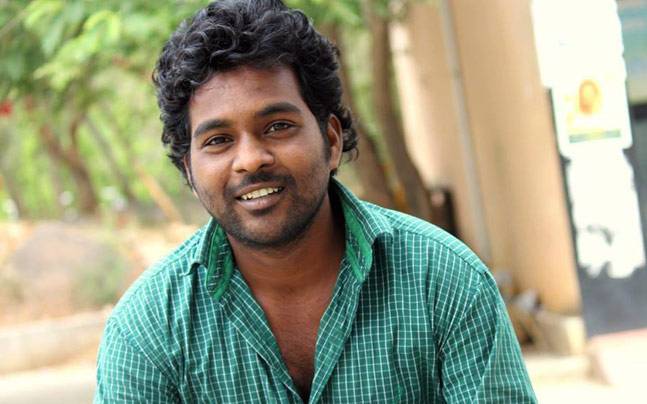
By Suchitra
-January 17, 2020
The whole country shook in 2016, when Rohith Vemula, a brilliant PhD scholar was institutionally murdered for standing up against the casteism of the Chancellor of the University of Hyderabad. Rohith Vemula, a Dalit student and a PhD candidate, had been suspended along with four others after a complaint by the local unit of the Akhil Bharatiya Vidyarthi Parishad (ABVP), the student wing of the BJP.
He was constantly questioned on his caste, and his abilities were never trusted with because it was assumed that he was not ‘meritorious’, something that Savarna discourse still doesn’t address.
Unfortunately, due to systemic injustice and institutionalised bigotry, Rohith Vemula wasn’t the first person to be institutionally murdered, hundreds were before him, and after him there were several. Yet there’ll always be a time pre-Rohith Vemula and post-Rohith Vemula in memory, because his funeral brought the casteism in campuses into mainstream media. His death had caused protests and outrage across India.
YET THERE’LL ALWAYS BE A TIME PRE-ROHITH VEMULA AND POST-ROHITH VEMULA IN MEMORY, BECAUSE HIS FUNERAL BROUGHT THE CASTEISM IN CAMPUSES INTO MAINSTREAM MEDIA
His suicide note said:
“The value of a man was reduced to his immediate identity and nearest possibility. To a vote. To a number. To a thing. Never was a man treated as a mind. As a glorious thing made up of star dust. In every field, in studies, in streets, in politics, and in dying and living.”
Post Rohith Vemula: Has anything changed?
Even after his death, there hasn’t been much change.
Even in the University of Hyderabad, where the gruesome incident unfurled, the Vice Chancellor, Appa Rao Podile is still in office.
In December, a month before his suicide, Rohith wrote to the Vice Chancellor of the University of Hyderabad, asking him to give poison or ‘a nice rope’ to Dalit students. In the letter, he identified himself repeatedly as a member of ‘(the) Dalit self-respect movement’ and suggested the persecution on campus for ‘students like me’ was so widespread that the campus should facilitate euthanasia.
“I HAVEN’T SEEN A DRASTIC CHANGE IN ANYONE’S ATTITUDE TOWARDS CASTE OR CASTE-BASED DISCRIMINATION. NO WORKSHOPS OR SENSITISATION PROGRAMMES HAVE BEEN CONDUCTED,” SAID A STUDENT
“I haven’t seen a drastic change in anyone’s attitude towards caste or caste-based discrimination. No workshops or sensitisation programmes have been conducted,” said a student to The Print.
We still see various incidents of institutional casteism. The unfortunate thing is that an issue like this is only brought to the forefront when a victim of institutional casteism dies, which is very upsetting.
Rohith Vemula was murdered at University of Hyderabad, Dr. Payal Tadvi faced somewhat similar abuse at her Mumbai medical college while nineteen-year-old Fathima became the latest victim of this string of institutional murders.
Even after graduation from prestigious educational institutions, Dalit students often come from severe poverty, face prejudice on campuses and experience job discrimination. Such individuals’ ability is always questioned because of their caste despite their success.
EVEN AFTER GRADUATION FROM PRESTIGIOUS EDUCATIONAL INSTITUTIONS, DALIT STUDENTS OFTEN COME FROM SEVERE POVERTY, FACE PREJUDICE ON CAMPUSES AND EXPERIENCE JOB DISCRIMINATION. SUCH INDIVIDUALS’ ABILITY IS ALWAYS QUESTIONED BECAUSE OF THEIR CASTE DESPITE THEIR SUCCESS.
Not long ago the brahmanical faculty at IIT Kanpur held a PhD award from a scientist who happened to belong to the scheduled caste community, accusing the scholar of plagiarism, when everyone knew the senior scholar’s track record as brilliant. His father passed away thinking about the same thing that his son may not be getting his hard earned PhD.
Lessons on disparities in castes start early. In Tirunelveli schools about 400 miles south of Tamil Nadu capital, primary school children wear coloured wrist bands to signify their castes (Janardhanan).
The ‘merit’ claim has always been forced down the throats of those who supported reservations or affirmative action whenever the marginalised have lifted their voices against questions of equal opportunities in education. The ‘merit’ vouched for by the established order, died along with S Anitha, a student who scored 98 percent (1,176 marks out of 1,200) in her plus two examinations. Anitha, a Dalit, was the daughter of a daily wages manual labourer and had hoped to become an MBBS practitioner. She was also one of the petitioners who moved the courts to scrap National Eligibility cum Entrance Test (NEET) which was deemed pro-urban, pro-coaching and discriminatory towards the Central Board candidates.
A student from Tirupur committed suicide in May 2019, barely hours after the NEET results were announced. S Ritusree, who was only 17 years old, committed suicide by hanging in her room, and was declared dead at the hospital. She had scored 98 per cent in her 12th board exams. It came two years after the suicide committed by S Anitha.
Discrimination based on caste impacts students even at India’s flagship medical school, All India Institute of Medical Sciences (AIIMS). In 2006, the allegations of caste-based violence against oppressed AIIMS students were investigated by a government Committee. Some of their results include teachers deliberately ignoring students because of their caste background, examiners asking students about their caste, students from the upper caste pressuring students from the lower caste to transfer to different hostels. Most Dalit students entering higher education institutions are usually learners of the first generation, coming from poor families and often struggling to fit in.
MOST DALIT STUDENTS ENTERING HIGHER EDUCATION INSTITUTIONS ARE USUALLY LEARNERS OF THE FIRST GENERATION, COMING FROM POOR FAMILIES AND OFTEN STRUGGLING TO FIT IN.
Dr. Payal Tadvi, a junior doctor who committed suicide after caste-based harassment, had been denied compulsory medical leave. Despite the terms, accused physician Bhakti Mehare refused Tadvi’s leave and taunted her with caste based insults for trying to avoid duties. She has blamed her seniors Hema Ahuja, Bhakti Mahare and Ankita Khandelwal in a note retrieved from Tadvi’s phone. Seven months before this, she had confided to a friend that three college seniors bullied her, subjecting her to casteist slurs and other forms of caste violence. Tadvi’s experience of bullying, humiliation and abuse would culminate in her being institutionally murdered in her hostel room at her college. She was a member of the Muslim community of Tadvi Bhil, a Scheduled Tribe, and would have been the first doctor from her community in 80 years, lost to institutional casteism.
SHE WAS A MEMBER OF THE MUSLIM COMMUNITY OF TADVI BHIL, A SCHEDULED TRIBE, AND WOULD HAVE BEEN THE FIRST DOCTOR FROM HER COMMUNITY IN 80 YEARS, LOST TO INSTITUTIONAL CASTEISM.
Fathima Lateef, 19, was a bright student. A humanities program undergraduate at IIT Madras, she was murdered institutionally as a result of harassment. Twenty-five people, including professors and students of IIT Madras, are on the inquiry radar of the police. “Harassment and caste discrimination had forced my daughter Fathima to take the extreme step,” Fathima’s mother had said after the suicide.
These institutional murders represent the problem with casteism in institutions in that despite reservation ensuring reserved seats for the marginalized, society still is not equal.
Can the HRD ministry answer as to what it did to the investigation in the murder of Rohith Vemula? What happened in the case of Dr. Payal Tadvi? Which happened to the disappearance of Najeeb? And what is the latest update in solving Fathima Latheef’s murder? These are structural issues, and they must be taken seriously. If our institutions become killing fields of scholars from Dalit, Adivasi and Muslim communities then it’s time to look at their hierarchy seriously. Are there teachers in these institutions from these sections? Are there ample students in these sections? Is there appropriate percentage of representation from their communities? If not, then why? There are absolutely no redressal mechanisms to anyone facing institutional casteism.
But despite the outpouring of sympathy for Rohith, the mainstream narrative shows no support for the movement, media still uses the words ‘suicide’ and not ‘institutional murder’. There is no joint call for action to address the issue at hand other than omnipresent solidarity. Ignorant savarnas continue to throw around terms like caste-blind, acting as though the lives and struggles of Dalit people are research proposals for them to dissect and discuss.
Dalit-Bahujan-Adivasi-Muslim students stay outside a particular domain or are unable to join other classes; they are able to enter the Brahmanic groups, such as societies and student associations, they are alienated, discouraged and driven to suicide. Many of us, even those who are well-meaning, are waiting for a murder to show our outrage and anger, no matter how ridiculous and futile it is then. Yet caste is around us, in everyday life. It is up to the rest of the student body to rise in indignation as Dalit students are humiliated in class, made to sit apart, failed in exams, ridiculed in interviews and their spirits shattered; institutional casteism must be addressed properly.
ROHITH DID NOT STICK BY WHAT WAS EXPECTED OF HIM BY BRAHMINICAL NOTIONS: HE WAS A DALIT BUT REFUSED TO BE A VICTIM.
Rohith was beyond his caste. He was an educated and strongly expressive student leader who was prominent and conscientious of various social injustices. He was a talented academic, gaining entry to a prestigious graduate science program and a highly competitive fellowship for national research. Rohith was admitted by general admissions and not by reserved seat. Politically and socially conscious, Rohith did not stick by what was expected of him by brahminical notions: he was Dalit but refused to be a victim.
Share this:
Subscribe to:
Posts (Atom)