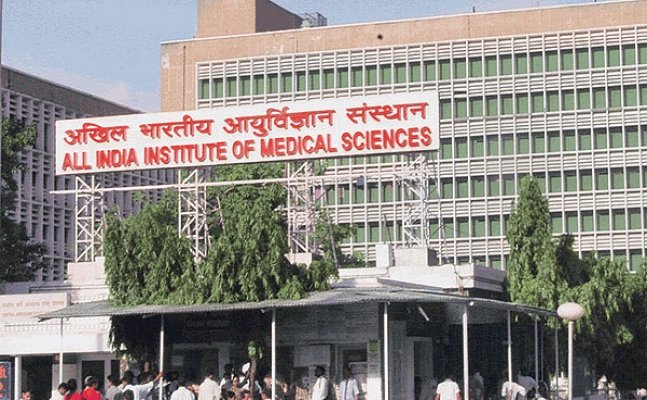
I have a Solution that will reduce pressure on IIT aspirants but do not know how to get this across to HRD Minister of India. Suggestions are welcome. - Ram Krishnaswamy

Search This Blog

Wednesday, June 24, 2020

On the e-book 'Young Mental Health' - The Hindu,


On the e-book 'Young Mental Health'

Anwesh Pokkuluri
JUNE 23, 2020 11:41 IST
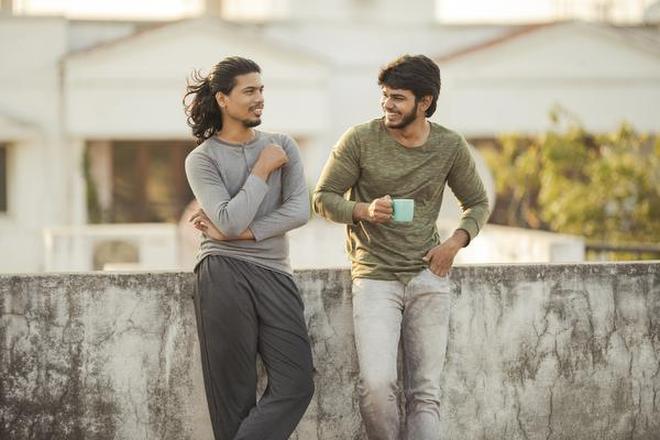


Reach out to your friends 
Photo Credit:  VSanandhakrishna

By talking about what is bothering us, we take away its power to control us. 

Weeks before the Supreme Court’s landmark judgement on Section 377, a young man shared his journey, now published in the e-book 
‘Young Mental Health’

Trigger warning: Suicidal ideation

The first time I came out to a friend (a day after I had come out to my junior in reciprocation), we were in a class together, I scribbled on a paper that I was not straight and started crying. He told me it was okay and hugged me after the class which felt very comforting. I came out to a few close friends after that, all of them received it well and offered any support I needed. I came out to my parents in November 2015 and started coming out to more of my friends and colleagues after that. A common response from my parents and some of the friends was, ‘You could have told us what was going on much earlier instead of going through it alone all these years.’

I realised that it was true, that I could have shared this truth with someone much before and even if they had not known how to accept it, it would have at least given me space to talk about it instead of having to struggle to find strength to deal with it all alone.

And the first time I talked about my mental health was at work with a colleague (July 2015). I had severe suicidal ideation one day... I needed to distract myself and at that point I didn’t know how to lie anymore so I took a colleague out and told her what had just happened. She talked me out of it for the time being and I visited a psychiatrist after that.

In my experience, many of the times I confided in someone about my mental health, more often than not, people could relate to what I was saying and narrated their own experiences of loneliness or the feeling of hopelessness, and also expressed how lonely it feels in those times. Many of these times, people thanked me for being vulnerable around them and said it encouraged them to open up about their own struggles. How relieving it feels when you see you’re not alone! It feels like when we share our story with someone, we take on some of their strength as well to fight our battles. It’s not as tiring when we don’t have to fight alone.

That’s why if there’s anything that I can advise my younger self, it is to talk. We’re only as sick as our secrets, and by talking about what is bothering us, we take away its power to control us. Be it sexuality or mental health, I wish I had opened up sooner.


The following are words from a Netflix special called Nanette by an Australian stand-up comedian Hannah Gadsby (who is queer as well and talks about mental health):

‘Stories hold our cure. I just needed my story heard, my story felt and understood by individuals with minds of their own. Because, like it or not, your story... is my story. And my story... is your story. I just don’t have the strength to take care of my story any more. I don’t want my story defined by anger. All I can ask is just please help me take care of my story. Do you know why we have the sunflowers? It’s not because Vincent van Gogh suffered. It’s because Vincent van Gogh had a brother who loved him. Through all the pain, he had a tether, a connection to the world. And that... is the focus of the story we need.’

To sum up, I would advise anyone who’s feeling a lack of safety (including my younger self) to look out for people who value authenticity and can handle being vulnerable, and share their stories. More often than you’d think, you’re met with understanding, comfort, relief, connection, strength. Also, we can all be vulnerable about our struggles in our everyday lives, which can create a safe space for everyone.

...I’ve been going to my current therapist for three years now. We’ve identified that I have accumulated layers of trauma, my own and intergenerational — my parents’ inter-caste marriage and my mother’s family disowning her, me growing up gay in denial, the sudden death of my brother, unhealthy relationships. My therapist made me see how I didn’t give space to myself to process the grief of my brother’s death because I was worried about how my parents were handling it and that I had to be there for them. In the process, I forgot how to emote and everything became cognitive.

My therapist started with how to identify emotions and feel them in real time, we’re now working on how to change thought patterns, and how to unlearn unhealthy coping mechanisms — some of them like fight, flight, fawn (people pleasing in order to deflect from letting myself feel), freeze (dissociate, again to distract from feeling). We’re working on cultivating radical acceptance towards trauma.

When I first started going to therapy — and I notice this among a lot of other people as well — I wanted a quick fix to my ‘negative’ emotions which had started to feel overwhelming. I believed that once I stopped feeling sad or afraid or angry, everything would work out great.

Thinking we, or our emotions, need fixing feeds into a loop of believing we are broken in some way. And this not only doesn’t help in our healing but also sets us on a pattern of new maladaptive mechanisms. Especially for those of us young people who have not felt adequate sense of safety while growing up and picked up unhealthy patterns in our formative years, we may question comfort and love in our later relationships, and are prone to stay in abusive relationships. It’s imperative we hold space for ourselves and form support systems.

Anwesh Pokkuluri is an IIT graduate who took on the broader legal system, leading a group of other IITians to file a petition against Section 377 in the Supreme Court. In Young Mental Health, Pokkuluri builds on his story shared with The Health Collective, a space for conversations around mental health.

If you are in a crisis and feel suicidal, call Sneha at 044-24640050.

Excerpted from Young Mental Health by Amrita Tripathi and Meera Haran Alva (Simon and Schuster), available on Amazon.in and Healthcollective.in

Sunday, June 21, 2020

Mental health is a collective responsibility: The person is not the problem - INDIAN EXPRESS


Mental health is a collective responsibility: The person is not the problem

Imagine: We have created the toxic society in which young people are struggling to survive.


Written by Shelja Sen | New Delhi | Updated: June 21, 2020 9:45:50 am


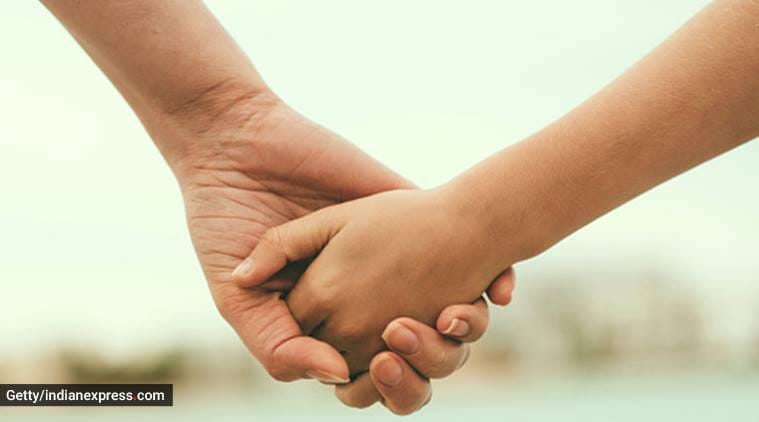
XReach out, hold tight: We need to reflect on how to help each other overcome mental-health impediments. (Source: getty images)

Right from an early age, we are recruiting our children into believing that there is one right way to live their life. In a talk or in a workshop, I generally ask the audience if they know somebody who has experienced mental health struggles. Some hands shoot up right away, then others start raising their hands tentatively, looking around and taking solace in the sense of solidarity until all the hands go up. Then, I make it a little more difficult and check if they know somebody who has dealt with suicidal thoughts. Majority of the hands go up again. It is all around us — in our homes, our schools, colleges, workspaces, public places — staring back at us, asking us to look, listen. But we turn away, leaving them with their silences. Maybe sometimes, that silence and shame becomes too much to live with. It takes the death of a public figure to remind us how much mental health matters. For the coming weeks, there will be a flurry of Instagram, Facebook and Twitter posts by well-meaning people, but then it will all go away, as it generally does. Do we realise how difficult it is for people living with depression or anxiety to be their own advocates at every step, especially when they have been convinced that something is inherently wrong with them — that they are the problem?

The person is not the problem, the problem is the problem

Right from an early age, we are recruiting our children into believing that there is one right way to live their life. They are constantly struggling against the illusionary yardstick of success. They are being sold the idea that the higher they go, the better they will be. But then they wonder why every rung up leads to more misery? Off-the-chart suicide rates of IIT aspirants in Kota coaching centres should shake us out of our collective stupor of what we see as the making of a “good life”. A study conducted by Assocham in 2018 found that 42.5 per cent of employees are struggling with depression and/or anxiety in their high-pressure jobs. They possibly climbed the ladder of success and security to find it is a myth. They have internalised the propaganda that the only way they are worth something is if they get into a good college, “be productive” and get into a financially stable career. Therefore, it is no surprise that the chilling statistics indicate that one in four young persons is struggling with depression or anxiety and that India tops the world in youth suicide.

Read| Imagine: It’s our society that is broken, not our kids

The person is not the problem, the problem is the problem, and the problem is social!*

Shiv is a young man I met who had been lured into the society’s idea of success. In our discussion, he started realising that his company’s work culture of constant pressure, of “never being good enough” was pushing him into depression. As we unspooled this problematic notion of success, he realised, “My life can’t be just about meeting the next target, pay my bills and die.” He renegotiated his purpose in life, had a clear chat with his boss on what he would be able to deliver and started doing things that aligned with what he valued the most. For example, getting together with his old band and jamming every weekend and not “wasting precious hours of my life thinking of how to get ahead.”

There is much talk about the “epidemic” of mental health problems reaching unprecedented proportions. We have been made to believe that it can all be understood as “chemical imbalance” but that does not hold much water in the face of growing research and begs the question, “Who has a chemically balanced brain and what does it look like?” To the point of being provocative, I can say it is pretty fictional and not helpful as it locates the problem within the person. It is an extremely complex problem within our socio-cultural context which needs a nuanced understanding. Our identities are formed at the intersection of gender, sexuality, age, caste, class, religion, looks (let’s not underestimate the demand for “fair & lovely”) and the most important of it all — social acceptance and social success. Mental health problems as chemical imbalance absolves us of the collective responsibility we need to take as adults. This pushes us to think it is not our problem and we end up making the problem individualistic, leading to, what I call, the 3 Ds.

Dismissal — trivialising the problem with normative judgements such as “Stop complaining all the time”; “This is so silly”; “You just need to be stronger”.

Defining — making the problem the single story about them — “I don’t think you will be able to do much in life if you are so weak.”

Dumping — mental-health problems hide issues of gross social injustice. For example, women being diagnosed with depression when they react to marital abuse, young girls who feel rejected and suicidal as they do not fit the rigid definition of “fair & lovely.” Their mental-health problems are just a mirror of a society that is unfair and damaged.

Sometimes, all people need are these simple messages:

“I see you” “I hear you” — People are multi-storied so let’s not define them by single stories of “failure” and “unworthiness.” This does not mean we have to “be positive” and “look at the silver lining” as that can be quite dismissive. It means to listen to their problems and also keep sight of their stories of courage, hopes and dreams.

“Tell me how I can help” — We might not know what to say or do, so asking might help. It is easy to get into the “let’s fix it” or advising mode but step back from it, as it might stop them from accessing their own skills and abilities to find their solution. “I have your back” — If each person knew that there is somebody out there who will accept them the way they are no matter how damaged they are feeling.
It is not a mental-health problem but a problem of social justice

As a narrative therapist (Narrative Therapy was pioneered by Michael White & David Epston), I strongly believe that the solution is not an individual’s or a family’s responsibility. It is a social problem, and, therefore, we need to take the lens of social justice. There is an old legend-now-turned-to-a-metaphor that canaries were sent down into coal mines to test for gas leaks. Our young people are the canaries of our present time. We have created the toxic society in which they are struggling to survive. Maybe, this pandemic is an opportunity for us to let go of the deadwood of social expectations of success and carve out something new collaboratively. Rather than quick solutions, here are some questions we can reflect on:

What do you think are the social beliefs and norms that contribute to the rising mental health problems?

How fair are these social norms and expectations?

In what ways can you resist these expectations and support others?

We need nothing short of a social movement to make this happen. We have lost too many lives and too much time. Nobody is going to come and sort this out for us. We have to do it ourselves.

*Quoted by David Denborough, narrative practitioner, in a workshop

(Dr Shelja Sen is a narrative therapist, co-founder Children First, writer, and, in this column, she curates the know-how of the children and young people she works with. Write to her shelja.sen@childrenfirstindia.com)

Saturday, June 20, 2020

Student suicide rising, every one hour one student commits suicide in India


Student suicide rising, every one hour one student commits suicide in India

In Indian states, Maharashtra has the highest number of suicides in 2018 with 1448 with an average of 4 suicides every day.
By TPT Bureau | Agencies
-June 19, 2020


According to NCRB (National Crime Records Bureau), every hour, at least, one student commits suicides and 28 suicides each day are recorded on an average. Its data shows that 10,159 students died by suicide in 2018 with an increase from 9950 cases in 2017, and 9478 in 2016. In Indian states, Maharashtra has the highest number of suicides in 2018 with 1448 with an average of 4 suicides every day.

“Live a little every day, ek hi zindagi mili hai”, you have got only one life, this is the abstract of the eight-page long suicide note written by a deceased postgraduate student at IIT-Hyderabad who was found dead on July 2 last year in his hostel room.

Pressure Comes from Different Sides

It might be easy for others to say that “coward” people do suicide, they don’t think about their family or anyone but it is the worst kind of feeling which only the sufferer may experience. There are many reasons for students to be under pressure and that pressure somehow becomes unbearable for them. Education is the point that tops the list of pressure. For instance, in April last year, 19 students in Telangana committed suicide a week after the exam results were announced. In 2018, 12 students including six girls ended their lives a single day after the release of the board exam’s results. Taking the recent cases into consideration, on 18th June 2020, two inter students committed suicide in the state on Thursday.

According to an interview given by a psychiatrist Mr. Murgesh Vaishanv “Stress, anxiety disorder, depression, personality disorder- all these things result in mental illness that leads a student towards suicide. This happens when the students are not familiar with/satisfied with his or her surroundings”. Although fight or argument in friendships and relationships is also a prominent reason for having these feelings.

Two Persons can Save Each Other
Now, why do they do suicide? There are so many people around everyone and hardly anyone is alone nowadays, then why these types of cases are increasing. If we hear to Md. Sanjeer Alam, “A student commits suicide when he does not get emotional support at the time of stress or anxiety. This might happen when individual expectations are too high. Parental and peer pressure also have an adverse effect”.

In 2017, a survey report was released by Lokniti-CSDS released a survey that states that one out of every fourth youth moderately suffered from depression, loneliness, worthlessness, and suicidal thoughts. It also states that four out of every 10 people are going through depression.

Now, the question which arises here is, why are the number of depressed people in our country shooting up? Why are very much busy in our lives that we do not have time to listen to the other person or at least say to them that ‘you can tell me, I am here’. According to doctors, and psychiatrists depression, anxiety, and other mental issues can be tackled at home and will never even raise if we talk to our parents and friends

Author
Kanupriya

Publisher Name
THE POLICY TIMES

Publisher Logo

Thursday, June 18, 2020

The futile search for rationale in the act of suicide,


The futile search for rationale in the act of suicide
By Bhavdeep Kang

Suicide seems irrational, inexplicable, illogical. We are wired to look for meaning, because without it, there is only chaos.


Pixabay

Suicide is a paradox. An act where the victim and perpetrator are one and the same, where an organism hardwired for self-preservation chooses to self-destruct. An act which evokes paradoxical feelings of empathy and alienation. Empathy, because deep down we are all capable of self-harm, and alienation, because it defies our most fundamental evolutionary instinct, to survive.

The solitary nature of the act, in a species designed for social behaviour, makes it still more disturbing. We search obsessively for rationalisation. In the absence of closure in the form of an explanatory suicide note, we look for triggers: a former lover, a sadistic employer, a band of cyber-bullies, or a demanding family; financial ruin, public humiliation, ill-health or an altruistic motive. Sometimes, our survivor's guilt and anger at the pointless waste of a life is misdirected and we lapse into scapegoating.

The tragic death of actor Sushant Singh Rajput has opened the floodgates to recriminations. Bollywood's power elite has been castigated on social media for allegedly ill-treating the young actor and sabotaging his career. The outsider versus the establishment narrative has caught the imagination of the Twitterati, prompting certain members of the Bollywood aristocracy to hit back.

Assigning blame is a desperate effort to make sense of a senseless act, but is itself illogical. Every profession has its bullies and exclusive clubs that make outsiders feel unwelcome. Why should the entertainment industry be any different?

Many young outsiders like Rajkumar Rao, Nawazuddin Siddiqui, Ayushmann Khurrana and so on, have made their mark in Bollywood in recent years. Granted, they may not command the big budgets and massive fees that the more well-entrenched stars enjoy, but have achieved tremendous success nonetheless. Perhaps they were fortunate and did not provoke the ire of the brat-pack, or perhaps they didn't care two hoots if they did.

Which brings us to the question of being “strong enough” to withstand the slings and arrows of an unkind world. The suicide victim is characterised as “weak”. The premium on strength is ritualised in various ways. In certain communities, running the gauntlet of physical or verbal abuse is a rite of passage. Witness the hazing that newcomers in college go through, before they are accepted as members of the student body. Sadistic ragging has claimed more lives than we care to acknowledge and to describe the victims as weak is to add insult to injury.

Depression does not discriminate between the so-called weak and strong. It knows no boundaries of age, class, gender or education. It could be induced by psychological or physiological (as appears to have been the case with Sushant Singh) factors and aggravated by stress, which in turn may be caused by any number of things: professional setbacks, social isolation, etc. It is hard to determine how a melancholic train of thought is set in motion and where it leads.

Few of us can claim never to have experienced depression, however fleetingly. Who can forget the violent emotional storms of adolescence? Many of us, in the throes of a broken relationship, will have had dark thoughts and vague ideas of ending it all. A minority may have escaped the plunge into despair altogether, but most others will have confronted the dark side and survived, congratulating themselves on their strength of mind. The truth is that they are more lucky than strong.

Depression is a condition with potentially serious outcomes, like diabetes or heart disease. Precautionary measures and/or medication are just as necessary. To treat it as a form of self-indulgence or weakness is like a heart patient shutting out the necessity of exercise and a controlled diet. Sadly, the cultural emphasis on mental strength may prevent the victim from reaching out for help when they needs it most.

Family, friends, spiritual advisors and mental wellness professionals can play a critical role in keeping depressed individuals from falling off the precipice. Everybody needs someone to reach out to at any time, for any reason. The “3 am friend” is a necessary feature of the modern urban family, a tribal unit not necessarily related by blood. But no matter how strong the support structures are, they may not always succeed. It is all too easy to confuse self-pity with depression and tell our friends to “get a grip” or “snap out of it”, thereby aggravating the problem.

Every 40 seconds, someone, somewhere in the world, commits suicide. More lives are lost to suicide every year than a whole decade of war and terrorism. Our response to news of suicide is visceral, particularly when the victim is an apparently healthy and successful youngster. It seems irrational, inexplicable, illogical. We are wired to look for meaning, because without it, there is only chaos. So we try to solve the unsolvable. But some questions don't have answers and all we can do is to try and ensure it doesn't happen to someone we know.

The writer is a senior journalist with 35 years of experience in working with major newspapers and magazines. She is now an independent writer and author.

Wednesday, June 17, 2020

Governments pass the buck of suicides, every time - QRIOUS

16JUN, 20

Governments pass the buck of suicides, every time

Apart from the occasional uproar that we witness when a famous personality has committed suicide, we as a society seldom talk or discuss or take enough measures to at least minimize the suicides that are happening in our country.

BY QRIUS


by Dr. Sipoy Sarveswar

The recent news on the suicide of Sushant Singh Rajput has come as a shock for the whole country. Celebrities have expressed their shock and condolences on the demise, from politicians to Bollywood’ fraternity’ and cricketers. His close friends have blamed themselves for not being able to render emotional support to him to battle his depression and mental health issue. It took us one more celebrity suicide and demise for the celebrities and millennials to acknowledge that mental health issues and depression are real and that there is dire need to reach out to the people who are close to us. Another set of friends, as well as the critics, has blamed the Bollywood ‘fraternity’ for not recognizing and seeking measures to reach out to their ‘community’ of actors.

On similar lines, last year, in July, Cafe Coffee Day founder and VG Siddhartha- a business tycoon allegedly committed suicide because of the financial problems and setbacks. 

The two deaths of famous and well-established personalities also triggered the debate around mental health and depression as potential reasons for suicides. Suicides are a peculiar problem that haunts academicians as they couldn’t decipher potential established patterns that one can observe and pose a remedy of the situation as an attempt to prevent suicide. Every suicide seems to pose a unique pattern that cannot be collated and used to avoid the suicides, possibly.

Apart from the occasional uproar that we witness when a famous personality has committed suicide, we as a society seldom talk or discuss or take enough measures to at least minimize the suicides that are happening in our country. 

According to Accidental Deaths & Suicides in India (ADSI) (2018) report published by National Crime Records Bureau (NCRB), Ministry of Home Affairs, GoI, in the last five years (2014-2018) the total number of reported suicides are 6,60,700. However, the other independent organization estimates a much larger number of suicides than the ADSI reported data. According to the report each day, there are 362 suicides reported in these past five years, which is, for every hour, 15 people committed suicide.

But who are these people committing suicides? 

In the total number of reported victims of suicide, 22.4% are Daily wage earners, 17.1% are housewives, 9.8% are Self Employed, 9.6% are unemployed, 7.7% are in the farming sector, and 7.6% are students according to the ADSI (2018) report. 

Farmers’ suicides are a recognized problem because of the agricultural distress and the respect we hold for our food producers. However, there are no substantial measures taken to prevent even the farmers’ suicides, apart from states coming up with monetary compensation for the victims of suicide in the farming sector. On 2nd January 2018, the then Minister of State for Home Affairs replied to the lower house of Indian Parliament that almost 26 students committed suicide every day (more than one student committed suicide every hour). Nearly 75,000 students are victims of suicide from 2007-2016.

After the rise in student’s suicide in IITs, IIT Madras, IIM Kashipur, and a large number of student hostels, Kota in Rajasthan, installed or contemplated to use ‘Fan Bush Protection Device’ to prevent these events. This device would not withstand the weight of more than 40 Kilos if students tried to hang themselves. One of my friends in IIT Hyderabad informed me of the institutes’ measures to remove one or two bolts that hold the door, which will help break the door quickly in case of a suicide. During discussions with my friend, he drew an analogy that we are in the habit of cursing someone if they happen to come under the wheel of our vehicle, saying, ‘did you get only my vehicle to die for?’. We are culturally trained to not to see the larger picture but to have an objection to someone dying in front of our vehicle. The educational institutes and system are trying to do the same by not addressing the issue holistically but coming up with measures to stop suicides in their respective institutions. If only all the academic knowledge is mustered and put to use to minimize the student’s suicides, maybe we will not be reported as a country with the highest suicide death rate in the world.

The general arguments that propel in the buzz of a famous personality’ suicide can be categorized as 

Individual’s problem- Asking those who are depressed to reach out to the people and not to commit suicide. Ironically the people who are going through depression may not realize it, and the conditions we have successfully created in the society may not give them the confidence to reach out for help. 

Society’s (community) problem- These sets of arguments (a) blame themselves for not able to provide emotional support. (b) Blame friends, relatives or the ‘imagined’ community such as film, media and academic fraternity and so on, for not able to either reach out personally based on their personal relationship or not able to create a conducive environment as the community that would have prevented the suicide of the person. Or (c) Advocate to reach out to friends and family or to create a society that will not stigmatize mental health issues and provides an opportunity for the depressed to reach out for help without being judged.

It is appalling to see how the State and the free-market Capitalism induced neo-liberal economic policies and systems are always gone scot-free without being held accountable for by the members of the society. 

As Yuval Noah Harari (2011) argues, the systematic intervention of state and market in the lives of individuals distanced family and community influence from the individual’s life. The state and market dictate every aspect of our lives. It commodifies necessities such as education, health, and water. 


Crony capitalism influenced state policies
Weakens the labor laws
Exploits our natural resources
Pollutes our environment
Creates unliveable situations
Taxes us heavily
Widens the economic inequalities
Leads towards privatization and commodification of education
Sells us unachievable dreams
Keeps us in the limbo of unhappiness
Creates economic, social and job insecurities
Make us adopt uncertainty as a part of our culture

Then all of a sudden, when suicides happen, the state and market don’t own any responsibility and pass on the buck to the individual and community in the name of mental health and depression.

To make some sense, let’s use the language of the market and state here for a minute. Hypothetically, imagine a Boeing 777-300 ER with a seating capacity of 345 passengers crashing every day in a year. How would State, Market, and individuals in the society react? They would want the government to take responsibility and resolve the issue. The number of passengers mentioned in the above hypothetical situation is lesser than the number of suicides reported per day by the ADSI (2018) report.

There is a dire need for our all-powerful market controlled state to start owning up the responsibility (if not all of it) to address this issue, which the country suffers. I also acknowledge the importance of the role of the community in addressing this issue. Mental Health issues are real, and depression is not a matter of joke. Still, without addressing the problem holistically from all possible angles, we may not potentially resolve this issue and minimize the instances of suicides in India. If we fail to collectively pressurize our government to provide concrete solutions in addressing this issue, the suicides are going to be part of our daily reality. A famous person’s suicide is going to be fodder for our social media updates in the momentary buzz, creating a mere chance to express our shallow solidarities with the victims of suicide and in continuing to add useless analysis and news in the media outlets.

This article was first published in The ArmChair Journal

Wednesday, May 13, 2020

Indian Man Kills Pregnant Wife In Murder-Suicide In New Jersey,


Indian Man Kills Pregnant Wife In Murder-Suicide In New Jersey


NEW YORK – A 35-year-old Indian woman, who was five months’ pregnant, was found murdered in her apartment and her husband was found dead in an apparent murder-suicide. The husband Man Mohan Mall’s body was found in the Hudson River.

Garima Kothari, a chef, was found unresponsive with trauma to her upper body on April 26 by Jersey City police officers, the Hudson County Prosecutor’s Office said.

Following an autopsy by the Regional Medical Examiner, Kothari’s death was ruled homicide. She suffered multiple injuries in her upper body.

Kothari’s husband Man Mohan Mall (37) was found dead in the Hudson River in Jersey City. According to a report in the Daily Voice, Kothari was a talented chef and Mall was an alumnus of the India Institute of Technology (IIT).

Tuesday, May 12, 2020

Lockdown misery and death for migrant worker


A worker on condition of anonymity said, the deceased was upset after construction stopped on March 25 and he was missing his wife and children.

Published: 12th May 2020 09:09 AM | Last


For representational purposes
By Express News Service

BHUBANESWAR: It was poverty and joblessness that had driven the 29-year-old labourer from West Bengal’s Malda district to the seemingly greener pastures of Odisha three months back. Now, his dreams along with his body lay buried even as migrant workers of the country experience the biggest crisis of recent history.Employed at a construction site in IIT-Bhubaneswar, he was found hanging at an under construction building on the campus under Jatni police limits on Sunday morning. The police investigation suggested the worker committed suicide.

A worker on condition of anonymity said, the deceased was upset after construction stopped on March 25 and he was missing his wife and children. “He spoke to his family members three to four days back on video call. He used to frequently tell us that he wanted to return to his village and also went with a group of workers to meet their employer recently requesting to facilitate their return,” he added.

The deceased was observing fasting (roza) during the holy month of Ramzan and he did not return to his bed on Saturday night. When his associates woke up in wee hours of Sunday to have pre-dawn meal (sehri), they found him missing. He was later found hanging in an under-construction building on the institute campus.

His body were sent to his family members back home on Monday. The police directed the workers’ supervisor to buy a coffin to transport the body in an ambulance and a same was bought for `5,500. At least three associates of the deceased hailing from the district handed over his mortal remains to his family on Monday morning and later, they were sent to a quarantine facility by the authorities there.

“There are about 1,000 migrant workers staying in three different colonies on IIT campus and they are natives of different states,” said an electrician, Salman Khan of Uttar Pradesh’s Maharajganj district. Khan said their employer is giving them `400 to `500 per week and they were purchasing ration from it but the amount is not sufficient for many labourers, who are staying here with their families.

A tiles mason, Anikul Hassan of West Bengal’s Murshidabad district, said their employer assured that the work will commence few days after the first phase of the lockdown but construction work started only after May 3.

Monday, May 11, 2020

Migrant worker, stuck on IIT-Bhubaneswar campus due to lockdown, ends life


Migrant worker, stuck on IIT-Bhubaneswar campus due to lockdown, ends life

The deceased mason and other members of his group reportedly had an argument with their employer a few days back over making arrangements for their return to their native villages.

Published: 10th May 2020 05:44 PM | Last 


IIT Bhubaneswar. (Photo| Facebook/ IIT Bhubaneswar)
By Express News Service

BHUBANESWAR: A migrant worker allegedly committed suicide at an under construction building on the campus of Indian Institute of Technology's (IIT) campus Jatni police limits late on Saturday night.

Police confirmed that a migrant worker hanged himself. However, they are yet to ascertain all the other details, including the name and address of the deceased.

Sources said the deceased, who was working as a mason, was a native of Malda district in West Bengal. He was reportedly upset as there was no work in the institute after the nationwide lockdown was imposed on March 25 leaving him with very little money. The deceased is survived by his wife, two daughters and a son.

The deceased mason and other members of his group reportedly had an argument with their employer a few days back over making arrangements for their return to their native villages. The police had to step in to resolve the matter.

"There are about one thousand migrant workers staying in three different colonies on IIT campus and they are natives of different States," said an electrician, Salman Khan of Uttar Pradesh's Maharajganj district. Their employer was paying them Rs 400 to Rs 500 per week and they were purchasing ration using that money. The labourers who were living with their families soon fell short of money.

A bus from Bihar reportedly carried the workers stuck here on Saturday.

"In our group, there are seven persons and the employer turned a deaf ear towards our request of arranging a bus saying that a passenger vehicle cannot be arranged for such a small batch," said Khan, adding that there are also many workers from Uttar Pradesh, who are staying in other colonies on the campus.

Khan and his group are not arranging a private vehicle as it would cost a lot to each one of them and they alleged that they were also not able to take the help of the State Government due to the restrictions on not leaving the campus.

A tiles mason, Anikul Hassan of West Bengal's Murshidabad district, said their employer assured that the work will commence few days after the first phase of the lockdown was imposed in March but so far the construction has not started.

"Our employer is telling us that West Bengal Chief Minister Mamata Banerjee is not allowing migrant worker's entry into the State. We are running out of money from the last three months and now we are desperate to return and meet our families for Eid," he added.

Meanwhile, the police said they have registered a case of unnatural death and further probe into the matter is on.

Friday, May 8, 2020

Operation Eklavya in Action at Premier Institutes


Operation Eklavya in Action at Premier Institutes

India is neglecting caste-based discrimination in higher educational institutions at its own peril.

Subhash Gatade
07 May 2020


It was exactly 13 years back that the Thorat Committee, constituted in September 2006 to enquire into allegations of differential treatment of Scheduled Caste and Scheduled Tribe students at the premier medical institute, AIIMS—was released.

The first of its kind in independent India, this three-member committee led by then chairman of the University Grants Commission, Sukhdeo Thorat, had looked deeply into the many shades of discrimination faced by students of non-elite castes in the institute.

What it discovered after talking to students and faculty was, to say the least, shocking. Some 72% of SC/ST students mentioned facing some discrimination during the teaching sessions. 

Second, caste-based discrimination was prevalent in the hostels, for instance around 88% students reported experiencing of social isolation in various forms. The committee’s report also outlined the discrimination faced by SC/ST professors.

This context frames the alleged suicide attempt of a female doctor a fortnight ago in the same institute. The doctor, who worked at the Dental Research Centre of AIIMS, was allegedly facing sexual harassment and caste discrimination. This is another reminder that there has not been a qualitative change in the institute in the long years since the Thorat Committee report.

The report had recommended joint committees of students, residents and faculty to examine the social atmosphere; developing mechanisms to regain social harmony; formation of an “equal opportunity office” to deal with all issues of non-elite caste students; encouraging students of all identities to participate in cultural and sporting activities; creating a roster system for selecting senior residents and faculty. It had also asked that the Ministry of Health should closely monitor how reservation is implemented at AIIMS.

The recent attempted suicide is disturbing, for the doctor had repeatedly written to the authorities, including the Resident Doctor's Association, to examine the issues she was raising. The Association had written to the concerned authorities, including the health ministry, to take necessary action, which was never done.

Question is: was the administration’s inaction a result of caste blindness or deliberate neglect of a marginalised student? Definitely, the callousness of AIIMS’ administration is no exception. 

On 22 May 2019, Payal Tadvi, a promising doctor who belonged to the Bhil-Muslim community, ended her life in a teaching hospital in Mumbai due to ill-treatment by her seniors. The 26-year-old would have become the first doctor from her community, were she still alive today.

Payal had also complained to the management of her hospital about continuous harassment by her elite-caste colleagues, who were her seniors, Hema Ahuja, Bhakti Mehra and Anikta Khandelwal. She had alleged not being allowed to perform surgeries. She had confided in her parents and to her husband Dr Salman Tadvi about this and other harassment.

After Payal had died, Thorat said that the premier institutions are filled with bitterness about marginalised students. “Nearly 25-30 students in the top educational institutes have died in the last decade or so, but the subsequent governments have failed to take any concrete policy decision to end caste discrimination...,” he told the New Indian Express.

The logic of purity and pollution, which is the basis of caste and its exclusions, manifested itself in IIT Madras as well, where separate entrances to the dining hall were delineated for vegetarians and non-vegetarians in 2018. The Ambedkar Periyar Study Circle, a student group within the institute, had brought this issue to national attention. The segregation was withdrawn after tremendous public uproar. “Caste masquerades as something else in ‘modern’ society. In IIT Madras campus, it manifests itself as separate entrance, utensils, dining area and wash area in the mess for vegetarian and non-vegetarian students...,” the students of the APSC said.

In her essay, “An anatomy of the caste culture at IIT-Madras”, Ajantha Subramanian, a professor of Social Anthropology at Harvard University, investigates caste and the notion of “meritocracy”. She notes, “Caste and casteism have shaped IIT Madras for a very long time, generally to the benefit of upper castes”. Until 2008, when a legal sanction was given to reservation of seats in educational institutes for members of the other backward classes or OBCs, the general category made up 77.5% of student admissions. This, as Subramanian points out, indicates that mostly members of elite castes populated premier institutes. She wrote: “Not only students, the composition of the faculty at IIT-Madras is also overwhelmingly upper caste,” she notes, with 464 professors drawn from the general category, 59 OBCs, 11 SCs, and only two STs.

Rohith Vemula’s case was no different. Deeply-entrenched caste prejudices in India’s society and academic institutions, he said, reduced the value of a to his immediate identity and nearest possibility. “To a vote. To a number. To a thing. Never was a man treated as a mind,” his unforgettable and deeply poignant suicide note of January 2016 said.

This promising student of Hyderabad Central University, who yearned to become a science writer and was part of the Ambedkar Students Association, was unjustly suspended by the University in August 2015 after an alleged altercation with Hindutvadis students.

Rohith’s death led to a national uproar and created a pan-Indian student uprising whose focus was on justice for a young scholar’s “institutional murder”. There were demands for a Rohith Act to protect students from marginalised communities in higher educational institutions, much on the lines of the Nirbhaya Act. It was supposed to be an instrument to fight caste oppression and ensure punishment and dismissal of those who discriminate on grounds of identity.

What remains unanswered till date is how many students who could have been role models for their communities and the entire country will have to sacrifice their lives before we rise from our deep slumber. Should not society do a soul-searching for its complicity in these denials, humiliations and deaths. The poet Meena Kandasamy had written after Rohith’s death that the suicide of a Dalit student is not just an “individual exit strategy” but “...a shaming of society that has failed him or her.”

Yet time does not seem to be reducing caste discrimination and oppression, rather it is increasingly being normalised. The arms of the state; the legislature, executive and even judiciary, seem to be wanting on this score.

Caste asymmetries have seen a quantum jump with the ascent of Hindutva supremacist formations. With its ascent to power at the Centre and most states in 2014, the BJP has been “...systematically conniving to dilute existing provisions of affirmative action and legal protection to Dalits.”

The BJP government has diluted legal provisions that are meant to include more Dalits in university appointments, and it did not show alacrity in restoring the Atrocities Act to its original form when it had been watered down by a court order.... Instead, the UGC passed orders that reservations will be based on departments rather than for a university or college as a whole. Following this change in the rules, the advertisement for 52 faculty posts at the Indira Gandhi National Tribal University in Madhya Pradesh, to cite just one of many such instances, had only advertised one reserved post.

The dilution of affirmative action programmes manifests itself in some ingenious ways, which end up reducing the representation of members of marginalised sections in educational institutions. For instance, at the Jawaharlal Nehru University, where a unique reservation system is in place, aspirants from backward districts, and students from weaker sections of society, are included in the rank and file of the institution. However, of late, there has been a qualitative change in the composition of the university. It has been reported that according to the Annual Report for 2013-14, out of the total 7,677 students at JNU, 3,648 (or around half) were Dalit-bahujan (1,058 SCs, 632 STs + 1,948 OBCs). If other deprived social groups, minorities and women are included, the elite-caste and upper class are a numeric minority at JNU, as pointed out by Abhay Kumar, in his 2016 essay, Assertion of Dalitbahujan Discourse in JNU.

But the recent suicide attempt and other changes ever since the university decided to revisit its unique reservation system, this last bastion of representative social composition is also under threat.

The author is an independent journalist. The views are personal.

Saturday, May 2, 2020

“Only community sensitization can curb suicides”


“Only community sensitization can curb suicides”


Photo credit : Dr Uday K Sinha

Pritha Roy Choudhury | May 1, 2020 - 11:45 a.m.

NEW DELHI: According to data revealed by the National Crime Report Bureau, 10,159 Indian students died by suicide in 2018, up from 9,905 in 2017, and 9,478 in 2016. 

Uday K Sinha of the Institute of Human Behaviour and Allied Sciences says educational institutions play a bigger role than any other organisation in sensitizing the community to help curb suicides among students as they can concentrate on individual cases. Talking to Careers360, Sinha emphasized the importance of policy decisions to address the issue.

Why is it that the number of suicides among students in higher education institutions rising in our country?
There are several issues, the main one being the stress that a child undergoes to reach up to a certain level and crack competitive exams to gain entry to an educational institution. The pressure continues both at the academic front and personal front.

Do you think that the victims come from a particular background?

The victim is found to be from a marginalized and disadvantaged community mainly. We should target the actual reason for the rise in numbers. Marginalized communities have lots of issues. They do not have the facilities and social models that the advantaged communities have. Here the disadvantaged continue to remain disadvantaged, those who belong to the creamy layer progress much faster.

What has happened and has been happening is, a child from a particular community, who has been targeted, could not bear the stress and then committed suicide. Educational institutes have tried because they come under the anti-ragging rules, but unfortunately, these continue to happen within the premises of campuses.

There have to be policies that need to be looked into. Reservation is one formula, but that cannot be the only formula. Secondly, sensitivity is essential, as we are becoming very materialistic, and third, the educational institutions also need to be a little considerate within their paradigm. It is not only academic excellence, but their emotional and human aspects are equally essential. Stress management is also very important, which needs to be looked into.

What role can institutions play?
A lot of institutions have started orientation programs in the beginning of the academic session. I remember being called to IIT Roorkee many times for the orientation program, which is basically for the students. In such programs, all such delicate issues are discussed. The students are briefed about what to do and what not to do. Most of the educational institutions also have a student support centre. It may not be a counselling centre. Those from a disadvantaged community require a lot of morale-boosting. Though a lot of educational institutions have started including such programs, there are many more which do not have such programs.

Do you feel that such programs should be conducted regularly and not just at the beginning of a session?

I think the law of the country is that. The UGC and similar regulatory bodies accept that institutions must have such support systems in place. You need to train counsellors for schools and for colleges. It has to be implemented in all the institutions.

Emotional and behavioural issues are very much a part of human being, and they need to be addressed. There are a lot of issues which hampers their academic environment, and they are related to their colleagues as well as teachers.

Is the implementation a problem, then?

To an extent, yes. Professionals are also missing. I would say you need to have a school counsellor and there has to be training for such counsellors. But in our country, there is no scope of training for school counsellors or college counsellors. There are not enough trained professionals at that level. Anybody with MPhil or PhD takes up the job. That should not be the case.

Do you think that there should be a subject on mental health right from school till the completion of education?

Educational institutions have a more significant role to play. The concept of the parent-teacher meeting is basically that. The parents should be sensitized about the child’s wellbeing. The teachers need to understand the family and regular interactions help both. It is indeed a correct thing and there should be a class to address mental issues right from school. All students should understand the importance and some component of emotional and mental health wellbeing should always be there. There should be a specific cell addressing the issues. And it should continue as long as they continue their education.

Also Read:
AIIMS resident doctor attempts suicide alleging harassment by faculty

Increase in student suicides from 2016: MHRD in Lok Sabha

Write to us at news@careers360.com.

'Master Chef: India'' finalist, husband dead in ''murder-suicide'': US prosecutor

01 MAY 2020 Last Updated at 8:47 PM | SOURCE: IANS

''Master Chef: India'' finalist, husband dead in ''murder-suicide'': US prosecutor

New York, May 1 (IANS) A "Master Chef: India" finalist whose restaurant had closed due to the COVID-19 pandemic and her husband have died "in an apparent murder-suicide," according to a prosecutor in New Jersey.

Hudson County Prosecutor Esther Suarez said that police found Garima Kothari, 35, who was five-months pregnant, dead in her residence in Jersey City on Sunday morning with injuries to the upper body and her husband, Man Mohan Mall, 37, in the Hudson River.

Both were declared dead at the scene.

"While it remains at this time that these deaths are the result of a murder-suicide, the final determination is still pending the complete findings of the Regional Medical Examiner''s Office," Suarez said in a statement.

She said that the medical examiner has determined after a postmortem that Kothari''s death was a homicide while the cause of Mall''s death was still pending.

Kothari''s restaurant, Nukkad, which opened in February in Jersey City, was closed a month later because of the COVID-19 restrictions.

She re-opened it partially in April for only pick-up and delivery orders and delivered donated meals to healthcare workers at the Jersey City Medical Centre, New Jersey magazine reported.

A week before her death, she gave an indication in a Facebook post about the financial difficulties of small restaurants and complained about large restaurant chains grabbing federal loans meant for small businesses affected by the COVID-19 pandemic.

She wrote, "Yet another tough decision "Nukkad is up and running" even on Sundays now. I would so appreciate the support of the community at this point of time! Existence in silo is not possible, hence I feel compelled to stay open & support my skeletal staff & be able to pay some fixed expenses (now that small biz fed loans have been lapped up by the Ruths & Shake shacks!!)"

Later, Shake Shack chain that operates nearly 250 restaurants and Ruth''s Chris Steakhouse with about 80 locations agreed to return the Paycheck Protection Programme loans meant for small businesses that they had taken.

When the restaurant opened, New Jersey magazine wrote that Nukkad "is an elegant-looking fast-casual Indian restaurant doing "Indian Soul Food" from chef Garima Kothari, one of the top 15 finalists from ''Master Chef: India''."

It said that Kothari had started as an investment banker in India but switched careers after her performance on the "Master Chef" show.

The magazine said that she studied pastry and baking at Le Cordon Bleu in Paris and after working as a pastry chef she opened a catering company, Breaking Bread Co, in Jersey City before starting Nukkad with her husband.

Mall described himself on Facebook as an IIT Kharagpur graduate with an advanced degree in financial engineering from Columbia University in New York.

--IANS

al/rt
Disclaimer :- This story has not been edited by Outlook staff and is auto-generated from news agency feeds. Source: IANS

Friday, May 1, 2020

Indian man, pregnant wife found dead in New Jersey


Indian man, pregnant wife found dead in New Jersey
Posted: May 01, 2020 07:23 AM (IST)


New York, April 30

A 35-year-old Indian woman, who was five months’ pregnant, was founded murdered in her apartment and her husband was found dead in an apparent suicide in the Hudson River near here.

Garima Kothari, a chef, was found unresponsive with trauma to her upper body on April 26 by Jersey City police officers, the Hudson County Prosecutor’s Office said.

Following an autopsy by the Regional Medical Examiner, Kothari’s death was ruled homicide. She suffered multiple injuries in her upper body.

Kothari’s husband Man Mohan Mall (37) was found dead in the Hudson River in Jersey City. According to a report in the Daily Voice, Kothari was a talented chef and Mall was an alumnus of the India Institute of Technology (IIT). — PTI

Thursday, April 30, 2020

31-year-old research scholar found hanging in IIT-Kharagpur hostel


Campus Updates

31-year-old research scholar found hanging in IIT-Kharagpur hostel

By Campus Varta
-April 29, 2020

The body of a 31- year-old research scholar of IIT-Kharagpur was found hanging in his hostel room, police said on Tuesday.

The body of Bhavanibhatla Kondal Rao was found in his room on the second floor of the B R Ambedkar Hall around 10 am on Monday, they said. Unable to contact him over the phone, his parents informed other inmates of the hostel.

They found Rao’s room locked from inside and after repeated knocking when he did not open the door, they informed police, an official said. The police then rushed to the hostel and broke open the door, finding the body hanging, he said.

Rao, a resident of Vijayawada in Andhra Pradesh, was a research scholar in the Department of Mechanical Engineering. He got married in February at his hometown and after staying there with his family for around two weeks, he returned to the campus before the lockdown began, according to district police sources. His wife is currently in Chennai where she is working, they said.

IIT-Kharagpur director V K Tewari, who described Rao as a “bright young scholar”, said the institute has got in touch with his family. He said Rao is suspected to have committed suicide and the matter is being investigated. Police said the body has been sent for post-mortem examination and the reason behind the incident is being probed.

Very few students are currently on the campus as most of them returned home before the lockdown was imposed. Rao, who joined the Indian Institute of Technology- Kharagpur in 2015, was on the verge of completing his research project, his friends said.

They remembered him as a jovial person and popular among students and faculty members. Some of them said that he was under some sort of mental stress but didn’t share it with anyone Following Rao’s death, the director, in a Facebook post, urged students to connect with friends who need support.

“Look beyond the hurdles which at present may seem like the most critical chapter of your life but are mere speed-breakers if you are able to envision your life in the long run,” he said. “Try to reach out to us, your faculty supervisors, the counselling centre and your peers. Talk to your friends and family, your seniors, your juniors, they are only a tap away from your phone in this century and at this time,” Tewari said in his post.

Thursday, April 23, 2020

Payal Tadvi, Fathima, AIIMS Doc Suicides: When will they get Justice?


Payal Tadvi, Fathima, AIIMS Doc Suicides: When will they get Justice?
APRIL 20, 2020
POORVI GUPTA
Subscribe To Our Whatsapp Subscribe To Our Telegram

A case of alleged caste-based discrimination leading to suicide has emerged at India’s top medical established AIIMs. So much so National Commission of Women (NCW) have taken notice and sent a letter to the premier institute. This isn’t the first of such cases in India. We have had many young women doctors and students who have been driven to suicide due to alleged caste discrimination and most of these cases are yet in courts.

One such story made headlines. On May 22, 2019, a postgraduate student of gynaecology at the Topiwala National Medical College in Mumbai committed suicide because she couldn’t take the alleged bullying and torture she was subjected to by her seniors. The 23-year-old woman was Payal Tadvi and in a suicide note she left behind, she accused three senior doctors of pushing her to take such an extreme step. It is going to be a year, but justice evades Tadvi, now even more with the coronavirus outbreak delaying the hearings. Besides, Tadvi is not alone. Other cases of suicide due to bullying and mental harassment have grabbed headlines in the recent past. We need to ask ourselves, why do we continue to fail our doctors and students? Why is discrimination still so prevalent in our society? And why does justice take so long? Why is social status or caste still a reason for such incidents?

In a recent case, a female dental surgeon working at All India Institute Of Medical Sciences (AIIMS) also attempted suicide on Friday reportedly due to alleged gender and caste-based harassment by her faculty members. The woman is now in a critical condition fighting for her life. Responding to this incident, the Resident Doctors Association (RDA) of the All India Institute Of Medical Sciences (AIIMS) wrote to Health Minister Harsh Vardhan on Sunday alleging inaction by the administration in the case.

Also Read: IIT-M Topper Kills Self, Father Alleges Mental Harassment by Profs

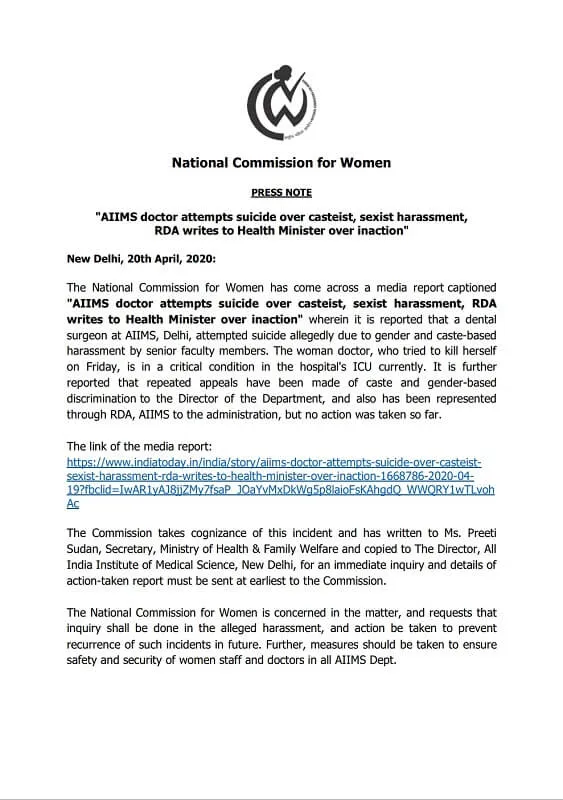
“Despite multiple letters (on three different dates), there has been no adequate action to address this issue of grave concern and eventually, leading the Resident to the edge, making her take the drastic step to end her life after losing the hope of justice in this prestigious institute,” the letter said as per the India Today report. Meanwhile, the National Commission for Women took cognizance of the case and wrote to Preeti Sudan, Secretary, Ministry of Health & Family Welfare for an immediate inquiry and details of the action-taken report to be sent at earliest to the Commission.


NCW Letter on AIIMS doctor suicide attempt case

In another incident in November last year just a few months after Tadvi’s suicide, a first-year student of MA, humanities and development studies (integrated) in IIT-Madras, Fathima Nafis also committed suicide. In a letter written by her father Abdul Latif to the CM of Kerala, Pinarayi Vijayan requested state intervention in the probe being conducted by Tamil Nadu police. To support his case, Latif attached an image of a screenshot from his daughter alleging that a professor was the reason of her death. Fathima was reportedly a class topper and her father claims that she had mentioned the accused professor to him earlier as well.

Tadvi’s case grabbed more attention compared to the other cases because
It was allegedly a caste-based discrimination – Tadvi belonged to the Muslim Bhil Tribal community of Maharashtra. This report and many others report that this was a caste-based discrimination that led to suicide
It highlighted the issue of bullying and mental harassment by superiors

But now with the news of another doctor attempting suicide just last week, one wonders what is driving such caste base suicides in the country? Why is it not getting enough attention.

Also read: Two Doctors Accused In Payal Tadvi Suicide Case Get Clean Chit

The AIIMS doctors is a woman and belonged to the SCST community. She had also written to the Women’s Grievance Cell and SC-ST Welfare Cell of AIIMS as well as the National SC-ST Commission.

Why is India’s deeprooted caste system raising its ugly head again and again?

Clearly, our deeply-rooted biases against caste, gender, classes etc continue to get the worse of our society even in 2020. As a country that prides itself on unity in diversity, we as citizens are failing our fellow country men and women. We ought to drive change in mindsets and have more detailed coverage on issues like these.

Picture credit- Twitter/ Vishal Sonara
Kashmir Images

Age-related emotional turbulence and suicides
BY: Syed Mustafa Ahmad

Given the present situation, anyone can feels suffocated. The chaotic situations prevailing all around forces people to look for an easy escape – sometimes suicide being one!

The age group of 15-29 years is my concern, as I myself belong to this group. This stage of life is called the ‘age of strife’. There are physical, emotional, mental changes happening in an adolescent or a youth. He or she is a storehouse of energy, creativity, agility, sympathy, love, etc., to name a few. Every youth tries to fulfill his or her aims, whatever they are. The chaos and confusion comes in to play when the things do not seem to work up the way they want them to. Let us have a look at some facts.

Live a little every day – ‘ek hi zindagi milti hai’ ( we have got but only one life), these were the last words of the postgraduate student, written on the suicide note he left at the Indian Institute of Technology, Hyderabad, on July 02, 2019.

What forced him to take this step is of utmost importance? He felt frustrated as the things were going. Cut-throat competition with no aim is forcing the students to go for the extreme step.

According to the facts, every hour one suicide takes place in India. It means about 24 suicide incidents take place every day in India. According to the National Crime Research Bureau (NCRB), in 2018, 10,159 incidents of suicide took place. 9,905 incidents of suicide took place in 2017; some 9, 478 incidents in 2016. Among the states and the union territories, Maharashtra is at the top of the list. Every year 1,448 incidents of suicide take place there. Tamil Nadu is the second in this crime. There are 953 cases of this type everywhere. Madhya Pradesh is at the third place. 862 cases of this kind are recorded there.

From1999-2003, some 27,990 students ended their lives this way. From 2004-2008, 28,913 students ended their lives. From 2014-2018, 46,554 students went for the extreme step.

As per the data of the Department of Higher Education, under the Ministry of Human Resources Development, between 2014-2019, 27 students committed suicide in the top IITs of the country. The top-most among the IITs is the IIT Madras with the cases stood at 7. It shows the reality of our educational system. Why our creative minds are failing in living this life? Why do they look out at escapism? It, indeed, is a bothering question.

Last year, in Telangana, 19 students committed suicide after their results were out. They failed on their intermediate examination. It is the secondary question that there were many lapses from the authorities. Look at this picture. Why to go for this extreme step? It shows our level of teaching. We still believe in fantasies. We don’t prepare our students for failure. It is failure that makes the real worth of education possible.

In 2017, like the same fashion as in Telangana, 12 students found an escape from the life by committing suicide. In Kota, Rajasthan, 58 students ended their lives in between 2013-2017. The hub of coaching centres is still lacking in giving the real education!

According to a Lancet report, most suicides are found in the age group between 15-29. Among men, 40 percent were individuals, while it is 60 percent among women. Why does this age group become the scapegoat of everything? They, being the torch-bearers of a nation, cannot die in this fashion.

As told by Karan Singh, the son of the Maharaja Hari Singh, that the youth are not children now. They are not married yet. It becomes possible for them to face the realities. They can do it very efficiently. The same was told by Sir CV Raman. He said that it is nature with science that gives the reality of life. It means that all the happenings of life are to be welcomed and looking for the solutions, make our life.

According to Mrugesh Vaishnav, stress, anxiety, disorder, depression, personality disorder, etc., lead to the extreme step. He says that there should be a proper mechanism from the very beginning so that the students often don’t become worried about their lives. They should be taught in a healthy environment. Maximum effort should be placed on the well-being of the individuals.

Sanjeev Alam, a faculty at the Centre for the Study of Developing Societies, New Delhi, said that a student commits suicide when he/she doesn’t get emotional support at the time of crisis. This might happen when individual expectations are too high. Parental and peer pressure also have an adverse effect. Furthermore, it can be a personal relationship as well. In our country, we have wrong perception about the personal relationships. There is no healthy environment for these things.

A.K. Joshi, Professor and Head of Sociology, Banaras Hindu University, stated that academic stress is an obvious factor for students taking their own lives. After studying to a certain level, when they feel they are without support or that they can’t fulfill their own and their parents’ role expectations, a role conflict starts within the student. In this type of situation, students feel they are left without any choice and so they take such an extreme step.

Pradip Kumar Saha, Directorate of Institute of Psychiatry, Kolkata, says that the fear of failure is a leading cause for suicide among students. When students pass through an unsuccessful phase, everything seems pessimistic to them. They feel their future is bleak and this may result in them committing suicide.

Having said all these things, the need of the hour is to do something on the ground level. For a healthy society, we should make it our duty to create a healthy environment. A lot of work is to be done. The causes are known. There is the need to address them in a sustainable way. It means that all the responsible people have to find ways to get out of the present sameness.

Students need care. They need love. They are not in a position to know themselves. They want comfort at every level. We have to make them understand the true realities of life. Imitation is never an option for them. Live your life is the mantra for them. Changing the way of looking at the things and life, can do miracles; and we are in dire need of such miracles.


Sunday, March 29, 2020

Moved by Granddad’s Struggle, IIT Grad Empowers 3000+ Farmers With Unique Venture,


Moved by Granddad’s Struggle, IIT Grad Empowers 3000+ Farmers With Unique Venture


“Growing up, I experienced struggle from up close. I had to walk barefoot for 5 km to reach the village school, often watching the farmers toiling in the fields on my way.” #FarmersFirst

SAYANTANI NATH
MARCH 27, 2020
AGRICULTURE ORGANIC FARMING

Hailing from a farming family in the small village of Manoli in Rajasthan, Anu Meena grew up watching the struggles of rural cultivators from close quarters. Aside from the inaccessibility of advanced agricultural infrastructure, the small-scale village farmers also grappled with securing the proper pricing of their products.

“(As a child), I used to see my grandfather facing difficulties to sell his produce – finding Mandis, searching for buyers, getting payments and mostly for getting a good price for the harvest. So I decided to work on this problem for my grandfather and many more farmers who feed the world,” shares Anu Meena, an IIT-Delhi graduate who started an agro-tech firm ‘AgroWave’ that bridges the gap between remote farmers and the consumer sector. 


Anu Meena with the AgroWave app
A Childhood Full of Struggles

In a conversation with The Better India, Anu Meena shares about the struggles of her childhood that fuelled the idea for her startup, which is now aiding hundreds of small-scale farmers in North India.

“Growing up, I experienced struggle from up close. I had to walk barefoot for 5 km to reach the village school, often watching the farmers toiling in the fields on my way,” shares Anu.

Her academic brilliance prompted her to pursue her plus two in science from the small town of Sawai Madhopur, before she cracked the IIT entrance examination.

Her initial days at IIT-Delhi were riddled with hurdles. Language proved to be a difficulty for her in communication and learning, owing to her background in a Hindi medium school. It affected her academic performance and drove her into depression.


But with grit and determination, Anu persevered. She brushed up on her English skills soon and worked harder. She soon began acing her classes like before. After completing her graduation in Biochemical Engineering, Anu started working as an Operations Analyst at a startup dealing with logistics In 2017.
To Do Something for the Farmers

“I worked there for a brief period of time, but somehow my experience there reminded me of my family’s struggle to transport and sell their produce at bigger markets and for better profits. I remembered how much trouble my grandfather went through simply to rent a tractor from larger farmers in the village. At the same time, the regular news of farmer suicides from across the country upset me a lot. I decided the job was not my cup of tea and I had to do something for the farmers,” expresses Anu.

While doing her research for her startup, Anu learnt that the problems her family faced once are still affecting more than 50 per cent of the farmers around India. Mostly, they are unaware of the huge demand in urban market clusters and continue selling their produce for a low price in rural belts. Moreover, their sales are regularly intercepted by unscrupulous middlemen, who tend to pocket a larger share of the profit.

Anu’s target was to connect these farmers to urban consumers, and thereby eliminate the middlemen in the chain. Within a short time, Anu conceived the idea of AgroWave and started the company in March 2017 along with a group of dedicated friends, including Payal Jawalkar, her batchmate from IIT-Delhi. 

A farmer involved with AgroWave


How AgroWave Functions

With thorough ground research, analytics and the intervention of technology, the company tries to optimise the agricultural supply for the partnering farmers, and also helps to secure the best price for their harvest.

Anu informs, “We are building a Farm2Market mobility supply chain through an integrated network of mobile pickup station MPS(s) using data-driven technology like smart route mapping, price prediction engine and supply-demand mapping.”

“We buy fruits and vegetables through MPS(s) from farm gates and sell the produce to retail outlets in metro cities and other businesses,” she simplifies.

In everyday terms, AgroWave helps a farmer plan everything – ranging from the fastest and cheapest transportation route to accurate price prediction and finally reaching the customer. From higher revenue for guava farmers in Sawai Madhopur to more price for cauliflowers across farms of Agra, AgroWave has managed to bring smiles to many families.

“We have farmers who are happy to work with us as we give them instant payments,” says Anu highlighting another excellent aspect of AgroWave. 

Ringing in Increased Profits for Small Farmers
AgroWave started with just 15 farmers in Palwal, Haryana. At present, their farmer count stands at over 3,000 across Haryana, Uttar Pradesh, Rajasthan, Punjab and Madhya Pradesh.

Like Narayan Singh who owns a 3-acre organic farm in Khandoli, Agra where he grows seasonal vegetables like potato, cauliflower, chilli, gourd, watermelon and okra. He has been partnering with AgroWave for the past one year, after their field executive invited him onboard by buying all his cauliflower. His sales have only grown ever since.

“Earlier, I had to travel to the Mandis in town to sell my vegetables. Sometimes the transit would take up to two days. Not only was it tiring and a waste of time, but there was also price discrepancy often at the wholesale vendors. Through AgroWave, now I can transport the entire produce at one go, thus saving a huge amount on transportation expenses. I also get at least Rs 2-3 extra per kg for my vegetables that the normal Mandi rates,” shares Narayan.

The AgroWave team

He adds that a lot of his neighbouring farmers have started working with AgroWave following his example.

Anu claims that they have charted an average increase of 10-15 per cent of profits for the farmers they have started working with. Their steady customer base includes retail outlets, canteens, caterers and restaurants in Delhi-NCR and other cities of North India.

She envisions to launch AgroWave as a pioneer in the farm-to-business sector of India. The company also plans to have a tie-up with state governments soon to upscale their initiatives and thereby aid more farmers.

‘To build a sustainable supply chain of fruits & vegetables!’ – reads the AgroWave motto. And true to their vision, Anu Meena’s unique startup is truly empowering the often-overlooked agricultural sector of the nation.

Also Read: ‘We Earn More Now’: Couple Quits UK Jobs For Organic Farming in Native Village

(Edited by Saiqua Sultan)

Like this story? Or have something to share?
Write to us: contact@thebetterindia.com
Connect with us on Facebook and Twitter.