I have a Solution that will reduce pressure on IIT aspirants but do not know how to get this across to HRD Minister of India. Suggestions are welcome. - Ram Krishnaswamy

Search This Blog

Friday, September 18, 2020

Is it Fair to Conduct JEE & NEET Amid Pandemic ? - QUINT,


Fair to Hold JEE Main & NEET UG Amid Pandemic? Students Debate

The Quint spoke to students who argued for and against JEE Main & NEET in September 2020.

Published: 
EDUCATION
2 min read

Video Editor: Ashutosh Bhardwaj


From contactless frisking to COVID declarations from aspirants to just 50 percent utilisation of test centres, the National Testing Agency is on a war-footing to conduct JEE Main and NEET UG 2020 in September 2020.

But are the students ready? Why is such a large section of aspirants opposing the exams in September? And what are the merits of conducting the entrances at the earliest?

In order to evaluate both the sides of the coin, The Quint spoke to JEE aspirant Aniket Mishra, who wants exams to be conducted in September, and to NEET aspirant Arushi Sarangi, who’s been very vocal for the need to postpone the exams.

Is it safe to conduct exams in September 2020?

Arushi Sarangi, NEET aspirant: “We have been given separate slots for entering the exam hall to avoid crowding. But there is no such slot for leaving the exam hall. Which means we can all imagine the crowd that'll be there. Also, there are so many exam centres. What is the guarantee that in each of these exam centres these measures will be followed?”

Aniket Mishra, JEE aspirant: “Those who want exams to be postponed can they give it in written that the situation of COVID-19 in November and December would be better? The SOPs are made by the NTA but the implementation has to be done by students. If the students don't implement them, what can the NTA do?

Won’t postponing exams delay the academic session?


Aniket Mishra, JEE aspirant: “We have already lost one semester, remember, one semester. If we conduct exams in November and December, maybe the full academic year will go to waste.”

Arushi Sarangi, NEET aspirant: “The ex-director of AIIMS and the Director of IIT Delhi have both claimed that they can adjust the academic calendar and it's very much possible by cutting down holidays and probably taking extra classes too.”

What about the students who can’t take the exams?


Aniket Mishra, JEE aspirant: “Due to floods or any transportation issue if students can't reach the exam centre, the authority should plan a special exam and the admission process should be special.”

Arushi Sarangi, NEET Aspirant: “If the exams take place in September, it will be a huge mass injustice to students and their families too. For many people, it is their last attempt and it is not their fault that they would be missing the exam either because they have the COVID-19 infection or because of fear.”

Watch the video above for the full debate.

The Quint is available on Telegram & WhatsApp too, click to join.

The bereaved need therapy, not compensation


The bereaved need therapy, not compensation
Source :SIFY
Author :SIFY
Last Updated: Wed, Sep 16th, 2020, 10:29:08hrs


Political parties are used to viewing every unnatural death as an opportunity—the ruling parties in the state get leverage with the centre, the opposition parties have a new bullet point in their litany of complaints against the ruling party, the ones that don’t matter get to enjoy their fifteen minutes of fame by sending their leaders to meet bereaved families and make the right or wrong noises about competitive examinations and police brutality and government ineptitude.

Journalists who have been crawling like maggots around the homes and workplaces of the dead will be glad to have something to report—the amount of compensation received from each party, the views of each political leader, the reactions of the disaster tourists joining the brood of maggots.

Every time a student commits suicide, we blame the “system”. The National Eligibility and Entrance Test (NEET) has been a sore point with several states since its inception. Politicians claim, and the public agree, that the competitive exam imposes an unfair disadvantage on those who have not had an elite education. What is does for certain is take away a point on their manifestos—they can no longer make promises on behalf of medical education. It levels the playing field in theory, and eventually will in practice.

But the problem is not competitive examinations. Every examination, even relatively unimportant ones, has been a trigger for student suicides. Students often leave behind letters saying they were afraid of the results—not simply because a low score would deprive them of further education, but because they were afraid of the reactions of their families, or were unable to live with the guilt of having been a financial burden on their families and not delivered on the investment.

We will have to live with the fact that there needs to be a gauge for qualification for entry into colleges, and then another gauge for qualification for entry into employment, particularly when performing one’s duties involves being responsible for the health and even lives of others. Examinations have been one of these gauges. There are others too.

An invisible gauge is one’s passion for the subject.

How many students writing the NEET, or any other competitive exam such as the IIT-JEE, or the UPSC, have a passion for the course that their careers will take if they were to succeed in the examination? How many more take the examination for the sake of the honour and prestige and parental or societal approval and validation that those careers will guarantee?

The villains are not the examinations. Among the three students who killed themselves in Tamil Nadu on the eve of the examinations, one had spoken of being afraid of letting her parents down and written several times that she could not handle the pressure; another had excelled in the mock examination.

The villains are not the parents either.

What kills people is the fear of betraying expectations, the shame of being a burden on their families.

And when political parties compete to dole out compensation to the bereaved, they set a trend.

Farmer suicides have been attributed not simply to the failure of monsoons, but the hope that they will be able to look after their families in death better than they could in life—whether life insurance pays off or not, the government and opposition compensation certainly will tide their families through the financial crisis.

What the bereaved need is not a channel for blame. Screaming about the unfairness of NEET converts their guilt into anger, and allows them to blame an idea or person instead of blaming themselves. The media is happy to latch on to this. The Twitterati tweet.

But in the privacy of their homes, away from the spotlight, knowing all the money in the world will not bring back their dear departed, the bereaved do feel guilt.

In the case of other unnatural deaths—unrelated to examinations, but either suicide or homicide or the result of negligence too—the families are struggling with guilt and grief. It is bad enough when someone dies of natural causes—one wonders what one could have done that might have saved them. Knowing that the person would be alive if not for a moment of negligence or hatred or self-loathing or other transient cause is a permanent source of torment.

It has always been my belief that all of us need some form of professional mental healthcare. Just as we have physical health check-ups every now and again, we ought to have our minds checked too.

People who have been through trauma need this urgently. They need their ways out of the darkness. The idea of compensation was to make up for the loss of a breadwinner. However, at the rate at which it is being doled out by vested interests, “compensation” has begun to feel like blood money.

If the government does care about its citizens, it cannot limit its aid to payouts.

More Columns by Nandini Krishnan:

Friday, September 11, 2020

The Community Has a Critical Role in Suicide Prevention


The Community Has a Critical Role in Suicide Prevention
Published on September 10, 2020

Mumbai : Suicide is a social issue and not an individual problem. An online discussion on “Suicide Prevention: The Importance of Community” hosted by YourDOST, India’s largest online counseling and emotional support platform designed to foster mental health, today appealed for more efforts from the community to raise suicide prevention awareness. The panel discussion was held to mark World Suicide Prevention Day.

60-Second Quiz Reveals What Type Of Parent You Are

The panelists included 
Dr Seema Sharma, clinical psychologist; 
Ms. Sandhya Menon, Independent writer, journalist and a suicide survivor; 
Rajesh R Pillai, lawyer and President of Befrienders India; 
and 
Raashi Thakran, a certified QPR trainer, and a suicide loss survivor. 

The discussion was moderated by 
Dr. Jini K Gopinath, Clinical Psychologist and Chief Psychology Officer, YourDOST.

India has been witnessing an increasing number of deaths by suicide. According to data compiled by the National Crime Records Bureau (NCRB), since 2007, there has been a 52% increase in the number of suicides among youth in India, with an average 26 suicides taking place every day, or one every hour. These grim figures are alarming enough for the society to bring about a fundamental change in its approach towards mental and emotional issues.

Commenting on the community’s responsibility in the massive increase in suicide rates, Advocate Mr. Pillai said, “Community has a big role to play since not all suicides are due to mental illness but also due to apathy and lack of avenues to express oneself. Being able to share one’s grief and air their trauma is a basic need of a human being. A systematic change at every level to create a more supportive ecosystem is imperative – from family to teachers to Governments, everyone has a role to play in avoiding these instances.”
Dr. Sharma said, “Suicides due to life events or psycho-social situations deserve much greater attention. Generally as a society we are not very supportive, rather judgmental especially when it is about mental wellness, personal choices, grief, and trauma. Any individual showing suicidal tendencies or contemplating a drastic step needs a listening ear and compassion. We should use available resources such as community elders, especially in rural areas where professional help is limited, who can give time, listen with empathy and without judgment.”

Ms. Raashi, a YourDOST mental wellness champion who has been actively driving a campaign for the launch of a National Suicide Prevention Helpline lost her brother to suicide and eventually her own mental health deteriorated. She shared her life experience and issues with PTSD and anxiety, “Death does not happen to the person that dies. It also happens to the people left behind. I started struggling after my brother’s demise. Doctors helped me a lot, so did medication. But what really helped me was talking about it. I now know how important suicide prevention is and that led me to delve further into this. The data was scary. That prompted me to work towards prevention awareness”.
Earlier this week, the Central Government launched a 24X7 toll free mental rehabilitation helpline (KIRAN) for providing psychological support to people.

Ms. Sandhya, mental wellness writer and a survivor spoke about her own experience with suicidal attempts and triggers, “7 years ago, I was diagnosed with depression. I had a tough time being a single mother to two kids and increasing financial challenges. An argument with a family member triggered my first attempt. I felt not understood. I was expressing myself on social media instead of talking to my friends. I could never reach out and say I need help”.

The session lasted for over 60 minutes and touched topics that are generally considered a taboo such as dysfunctional families, poor consideration towards mental health, non-judgmental acceptance and practicing empathy without criticism. The panelists answered the viewers’ questions before signing off.

The panelists suggested a three-step actionable plan for suicide prevention:

1.)Look: Look for warning signs which may be physical, verbal, or non-verbal 

2.) Listen: Actively listen to the person, 

and 3.) Link: Link those needing help with the various stakeholders/professionals/ volunteers.

Concluding the session, 
Dr. Gopinath, YourDOST said

“Suicide is not just a psychological issue. It is a psycho-social issue. As a society, we miss the clues. We need to be mindful of signs from the psychological perspective. Listen actively and carefully. Link people in need with the experts and volunteers who can lend an empathetic ear”.

About YourDOST:

Headquartered in Bengaluru, YourDOST, is a leading start-up company that provides mental wellness services through an innovative technology platform. It anonymously connects people with the right expert consisting of Psychologists, Counselors, Career Guides for guidance related to anxiety, relationships, career, academics, sexual wellness, self-improvement and more. through completely confidential individual sessions. 

Founded by Mr. Puneet Manuja, an IIM- Bangalore alumnus and Ms. Richa Singh, an IIT-Guwahati alumna in 2015, YourDOST has so far impacted over 2 million lives in India. They work with 100+ top corporates and colleges all over India and have also tied up with state and central government agencies for counseling support.

Sunday, August 30, 2020

My cousin Vikram hanged himself because of JEE pressure. September dates made it worse,


My cousin Vikram hanged himself because of JEE pressure. September dates made it worse

Vikram was struggling to study during the lockdown and the online tutorials were getting to him. He was hoping the JEE exams would be postponed.
30 August, 2020 9:49 am IST


Representational image | Pikist
Text Size: A- A+

It was a rainy Tuesday, just past noon, when the phone rang to say that Vikram had just hanged himself in his study. Few frantic calls later, the dreaded news was confirmed that by the time he was taken to the hospital, he had died. My 18-year-old cousin had committed suicide. A daytime nightmare that was the culmination of a common Indian dream – the IIT dream.

Vikram was a delightful, cheerful, beautiful boy who brought much joy to his family. A promising young man who could not bear the pressure of an upcoming engineering college entrance exam — the JEE or Joint Entrance Exam.

This year there was a demand to further postpone the exams due to the Covid-19 pandemic, but the Supreme Court rejected the plea for postponement and the final date of the exam was announced for September.

This news reached Vikram on 17 August and he was dismayed. Scores of students like him were hoping that the NEET/JEE exams would be further postponed. The prolonged lockdown had heightened their anxiety and online tutorials were getting on their nerves.

But Vikram’s death by suicide is not a standalone case. And the pandemic year and postponed exams have only made it worse.

He would have, perhaps, not taken the extreme step that day if the exam date was not confirmed. However, he was worried about disappointing his parents; he was afraid of the exam.
One sole aim

The pressure on students builds early on. Middle-class Indian families seek security in a stable future for their children via professional courses – especially engineering and medicine degrees – those that necessitate tough entrance exams. Parents work hard to provide for tuitions and coaching classes. They also spend all their time to help make a conducive environment at home for children to study unobstructed. They forego holidays, parties, and entertainment activities for this sole aim.

Vikram’s parents did all this and more and ensured that he had all the amenities to pay attention to what was most important – prepare for the JEE.

Also read: Enraged over Sushant Singh Rajput’s suicide? Students dying in Kota’s IIT, IAS factories too


The case for JEE

The Joint Entrance Examination, organised by the National Testing Agency (NTA), is a national-level competitive test for admission to undergraduate engineering courses.

In 2020, the JEE exams were to be held twice — in January and then in April, and students could appear for either one or both the sessions, and only their best score would be considered final. When the pandemic made the world upside down, many students had not even finished giving their class 12 board exams. JEE, due to be held in April, was postponed.

Often called the mother of all exams, the JEE exams are perhaps one of the toughest in the world. Over 10 lakh students were to sit for the JEE Mains, out of whom 2.2 lakh would qualify for the JEE Advanced, and only around 10,000 students would make it to the IITs.

The question papers, said to be unpredictable, cover Physics, Chemistry and Mathematics with an enormous syllabus that sometimes takes at least four years of preparation, and there is negative marking.

Exam year 2020 – one million to appear

Vikram was one amongst the nearly 10 lakh candidates registered for the September JEE main exam this year. The sheer scale of the competition and the burden of expectations was weighing him down. He got an anxiety attack the evening before he died. His head was hurting and he threw up. His parents tried to do what they could – assured him that the results won’t matter. It was important to now appear for the exam, which would be the culmination of his relentless preparation of the last several years. His mock exams were going well, only Chemistry was proving to be a bit tricky. He told his best friend a few days ago that he was forgetting formulas. Everyone counselled him to just take the exam and see what happens.

He didn’t want to. Next morning he got up as usual and told his mother that he was going to attend an online preparatory session by the coaching institute he was enrolled in. He went to his room and locked it. After an hour, Vikram’s mother just went to check on him on a hunch. When she opened the door with a spare key, she found him hanging.

Also read: Here’s how govt plans to hold NEET, JEE Mains next month amid Covid risks
Death of a dream

There is no greater tragedy for parents than to see their child die. This was worse than that. There is no closure, no redemption.

The burden lies on the collective conscience of the nation. Vikram is not a stand-alone case. There are news of students suicide from around the country. His own friend had died in a similar way just a month ago. Many students had died by suicide after being unable to clear the first round of JEE in January. Many other do the same in coaching centres or even in the engineering colleges. This is a well-known fact in India.

The exam is designed to eliminate people or reject candidates, not select them. It is so competitive that every year the exam is made tougher. The difference of one or two marks can make the rank go down by thousands.

There have been suggestions about how the test format can be changed so that it becomes less about merit lists where higher ranks are only achieved by rote learning.

Increasing the number of engineering colleges in the country is also important. Despite the lure of the private colleges, students prefer the national institutes because they are more reputed, get better placements and have relatively lesser fees.

Also read: JEE-NEET brings another student protest before Modi govt. 

This time, opposition is united
The coaching industry

The clamour for admission to these colleges has led to the spawning of a huge coaching industry in India—especially in Rajasthan’s Kota.

The coaching classes are perhaps the most subversive part of the story of the IIT dream. While engineering may not be as desirable a career option anymore as it was in the 1970s and ’80s, the admission to these institutes of higher education seems to be a marker of academic excellence. A notion that the coaching institutes routinely sell in the expensive front-page newspaper ads they publish after each result with photographs of the so-called ‘toppers’.

‘IIT coaching’ begins quite early, often up to four years before the actual JEE exam. School education is either inappropriate or the competition makes it inadequate, and that is when parents make a beeline for the coaching centres. These centres not only charge hefty fees, but they are also completely unregulated. Shaming, scolding, creating faux competition within students often can add to the feeling of inadequacy and worthlessness.

There is extreme pressure on not just the students but also on the parents. While a government committee had recommended a regulator for coaching institutes, it has not happened.


The 2020 fight continues

The Covid-19 year is a dreadful one on many accounts, leading to cases of severe mental stress and anxiety. The death of Sushant Singh Rajput and the subsequent eulogising of that incident has had an impact on many. Vikram was also deeply affected by that news. Suicide has not just become common parlance, but prime time TV in India also play havoc with the minds of people who are already on the edge.

Vikram’s act shook his family and his friends, and perhaps some parents who are paying close attention to the mental state of their children. But his death was a small news item in the local newspaper. The larger fight to get into the IITs continues.

There is a clamour to get JEE postponed and it is gathering support from state chief ministers. Opposition leader Rahul Gandhi has also joined in.

Also read: Sushant Singh Rajput was right to hide his depression, India is no country for mental health

Burden of expectation

From the beginning, there is pressure to make it. And in trying to make it, Vikram had to select study time over everything else. Hanging out with friends, going for holidays, fooling around, having the time to do absolutely nothing had probably not existed in his life for the past few years.

The horrors of the IIT dream do not end in the coaching class nor do they see a break at home. To quote the cult Netflix show — Dark — of which Vikram seems to have been a fan of, “the beginning is the end and the end is the beginning”.

The author is a former BBC Journalist and currently a Business Communication faculty at Bhavan’s SP Jain Institute of Management and Research (SPJIMR). Views are personal.

Saturday, August 29, 2020

Message from IITMadras - Dean Alumni and Corporate Relations,


Dear Alumnus

In these unprecedented times of pandemic, the world is passing through a lot of struggle and our students are no exception. One has to agree these times and uncertainties cause enormous stress in our lives. Our students have reached out to IIT M for help in finding internship and placement opportunities, adapting to the new learning methodologies, and some for financial help because of the damage done by COVID 19.

This is a time where we have to stand by each other and IITM stands with its fraternity. With this level of stress and given academic responsibilities the students are exposed to mental stress and trauma. IITM has taken the initiative of setting up a Student Wellness Centre. The Centre is undertaking a lot of activities aimed at helping students understand and cope with stress.

The center has appointed a Chief Wellness Officer. Currently, we are also planning to have more outreach programs to help students which demands additional resources. Here is a proposal by our Dean of Students' Prof Siva. with more details. Please find a brief report on various initiatives by our wellness centre.

IITM's alumni have always been there by its side in helping students in various areas like education, distress support, travel, etc. We seek your generous donations and request to lend a helping hand in improving the mental wellbeing of students.

Donate Now

===============
Mahesh Panchagnula
Dean, Alumni and Corporate Relations, IIT Madras
Professor, Department of Applied Mechanics
Indian Institute of Technology Madras
Chennai 600 036 INDIA
Phone (EA): +91-44-2257 8390

Friday, August 28, 2020

The Aditya Birla Integrated School & Mpower collaborate to create awareness about suicide prevention

NEWS
digitalLEARNING Network
Posted on August 27, 2020


🔊 Listen to this Article

In a bid to create suicide prevention awareness, The Aditya Birla Integrated School (TABIS) and Mpower have collaborated for a campaign ‘Letters of Hope’. The awareness programme will aim to generate ‘hope’ through a series of positive messages expressed via a written letter, an awareness poster, a work/design of a hopeful art, symbol, message, quote.

The ‘Letters of Hope’ is initiated by TABIS students leading up to World Suicide Prevention Day 10th September. TABIS has invited communities, other schools and their students from grades 6 to 12 to participate in ‘Letters of Hope’ to generate hope and create awareness on a larger scale.

The campaign emphasizes on generating ‘hope’ through a series of positive messages expressed in creative forms and ways. TABIS and Mpower will appeal to their communities via various platforms to spread the word around.

Also read: School paints walls to provide lessons to poor students


Neerja Birla, Founder and Chairperson, Aditya Birla Education Trust, said, “Mental health concerns among children are increasing, especially behaviour disorders and suicides. Since suicide is one of the leading causes of death amongst teenagers, our educational system can play a key role in the prevention efforts, which must be comprehensive, sustained and integrated to create the desired impact on this alarming issue.”

Piya Marker, Director – Head of School(TABIS), said, “Hope is always something we feel we need, as adults, when life became stressful. It is our sense of hope in tomorrow that takes us bravely over the challenges or what we feel is impossible to overcome at that time. ‘Letters of Hope’ is our endeavour to share these positive experiences with anyone who needs to believe that this too will pass and it definitely does. The students of The Aditya Birla Integrated School along with their school counsellor initiated ‘Letters of Hope’ in 2019.

Follow and connect with us on Facebook, Twitter, LinkedIn, Elets video

Saturday, August 22, 2020

Subramanian Swamy urges PM Modi, Education Minister to conduct exams after Diwali

Home >Education >News >

NEET, JEE 2020: 

Subramanian Swamy urges PM Modi, Education Minister to conduct exams after Diwali


BJP MP Subramanian Swamy (File photo: PTI)
NEET, JEE 2020: Subramanian Swamy urges PM Modi, Education Minister to conduct exams after Diwali3 min read . Updated: 21 Aug 2020, 04:17 PM ISTWritten By Aparna Banerjea
JEE Main exam 2020 is scheduled to be held from September 1 to 6, while NEET exam is scheduled to take place on September 13
'(Education) Minister is holding an emergency meeting. Let us see', Swamy tweeted


Topics
NEETJEESubramanian Swamy


As the speculations and demand for postponement of JEE and NEET examinations for this year increase, Bhartiya Janata Party leader and Rajya Sabha member Subramanian Swamy on Friday said that he has urged Prime Minister Narendra Modi as well as the education minister Ramesh Pokhriyal to conduct the entrance examinations of NEET, JEE and other competitive exams till after Diwali, in the wake of novel coronavirus pandemic.


The BJP leader took to Twitter and posted, “I have just spoken to the Minister of Education suggesting that NEET and other exams be conducted after Deepavali. The SC order the other day is not a bar since the Hon’ble Court has left the date to the government. I am sending an urgent letter to the PM just now."


In the letter, Swamy wrote, "There is wide spread desperation amongst the youth since this exam is make or break for them and they have to take it fully prepared. Holding the exam in toy opinion you may lead to a large number of suicides around the country of youth."

He also cited that the Supreme Court "doesn't bind the government at all, on whether to now or two weeks later or two months later, the examinations. It is a policy decision of the Government."

He also wrote that in order to hold the competitive examinations, every part of the required infrastructure as currently such infrastructure was not yet in place for students. "In the city of Bombay for example, there is no public transport and people have to come from in the adjacent areas, often 20kms to 30kms away," Swamy pointed out in the letter.


In another tweet Swamy wrote, “I have already tweeted as well as conveyed to Education Minister that NEET exams should be after Deepavali. Minister is holding an emergency meeting. Let us see. I was asked to intervene by you all at a very late stage after SC had delivered its judgment."

The JEE Main examination is scheduled to be held between September 1 to 6 while JEE advanced exam will take place on September 27. NEET examination will be held on September 13.

On Monday, the Supreme Court dismissed a plea seeking postponement of JEE (Main) April 2020 and NEET-Undergraduate examinations saying precious year of students "cannot be wasted" and life has to go on.

"Life has to go on. Life has to move ahead. Precious year of students cannot be wasted," the bench, also comprising Justices B R Gavai and Krishna Murari, said during the hearing conducted through video conferencing while paving the way for commencement of the exams as scheduled.


The plea, filed by 11 students belonging to 11 states, had sought quashing of the July 3 notices issued by the National Testing Agency (NTA), by which it was decided to conduct the Joint Entrance Examination (Main) April 2020 and National Eligibility-cum-Entrance Test (NEET)-Undergraduate exams in September.

Last month, Union Education Minister Ramesh Pokhriyal Nishank announced that JEE and NEET examinations have been postponed and will now be held in September, keeping in view the safety of students amid Covid-19 pandemic.

On May 7, it was announced that JEE Advanced Exam will be conducted on August 23. Nishank had earlier announced the NEET exam will be held on 26 July while the IIT-JEE (Main) examination will be held on 18, 20, 21, 22, and 23 July.


With inputs from agencies

Thursday, August 20, 2020

Two days after the Supreme Court verdict, 19-year-old NEET aspirant from Coimbatore dies by suicide

Suicide

Published: 19th August 2020

Two days after the Supreme Court verdict, 19-year-old NEET aspirant from Coimbatore dies by suicide

Aiming to crack the exam this year, she was preparing hard and got herself enrolled in a private coaching center in the same locality

Edex Live


Image for representational purpose only

A day after Supreme Court dismissed a petition seeking postponement of National Eligibility cum Entrance Test (NEET) and Joint Entrance Examination (JEE) scheduled to be held in September, a 19-year-old Coimbatore girl died by suicide on Tuesday allegedly out of fear of writing the paper. According to the police, the deceased R Subhshri, daughter of an ITI staff from Venkatasamy Road (East) in RS Puram, was preparing for the medical entrance test for the past two years.

Though she appeared for the exam in 2019, she couldn't get the minimum cut-off mark to qualify for the medical admission. Aiming to crack the exam this year, she was preparing hard and got herself enrolled in a private coaching center in the same locality. At around 11.00 am on Tuesday, she went inside her room and locked herself. As the girl didn't come out for over four hours, her parents knocked on the door. After getting no response, her relatives and parents broke open the door. But to their shock, the girl was found hanging in her room.

RS Puram police recovered her body and sent it to Coimbatore Medical College Hospital for post-mortem. The police registered a case under section 174 (police to enquire and report on suicide) of IPC and are investigating the suicide. The National Testing Agency is scheduled to conduct NEET (UG) on September 13.

The Supreme Court on Monday dismissed a petition seeking postponement of NEET and JEE, observing that ‘Career of students cannot be put under jeopardy for long.’

If you're suicidal, here is a list of helpline numbers, apps and pages that can help in the time of need.

AASRA: This Mumbai-based NGO is dedicated to people with suicidal tendencies and battling anxiety and depression. Their 24-hour suicide helpline number is +91-22-27546669

Sneha Foundation: This Chennai-based NGO is also dedicated to supporting individuals who are depressed, distressed, or suicidal. Their 24-hour helpline +91-44-24640050

iCall: Tata Institute of Social Sciences' helpline for the psychologically distressed has a team of mental health professionals helping individuals across various languages and regions. The helpline number (+91-22-25521111) is available Monday to Saturday from 8 am to 10 pm.

7 Cups of Tea: This website and app (available on iOS and Android phones) is an online chat platform offering live support to the depressed and anxious.

The Pink Project: This Mumbai-based mental health intiative, founded by two psychologists, is offering free online counselling during the COVID-19 crisis.

People Tree Maarga: Bengaluru-based People Tree is offering free telephonic counsellling between 10 am and 11 pm to those stressed or anxious due to COVID-19. The helpline number is 080-46659999

_vibewithvishuddha: This page on Instagram encourages you to talk about your feelings and emotions or just vent out. Just message them a 'hi' and they'll get in touch.

Thursday, August 6, 2020

Major issues faced by research scholars - Greater Kashmir


OPINION & EDITORIAL, TODAY'S PAPER

Dr Ummer Rashid Zargar
Srinagar, August 6, 2020, 3:25 AM


Major issues faced by research scholars


Why a brilliant brain of our society is not happy with life, and what prompts him to take an extreme step?

Representational Pic

Higher Education acts, across the globe, as a means to secure better growth and development. As the world is progressing in leaps and bounds, developing countries invest more on higher education to motivate more human resource towards research and development. Nevertheless, some countries (especially developing countries) are achieving the goal of higher education at a huge cost. The suicide of 32 year old researcher at IIT Gandinagar, one in a series of these events, sent shockwaves through education corridors. Recent trend of suicides among the research students and higher education aspirants is opening up new a debate: Why are brilliant brains of our society not happy with life, and what constraints they face that prompt them to take extreme steps? The answer to these questions is for the policy makers to find out, but as a researcher I will discuss some of the basic issues faced by higher education aspirants during their period of pursuing the degree, and some of the possible remedies.
: The primary problem in higher education in developing countries is that there are idealistic aims that are hardly achieved. We have to devise higher education in such a way that doesn’t become burden on the aspirant, rather should become a roadway for achieving economic security. Many aspirants in the initial stage believe that after spending years in higher education will enable them to get better academic position, which later on becomes a mental burden. For some, higher education is a part time excursion; they attend their labs without having any interest for achieving goals in research. Meanwhile such aspirants are busy for qualifying recruitment exams.
Pursuing Higher Education should be a Choice not Chance. Majority of us are waiting for chance factor to pursue particular career without any regard for our aspirations. It is important for us to understand that everyone is not born for research career. It needs lot of patience and hard-work. Many of you have heard stories of many scientists whose experiments failed many times, and they still tried to achieve their goals. Once you have made your mind to pursue research, you should consider it like your masters degrees, and freely enjoy every part of it.
To be keen on future prospect of particular assignment is a normal human behavior. But obsession about future prospect of research career sometimes haunts budding higher education aspirants, and it becomes cause of stress and depression. There is a mushrooming of universities and colleges, which are annually producing hundreds of graduates and PhDs. However, there are no avenues for researchers to get a compatible job after the completion of highest degrees. Government need to provide opportunities for talented researchers to take up industry based start-ups. In this direction, scholars should also hunt for new opportunities which suit their expertise and ability.
Advisors and university authorities need to understand that researchers in our universities cannot write paper in journals like Nature, because of paucity of research facilities. It is the duty of advisors to guide youngsters to write a good paper with focus on originality, research protocol and ethics, rather than pressuring him/her for making it to any elite journal. Here comes the role of professors and research advisors who can first teach a newcomer about various stages of research writing. Having said that, it doesn’t mean research aspirant should not try to write research articles; my point here is that they should write quality papers with great responsibility. Taking baby steps during your writing phase will not burden the mind and body.
Recruitment in our varsities has not been up to the mark, and this has also led to mental stress among the research scholars, when they observe that meritocracy is being compromised during faculty recruitment.Transparency during recruitment process can build confidence among the scholars and they will not feel dejected.
Our Universities have not created situation where researchers can discuss matters freely with advisors. Most often they are not received well when they come up with a new idea. In some cases researchers having better ideas are mentally tortured by advisors. It is important for advisors and scholars to understand that research is a universal endeavor and not a monopoly of a single individual; collaborative research increases the core competencies and decreases mental stress.
At times scholars need simple psychological advice to resolve mild stress issues. It is therefore essential to incorporate well-trained counsellors in varsities to deal with the mental issues faced by scholars and faculty.

Authorities need to address these basic issues faced by higher education aspirants and try to resolve their problems after consulting various stakeholders and policy makers.


Illuminating shell found, destroyed in Pulwama


Naib tehsildar among four more die of COVID-19 in Kashmir


BJP Sarpanch shot dead in south Kashmir's Qazigund


Manoj Sinha appointed new Lieutenant Governor of J&K

Dr. Ummer Rashid Zargar is Assistant Professor, Department of Zoology, Govt. Degree College Anantnag,

Wednesday, August 5, 2020

India pioneered TV education, but smartphone classes during Covid let down its poor students - THE PRINT


India pioneered TV education, but smartphone classes during Covid let down its poor students
Trauma faced by students for being able to afford smartphones and laptops for online classes could have been avoided if the govt implemented the DTH scheme.
4 August, 2020 5:31 pm IST

Students show the non-smartphones their coaching centres ask them to use | ThePrint Photo | Praveen Jain

The death of two students by suicide, one in Kerala and the other in Punjab, is tragic, more so when we realise the reason behind them. The two girls, aged 14 and 17, were unable to access online classes because their poor families could not buy them smartphones.

In the current Covid-induced crisis, there are countless other children who are in similar situations, heartbroken and left out of the web-based home learning, either because they are unable to afford technological devices or because of inadequate network infrastructure.

Tragic incidents such as those in Punjab and Kerala could have been avoided if the Ministry of Human Resource Development’s (MHRD) National Mission on Education for Information Technology (NMEICT) scheme, which was approved by the Union Cabinet in 2009, had been fully implemented. It could have proved to be the proverbial Ram baan (panacea) in these difficult times, especially for children whose education has come to a standstill due to the nationwide closure of schools, colleges and universities.

The core component of this scheme was Direct to Home (DTH) broadcasting of e-content in higher education, considering that India now has more than 200 million TV sets. This would help cover at least 70 per cent of the population, in stark contrast to smartphones, which cover a little over 35 per cent.

Also read: 90 lakh govt college students can’t access online lessons, report states, urges aid

Missed opportunity

There are several reasons why the MHRD’s DTH programme could have been a real game-changer.

First, compared to the 32 channels being used for education by Swayam Prabha, about 1,000 new TV channels would have been set up under the NMEICT, one for each subject, every grade, and in every regional language possible on a 24×7 basis. The budgetary support for this was also unprecedented, with an allocation of Rs 4,612 crore (almost $1 billion).

Second, only the top 213 institutions such as the Indian Institutes of Technology (IITs), Indian Institutes of Management (IIMs), National Institutes of Technology (NITs), medical colleges, agricultural universities, Indira Gandhi National Open University (IGNOU), state open universities, and leading state and private universities were shortlisted. Top faculty of these institutes were involved in content development, which was by design a continuous and self-improving process.

Also read: Under a Delhi metro flyover, 25-year-old teaches children who can’t afford online classes

Third, the programme was designed to be relevant, flexible and user friendly, because the subjects and their content were drawn from the existing curriculum of leading Indian universities. Beside the DTH mode, the e-content could have been viewed simultaneously through multicast mode on various devices — PCs, tablets, smartphones — at the affiliated educational institutes, as well as at home. Students seeking clarifications could ask questions on a real-time basis via video conferencing, mobile phones, SMS, e-mail, and webinars.

Fourth, even though NMEICT was meant for only higher education to begin with, it had the scope to create mirror systems for schools too.

Finally, the most important aspect was that students had to pay nothing. The cost of the entire delivery system, including the set-top box, which cost Rs 2,500, was to be borne by the ministry. All that had to be done at the student’s end was to adjust their family’s TV entertainment viewing time to that of their classroom hours. This was a very small price to pay compared to how dire the situation for many students is in this crisis.

Also read: Govt turns to ‘TV classrooms’ as online lessons prove to be a challenge during lockdown

India’s history with TV education

Today, very few are aware that India was a pioneer in the use of television for education. In 1969, India signed an agreement with the United States to share the National Aeronautics and Space Administration (NASA)’s ATS-6 satellite for ‘Satellite Instructional Television Experiment’ (SITE). This was the first and largest educational content delivery system in the world at that time, run by the Indian Space Research Organisation (ISRO) and covering 2,400 villages in six Indian states.

Later, when India acquired its own satellite, the regulatory body University Grants Commission (UGC) launched the countrywide classroom programme in 1984, on the Doordarshan network via INSAT-2 satellites. Next came IGNOU’s Gyan Darshan in 2000, followed by Ekalavya of IITs and Vyas by CEC/UGC. By 2004, India had launched EduSat and became the first country in the world to launch a satellite solely dedicated to education. This is, therefore, a known territory for India — the idea of using TV and satellites for education was a tried and tested one.

Also read: Why online classes may not be such a good idea after all, especially for kids

An abrupt roadblock

The MHRD officers and the Chairman of DTH Committee, Dr S V Raghavan of IIT Madras — who was the chief architect of India’s National Knowledge Network – NKN — burnt the midnight oil in working out the nuts and bolts of the scheme. They worked on getting the statutory clearance from the Department of Space (DoS), Ministry of Information and Broadcasting (MIB), Telecom Regulatory Authority of India (TRAI), and Prasar Bharati for their satellite channels.

There were efforts made to set up 213 Teaching Ends (TEs) in India’s top universities and Institutes of National Importance (INI), while working on the nitty-gritty of the delivery of e-content and connectivity. By 2014, the scheme was all set to be launched with 50 channels. Then it went into a blink.

In a democracy, governments are supposed to work in continuity and not waste time, resources, and energy in reinventing the wheel when something works and is meant for the ordinary people, especially those who are economically deprived. Unfortunately, governments tend to downplay, or even kill, the best of schemes, if they do not have the right parentage.

The launch of the ‘Digital India’ campaign by the current Narendra Modi-led government seems to have eclipsed NMEICT and the DTH programme, though they still continue to exist on the official website of MHRD. The newly launched Atma Nirbhar Bharat Abhiyan (self-reliant India scheme) mentions Swayam Prabha, which includes some components of DTH for schools, but it is too little and too late.

Swayam Prabha is a mutilated version of NMEICT and lacks the comprehensiveness and scale of the latter. In fact, NMEICT is much more than just DTH. It has forward-thinking avant-garde programmes, which could prove to be a blessing for students and researchers in today’s time. These involved the development and use of haptic devices, setting up remote laboratories, and even a full-fledged virtual university, which is what the education system of the future is more likely to look like. Who knows how long Covid-19 will last and how long our schools, colleges, and universities may have to remain closed. NMEICT is a scheme tailor-made to meet these challenging times.

The author is the former Education Secretary, Ministry of Human Resource Development, Government of India. Views are personal.

Also read: Investing in the young is the best way to recover from the Covid economic crisis


We have a newsroom filled with talented young reporters. We also have the country’s most robust editing and fact-checking team, finest news photographers and video professionals. We are building India’s most ambitious and energetic news platform. And we aren’t even three yet.

At ThePrint, we invest in quality journalists. We pay them fairly and on time even in this difficult period. As you may have noticed, we do not flinch from spending whatever it takes to make sure our reporters reach where the story is. Our stellar coronavirus coverage is a good example. You can check some of it here.

This comes with a sizable cost. For us to continue bringing quality journalism, we need readers like you to pay for it. Because the advertising market is broken too.

If you think we deserve your support, do join us in this endeavour to strengthen fair, free, courageous, and questioning journalism, please click on the link below. Your support will define our journalism, and ThePrint’s future. It will take just a few seconds of your time.

Monday, August 3, 2020

Students dying in Kota’s IIT, IAS factories too.. - The Print


Enraged over Sushant Singh Rajput’s suicide? Students dying in Kota’s IIT, IAS factories too
Even a Rohith Vemula is not enough for India to acknowledge the scale of misery its students face in a country that places high premium on excelling at all cost.
2 August, 2020 11:40 am IST

Actor Sushant Singh Rajput in a still from Shuddh Desi Romance | YouTube
We don’t know why Sushant Singh Rajput decided to end his life. He didn’t leave a note. But from Kangana Ranaut to the average Sarla chachi to TV news channels, everyone thinks they know exactly what happened.

Kangana Ranaut & Co have swayed the debate from mental health to a Bollywood witch hunt. 

Sushant Singh Rajput’s untimely demise was an opportunity for India, the suicide capital of the world, to talk mental health. But no, Indians are more interested in his partner Rhea Chakraborty, a CBI probe, Subramanian Swamy’s ‘expert analysis’, the driver, cook and bank account statements. Locked down Indians have finally got their dose of sensationalism, largely missing from their lives in the times of a pandemic. Six weeks since the actor’s death, the drama for those preying on its coverage, it seems, is yet to reach the climax.

On Saturday, the Bollywood actor’s therapist Susan Walker came out in defence of Rhea Chakraborty, saying “she didn’t kill him”. Walker said she was dismayed with media’s irresponsible coverage on mental health. She added that Sushant suffered from bipolar disorder and that Reha “gave him courage to seek help”.

If only we felt this pain at the death of every Indian who died by suicide. If only we probed the death of every engineering student in IITs, or those studying in Kota and the IAS coaching factories with the same vigour and national alarm. And if only we blamed patriarchy, academia, our education system, the increasing loneliness in our society, and depression due to exhausting work hours but inadequate wages, just as we are blaming Rhea Chakraborty, we might have taken a positive step towards saving many lives, including Sushant’s. The suicides of Rohith Vemula, farmers, CRPF personnel, and married Indian women call for equal outrage, if not more.

Also read: Delhi University has one obsession and it’s making a mess of it. Exams


The suicide capital of the world
As crude as it sounds, it’s true. India reports disproportionately high numbers of suicides, and more people decide to end their lives in our country than anywhere else.

According to a 2018 Lancet report, India accounts for 36 per cent of the world’s female suicides, while being home to only 18 per cent of the global female population. We also report about a quarter of the global male suicides, every year. These victims are often very young; suicide is the leading cause of death for Indians in the age group of 15-39.

Also read: Suicides see a sharp rise in Kolkata amid lockdown, over half are 40 years or younger

Student suicides
India loses one student to suicide every hour, every day. Many students kill themselves because they give in to the pressure to excel by our society and an education system that always prioritises marks over knowledge. Let’s see if the New Education Policy changes that.

Lockdown has been detrimental to students’ mental health. A 21-year-old undergraduate who lived in my neighbourhood jumped off the 22nd floor of a building right in front of my society. No suicide note was found. A few days before his death, he did step out of his house to meet his friends. In Kerala, about 66 school students died by suicide during the lockdown.

Kota in Rajasthan, known as the ‘coaching capital’ to parents, is actually a suicide hotspot. The stories of mental pressure and torture that I’ve heard from those who lived in the education hub are horrifying. Staying away from family when you are as young as 15, being slut-shamed if you return to your hostel or PG after sunset and developing eating disorders are just some of the experiences that can eat into your mental peace.

There’s pressure to excel, and the students double down that pressure on themselves because they are aware of the huge sums of money their parents invest in them to stay in that desolate environment and crack those overly-competitive exams.

In Kota, as was told to me by a friend who studied there while preparing for AIPMT (now NEET), students were categorised into strong and weak groups and put in study batches accordingly. Now you can decide how demeaning it must be for those in the ‘weak’ group.

If these students fail a paper, or even score less, they are made to feel they have spoiled all prospects of living a decent life. Generation after generation this is the message our society has given them: XIIth boards mein 95 per cent le aa beta phir aish he aish hai (score well in boards and you will find success later on).

The issue of student suicide has been explored in popular films like 3 Idiots and even Rajput’s Chhichhore. But young, discouraged, disheartened students ending their lives every hour, every day somewhere in India isn’t sensational enough for us to start Twitter hashtags or Change.org petitions. After all, you might not find a woman to blame here.

Also read: Mother of ‘murdered’ NLU Jodhpur student seeks CBI probe, SC issues notice
Caste-Based violence

While making up 8.6 per cent of the total population, Scheduled Tribes in India accounted for about 10 per cent of total suicides among caste groups, according to this 2016 report in The Indian Express. This was followed by Dalits who accounted for 9.4 per cent of all suicides.

Societal discrimination can be blamed for suicide among oppressed groups. The visuals of two children crying while their parents consumed pesticide before the police in Guna in protest against an anti-encroachment drive is a recent example of the atrocities faced by oppressed groups that push them to end their lives.

In cases of Rohith Vermula and Payal Tadvi, a medical student in Mumbai, the victims did point out who and what made them take their lives. But this wasn’t enough to bring India together and demand justice for the two bright students who were killed by the systemic caste oppression that thrives in university campuses across India.

If the existence of nepotism doesn’t let you sleep at night and you want Bollywood to be purged of undeserving actors, you must understand how casteism works. It is the biggest reason why you see so many papa ki savarna daughters and mummy ke spoilt brats on the big screen in India.

Why would you think the centuries-old practice of ‘doing exactly what your father did for a living’ will leave the Hindi film industry unaffected? Casteism is the root cause of nepotism, not only in Bollywood but across sectors.

Brahmin-baniyas make cliques everywhere — from academia to medicine to civil services to the Army. They then bully the ‘outsider’, the Dalit, as was the case with Rohith and Payal. Why did it not bother us then?

Why were only a handful of people, who many of us brand as ‘pseudo liberals’ or ‘urban-Naxals’, were demanding justice for Rohith and raising the issue of violent casteism seeped in Indian universities?

Imagine if our collective conscience had woken up much earlier to address the mental health pandemic in our country, primarily because of the centuries-old systemic oppression and increasingly because of capitalism, where the ‘work is life’ mantra is shoved down our throats.

Where we not so focussed on Rhea Chakraborty’s bank account, arm-chair activism and Twitter monologues could have brought about real policy intervention.

Blaming his partner, bullying Karan Johar or watching Kangana Ranaut interviews won’t bring Sushant justice. What can really help is preventing other Sushants from tightening the noose around their neck. And that will only happen if we push for better mental health policies. Nothing less would do.

Views are personal.

Subscribe to our channels on YouTube & Telegram


News media is in a crisis & only you can fix it

You are reading this because you value good, intelligent and objective journalism. We thank you for your time and your trust.

You also know that the news media is facing an unprecedented crisis. It is likely that you are also hearing of the brutal layoffs and pay-cuts hitting the industry. There are many reasons why the media’s economics is broken. But a big one is that good people are not yet paying enough for good journalism.

We have a newsroom filled with talented young reporters. We also have the country’s most robust editing and fact-checking team, finest news photographers and video professionals. We are building India’s most ambitious and energetic news platform. And we aren’t even three yet.

At ThePrint, we invest in quality journalists. We pay them fairly and on time even in this difficult period. As you may have noticed, we do not flinch from spending whatever it takes to make sure our reporters reach where the story is. Our stellar coronavirus coverage is a good example. You can check some of it here.

This comes with a sizable cost. For us to continue bringing quality journalism, we need readers like you to pay for it. Because the advertising market is broken too.

If you think we deserve your support, do join us in this endeavour to strengthen fair, free, courageous, and questioning journalism, please click on the link below. Your support will define our journalism, and ThePrint’s future. It will take just a few seconds of your time.

Saturday, July 25, 2020

SUSHANT SINGH RAJPUT,


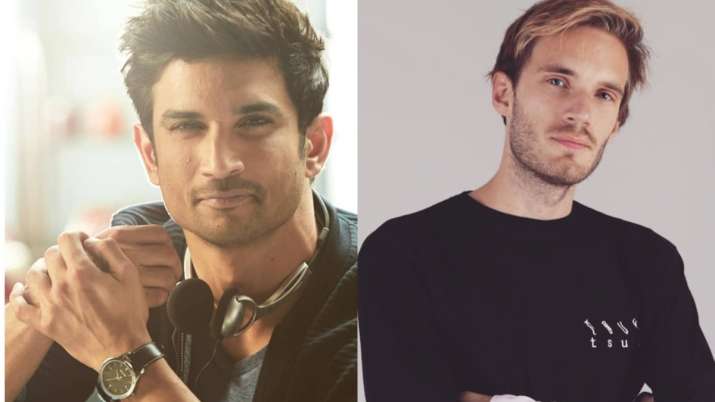
YouTuber PewDiePie's tribute video for Sushant Singh Rajput wins hearts, fans say 'we respect you more'


Popular Swedish YouTuber PewDiePie broke the internet after he shared a video paying tribute to late Bollywood actor Sushant Singh Rajput. Fans were elated that the biggest name on YouTube offered his condolences and talked about different aspects of the Dil Bechara actor's life.


New Delhi
Updated on: July 24, 2020 18:23 IST


Image Source : INSTAGRAM

Sushant Singh Rajput and PewDiePie

Popular Swedish YouTuber Felix Arvid Ulf Kjellberg aka PewDiePie broke the internet after he shared a video paying tribute to late Bollywood actor Sushant Singh Rajput. The YouTube sensation confessed that he didn't know Sushant but explained that he heard a lot about him lately and decided to enlighten his followers about his life. PewDiePie called him a 'smart dude' and shared parallels from his and Sushant's life in the video. In no time, the 24 minutes long video went viral on the internet and fans showered their love and respect through social media posts. Sushant Singh Rajput's fans were elated that the biggest name on YouTube offered his condolences and talked about different aspects of the Dil Bechara actor's life.

PewDiePie in the video talked about how he also left engineering like Sushant to pursue his dream and was an introvert. He said that he also found a medium like YouTube to be an extrovert just like Sushant claimed that acting was his medium to be out there in spite of being a reserved person. He talked about Bollywood movies in which Sushant Singh Rajput starred and also made a reference to the actor's speech at Avenues 2016, SJMSOM, IIT Bombay.

Ending his video, PewDiePie leaded Sushant for his thinking and said, "He's such a cool dude, such a smart guy, such a good message as well that I so wholeheartedly believe in just such a tragedy..it really makes you sad to think that he passed away at such a young age." He added, "Police say that he died of suicide but at least personally that someone lives in the moment..I cannot make sense out of committing suicide and there's been this whole controversy and theories about did he really commit suicide or what happened..I don't want to get into that but want it just to be a video attributing him because I think he's a cool dude and I wanted to share with my audience."

PewDiePie also claimed, "It's just this statement he had about living in the moment...obviously this was a couple of years ago but it's just you wouldn't commit suicide if you had this mindset...I don't believe that at all but then again I don't want to add to that.... Rest In Peace Sushant.. I would love to meet you..seem like a awesome dude and thank you for being you."

ALSO READ | When Sushant Singh Rajput deleted all Instagram posts after release of film Sonchiriya

Fans flooded the internet with praises for PewDiePie as soon as the video surfaced YouTube. One Twitter user said, "This video from #pewdiepie is beautiful, the fact that two people from different countries who made it to the top, on their own owing to their talent and hardwork, can have such similar experiences, inspite of the cultural differences is insightful." Another wrote, "Even the world's most successful YouTuber is sayin that Sushant can't commit suicide..Sushant Broken heart, please come back, please."

Earlier, PewDiePie also mentioned Sushant in one of his videos and said, "I have seen people talk about it and there was something about Sushant Singh Rajput. It was a university talk of this guy. He seemed like such a good dude, like a genuinely good dude. So people were pointing to nepotism in the industry and then it somehow got in clash with T-Series and that is why Unsub T-Series got trending. It’s such a shame he decided to end his life. I don’t know everything about him but from what I saw he seemed a really good dude and someone the industry needs. So it’s a huge loss. Rest in peace."

Fans are gearing up to watch late Sushant Singh Rajput's last film Dil Bechara that will release today on Disney Plus Hotstar at 7:30 pm. Directed by Mukesh Chhabra, the film also stars Sanjana Sanghi and is an official Hindi adaptation of Hollywood film The Fault in Our Stars, based on John Greene's novel with the same name.

ALSO READ | VIDEO: Sushant Singh Rajput grooving with onscreen grandmother during Dil Bechara shoot

Thursday, July 23, 2020

Chetan Bhagat vs Vidhu Vinod Chopra: Why the Author is Right in Accusing the Producer for Not Giving Him Due Credit for Aamir Khan’s 3 Idiots! Here’s a Recap of the Controversy!


Chetan Bhagat vs Vidhu Vinod Chopra: Why the Author is Right in Accusing the Producer for Not Giving Him Due Credit for Aamir Khan’s 3 Idiots! Here’s a Recap of the Controversy!

July 22, 2020
9 Min Read


Gary James]

Chetan Bhagat, the author of some very popular bestsellers, has kicked a hornet’s nest with some of his recent tweets. What began as a warning to ‘critics’ to be sensible to Sushant Singh Rajput’s last release – Dil Bechara – later became a revisit of an old wound when it came to his second experience with Bollywood. While reacting to Anupama Chopra’s tweet, Bhagat wrote, “Ma’am, when your husband publicly bullied me, shamelessly collected all the best story awards, tried denying me credit for my story and drove me close to suicide, and you just watched, where was your discourse?” 

Chetan Bhagat Alleges Vidhu Vinod Chopra Drove Him ‘Close to Suicide’ By Trying To Discredit Him From 3 Idiots (View Tweet).

The incident he was referring to happened during the release of 3 Idiots. The movie was produced by Vidhu Vinod Chopra, who is critic Anupama Chopra’s husband, and was directed by Rajkumar Hirani. Starring Aamir Khan, Kareena Kapoor, R Madhavan and Sharman Joshi in the lead, 3 Idiots was a big blockbuster in 2009 when it was released. It is still ranked as one of the best comedies produced in Hindi cinema.

The Controversy

During the pre-release chatter, it was clearly defined that 3 Idiots was based on Chetan Bhagat’s best-selling novel, Five Point Someone. However, this aspect was downplayed when the film came out, with the author himself miffed about not giving him due credit for the inspiration. To understand more about the controversy, we need to know more about the book.

Five Point Someone

The novel was Chetan Bhagat’s first book, based on his own experiences while studying in IIT. The book follows the misadventures of three friends – Hari, Ryan and Alok – who see themselves as misfits in the IIT grading system. Hari is both the protagonist and the narrator, and also the stand-in for Bhagat himself. Ryan is the one with a rebellious attitude, whose brilliance isn’t being gauged by the grading system, while Alok, who comes from a meagre household, wants to be a studious type. There is also Neha, the daughter of a professor they hate, on whom Hari had developed a crush on.

Five Point Someone, which came out in 2004, was a runaway hit, establishing Bhagat as a youth writer. Critics didn’t take much of a liking, but the book turned out to be a bestseller. Many of the writer’s ardent fans still consider Five Point Someone as his best book. 

Chetan Bhagat Birthday Special: From Salman Khan’s Hello to Aamir Khan’s 3 Idiots, Ranking All Film Adaptations of Author’s Books From Worst to Best.

Comparing Five Point Someone to 3 Idiots

As someone who has read Five Point Someone and watched 3 Idiots, I can say they are very different from each other. And even if it may affront the movie’s die-hard fans, I am of the opinion that the book was much better. However, you cannot ignore the commonalities between the two.

Yes, the film is adapted by Abhijat Joshi and Hirani, giving a different direction and adding more elements. For one, the movie is set in an engineering college instead of IIT. Hari, Ryan and Alok become Farhan, Rancho and Raju respectively. Instead of Farhan (who continues to be the narrator), Rancho is the protagonist and he also gets to woo the professor’s daughter. 

Omi Vaidya’s character Chatur, who was a minor character in the book, gets a major role and is pitched as the antagonist. The climax of the boys’ college adventures, involving a makeshift baby delivery, isn’t there in the book, and so is the flash-foward portions involving the mystery of Rancho’s whereabouts.

But there is no denying that the framework for 3 Idiots is the same as Five Point Someone, while also borrowing certain other elements, even if they aren’t played the same way as in the book. Like for example, the whole ‘machine’ definition scene in the movie. is played in reverse in the book. Ryan gives the same answer as Chatur in the book, and is chided for it by the professor. 

Like in the book, Raju tries to commit suicide, but he does so by jumping from the Dean’s room, instead of the water tank, which is their hangout place. Raju’s character is the most similar to that of Alok in the book, including his temporary breakup with his friends and later reuniting with them after they help take his sick father to the hospital.

Was Chetan Bhagat Given Credit In The Movie?

Chetan Bhagat had himself said in an old interview that he wasn’t involved in the scripting of the film, as he was working in Hong Kong then. As per the makers, the contract with the writer involved remuneration and mention the writer in the credits section.

Did that happen?

Oh, yes. But we really can understand why Chetan Bhagat was so miffed about it. The part ‘Based on the novel Five Point Someone by Chetan Bhagat’ came only in the closing credits, that too in fine print, and it came below the cast credits, media consultant, action director, stills and project team. See the screenshot of the same below:

Mention of the book in the closing credits of 3 Idiots

What infuriated the author even further was the ‘story’ was credited to Abhijat Joshi and Hirani, with no mention of Bhagat, in the opening credits. You can see that below:

The Story Credit in the Opening Credits of 3 Idiots

Even Bhagat won’t deny that he doesn’t deserve a credit for ‘Screenplay’, but not getting one for ‘Story’ is an altogether different issue. To add insult to injury, 3 Idiots won the Best Story Award at Filmfare, and IIFA the following year, which Joshi and Hirani taking the honours. Something Bhagat mentions in his tweet last evening,

Who’s Right, Who’s Wrong?

Bhagat had continued to pursue the controversy for so many years, and we don’t blame him for doing so. In a media interaction during 3 Idiots post-release promotions, when Chopra was asked about this, he flew into a rage, something he regretted later.

Hirani, speaking on this controversy, had said in 2013, “According to the contract, it clearly says that Chetan will be given credit in the rolling credit, which comes at the end of the film. He is lying when he says that his name comes after the junior artists, his name is after the main artists of the movie.” Which isn’t exactly right, as you can see in the screenshot we shared a few paras before. Even Aamir Khan had supported Hirani then, claiming that the author is raking controversy for “cheap publicity”.

Bhagat, reacting to the above statement, said, “They abused the contract and thought that they can hide the credit. They made a new credit that is of story, which gives the wrong impression that the original story was written by Abhijat and Hirani but it is my story they adapted from. They should have mentioned novel’s name in ‘Adapted By’ or they should have mentioned my name in the story credit.”

Our Thoughts

We don’t know the specifics of the contract drawn between VVC Films and Chetan Bhagat, but there is something ethically wrong that happened here. It doesn’t matter if Joshi and Hirani changed 3 Idiots to keep it very different from Five Point Someone, but the skeleton remains the same. 3 Idiots came out at a time, when Bhagat’s novels were a rage, and his fans were excited about the movie adaptation of his first novel, which added to the curiosity factor for the movie. So you really can’t deny the influence of the book in the film’s promotions, not to mention also in the narrative. Bhagat deserved better than the kind of credit he got with 3 Idiots.

Look at Hollywood. For years, they haven’t shied away from mentioning the adaptations on which their movies are based on. Even if the films are very different from the source material, the credit is clearly mentioned. For example, David Fincher’s Fight Club, Steven Spielberg’s Jurassic Park and Stanley Kubrick’s The Shining – all iconic movies – are clearly different from their source novels, but they flaunt the inspiration clearly in the credits. It is another matter that Hollywood doesn’t have a ‘Best Story’ award, instead just relying on ‘Best Original Screenplay’ and ‘Best Adapted Screenplay’.

Watch the Opening Credits of The Shining:

https://www.youtube.com/watch?v=5a-MS-lB8gM

What happened to Chetan Bhagat in lieu with 3 Idiots is something Bollywood has often been accused of every now and then – the step-motherly treatment it has meted out to the writers, never given them due credit. The author has been more involved in the future adaptations of his work, like in Kai Po Che and Half Girlfriend (also marks his debut as a producer), but he is still hurt by what happened with 3 Idiots, clearly defined by his recent tweets. And can we blame him for feeling so?

(The opinions expressed in the above article are of the author and do not reflect the stand or position of Report Door.)

(The above story first appeared on Report Door on Jul 22, 2020 03:09 PM IST. For more news and updates on politics, world, sports, entertainment and lifestyle, log on to our website reportdoor.com).