SUICIDES IN IIT's & IIT JEE COACHING SCHOOLS

"If I can stop one Heart from Breaking, I shall not live in Vain; If I can Ease one Life the Aching; I shall not live in Vain."

I have a Solution that will reduce pressure on IIT aspirants but do not know how to get this across to HRD Minister of India. Suggestions are welcome. - Ram Krishnaswamy

Search This Blog

Monday, May 24, 2021

Nobody gets the IIT story right, 3 Idiots, TVF, to Netflix’s Alma Matters


Nobody gets the IIT story right, 3 Idiots, TVF, to Netflix’s Alma Matters

Alma Matters places students before you but forgets to critically contextualise what they are saying about toxic IIT culture, or more importantly, not saying.


RAGHAV BIKHCHANDANI
23 May, 2021

IIT-Kharagpur | Screengrab from Alma Matters, Netflix

Alma matters, but so do real issues that never make it to India’s OTT platforms. Bollywood’s 3 Idiots may have been your introduction to the horrors of the Indian Institutes of Technology, but our YouTube generation is seeing a lot more campus content. If you’ve seen one, you have seen them all — whether it is TVF’s Kota Factory or the erstwhile AIB’s Honest Engineering Campus Placements or Netflix’s Mismatched. If Bollywood and YouTube managed to give viewers a glimpse into the dark secrets of suicides at IITs, a Netflix docu-series should have taken it one notch higher. But it ends up just adding to IIT nostalgia and the cult around the coveted institute.

Yes, Netflix’s Alma Matters, based on IIT Kharagpur, covered students’ mental health, suicides, the rat race — first to get in and then get to the top of your class — and competitive placement culture, but it felt more like a check-box attempt rather than a deep dive.

When will we talk about the undeniable casteism, deep-rooted patriarchy, and institutional destruction of mental health on India’s much-sought-after campuses?

Also read: Intense anxiety, burnout, entrance exams — education in India needs an overhaul
A hotbed of mental health issues

“Sir, our parents took good care of us for 20 years and sent us here thinking that we would come back home with a good degree. They could keep me alive for 20 years, but you can’t for 5 years? You’re blaming the parents who aren’t even present here! Is this not a failure of the system as well, sir?” said an impassioned student to loud applause during an open house in IIT Kharagpur to address a spike in student suicides in late 2017.

Made by two IIT alumni, Pratik Patra and Prashant Raj, Alma Matters places students before you but often forget to critically contextualise what they are saying, or more importantly, not saying.

The interviews lend themselves to bits and pieces of great moments that could have been expanded upon to truly skewer IIT Kharagpur for the flaws in the way it is run. Having a photo of Biswa Kalyan Rath on your show’s thumbnail may get you clicks, but the campuses have a lot more to say.

The greatest highlight of the series is the sincere, albeit brief, focus on students’ mental health, with multiple students directly criticising the university’s administration for its alleged inaction and apathy in providing the necessary medical facilities and support.

A Hindustan Times report from 2020 quotes a Mental Health Day survey, in which a massive 85 per cent of the respondent students at IIT Bombay considered mental health to be a common issue on campus. More alarmingly, 71.3 per cent cited academic pressure as a contributing factor to their mental health problems, while 52.2 per cent cited concerns over their professional future, which is tied to the outcome of campus placements.

Following the open house scenes in the Netflix series, a student named Srinidhi Moodalgiri mentions how unexpected it is to see students “hang a rope around the fan and just like…quit everything.” It is nonchalant explanations like these that showcase how commonplace desensitisation is in this ecosystem — but a self-preservation tactic for many students like Moodalgiri to help them survive the high-pressure environment. But wish I didn’t have to wait until the final episode to see that.

Also read: ‘Everything is abnormal’ at IIT Guwahati, students allege they’re being driven to suicide
IIT-driven content

There is much to be desired in the Netflix show’ foray into the issues that plague India’s most prestigious university. But Alma Matters is not the lone offender here. The spate of IIT-focused series may touch upon issues of mental health, alienation, loneliness, and pressure faced by students, but they are often reduced to tropes and catalyses to forward storylines.

Arguably at the forefront of the student-focused content trend has been the YouTube channel-turned production company The Viral Fever (TVF). In the years following the success of its 2015 comedy-drama TVF Pitchers, which satirised startup VC culture, the company produced a glut of series on student life as well as life after college, TVF Bachelors being a notably successful and comedic, take.

However, its first real attempt at providing a serious look into high-pressure education environments was the 2019 Kota Factory. The series focused on high school students taking coaching classes for JEE preparation. But much like Alma Matters, it was seen by viewers as a relatable take on the experiences of young students, made by IIT alumni. However, as the show went on, it appeared to be more interested in fulfilling contractual obligations with its sponsor Unacademy.

As a result, we got a highly contrived story bogged down by product placement that, in its attempt to find a happy or hopeful ending for its protagonists dealing with stress and pressure, ended up trivialising those issues.

What is more depressing is that this appeared to be a successful tactic for TVF financially, as the production company has repeated the same process with its latest iteration with the sponsor, this time on the UPSC exam.

From the trailer and hype created around Alma Matters, it appeared as if Netflix was trying to give us a new outlook on IITs. But what it ended up creating was only a gateway into these issues and some nostalgia.

On the similarly hot button issue of gender bias, for instance, the filmmakers introduce the problem in an insightful way by means of a student criticising the “inherent bias” behind the fact that IIT Kharagpur has had no female student Vice Presidents, and very few candidates, in its nearly 70-year history. However, except for a speech given by Spandana, a successful General Secretary candidate, and some light calling out of casual sexism, little is said about the university’s handling of any serious cases or allegations of sexual abuse.

There is also little connection made between the huge disparities in men and women on campus to the broader admissions process or governance of the university.

But Alma Matters, for all its flaws, is a more honest look into the issue of mental health, and takes a small step forward in painting a picture of what greater societal sensitivity towards such issues should look like.

One mainstream film that understood this, to an extent, was the Sushant Singh Rajput-starrer Chhichhore (2019), which was partly set in IIT Bombay and focused on interpersonal relationships, the high-pressure JEE coaching process, and briefly, on mental health issues. More need to go down this route.

Ultimately, the onus should not be on IITians-turned-filmmakers to find solutions or be the forerunners for the cause of mental health awareness, but it is their responsibility to not mislead viewers or trivialise issues. If only this was more widely understood.

Views are personal.
Posted by R.K at 3:11 PM
Email ThisBlogThis!Share to XShare to FacebookShare to Pinterest
Labels: Nobody gets the IIT story right- 3 Idiots- TVF- to Netflix’s Alma Matters

Tuesday, May 18, 2021

The Kota Model Of Cracking JEE: COVID Or Not, It’s Unhealthy For Students,


This post has been self-published on Youth Ki Awaaz by Prabhanu Kumar Das. Just like them, anyone can publish on Youth Ki Awaaz. Find out more

The Kota Model Of Cracking JEE: COVID Or Not, It’s Unhealthy For Students
By Prabhanu Kumar Das in Campus Watch, Education, Mental Health, News
17th May, 2021

More from Prabhanu Kumar Das

Trigger Warning: Mentions of suicide

An article on May 4th, 2021 by The Print spoke about how lockdown till 17th May in Rajasthan will adversely affect those running coaching centres and other allied businesses like hostels and PGs. One of the people that The Print spoke to said that Kota will become a “suicide hub” if these businesses aren’t allowed to resume. Of course, the livelihood of many will be affected, but hasn’t Kota always been a “suicide hub” for many students who go there, due to the stress and anxiety these institutes and the system puts on them?

Dialogue from the TVF Show ‘Kota Factory’. Translation: Children leave Kota after two years, but the effect of Kota on students stay for many years.
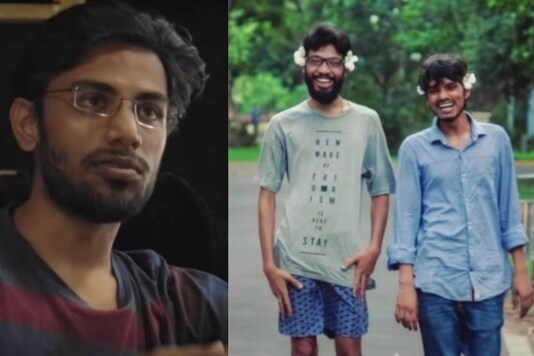
For those who are not aware, Kota is a city in Rajasthan where lakhs of students go every year to enrol and study in IIT-JEE coaching centres. JEE being the exam to crack into any engineering course in India, it has had a notorious history of being extremely hard to crack, and many engineering aspirants look at coaching centres as a way to get an edge. However, the entire culture around these coaching centres and the system that JEE represents leaves no space for the mental health of the student. Kota is no exception.

Kota became a hub for engineering and medical aspirants in the 80s, reinventing itself with the growth of many coaching centres promising a quality education. Pre-pandemic, there are usually around 1.5 lakh students in the city at any point of time preparing for the same.

Many of these students leave their homes and are thrown into an unknown, high-pressure environment without the love and nurturing children need at this age. Add to the fact that Indian parenting contains a lot of pressure towards material results for appreciation and care, one can see how the journey to Kota is daunting and extremely stressful to many students.

Add these high expectations to the fact that there are no fee refunds, up to 18-hour study shifts, and segregation based on ability. Fees are anywhere between 50,000 to a lakh annually, and with the no refund policies many Kota institutes employ, the pressure just becomes worse and worse for students coming from marginalized and economically weak backgrounds whose parents have had to borrow money to send their ward to Kota.

Since 2013, Kota has seen 85 suicides. The mental trauma that Kota inflicts on students is harrowing. In an article by Times Of India, parents of a Kota student explained the effect going there had on the student, saying “It started with a headache, fatigue, and bed-wetting. He now suffers from blackouts, partial memory loss, and occasional hallucinations.”

In December 2018, news of 3 student suicides in Kota shook the country. The city and many coaching institutes tried to rebrand their image, but the pervasive practices and pressures of Kota remain. A documentary by Hemant Gaba titled “An Engineered Dream” is a poignant story capturing the effect of Kota on the many aspirants that head there in the hopes of a better future.

This issue is not just restricted to Kota, with many coaching centres for the science field employing the same practices, and the students going there facing the same pressure. Kota is a symptom of a larger problem, and that is the current state of the Indian education system.

A student dies by suicide every hour in India, and a lot of it is due to the pressure that the system puts on students. Institutes like those in Kota arise out of the desperate need of struggling students to get that extra edge over their peers, whether they get an extra edge or not, I am not one to say. What I can say is that the system that makes students look at their peers as competitors that they need to beat, and the Indian attitude that places material success over well-being is a killer.

And it needs to change.
Also read: “Why Are Student Suicides On A Rise? The Answer May Lie In Unrealistic Academic Standards“

Like what you read? Recommend or share it ahead.

Posted by R.K at 6:38 PM
Email ThisBlogThis!Share to XShare to FacebookShare to Pinterest
Labels: Kota Suicides

Saturday, May 15, 2021

Alma Matters Review: Big Dreams Come at a Heavy Price

Alma Matters Review: Big Dreams Come at a Heavy Price


The docu-series Alma Matters is a look inside IIT Kharagpur, one of the most reputed engineering institutions of India.

NEWS18.COM
LAST UPDATED:MAY 14, 2021, 17:39 IST


Alma Matters
Creator: Prashant Raj
Directors: Prashant Raj, Pratik Patra


The New Netflix documentary Alma Matters is a look inside IIT Kharagpur, one of the most reputed engineering institutions of India. With three hour-long episodes, the documentary tries to break the stereotypes one often associates with the place.

At first glance Alma Matters looks like a documentary which talks about the pressure of studying in IIT Kharagpur. That’s how it starts, with students talking about the overwhelming rat race and the fact that most student chose the college over their stream. However, what this series tries to do, is celebrate the institution with all its flaws.

The first episode is divided into three parts. The first part is about how IITans are branded as the ‘cream’ of the nation and the repercussions associated with it. A lot of students don’t get the subjects or streams they want and end up losing the motivation to study. This leads to a cycle of disappointment. In the second half, we look at the heirarchies that exist within the campus, how a “chaggi" or a six pointer is different from the eight pointer. We see students take respite in the extra-curricular activities.

The third part of episode one is titled 1:9. It is about how women are overwhelmingly outnumbered by men in the institution. We see this from the point of view of the Vice President elections and how in the 60 years of its existence, there has never been a woman VP candidate. We meet the first ever Sports General Secretary Spandana, who talks about facing sexism and almost losing the will to contest.

While it is noble to call out sexism in IIT Kharagpur by devoting a slot to it, this is the only segment in the entire three-part series that women have a voice in. In fact more men are interviewed to talk about sexism in women. In the second and third episodes where the film talks about important issues, no female student is actually featured. Like they are not scared of placements, or have responsibilities towards their families. When you box women into just one slot and that too give them a quarter of space that you give to your male subjects, it is tokenism at best.

The second episode is all about placements. We see five to six boys prepare for different jobs. They talk about what their families and the society expect out of them. After an intense episode we see our protagonsists landing great placements. Here too, the non-existent role of women is jarring. Cigarette smoking and foul mouthed college boys are beneficial to the narrative, but imagine how interesting some of those stories could have been. IIT Kharagpur is a boys club, we get it.

The third episode is probably the best made. It starts with an IIT KGP tradition that the rest of the world did not even know existed. On every Diwali, the students get together and create a light show with diyas in an extavagant scale. Called ‘Illu’ (from illuminate) by the students, it is actually exhilarating to watch them build something out of scratch and it turning out so beautifully.

However, this feeling quickly dims down since days after this event, we find out that a student has died by suicide. It is also that year’s fifth suicide. This sparks a larger, more important conversation about how the system has failed so many students. When the authorities try to shift the blame, a student passionately says, “Our parents raised us for 20 years and nothing happened to us, you couldn’t keep up alive for five years?"

That moment is definitely goosebump inducing.

Since Alma Matters is a celebration of the institution, we quickly transition into the ‘last days of college’ phase. We see everyone at their most vulnerable, their dorm rooms, their relationship with each other, their relationship with strays who become pets. It is a sweet sentiment, one that makes us yearn for our college days. At the end of the day, the students say, it is an experience of a lifetime.

One thing that Alma Matters makes clear is that a student’s life is not easy. And in hindsight, keeping in mind the Covid-19 pandemic, it makes us realise how horribly we treat our students.

Alma Matters is a good documentary, however, some things feel incomplete. We get to know nothing about the female students. It might have been because the directors, who were men, were not really allowed to shoot in their dormitories. However, we get to know the guys very intimately, from their hopes and dreams , their personal life, down to where they stash their alcohol. Hence, it feels like a cop out, despite these protagonists being very interesting.

On the other hand, we don’t get to know about other important issues. For instance, about two days ago, an IIT KGP teacher was suspended for openly abusing ST and SC students. This lead to a movement in which students from the Dalit, Bahujan, Adivasi (DBA) community called out other casteist teachers. We do not get to see the rampant casteism, we also don’t get to see students with disabilities and those from underprivileged backgrounds.

Of course, Alma Matters sheds light to important topics. However, it doesn’t talk about every topic. Maybe that was the narrative they wanted to convey, maybe some topics were really uncomfortable to address. However, a lot of effort and passion has been put into Alma Matters and it shows.

Posted by R.K at 5:59 PM
Email ThisBlogThis!Share to XShare to FacebookShare to Pinterest
Labels: Alma Matters Review: Big Dreams Come at a Heavy Price

Thursday, May 13, 2021

Assistant registrar at IIT Kanpur commits suicide


Assistant registrar at IIT Kanpur commits suicide after toddler tested COVID positive, police suspect depression


The deceased was reportedly depressed. His family said his younger son, who is just one and a half years old, had tested COVID positive and hence Surjeet's depression had deepened


Edex Live


IIT Kanpur

Surjeet Kumar Das, an assistant registrar at IIT Kanpur committed suicide at his official residence in Kanpur.

The deceased was reportedly depressed. His family said his younger son, who is just one and a half years old, had tested COVID positive and hence Surjeet's depression had deepened.

Kalyanpur police station's Inspector Veer Singh said, "As per an initial investigation, the deceased Surjeet Kumar Das was in a depressed state and was under the treatment from a doctor based in Delhi."

READ ALSO: More than 1000 IIT alumni write to IIT KGP calling for the termination of prof who abused students during lecture

Police said Das was found hanging from a ceiling fan in his residence on Tuesday evening. The body has been sent for post-mortem. "The deceased Surjeet was a native of Assam and lived with his wife Bulbul, mother-in-law and two sons. His elder son is eight years old while the younger one is one-and-a-half years old. Kumar was under treatment for depression since 2011," Inspector Veer Singh said.


Posted by R.K at 5:33 PM
Email ThisBlogThis!Share to XShare to FacebookShare to Pinterest
Labels: Assistant registrar at IIT Kanpur commits suicide

Wednesday, May 5, 2021

Kota business owners say city will become ‘suicide hub’ as education industry is hit by lockdown - The Print


Kota business owners say city will become ‘suicide hub’ as education industry is hit by lockdown

Rajasthan is under a lockdown until 17 May. Kota’s coaching centres closed on 16 April. This has hit the city’s coaching industry, which was already damaged by the pandemic.

ANEESHA BEDI 4 May, 2021 4:03 pm IST

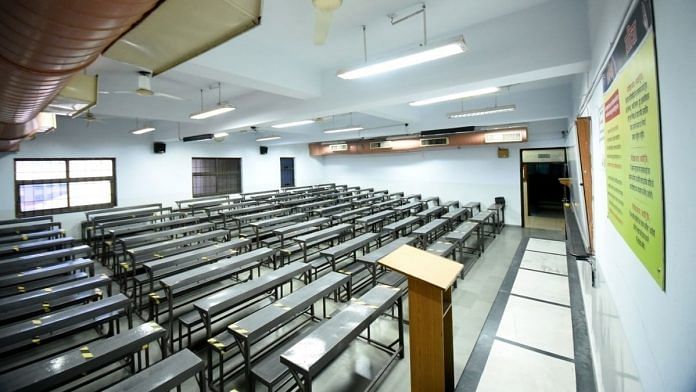
An empty classroom in a leading coaching centre in Kota. | Photo: Rohit Jain Paras/ThePrint
Kota: Ashutosh Yadav, a 17-year-old from Ghaziabad, is sitting on the terrace of his four-floor hostel building in Kota. He is in town to prepare for the IIT-JEE entrance examination. But Yadav is missing the comfort and ease physical classes offered.

A student of Allen Career Institute, which is located just a kilometre from his hostel, Yadav says, “We had returned only in January hoping things would get back to normal but this seems endless.”

With classes across the engineering and medical coaching hub in Rajasthan shut for an indefinite period, Yadav’s friend, Rishu Raj, 20, is also unable to decide what to do. Raj’s parents want him to return home in Bhopal at the earliest. “But I feel distracted at home, it’s easier to focus in this environment here,” he tells ThePrint.

Yadav and Raj are among the 13,000 students who are currently in Kota, data from the district administration shows.

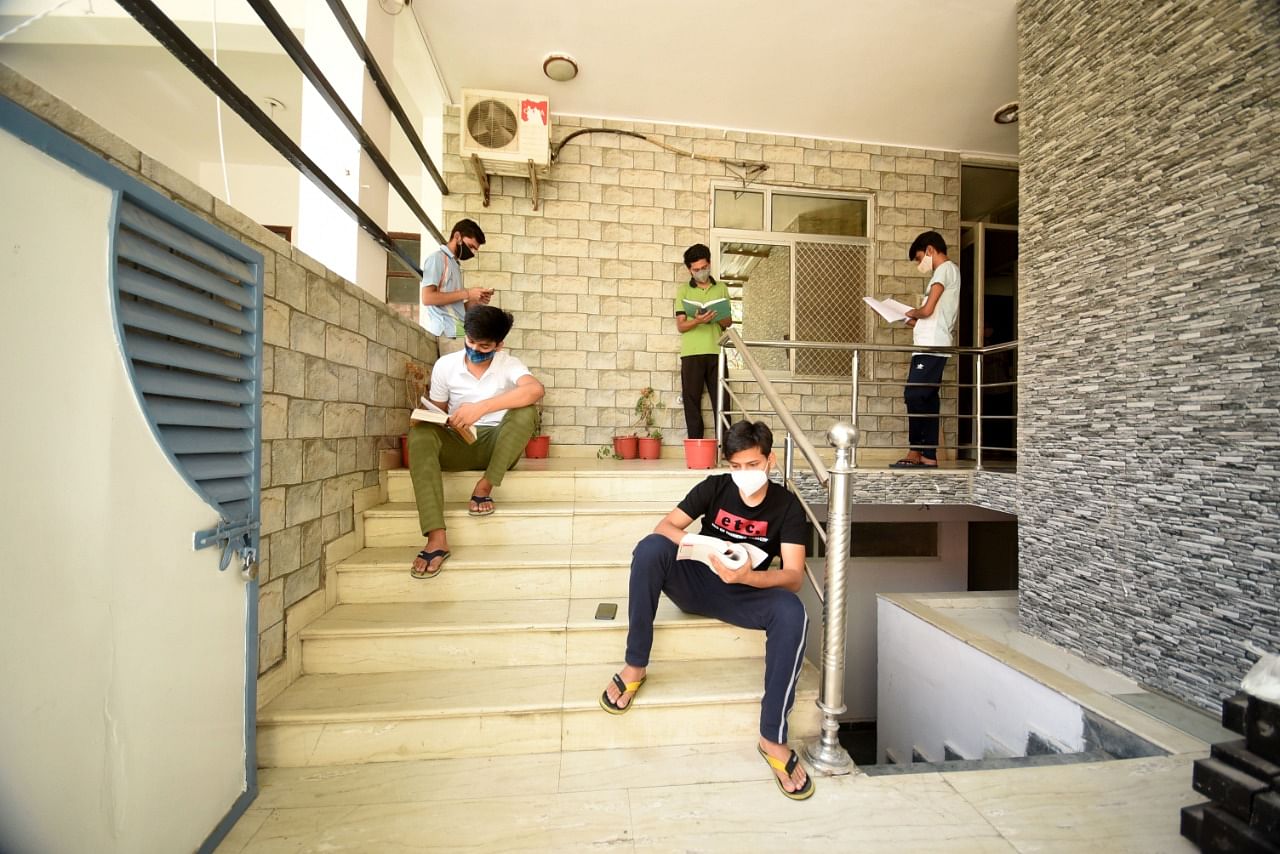
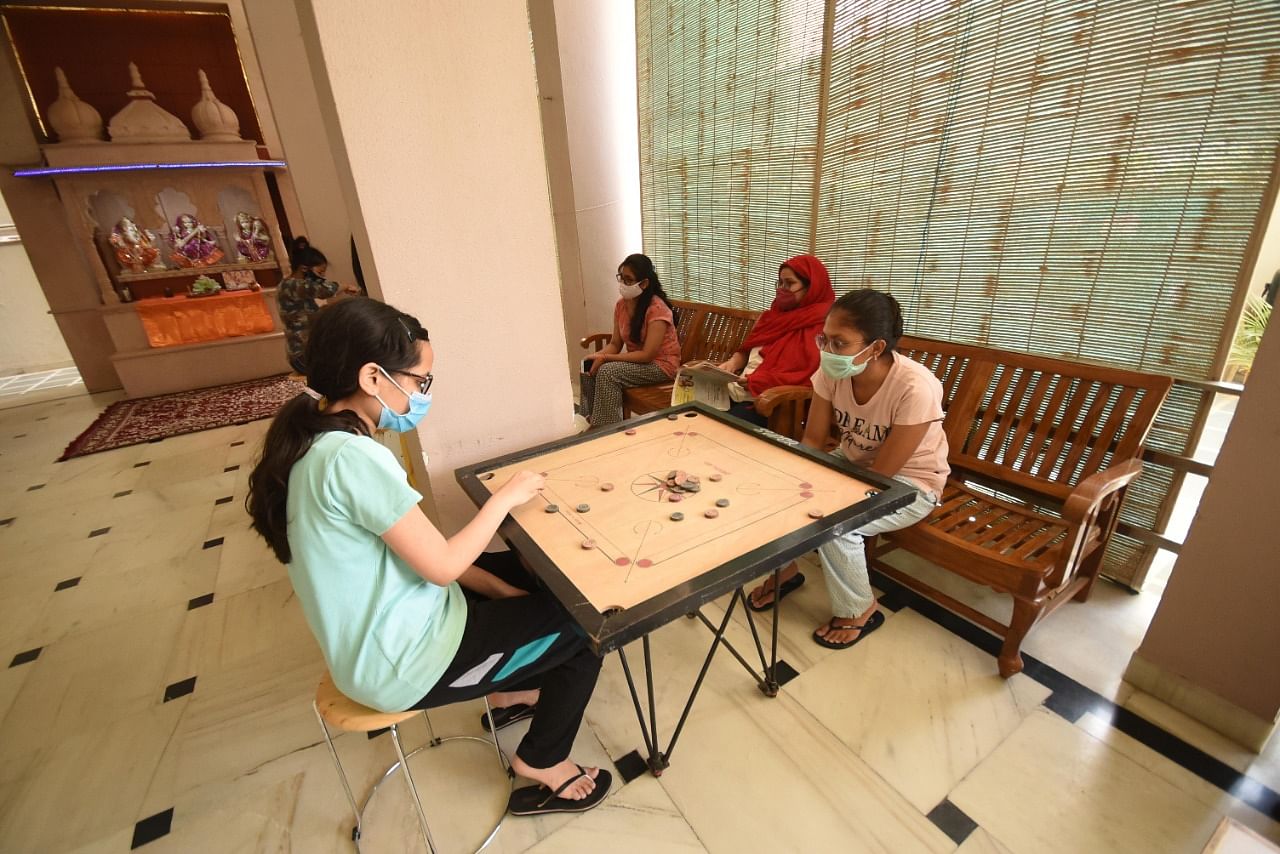
A group of friends seen doing group studies while following Covid-appropriate behaviour in their hostel. | Photo: Rohit Jain Paras/ThePrint
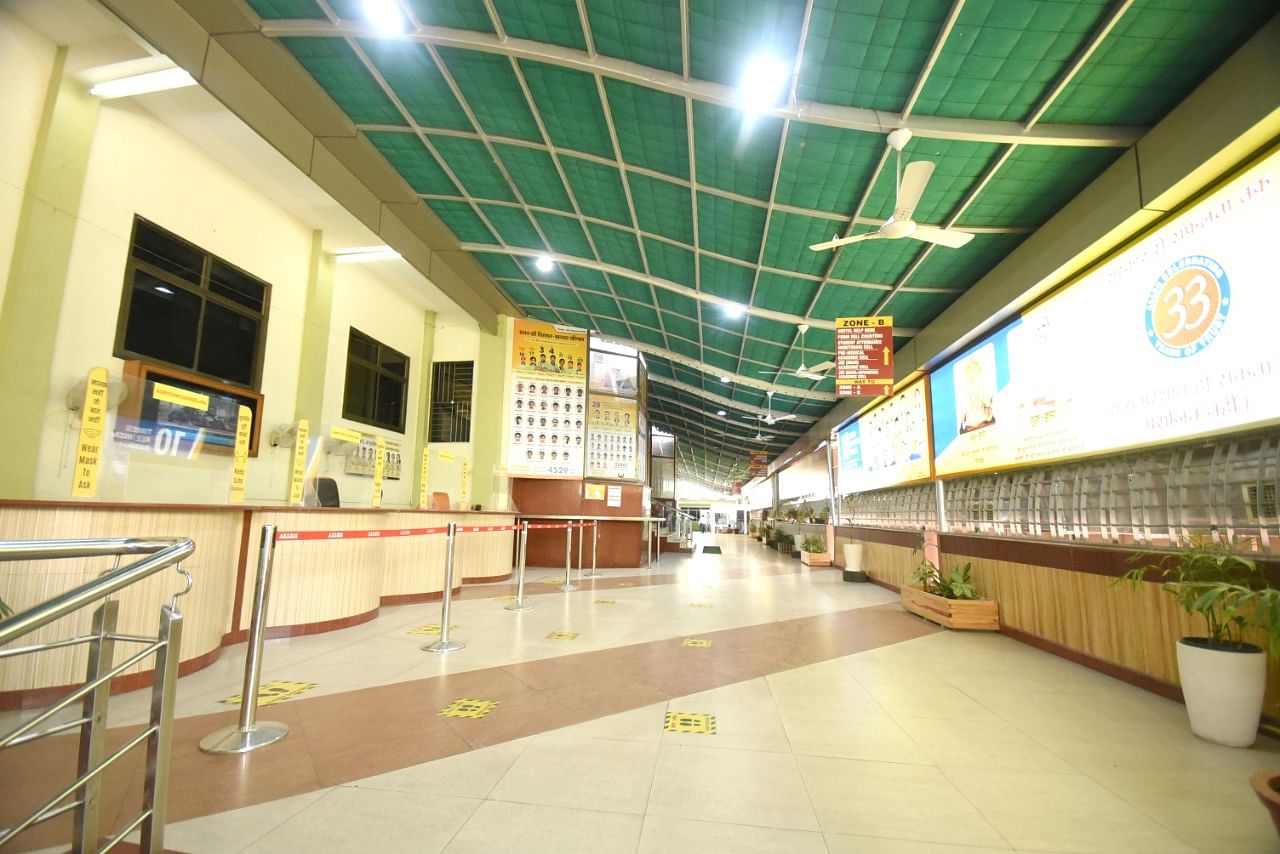
This is a significant fall from the 1.35 lakh students who took physical courses in 2019. At least 50,000 of them were evacuated in March 2020 ahead of the national lockdown in special trains, official records of Kota administration revealed. Around 10 per cent of them remain in the city.

Now, Rajasthan is under a lockdown until 17 May, which initially began as a weekend curfew in the middle of April. Kota’s coaching institutes closed on 16 April, and have remained shut since. The lockdown was extended by a fortnight.

This has hit the city’s coaching industry, affecting the livelihoods of many, who were already dealing with the costs of the first wave of the pandemic.

Also read: CM to sarpanch, how Rajasthan pulled together to beat vaccine fear, become top performer

The Kota industry

The coaching industry in Kota directly or indirectly impacts the livelihoods of at least 2 lakh people in the city, including its 3,000 hostel and 20,000 paying guest (PG) accommodation owners, local vendors, shopkeepers, mess staff, auto drivers, security guards and so on.

The closure of these institutes has impacted Kota’s economy dependent on them.

“Revenue worth Rs 3,000 crore was earned in 2019 through the coaching centres and the stakeholders dependent on them in Kota, which reduced to about Rs 1,500 crore in the past one year,” says Vinod Kumawat, senior vice president, Allen Career Institute, Kota. He has been in the coaching business for 33 years.

Many of these stakeholders are worried about the rising Covid cases in Rajasthan. On Monday, the state reported 17,296 cases and 154 deaths.

According to data obtained from the district magistrate (DM)’s office, Kota’s positivity rate rose from 11.12 per cent on 1 April to almost 38 per cent on 30 April.

While the state bulletin showed that Kota reported 762 Covid cases Friday on 30 April, the data for the day from the DM’s office showed 1,526 cases.

Explaining this discrepancy, DM Ujjval Rathore says: “The 1,526 figure is that from laboratories, includes repeat tests as well as those of outsiders.”

Owners of coaching centres have asked government officials to let them reopen with safety measures in place. Hostel owners argue that if by-elections could be held in April, coaching institutes must also be allowed to operate.

A deserted entrance to a coaching institute in Rajiv Gandhi Nagar, Kota. Staff and students are now operating from home and hold either live or pre-recorded sessions online. | Photo: Rohit Jain Paras/ThePrint
Kota will become ‘suicide hub’, say business owners

However, the empty, tall, brick campuses that welcome visitors to Kota are testimony to the gloom that has hit the city. From the usual heavy rush of students from all over the country, the hostels and PGs now lie deserted.

Sunil Agarwal, a hostel owner, says, “We have taken so many measures to ensure safety of students… why must the government not consider reopening centres once?”

From regular sanitisation to checking temperature of students daily to creating a separate isolation facility in the hostel, Agarwal lists them out.

“We have even provided pulse oximeter and kettles for steam to each of our students as we also care for their safety,” he says, adding desperately: “More than a coaching hub, Kota will soon be known as ‘suicide hub’ for us as we won’t survive this way.”

Naveen Mittal, chief of the local Kota Hostel Association, says, “We took loans last year as well. We haven’t been able to repay those and this year seems to be making it tougher for us.”

Some of the hostels have anyway been operating at 30 per cent capacity since students returned in January.

Teena Sharma, warden at Adarsh Boys Hostel in Kota, shares that out of a total of 110 rooms at her hostel, 59 were occupied as of 30 April. “But many boys want to leave with the lockdown extended in Rajasthan.”

The hostel has also converted its fourth floor into a quarantine floor where any student who shows symptoms is isolated.

Auto driver Monu Lal, a regular outside this hostel, is also suffering the consequences. “We used to earn at least Rs 700 to 800 a day when children were in the town. Now, we barely make Rs 80-100 on a good day,” Lal tells ThePrint, with his auto parked under a tree.

In another girls’ PG accommodation, four girls who learnt about the JEE-Advanced getting postponed, are packing their bags to leave.

“I don’t know when things will be back to normal so I’ve decided to be with my grandparents in Odisha till then,” says an engineering student of Career Point Coaching Institute.

An empty classroom in a leading coaching centre in Kota. Photo: Rohit Jain Paras/ThePrint
“Migration of students has started even though at least 30,000 students returned in November last year. We have advanced the summer vacation this year,” says Pramod Maheshwari, director, Career Point Coaching Institute.

Nearly 5,000 faculty members, including administrative staff, are also impacted. Salaries of faculty at various institutes have been reduced by 10-25 per cent, coaching centre owners confirm to ThePrint.

State Health Minister Raghu Sharma, however, tells ThePrint: “Loss of industrial resources can be made up for. But a lost life won’t come back. Kota is among our worst impacted districts and needs to remain under lockdown. At this point, saving lives is the government’s priority.”

Also read: How India’s high courts turned Covid warriors as Centre and states faltered
Turn to innovative modes for survival

Stationery shop owners in Kota claim lack of students is making them shut shop.

Rakesh Kumar Jain, president, General Merchants Association, Kota, says: “All kinds of businesses have been hit, stationery shops were a big business in this city, now some of the stationery shops owners have been coming to me saying they are shutting shop.”

Jain adds that they are now looking at alternate ways of doing business, including the online mode.

Such moves are being seen among others too.

Manoj Sharma, for example, took over as the CEO of Vibrant Academy, one of the better known coaching institutes in Kota, after working with rival group Resonance for over 18 years. The reason, he says, is his new employer’s tie-up with Unacademy, an education start-up backed by tech giant Facebook with a valuation of over $2 billion.

Speaking to ThePrint, Sharma says: “There is too much uncertainty since we thought things will improve with children returning in January but now things are worse than last year.” He adds that he was thinking of more tech driven solutions to retain student’s focus for exam preparation.

Similarly, Motion Education Pvt. Ltd is now thinking of ways to address each student’s needs separately. “Our content was the same based on the entrance examination but Covid has given us time and we’re thinking of offbeat solutions to look at each student’s need individually and address those though pre-recorded sessions through online platforms,” says Nitin Vijay, who is the director of the institute.

Also read: How Bhilwara is using lessons learnt from its 2020 ‘model’ to fight this Covid wave
Other industries hit too

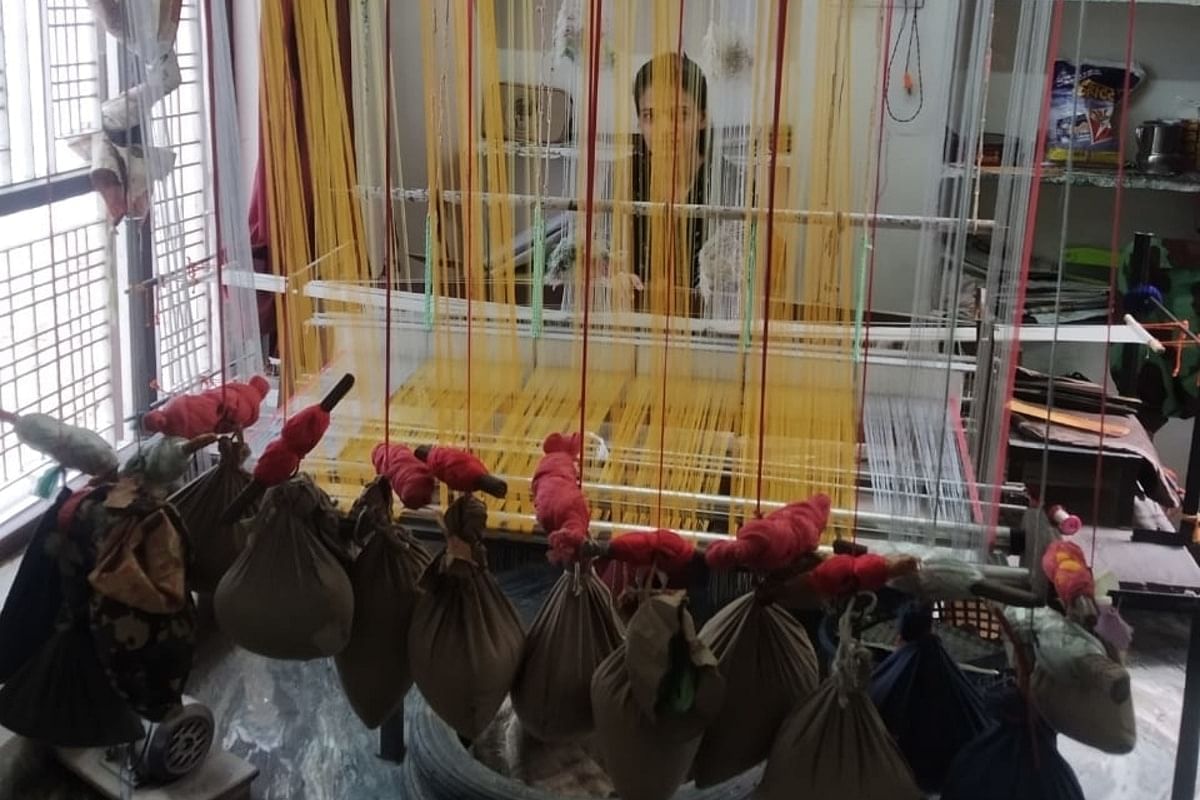
But the coaching industry isn’t the only sector that has been impacted in the city. Kota is also home to weavers. At least 3,000 looms in Kaithoon municipality, where the much talked about Kota Doria sarees are woven, have been severely hit.

With uncertainty over when there will be buyers again, Shabbir Hussain Ansari, owner of one such yarn business, says: “The production has been going on, but I haven’t had a single buyer in the past fortnight.”

A weaver seen at Shabbir Hussain’s shop amid the lockdown under which the Rajasthan government has allowed production in factories. | Photo by special arrangement

The curfew has also come at the peak sale season for the Kota Doria weavers, as these sarees are popular during the summer wedding season in parts of southern India.

The stone and fertiliser industry in Kota has also been badly hit as it is dependent on oxygen supply.

Govind Ram Mittal, a renowned industrialist in Kota and owner of Mittal Dhatu, one of India’s oldest and largest producers of metallic stearates, says the turnover of industrial output had reduced by 50 per cent amid the second wave.

“The industrial sector had incurred 75 per cent losses from original turnover of Rs 2,000 crore (before the pandemic hi). However, we managed to make up 25 per cent when the industrial production began,” he says, adding that with the latest surge in cases and curfew, it was down to Rs 1,000 crore once again.

Kota houses at least 14,500 MSMEs too. Achal Poddar, who is the owner of Chambal Stone Cluster Pvt. Ltd as well as the secretary of Rajasthan chapter of Laghu Udyog Bharati, says: “Each of these 14,000-15,000 MSMEs in Kota generate at least Rs 2 to 3 crore annually as revenue, but in 2020 this was impacted by at least 30 per cent.”

According to him, the uncertainty is even more this time. “Our stone industry involves construction work and hence labour is key, which we deprived off,” Poddar says, adding that grazing work in such industries requires oxygen supply.

“Here, people aren’t able to get oxygen, let alone us. So we would rather let the industry suffer then people’s lives. I can’t explain how it feels,” he adds.

(Edited by Amit Upadhyaya)

Also read: India’s vaccine shortage threatens to prolong its Covid crisis


Posted by R.K at 5:35 PM
Email ThisBlogThis!Share to XShare to FacebookShare to Pinterest
Labels: Kota business owners say city will become ‘suicide hub’ as education industry is hit by lockdown- The Print, PRINT

Tuesday, May 4, 2021

What IIT Kharagpur Professor’s Abusive Remarks Tell Us About Casteism In Educational Institutions,


What IIT Kharagpur Professor’s Abusive Remarks Tell Us About Casteism In Educational Institutions
By Shivani Gual
-May 4, 2021


Trigger Warning: Caste-based oppression, verbal and emotional abuse

While scrolling through my Instagram on a lazy afternoon, I came across a video of an IIT Kharagpur professor, Seema Singh. The video shows her taking an online class in a preparatory English course meant to help students belonging to the Scheduled Castes, Scheduled Tribes and Persons with Disabilities to perform well in the IIT JEE exams the coming year. Professor Singh is seen being evidently casteist towards and abusing the students, using foul language and addressing them with words like “bloody bastards”.

“Shameless creatures, you have to stand up for only two minutes for the national anthem, you cannot do it, and bloody ba****ds, this is on your parents, I am calling your parents that. Do you have any shame?” “What I have to do, I will do. Nothing on earth can prevent me from doing that thing. Go to the Ministry of Woman and Child Development, go to the Ministry of SC/ST and Minorities, nothing will prevent me from doing what I have to do to you. Is it clear? Hello, bloody ba****ds, is it clear? (sic).” — These are just a couple of instances of the IIT Kharagpur professor’s casteist remarks towards the students.


… nothing will prevent me from doing what I have to do to you. Is it clear? Hello, bloody ba****ds, is it clear? (sic).” — These are just a couple of instances of the IIT Kharagpur professor’s casteist remarks towards the students.

Also read: Remembering Rohith Vemula And Casteism In Indian Universities

Soon after around three video clips of Singh misbehaving with the students went viral, several people as well as social organisations came forward and criticised the unjust behavior of the professor. Over 800 IIT alumni wrote a letter to the Director of IIT Kharagpur condemning the professor’s behaviour. They demanded her termination from the institute apart from an apology to the students, which she later handed over.

 According to a Hindustan Times report, Singh said that she “went overboard” because she had tested positive for COVID-19. Meanwhile, several anti-caste activists denounced the apology as ‘useless’ and ‘dishonest’.

This outrageous episode is a classic case of intrepid casteism. Some of us might question this argument and simply call it a teacher-student-bashing incident. I would have been extremely happy if that was the case but unfortunately it is not so. When a group of students belonging to the marginalised sections of the society is mistreated, threatened, and abused, we cannot be ignorant and presume otherwise.


Casteism, even though outlawed in India, presents itself in multiple ways in educational institutions. In Justice D Y Chandrachud’s words “Overt discrimination has now become systemic”. The IIT Kharagpur professor’s case of verbal abuse and humiliation is not an isolated event. Every now and then, we witness cases of caste discrimination and tell ourselves ‘educated people are not casteist, this happens only in rural India’. But does it?

Rohith Vemula’s suicide in 2016 was closely related to his Dalit identity. The University of Hyderabad deprived him of his monthly scholarship and hostel accommodation. Apparently, his death came easier to him than his victory against the institutional system. His last words were “My birth is my fatal accident” which reflected his struggle as a marginalised born.

Also read: The Impact Of Social Disadvantage & Implicit Bias On Intellectual Performance

Bal Mukund was another Dalit student from Uttar Pradesh who died by suicide in his AIIMS hostel room in 2010. The faculty and students were always teasing him as the “quota guy”. These two cases were the ones that received media attention owing to the prestige of their institutions. Many other unfortunate cases don’t even get a chance to come into the limelight.

Singh brazenly saying “You can go to ministry of women and child. Go to ministry of SC, ST, and minorities. Nothing can prevent me from doing what I have to do to you” shows the fearlessness that reverberates in her words.

An important question that arises at this point is: where do discriminatory offenders derive their sense of authority from? It is probably due to the existing hegemony of the upper caste communities in almost all the authoritative positions- be it executive or judiciary. As a result of which, it becomes easier to get away with this kind of inhuman behaviour.

Another riveting question we need to ask is whether the IIT Kharagpur professor would have reacted with similar aggression over something as small as asking for a leave if it was a different set of students, for instance, a bunch of savarna students. My intuition tells me otherwise.

Further, it is highly unlikely that the upper caste students or their parents would have tolerated such a scandalous misconduct. Contrary to this, in the video, the students are listening without protest as if this kind of experience is embedded in their genes. The psychological safety that the offenders have while subjecting Dalits, Bahujans, or Adivasis (DBA) to casteism is nauseating.

In her apology statement, accessed by the Hindustan Times, Singh gave mental health reasons for her distasteful behavior. She explains how the isolation and lack of support that she has been experiencing in these difficult times led to her outburst. The cited reasons may likely save the IIT Kharagpur professor from termination or even public criticism. But will it be fair and just?

Clearly, despite laws like the SC/ST Act 1989, marginalisation and discrimination based on caste haven’t left the country. The government provides for setting up SC/ST cells in universities and other institutions to support the DBA students. These cells are there for helping the reserved category persons in different aspects of their learning journey. However, the truth is several institutes do not have a functional SC/ST cell.

These cells also act as a Grievance Redressal help desk for students. Therefore, every institution that gives admission to DBA students should mandatorily have these support cells. In order to take their place in the developing society, it is important that these students feel safe, secure, and respected.

Professor Singh belongs to the Humanities and Social Sciences department at IIT Kharagpur. Given the field of study, aren’t they supposed to be more sensitive and compassionate, especially towards socially underprivileged ones? Ironically, Singh has co-authored a paper titled Learning to Learn from the Other: Subaltern Life Narrative, Everyday Classroom and Critical Pedagogy.

Our teachers, at school or college, have often been our guide and confidant in times of need. Such callousness of teachers deteriorates the already suffocated self-esteem of these students. Consequently, it exposes the already suppressed students to the maltreatment by other members of the institute.

Professor Singh belongs to the Humanities and Social Sciences department at IIT Kharagpur. Given the field of study, aren’t they supposed to be more sensitive and compassionate, especially towards socially underprivileged ones? Ironically, Singh has co-authored a paper titled Learning to Learn from the Other: Subaltern Life Narrative, Everyday Classroom and Critical Pedagogy.

One cannot emphasise enough on how educational institutions should not rely on degrees alone in recruiting the faculty. It becomes crucial that they are tested on their emotional intelligence and social awareness levels too. Apart from providing technical training to the faculty and staff, the institute should socially sensitise them. They need to be more inclusive towards the diverse set of students that are present on the campus.

Providing education opportunities is not enough for creating an equitable system. It is necessary that enabling conditions for marginalised students are established in a step in the direction of our fight against eliminating caste-based discrimination.

Featured image source: LiveWire
Posted by R.K at 9:35 PM
Email ThisBlogThis!Share to XShare to FacebookShare to Pinterest
Labels: Humanity Prof Seema Singh- IIT Kgp calls her students "Bloody Bastards"

Thursday, April 29, 2021

Why IIT students need a political space


Why IIT students need a political space

The institutes are oppressive and discriminatory, and authorities are quick to shut down any space for dissent or debate.

ByRahul Kumar28 Apr, 2021


On March 28, as students at IIT Guwahati celebrated Holi, an undergraduate student was sexually assaulted by a fellow student on campus.

The assault was confirmed in a preliminary medical report but denied by the administration. 

A student was later arrested and charged with rape.

In the same month, a PhD student was expelled by the same institute for a Facebook post that questioned the credibility of the JEE. The institute said he “misinterpreted facts” resulting in “defamation”.

Earlier this month, the alumni body of IIT Gandhinagar issued a statement highlighting the college’s exclusionary measures during the Covid pandemic. 

Students were being forced to pay a “quarantine charge” if they wanted to use quarantine facilities on campus which, the alumni body pointed out, discriminated against marginalised students.

Students were also penalised for failing to meet attendance requirements during the pandemic.

More recently, a professor from IIT Kharagpur was captured on video abusing students from marginalised backgrounds during an online class.

We need to remember that the IITs are well-known for their high suicide rates. 

Last year during the lockdown, a PhD student died by suicide at IIT Gandhinagar. 

This is just one of the many things wrong with India’s “premier” institutions. Cases of suicide are deliberately buried in files to enable the institutes to maintain their public image.

The institutes are oppressive and discriminatory, and students have no agency to speak out against the authorities. 

The high suicide rates stem not only from academic pressure but issues of caste and religion. 

Compared to central universities like Delhi University, Jawaharlal Nehru University, University of Hyderabad, and Jamia Millia Islamia, the IITs have little or no political space. Elected student bodies have limited power, operating as extensions of the administration.

Some students groups have been trying to create space for activism at the IITs, such as 
APPSC at IIT Bombay, 
APPSC at IIT Gandhinagar, 
Chintabar at IIT Madras, 
Students for Change at IIT BHU, Science Education Group at IIT Kharagpur, 
and IIT Delhi for Justice, Freedom and Democracy at IIT Delhi. 

An inter-IIT support group called COSTISA has also attempted to promote progressive politics and campus democracy. However, many of the IITs have already cracked down on these initiatives, urging students to embrace the status quo instead and abandon independent thought.

In 1928, Bhagat Singh wrote a piece on students and politics to address the importance of student participation in political movements. He wrote: “It was the efforts of students and youth that has brought independence to any country which are now free. Will the youth and students of India be able to save the existence of themselves and their country by remaining aloof from the freedom struggle?”

Singh also wrote that students “should study, surely study. But along with it, they should also acquire political knowledge and, when required, should not hesitate to jump into the fray and dedicate their life to this work. Sacrifice their life for the cause.”

So, what are the IITs afraid of ? 
Should students at centres for higher education be involved in politics? Students are voters; therefore, they are already involved in the conventional political process. Students cannot be asked to ignore basic issues of human rights that affect them and their families and be told to focus on their studies instead. This is naïve, an assault on democracy, especially considering the irrational times we live in.

Political leaders and activists tend to emerge from campus politics. They gain trust and cultivate strategic skills and leadership qualities in the process. Student politics facilitates the reinforcement of social ties, the formation of new alliances, the promotion of communal unity, and helps hold the administration accountable. Without it, students will become mindless machines of corporate mills, unable to react to current issues. Or, in the case of the IITs, they become technological zombies.

Interestingly, most politically active students are from the humanities and social sciences disciplines in the IITs, nurtured by a general sense of trepidation against the authorities and their concomitant apparatus. But it’s important for students from other disciplines, primarily science and technology, to get involved. 

In the 21st century, new and emerging technologies have far-reaching political implications. If we analyse the relationship between science and state politics, we see how the science-state affinity can help shape social dimensions.

Hence, it’s high time for the IITs to equip its science and technology students with the space and know-how to familiarise themselves with changing socio political narratives of the global order rather than confining them to imaginary technological cocoons.

It’s also imperative that the student communities stand together for their democratic rights and fight against oppression, both obvious and invisible.
Posted by R.K at 6:42 PM
Email ThisBlogThis!Share to XShare to FacebookShare to Pinterest
Labels: Why IIT students need a political space

Wednesday, April 28, 2021

Humanity Prof Seema Singh- IIT Kgp calls her students "Bloody Bastards"


“Bloody bastards”: India’s elite IITs have a history of deep-rooted casteism


YOUTUBE/IIT KHARAGPUR

Wrinkles to iron out.


By Ananya Bhattacharya

Tech reporter
April 27, 2021

A video of a professor calling her students “bloody bastards” has sparked outrage around how minorities are treated at India’s elite institutes.

In a video that went viral on social media on April 25, Seema Singh, a professor at the department of humanities and social sciences at the Indian Institute of Technology-Kharagpur (IIT-KGP), can be seen and heard foul-mouthing students and berating them after she thought some of them had not stood up for the national anthem.

The video was first posted on the Facebook page IIT-KGP confessions.

The video was shot during Singh’s Prep English Course, which is meant for students from the Scheduled Castes/Scheduled Tribes and persons with disabilities. 

The one-year preparatory class is aimed at helping students from these communities to secure a seat the following year if they make the cut-off but are unable to get direct admission.

“This video is connected to the larger issue of reservation. If you notice, the very nature of the course is based on the merit-based education system, wherein it is assumed that SC, ST, OBC students are not eligible to study here; that they need a preparatory English course to enter this institution,” said a member of Ambedkar Periyar Phule Study Circle (APPSC), an IIT-Bombay (IIT-B) student body that promotes the anti-caste ideologies of BR Ambedkar, Periyar EV Ramasamy, and Jyotirao Phule.

In the clip, Singh threatens students that she will “give zero marks to everybody, all 128” and calls them “shameless creatures of prep course.” She then says, “when will you learn sense you idiotic people of prep course?”

The professor is also seen challenging the students to complain about her to the ministry of women and child development and ministry of SC/ST/Minority (coined ministry of social justice and empowerment now).

“She is aware of the power and immunity she holds as a faculty member,” the APPSC member said. 

“She knows that the savarna-dominated IIT administration will protect her from any backlash.” (Savarna refers to those belonging to one of four upper castes. SC/ST students come from the lowest caste, Dalits, and tribal backgrounds.)

IIT-KGP is considered among the most prestigious colleges even among the IITs. The college’s list of notable alumnus includes Alphabet CEO Sundar Pichai, Delhi chief minister Arvind Kejriwal, and former Reserve Bank of India governor Duvvuri Subbarao.

“In the IIT system, we do not support such language. We will take some action,” IIT-KGP registrar Tamal Nath told daily newspaper the Hindu. 

Quartz’s e-mails to Singh, Nath, IIT-KGP director Virendra Kumar Tewari, and head of humanities and social sciences as well as SC/ST student coordinator Narayan Chandra Nayak went unanswered at the time of publishing.

Seema Singh and the law

Since the video started making the rounds on social media, there have not only been calls for Singh’s termination, but many say there should also be legal action against her.

A case can be registered under the Scheduled Caste and Scheduled Tribe (Prevention of Atrocities) Act, 1989, Rahul Singh, general secretary of National Dalit Movement For Justice, told Quartz. “She knows they are SC/ST community members and even then she’s using such language,” he said. 

Once a First Information Report (FIR) is filed, the police investigation has to be concluded within 60 days, and after a charge sheet is filed, a special court must complete the trial within 90 days,” he explained.

Systemic casteism at IITs

Although India outlawed the caste system in 1947, at the country’s elite engineering institutes, casteism—both implicit and explicit—is rampant, according to Thenmozhi Soundararajan, executive director of social justice organisation Equality Labs.

Soundararajan was horrified but also unsurprised by the leaked footage “given that dalit bahujans across the country have been speaking out of horrible casteism that is ingrained in IIT culture,” she told Quartz. “Caste violence goes on in these campuses because of the administration’s refusal to address this as a structural problem.”

The discrimination starts even before candidates bag a seat.

For starters, getting into an IIT is pretty expensive. The fees for the coaching classes in Kota, Rajasthan—the hub of IIT entrance test training institutes—can surpass Rs5 lakh ($6,702). This alienates students from marginalised backgrounds who cannot afford these courses.

Then, the reservation policy at IITs—that holds 15% seats for Scheduled Caste, 7.5% for Scheduled Tribes, and 27% for the Other Backward Classes category—has largely been skirted.

In 2020, as many as 12 departments in IIT-KGP, 15 in IIT-Delhi, and 16 in IIT-B did not admit a single SC student into their PhD programmes.

Between 2012 and 2017, nearly every undergraduate student expelled at IIT Kanpur belonged to the SC/ST /OBC/PwD category, “suggesting a systemic failure in addressing caste discrimination and accessibility on campus,” a post on user-generated content platform Youth Ki Awaaz noted.

Meanwhile, grievance redressal systems for caste-based complaints at the universities are lacking.

Even if action is taken against Singh due to the media glare on the incident, people worry such incidents will recur in the future.

“I know very few universities that would allow such behaviour from professors outside of India but because of caste apartheid, there is an acceptable level of impunity related to dominant caste professors who violate professional norms” said Soundararajan. She suggests system-wide caste equity training with a clear redline that any violations will lead to suspension and termination. “These policies must be enforced and the setting up SC/ST grievance cell on all of these campuses with real power for investigation and enforcement must be done,” she said.

Casteism beyond the classroom

There are issues around caste that extend beyond just the students.

Towards the end of 2020, a panel comprising directors of various IITs recommended that the colleges be exempt from caste-based quotas in faculty hires. The resistance comes even after the 23 IITs are meant to reserve posts only at the entry-level. And if they don’t find suitable candidates, they can de-reserve these posts after a year.

At IIT-Madras, the caste politics went beyond the campus walls when the institute shut the gate connecting it to a majorly Dalit residential area Velachary, citing “heightened security threat” from “undesirable elements” who hang out near the gate and to prevent the sale of “banned substances” and “assault on women” students.

The residents took issue with this caste-based discrimination that shut residents off from employment on campus, kept their kids away from schools they’d enrolled in on IIT land, and took away their right to worship at their temple on campus grounds.

What’s more, is that the conversations around these issues are often hushed. Odile Henry, a professor of sociology at the Université Paris 8, who was researching caste discrimination at IIT-Kanpur from December 2014 to December 2016, alleged that her research was cut short because she participated in a discussion on the suicide of University of Hyderabad research scholar Rohith Vemula. Vemula left behind a heartbreaking suicide note speaking of caste oppression and prejudice.

Now, alumni of various IITs, including some from Kharagpur, have come forward to share personal stories of pervasive prejudice.


Posted by R.K at 7:47 PM
Email ThisBlogThis!Share to XShare to FacebookShare to Pinterest
Labels: Humanity Prof Seema Singh- IIT Kgp calls her students "Bloody Bastards"

Sunday, April 25, 2021

Netflix's Alma Matters is here to depict the inside details of the IIT Dream! Watch the trailer


Netflix's Alma Matters is here to depict the inside details of the IIT Dream! Watch the trailer


Come on, we've all been there - in those classes in which you're asked to study 18 hours a day so that you write the JEE Exam well and secure a seat in one of the IITs. But Netflix is here to shatter those ideas - that system. It's going to give us an inside into the lives of students at IIT Kharagpur ans the struggles they go through every single day, how their struggle is invalidated because they are "lucky enough to be studying in an IIT", how many of their friends and peers submit to the immense academic pressure and commit suicide, and how there's very little hope for many. 

The trailer itself is quite moving and deep. You can feel this one's going to be different. This one's going to shake you up as a parent, a student or even as a fellow citizen. Through the depiction of IIT Students, Netflix seems to aim to shake up the entirety of the Indian education system. Respect for this one, Netflix.

Posted by R.K at 8:24 PM
Email ThisBlogThis!Share to XShare to FacebookShare to Pinterest
Labels: Netflix's Alma Matters is here to depict the inside details of the IIT Dream! Watch the trailer

Friday, April 16, 2021

Mental Health Startup - Your Story,

STARTUP [Startup Bharat] 

This 20-year-old suicide survivor’s mental health startup is preventing others from walking in his footsteps 

By Aparajita Saxena|
16th Apr 2021 

Tharun’s Hyderabad-based mental health startup "FindHope" aims to become a platform where struggling young adults can get help for free. 


Trigger warning for content: 
Story discusses suicide and suicide ideation.)

 Aspiring engineer Tharun Sai E dreamt of the same thing others in his boat often dream of — cracking the IIT-JEE examination and getting into a good IIT school. Like thousands of others like him, Tharun put in over 10 hours a day studying. He joined a coaching class when he was in the ninth grade, signing away his life for the next four years to endless assignments, hours-long study sessions, and recurring mock tests. 

However, the universe had other plans for him. He did not clear his IIT-JEE examination — his only dream — which left him shattered. Around the same time, he met with an accident that left him bedridden, just as he was getting out of a relationship with his partner — the straw that finally broke the camel’s back. 

“All these life events led me to depression. The worst part was I never accepted that I was dealing with depression because of the stigma attached to it. I couldn't share my feelings with anyone because I didn't want to trouble my parents and was afraid of being judged in front of friends,” 

Tharun tells YourStory. 

Eventually, those feelings led him to decide to take his own life, and he decided to jump off a building. But just as he was about to, he saw someone else jump off it, right in front of his eyes. When shock and bewilderment abated, Tharun realised something that not only saved him but also gave his life a renewed sense of purpose — he was not alone in feeling the way he was, and that others around him were suffering in silence too. Sign up for our exclusive newsletters. Subscribe to check out our popular newsletters. “All that inner turmoil turned into the desire to build a solution for all who are suffering alone,” Tharun says. 

Six months later, after putting in heaps of research and talking to professionals, psychology students, and suicide survivors, the now 20-year old founded FindHope — a Hyderabad-based mental health startup. 

Tharun, CEO and Founder of FindHope ALSO READ [App Fridays] Deal with stress and anxiety with this made in India mental health buddy A win-win situation for all Having personally dealt with depression, and hence understanding what it entails, Tharun decided that FindHope’s biggest value proposition would be “free and continuous support for weeks or months.” Any professional support, talk-based therapy, and mental exercises need to be consistent to be able to ameliorate any psychological struggles. However, he realised that quality was another issue in India, where mental health, still in its nascent stage, is often viewed through a negative lens, especially in lower-tier towns. 

In India, having depression, panic attacks, anxiety, and other mental illnesses, such as bipolar personality disorder, are often tied to the religious sphere. Pseudo-sciences play a big and harmful role in treating such ailments, and people with zero qualifications in human psychology often masquerade as qualified professionals to remedy such problems, including homosexuality, with ritualistic practices. Having quality therapists and professionals to serve young adults was extremely important. To enable that, Tharun came up with the concept of peer support, where final year psychology students, in conjunction with professionals, would provide support to young people dealing with mild to moderate levels of mental health struggles. “This was a win-win situation because psychology students get the experience and mentorship, while the youth gets quality free support,” he says. Besides offering therapy as part of its peer support service, the Hyderabad-based startup also offers an “emotional fitness gym” — a smartphone-enabled game people can use to build their mental resilience and learn various skills for dealing with real-life challenges. Since its launch in May 2020, FindHope has provided support to over 3,000 young adults, with an average of four hours, across three weeks, spent on a user. It counts over 50 peer counsellors as part of its team. “Our mission is to leverage technology to make mental health services accessible to youth, thereby reducing the treatment gap from 83 percent to 50 percent. We envision an India, free of mental health struggles, as people are equipped with technology to get the right support,” Tharun says. Making mental health accessible In a bid to make mental health tools and resources more accessible to people, FindHope uses a freemium model to operate, where one-on-one counsellor-services are offered for free. Users are given the option to subscribe to its “emotional first-aid” online programme for Rs 199 that teaches them skills they can use to provide emotional first-aid to themselves or a friend in distress. Psychology majors who wish to offer services on the platform, and accrue on-field experience, pay a small fee to the startup to enlist. Tharun says his startup has managed to convert about 10 percent of its users into paying customers. The “emotional fitness gym” game — still in the works — offers a free trial for 21 days, post which it charges a nominal fee of Rs 99 per month. The game helps users connect with psychologists, and FindHope gets a cut of the fee paid to the therapist. To date, the bootstrapped startup has made Rs 2 lakh in revenue and claims positive unit economics. The single-founder venture — which is growing 1.5X month on month — is actively looking for seed funds to scale. Users can sign up for the startup’s services by just filling out a form containing details such as name and phone number. Post that, FindHope’s team reaches out to the user and asks them to take a few self-assessment tests. Based on the results, the team either connects the user to a peer counsellor or recommends a professional therapist in case of severe issues. “We want to make our platform a place to find hope when things fall apart, and we do that with technology that mixes engaging games with peer support,” Tharun says. FindHope’s competitors include a host of mental health platforms, including Wysa, 7 Cups, MindPeers, etc. — also based on a freemium model. ALSO READ World Mental Health Day: how corporates are ensuring the mental wellbeing of their employees As per an ASSOCHAM report, India has the highest rate of suicides in the 15-29 age category, with at least 42.5 percent of people working in the private sector battling depression or anxiety. About 60 percent of Indians facing mental health issues don’t seek help because of the stigma associated with mental illnesses. At present, there are merely three psychiatrists per 10 lakh Indians, making it one of the most underserved healthcare verticals in the world. The Insurance Regulatory and Development Authority (IRDAI) only recently made it mandatory for health insurance companies to add mental illnesses as part of their coverage, the way they do for physical illness treatments. Edited by Suman Singh

MENTAL HEALTH HYDERABAD STARTUP MENTAL HEALTH STARTUPS STARTUP BHARAT STARTUP

Read more at: https://yourstory.com/2021/04/mental-health-startup-suicide-prevention-findhope
Posted by R.K at 5:52 PM
Email ThisBlogThis!Share to XShare to FacebookShare to Pinterest
Labels: Mental Health Startup

Monday, April 12, 2021

From watchman to IIM professor, Ranjith pursued his dream with will and grit

From watchman to IIM professor, Ranjith pursued his dream with will and grit


All his life Ranjith R (28) lived in a leaky hut at Panathur in Kasaragod; his parents had studied only till Class 5

Published: 11th April 2021 05:28 AM | Last 


Ranjith's house

By George Poikayil
Express News Service

KASARGOD: “I was born in this house. I grew up in this house. I live in this house. With lots of happiness, let me tell you an assistant professor of the Indian Institute of Management (IIM) took birth here. I want to share my journey from this house to IIM-Ranchi. And I will consider it my success if this fuels at least one person’s dreams.”

Ranjith R, 28, who has a doctorate in Economics from Indian Institute of Technology (IIT), Madras, took over the Malayalam internet space a day ago after posting his incredible life journey on Facebook.

What especially tore at netizens’ heartstrings was the photograph of Ranjith’s house of 23 years -- an unplastered doorless two-room shed and a leaky tiled roof wrapped with black tarpaulin. 

Sharing the post, Finance Minister T M Thomas Isaac applauded the “extraordinary will power” displayed by Ranjith, whose journey to overcome social and financial backwardness to learn and grow reminded him of former Indian president K R Narayanan.

Ranjith

“He (Ranjith) is our inspiration and motivation. I am following in his footsteps,” said Ranjith’s younger sister Ranjitha K R, 24, who has a PG in Economics and a BEd. “He is the most qualified person in our family. I will be next,” she said. 

Ranjith was born to Ramachandran Naik, who worked as a neighbourhood tailor, and Baby R, who was a daily wage labourer under the rural job guarantee scheme, at Kelapankayam in Panathur.

The couple, who belong to the Marathi Scheduled Tribe community, had only studied till Class 5. However, they knew the importance of education, and admitted Ranjith to the government-run Model Residential School (MRS) for boys from tribal communities at Vellachal in Pilicode panchayat. 

“I was at MRS till Class 10. The government footed all my expenses. So I did not know much about the financial situation at home,” he told TNIE. 

For higher secondary education, Ranjith joined a government school at Balanthode, where he got interested in economics as a subject.

'Worked as watchman for Rs 3,500 per month'

After schooling, he joined St Pius X College in Rajapuram to pursue BA in Economics. This was the time he realised that the going was tough at home. Even as he was considering dropping out to help the family, he saw a job advertisement calling for a night watchman at the BSNL telephone exchange in Panathur. He applied, and ‘luckily’, got the job. “I worked as a watchman there for five years — all through my degree and post-graduation days,” he said. Though his salary was Rs 3,500 per month initially, it went up to Rs 8,000 per month in the fifth year. “I studied during the day and worked at night," he said. Ranjith topped his college that year.

After completing his post-graduation at the Central University of Kerala in Kasaragod, Ranjith joined the elite IIT-Madras for his PhD. At IIT, however, Ranjith felt like he was alone in the middle of a crowd. “I was even afraid to speak. Before coming to Chennai, I was used to speaking only in Malayalam.”

After a year, he decided to give up on his PhD because he felt “academically inadequate”. But his guide Dr Subash Sasidharan, an associate professor in the department, would have none of it. 

He took me out for lunch for a week and convinced me to fight once before accepting defeat, he said. “From then, I got this strong will to succeed. Many of Subash’s sir students were working in premier institutes. I also wanted to get there,” he said.

Ranjith went on to complete his PhD with three publications in four years and three months, and IIT gave him a fellowship for pre-doctoral research for the remaining nine months. “It was an incentive for completing my PhD early,” he said.

Last October, Ranjith applied for the post of assistant professor at IIM-Ranchi. By December, Bengaluru-based Christ University offered him a job at the Department of Economics. “The first thing I did was apply for a loan to build a home for my parents and siblings,” he said. Before the loan was sanctioned, however, he got the appointment letter from IIM. “A lot of dreams have wilted before they could bloom in thousands of huts like mine. They should be replaced by stories of realising those dreams,” he said. “That’s why I told my story.”
Posted by R.K at 9:11 PM
Email ThisBlogThis!Share to XShare to FacebookShare to Pinterest
Labels: From watchman to IIM professor- Ranjith pursued his dream with will and grit

Saturday, March 27, 2021

Bring me back my Childhood!,


Bring me back my Childhood!

I am okay with being labelled a failure. I am not okay with being deprived of my childhood.

Megha Satapathy


It is late March. And since we are running a couple of months late due to the ongoing pandemic, it is the ‘Pre-Boards’ season for teenagers who are being looked in the eye by an imminent entry into adulthood. But for most of them, who should supposedly be excited about starting a new chapter in life, this is a season of immense mental stress and anxiety.

I am one of those teens. This isn’t my story. But this is our story.


“Engineering ya Medical?” 
“Ninety-seven percent? And how much did the topper score?” 
“Do remember how high the cut-off for that prestigious college was last year.” 
“Why exactly did you not apply for that coaching giant’s entrance test?” 
“Your cousin attends the largest school in the city and goes to three different coaching classes over it, and you can’t even sit at your study table for six hours?” 
“Don’t you understand that your exams are just a couple of months away?”

These questions may not make sense to the general reader. But for us, who have been at the receiving end of these questions, they make enough sense to be able to haunt us at night. And that is why it does not surprise us when the answer to all these questions ends with a simple “Let me sleep…” 

In 2017, when Nidhin, twenty-two, a student of IIT Kharagpur was found hanging from the ceiling fan of his room with a suicide note that said just those three words, a major part of the country mourned for him. But what if I tell you that almost every hour one such innocent Nidhin’s dreams are shattered? While school life is said to be the best time of one’s life, it is not only disappointing but also depressing that suicide is the leading cause of deaths among 14- to 26-year-olds. And the reason behind this disheartening statistic is not that we are ‘too sensitive to handle stress’ as claimed by many.

Picture this: Teenagers are rarely given the opportunity to speak up in important family discussions. In fact, most of the time we are not even included, because apparently, we don’t know enough. Then how do you expect us, sixteen-year-olds, to decide their careers, something which is going to affect our entire life? Why sixteen?

 Children are made to choose their ‘stream’ as early as sixth grade, if not before, courtesy to the blooming coaching industry. In our entire schooling life, you do not allow us to explore anything besides our studies and suddenly one day you ask us to choose what we want to do with our life? Tell me it isn’t ridiculous! Do you really let us choose?

 Because in India, despite there being a plethora of glorious opportunities, there are only two jobs that are prestigious enough: Engineer and Doctor.
Right? Few students have the inner calling to achieve something particular. When these children are compelled to choose from these minimal options early on, it only pushes them into intense confusion, which leads them into anxiety and the feeling of being a failure. And the children who do have a strong calling? They become victims of the ‘doctor/engineer trap’ and their dreams are killed even before they can take shape. In case you have been one of the lucky ones and do not understand why young people have to decide their careers so early, let me bring you that reason as well.

Thousands of students in identical attires pour into huge shiny buildings in the morning and emerge out of them only in the late evening; coaching classes are the new trend these days. As soon as we reach 9th grade, sometime even before that, we are put into coaching classes because they are supposed to be engineer/doctor-manufacturing hubs. On our first day, the sheer number of students scares us as the enormity of the competition hits. And by our first week, our minds are clouded with self-doubt and mounting anxiety. 

These so-called classes, that actually have made a business out of education, choke us. Yet we continue. Struggling through every single mark and each single rank, we continue, till our 10th grade starts to end.

That is when we are hit on the face by the truth that when it comes to auctioning education, schools aren’t left behind either! Entrance tests for 11th grade are conducted two to three months prior to Board exams by most, if not all, premier institutes. And we are asked by our parents to sit for most of them too. We squeeze in the preparation for these tests in between our normal schedule of studying for Boards, just so that we don’t miss that most coveted seat. Those of us who find our names in the list of qualified candidates, perform reasonably well with that boost of confidence. And those who don’t, invariably score worse in their Boards than they have the potential to. Notice the pattern yet?

And if you are one of those people who think that the problem lies with us and we should actually learn from toppers: toppers have it worse than the average student. The weight of expectations on them is much more than others. And as if the natural stress of performing well is not enough, they are taunted and rebuked for every mark they lose as well. With our teachers, our parents, everyone ultra-focused on success, nobody bothered to teach us how to deal with failure, and that it is okay to fail at times. And that is when stories like that of Nidhin enter the picture.

All our brothers and sisters, who chose to end their lives rather than live through this hell, were not weak. They were neglected. They might have appeared to have everything, but their emotional and psychological needs were not looked after. When all they needed was a helping hand, a pat on the back assuring them it was alright, we failed to be there for them and aggravated something that could have been prevented. When the matter was still at hand and professional therapy could have helped them, the age-old stigma associated with mental health came into play and they were left alone again. And when they had finally had it all, they were labelled a failure when it was the society, the system, and their parents who failed them. Yes, parents. No school, no coaching can be depressing enough when there is a warm home to return. But how far are we from that home?

We love our parents. Just as they would do anything for us, we would do anything for them as well. And they have every right to have expectations from us. But when they impose their humongous will upon us, as if the expectations we have from ourselves are not big enough, it hurts. Parents compel. They compare. Instead of supporting, they hover, and it hurts. When they ask about our marks and ranks before asking how we are, it hurts. Their intentions are not wrong. But in their attempt to give us a happy tomorrow, they snatched away our happiness today.

This story is not just about a single student or a single parent. This is about the entire system. Give us back our happiness. Give us back the thrill of running with our friends under the sun, without a single care. Give us back the joy of learning things instead of memorising. Give us back the time when we were students and not just pawns of this business that education has become. Give us back the relief of not having to worry that the next Nidhin will be someone we know. Give us back our childhood.

In case you think this issue is not crucial enough, you are part of the problem. Because this is an issue, which if not immediately looked at, holds the capacity to push the entire country’s future into darkness. The nation’s future is in our hands. And our future is in yours. Listen to our story. Hear us. Because we are the stars of future India. And how bright we will dazzle is up to you.

[1] https://www.thenewsminute.com/article/let-me-sleep-final-words-kerala-student-iit-kharagpur-he-hanged-death-60815

[2] https://ncrb.gov.in/en/accidental-deaths-suicides-india-2019


Megha Satapathy
Intern, Goa Chronicle

#ExamPressure, #ParentalPressure, #Coaching, #BoardExams, #Depression, #Suicide, #LetMeSleep, #Education, #Teenagers, #MentalHealth

Posted by R.K at 6:18 PM
Email ThisBlogThis!Share to XShare to FacebookShare to Pinterest
Labels: 2017 - Nidhin.N - IIT Kgp, Bring me back my Childhood!

Wednesday, March 24, 2021

No life, no hobbies, burnout, lost childhood — the price students pay for a prized IIT seat - THE PRINT

No life, no hobbies, burnout, lost childhood — the price students pay for a prized IIT seat

Last year, 1.5 million students took the JEE to qualify for 13,000 seats in 23 IITs across the country – in other words, for each seat there were 115 aspirants.

SONIYA AGRAWAL 
22 March, 2021 1:07 pm IST

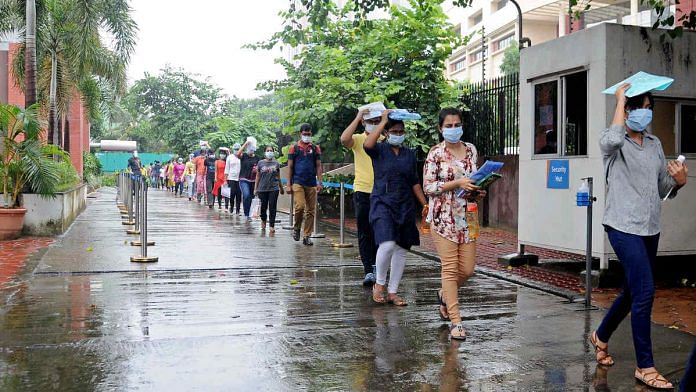
Students appearing for the JEE Mains in Kolkata in September 2020 (representational image) | ANI
Text Size: A- A+


New Delhi: They are the country’s premier engineering institutes and getting into them is internationally considered more difficult than admission into Princeton, America’s Ivy League university.

Last year, 1.5 million students took the Joint Entrance Examination (JEE) to qualify for 13,000 seats in 23 IITs across the country — in other words, for each seat there were 115 aspirants.

So intense is the pressure and so gruelling is the preparation required that students as young as 14 start the process, often missing out on the simple joys of adolescence. Most give up extra-curricular activities, relationships with friends and peers, and all forms of entertainment to achieve the goal. By the time they achieve their aim, if they do, many realise they have lost out on social skills, ability to communicate easily with others (an attribute now known as soft skills), and of course, some part of their youth.

An IIT Delhi professor who has been teaching for the last two decades underlines this reality, saying when students come to them after two or three years of prep, they don’t even know how to behave socially.

“They have been cut off from society, they are unaware of current affairs, and are desperately in need of our induction programme for freshers where we try to re-orient them to society and the institute,” the professor said on the condition of anonymity.

This skill gap haunts them even when they graduate. Despite all the hard work engineering students put in, a survey conducted in 2019 found that 80 per cent of engineers “are not fit for any job in the knowledge economy and only 2.5 per cent of them possess technical skills in Artificial Intelligence (AI) that industry requires”. The skill gap between what they learn and what is required of them in their workspaces makes them unemployable.

Yet, in India’s shortage economy, where everything of value is kept in limited supply, there is no end to this annual exercise of competing in the JEE.

Like a 23-year-old machine learning engineer based out of Florida, who started his JEE preparation as early as Class 8, because his peers had started as early as Class 6. The engineer says he was so engrossed in his prep that he ignored basics such as good hygiene, good grooming, or even making friends.

“It took me an entire gap year before undergraduation to recognise and overcome these shortcomings,” he now says.

Or 29-year-old Shivam Narang, now working as a procurement manager with a prominent firm in Mumbai, who spent three years preparing for JEE. An “above average student”, he had to work 12-14 hours a day to crack one of the toughest exams in the world, making him lose out on much of his teenage years.

A basketball player in high school, Narang had to quit the sport after Class 10, once he started preparing for the engineering entrance, moving to Kota from Delhi, the coaching college magnet for all IIT aspirants.

“There is no room for hobbies – even playing your favourite sport for 30 minutes comes with a feeling of guilt,” Narang says. “Add to that the shift to an alien city with a competitive environment, which is so difficult to adjust to.”

The constant pressure and fear of losing out led him to leave Kota. He took a break and took admission into a National Institute of Technology (NIT).

“The loss of my values is what affected me the most. I am still very competitive and don’t feel comfortable working in a team. My personality changed, as did my body. I gained 35 kilos in a matter of months and my weight went up to 120 kilos,” Narang remembers.

Also Read: 443 Delhi students committed suicide in 5 yrs, exam stress & failed relationships to blame


Some students such as Narang start preparing for the JEE at the age of 16, but others start as early as 12. These students, along with attending regular school, also go to coaching sessions and take weekly examinations. In the routine of coaching, school and tests, students claim that they miss out on important life skills, networking and overall personality development.

The National Eligibility cum Entrance Test (NEET) for medical college admission, which has become a political hot potato in Tamil Nadu, so much so that the Dravida Munnetra Kazhagam (DMK) has promised to scrap it, is only marginally less difficult. 

In 2020, more than 1.5 million students appeared for it, a 15 per cent rise from the number of applicants in 2018.

Of them, under 800,000 students were able to qualify for one of the 82,026 seats at 541 medical colleges across the country. After the introduction of the examination in 2017, several students committed suicide after failing to clear it.

The DMK has promised to do away with the examination and put back in place the previous system of admission to medical colleges in the state, based on results of the state Class 12 board exam. 

The All India Anna Dravida Munnetra Kazhagam (AIADMK), meanwhile, has offered to provide additional training to NEET aspirants.

According to coaching institutes, an average student spends 16 hours a week attending these extra classes, in addition to their regular school and studies. The annual financial cost of attending these sessions goes up to Rs 2 lakh.

Pragya Bhardwaj, 35, who now practises as a gynaecologist in Bengaluru, took a three-year break after school to prepare for her medical entrance test.

“I could not get an MBBS seat in the first attempt and it required two more attempts. Finally, after the third attempt, I got a seat in a reputed medical college in Karnataka. But the journey to get there was gruelling and took a toll on my personality, my health, mental well-being and social connections, almost everything,” Bhardwaj recalls.

Students are allowed two attempts at JEE, but there is no cap for the number of NEET attempts — there is, however, an age bar of 25.

The problem is not individual but systemic. As Dr Soumitra Pathare, director of the Pune-based Centre for Mental Health Law and Policy, puts it: “If you create a scarcity for something and push young students to try and get that scarce product in a restricted environment, it is bound to affect them mentally.

“Premier institutes in our country have an admission rate of about 0.1 per cent, so what kind of outcome can you expect? No matter how resilient an individual is, when the system is rigged against them, it is criminal when the individual breaks down.”

Parents go to the extent of disconnecting their children from the outer world to “help them focus”. Activities such as watching television, surfing the Internet, and participating in social events, sports and hobbies are placed at the bottom of the list of priorities. Shweta Garg, 50, a homemaker based out of Ahmedabad, says the two years her son spent preparing for the JEE meant the entire family put a pause on normal life.

“Those two years were not only difficult for my son but for the entire family as well. To ensure that he was able to focus on boards and competitive exams, we removed the cable connection so that there were zero disturbances for him. Family vacations and social events were given a skip and a serious environment was created in the house,” she told ThePrint.

Yet, her son was unable to make it to an IIT. Garg sidesteps that, saying she thinks her son matured during the period. Although he missed meeting his friends and cousins, he knew he had to prioritise.

Also Read: IIT-Hyderabad students blame isolated campus and academic pressure for suicides

The role of coaching classes

Coaching institutes make things worse for aspirants. Kishore Kumar, an IIT Kharagpur alumnus based out of Delhi, who has been coaching JEE and NEET students for the past 11 years, says the institutes create an atmosphere where students are divided into batches based on their performance.

If a student spends five years training in a ‘low-performing’ batch, it conditions the child to not think of himself/herself beyond a low-performing student. He/she will then hesitate to take part in group activities or anything else to assist his/her personality growth.

Anand Kumar of ‘Super 30’ fame says he ensures the focus of his students is on enhancing their creativity so that they don’t become another cog in the wheel.

“Most of my students are from rural backgrounds with poor financial stability,” he said. “Whoever shows a flair for scientific learning turns up for coaching. My focus largely remains on enhancing the ability of students to grasp concepts. They need to learn about real-life applications of their studies to ensure success even after getting into an IIT.”

Speaking about the types of skills he imparts, Kumar said, “Instead of just going by textbook examples, I try to relate the concepts with their real life situations. This helps students understand things better. I also need to prepare them for a massive shift, from a rural setting to a college, and then a formal workplace. To do so, we pick examples of world leaders with humble beginnings and read from their biographies.”

Of the 510 students he has trained over 19 years, 410 have got into IITs, NITs and other notable engineering colleges.

Some experts even question the necessity of coaching classes. Meeta Sengupta, founder of the Centre for Education Strategy, a Delhi-based think tank dealing in education policy issues, said: “Although experts say that coaching helps students take the exams, it is not healthy for children. They lose the space for discovery and innovation during the course of such training.”

Several students, because of the lack of an outlet and no mindspace for anything other than studies, experience a burnout by the time they reach a university. This leads to several mental health problems.

A mental health expert with an IIT, who chose to remain anonymous, said, “The most common problem among IIT students, who have all their lives been seen as high achievers, is the sense of a vacuum. It can also be called an ‘existential crisis’. After years of rigorous training, students start searching for a deeper meaning in life. This can either happen because of anxiety issues or depression, or exacerbate them as well.”

Also Read: ‘We didn’t do enough’ — AIIMS faculty and students say after suicides by doctors

(This report has been updated to accurately reflect that last year 1.5 million students took the JEE to qualify for 13,000 seats in 23 IITs across the country – and for each seat there were 115 aspirants, not 1,000. The error is regretted.)

Subscribe to our channels on YouTube & Telegram

Posted by R.K at 10:58 PM
Email ThisBlogThis!Share to XShare to FacebookShare to Pinterest
Labels: burnout, lost childhood — the price students pay for a prized IIT seat - THE PRINT, no hobbies, No life
Newer Posts Older Posts Home
Subscribe to: Posts (Atom)

Total Pageviews

Koshish Karne Walon Ki Haar Nahin Hoti

Koshish Karne Walon Ki Haar Nahin Hoti
Click on Image to read Poem

HOSTED BY:RAM KRISHNASWAMY, B.TECH 1970, IIT MADRAS

HOSTED BY:RAM KRISHNASWAMY, B.TECH 1970, IIT MADRAS
Click on Photo to Read my views Published in mail Today pages 20 & 21

PLEASE LET ME KNOW IF I CAN HELP YOU IN ANY WAY.

Name

Email *

Message *

CONTACT ME AT: ramboaus@gmail.com


WHY I HOST THIS BLOG Read my article from page 63 to 88

WHY I HOST THIS BLOG                  Read my article from page 63 to 88
CLICK ON IMAGE TO READ MY ARTICLE IN REFLECTIONS BY IITIANS

Fathima Lateef - IIT Madras

  • 2019 - Fathima Lateef - IITM

IIT = INSTITUTE OF INFINITE TENSION

Famous People who did not commit suicide but turned FAILURE into SUCCESS

Famous People who did not commit suicide but turned FAILURE into SUCCESS
Please Click on Image to Read Article

Watch Jackie Chan Story

How IITK Alumnus Dealt with Sinister Thoughts

How IITK Alumnus Dealt with Sinister Thoughts

ARE YOU IN INDIA FEELING DOWN AND DEPRESSED

ARE YOU IN INDIA FEELING DOWN AND DEPRESSED
CLICK ON IMAGE TO SEEK HELP

WHAT IS HELP SEEKING ?

WHAT IS HELP SEEKING ?
PLEASE CLICK ON IMAGE TO READ ARTICLES

YOUR DOST

YOUR DOST
CLICK ON BANNER TO FIND OUT MORE

SEEK HELP FROM - YOUR D.O.S.T

SEEK HELP FROM - YOUR D.O.S.T
CLICK ON IMAGE TO READ ARTICLE

SNEHA INDIA ....... HOTLINE......................91 44 24640050

SNEHA INDIA .......                 HOTLINE......................91 44 24640050
CLICK ON IMAGE TO GO TO WEB SITE

Why Kota Kills - Quint

Fresh probe into city boy’s death at IIT Guwahati - TNN

Fresh probe into city boy’s death at IIT Guwahati - TNN
Pl click on Image to watch video

The interesting story of our educational system | Adhitya Iyer | TEDxCRCE

The interesting story of our educational system | Adhitya Iyer | TEDxCRCE

INTERESTING POSTS

  • 176 - Rising expectations force Jabalpur youths to commit suicide
    Rising expectations force Jabalpur youths to commit suicide Manjari Mishra , TNN Jan 10, 2013, 05.42PM IST JABALPUR: Fourteen year...
  • 94 - 23rd Dec 2010 - No inquiry committee to probe IIT-Kanpur suicides RTI- Deccan Herald
    Kanpur, Dec 23, PTI: Despite suicides by a number of students at IIT Kanpur in the last five years, one of the country's premier ins...
  • 157 - Famous People Who Failed and Succeeded instead of Committing Suicide
    Famous People Who Failed At First Business Gurus  1. Henry Ford Ford is known for his innovative ...
  • IIT Gandhinagar Student Dheeraj Kumar Kanoje Suicide - You Tube
    IIT Gandhinagar Student Dheeraj Kumar Kanoje Suicide Ajay Kumar Koli Published on 31 Jan 2016 This video is shared to expl...
  • Why Are So Many IIT Madras Students Trying To Kill Themselves? - India Times
    Why Are So Many IIT Madras Students Trying To Kill Themselves? Kunal Anand October 19, 2015 An Indian Institute of Technology-M...
  • IT Delhi student succumbs after suicide attempt; reasons unknown - Newsd.In
    I IT Delhi student succumbs after suicide attempt; reasons unknown A first year IIT Delhi student attempted suicide on November 8 and s...
  • 244 - READ THIS BEFORE COMMITTING SUICIDE, THIS MIGHT SAVE YOUR LIFE
    Failures are finger posts on the road to achievement. C. S. Lewis Nothing in this world can take the place of persistence. Talent ...
  • 120 - IIT student commits suicide
    vks (patna) 05 Sep, 2011 02:49 AM The title IIT student commits suicide attracts me due to my own story I am remembering my first semester...
  • 54 - 23rd March 2009 - IIT Kharagpur student dies due to lack of adequate medical facility, outraged students demand Director's resignation
    Rohit Kumar, a 3rd year undergraduate student of Electrical Engineering at IIT Kharagpur died this morning due to lack of basic medical ...
  • 112 - 12th May 2011 - LET’S STOP GLORIFYING IIT SUICIDES! - Indian Fusion
    EVERY TIME A PEDESTRIAN IS RUN OVER BY A CAR. IT’S NOT ALWAYS THE DRIVER’S FAULT!   IIT B Student had short Attendance in 3 courses.. CGP :...

Kudos to IIT Gandhi Nagar for PAL Initiative to address Suicides

Kudos to IIT Gandhi Nagar for PAL Initiative to address Suicides
Please Click on Image to Read Article

Ivy League, Mental Illness and the Meaning of Life

Ivy League, Mental Illness and the Meaning of Life
Please Click on Image to Read this valuable article

BLACK DOG INSTITUTE

BLACK DOG INSTITUTE
CLICK ON IMAGE TO GO TO WEB SITE

READ THIS ARTICLE BEFORE YOU COMMIT SUCIDE. IT MIGHT EVEN INSPIRE YOU AND SAVE YOUR LIFE.

READ THIS ARTICLE BEFORE YOU COMMIT SUCIDE. IT MIGHT EVEN INSPIRE YOU AND SAVE YOUR LIFE.
CLICK ON IMAGE TO READ FULL POST. LOOK AT ALL THE HIGH ACHIEVERS WHO WERE TOTAL FAILURES AND REJECTS..BUT THEY BELIEVED IN THEMSELVES

ROOT CAUSE OF SUICIDE

ROOT CAUSE OF SUICIDE
PLEASE CLICK ON IMAGE TO READ FULL ARTICLE

SUICIDE.ORG

SUICIDE.ORG
CLICK ON IMAGE

Life Line Saving Lives

Life Line Saving Lives
PLEASE CLICK ON IMAGE FOR HELP

Filmed March 2014 at TED2014 Kevin Briggs: The bridge between suicide and life

Filmed March 2014 at TED2014 Kevin Briggs: The bridge between suicide and life
Click on Image to Watch TED Talk

Blog Archive

  • ►  2011 (129)
    • ►  May (11)
    • ►  June (106)
    • ►  October (10)
    • ►  November (1)
    • ►  December (1)
  • ►  2012 (42)
    • ►  February (1)
    • ►  May (8)
    • ►  June (1)
    • ►  July (2)
    • ►  August (29)
    • ►  September (1)
  • ►  2013 (44)
    • ►  January (15)
    • ►  March (1)
    • ►  May (5)
    • ►  June (4)
    • ►  July (11)
    • ►  August (1)
    • ►  September (4)
    • ►  October (1)
    • ►  November (2)
  • ►  2014 (75)
    • ►  January (4)
    • ►  February (15)
    • ►  March (3)
    • ►  April (5)
    • ►  May (2)
    • ►  June (1)
    • ►  July (1)
    • ►  August (1)
    • ►  September (18)
    • ►  October (4)
    • ►  November (1)
    • ►  December (20)
  • ►  2015 (168)
    • ►  January (7)
    • ►  February (6)
    • ►  March (1)
    • ►  April (3)
    • ►  May (33)
    • ►  June (16)
    • ►  July (7)
    • ►  August (10)
    • ►  September (33)
    • ►  October (32)
    • ►  November (9)
    • ►  December (11)
  • ►  2016 (200)
    • ►  January (39)
    • ►  February (23)
    • ►  March (16)
    • ►  April (9)
    • ►  May (41)
    • ►  June (10)
    • ►  July (26)
    • ►  August (7)
    • ►  September (7)
    • ►  October (3)
    • ►  November (15)
    • ►  December (4)
  • ►  2017 (131)
    • ►  January (10)
    • ►  February (4)
    • ►  March (2)
    • ►  April (30)
    • ►  May (14)
    • ►  June (17)
    • ►  July (8)
    • ►  August (7)
    • ►  September (11)
    • ►  October (15)
    • ►  November (9)
    • ►  December (4)
  • ►  2018 (145)
    • ►  January (21)
    • ►  February (3)
    • ►  March (13)
    • ►  April (28)
    • ►  May (9)
    • ►  June (12)
    • ►  July (6)
    • ►  August (5)
    • ►  September (21)
    • ►  October (6)
    • ►  November (12)
    • ►  December (9)
  • ►  2019 (280)
    • ►  January (26)
    • ►  February (12)
    • ►  March (8)
    • ►  April (4)
    • ►  May (21)
    • ►  June (8)
    • ►  July (23)
    • ►  August (11)
    • ►  September (9)
    • ►  October (18)
    • ►  November (90)
    • ►  December (50)
  • ►  2020 (85)
    • ►  January (13)
    • ►  February (9)
    • ►  March (10)
    • ►  April (3)
    • ►  May (7)
    • ►  June (6)
    • ►  July (10)
    • ►  August (8)
    • ►  September (7)
    • ►  October (3)
    • ►  November (7)
    • ►  December (2)
  • ►  2021 (67)
    • ►  January (2)
    • ►  March (7)
    • ►  April (5)
    • ►  May (6)
    • ►  June (6)
    • ►  July (9)
    • ►  August (5)
    • ►  September (6)
    • ►  October (8)
    • ►  November (4)
    • ►  December (9)
  • ▼  2022 (29)
    • ►  January (8)
    • ►  February (5)
    • ►  March (3)
    • ►  April (1)
    • ►  May (1)
    • ►  June (4)
    • ►  July (2)
    • ▼  September (5)
      • Over 13,000 students died by suicide last year: NC...
      • 31st August 2022IIT-Hyderabad student found hangin...
      • A PhD student at IIT Kanpur has committed suicide ...
      • IIT K and IIT HYD Suicides in 2 days
      •  Updated: 11th September 2022 10:40 AM  |  A+A 

COMPREHENSIVE LIST OF IIT ASPIRANTS, STUDENTS & ALUMNI WHO ATTEMPTED OR COMMITTED SUCIDE

  • 1981 M Chowdhary IITK (1)
  • 1987 Yadapalli Venkat IITK (1)
  • 1999 Vimal Jha IITK (1)
  • 2003 Vartika Murthy IITB (2)
  • 2004 Nishith Karwa IIT Kgp (2)
  • 2005 Lokesh Chand IIT Roorkee (1)
  • 2005 Sailesh IITK (1)
  • 2005 Swapnil Chandrakant Dhasaraskar IITK (7)
  • 2005 Vijay Nakula IITB (6)
  • 2006 Abhilash G.J PhD IITK (3)
  • 2006 Anjan Kumar IITK (1)
  • 2006 Bhoojan Rao M.Tech IITM (1)
  • 2006 Dhiraj Kumar Anand IIT Kgp (1)
  • 2006 Shailesh Sharma IITK (4)
  • 2007 Ajay and Chaitra IISc (1)
  • 2007 Bal Krishna Gupta IITB (5)
  • 2007 J.Bharadwaj IITK (4)
  • 2007 Shrikant Mallepula IITB - Dalit (8)
  • 2008 Attempted suicide IITB (1)
  • 2008 Deepak Kumar Gupta IITD (1)
  • 2008 Prashant Kumar Kureel (SC) IITK (6)
  • 2008 Ritika Toya Chatterjee IITK (5)
  • 2008 Sandeep Shelke IITB (1)
  • 2008 Sankar Perumal M.Tech IITM (2)
  • 2009 - Prateek Kumar Bajpai IIT Aspirant (1)
  • 2009 Durgesh Vickram ( attempted ) IITK (3)
  • 2009 G. Suman M.Tech IITK - Dalit (7)
  • 2009 Joginder Singh IIT Kgp (1)
  • 2009 K Ramananda Rao IIT Kgp (2)
  • 2009 Manoj Kumar IITKgp (4)
  • 2009 Ramananda Rao K IIT Kgp (2)
  • 2009 Rohit Kumar IIT Kgp (3)
  • 2009 Siddharth Singh Charan IITB (3)
  • 2009 Yogendra Kumar Singh IITKgp (5)
  • 2010 Dinesh Ahlawat IITD (1)
  • 2010 G. Ragavendra B.Tech IITM (1)
  • 2010 Madhuri Salve IITK - Dalit (21)
  • 2010 R.Sandeep IITM (2)
  • 2010 Rakesh Kumar Thakur M.Tech IITK (1)
  • 2010 Snehal Ajit Indurkar IITK (1)
  • 2011 - Mahtab Ahmed-IITK (1)
  • 2011 - Thimmappa Manjushetty - BITS Pilani (3)
  • 2011 Aniket Prasad - IITB (1)
  • 2011 Anoop Valaparla M Tech IITM (6)
  • 2011 Dinesh Ahlawat - IIT Delhi (2)
  • 2011 Gowrishankar IITM (1)
  • 2011 L. Nitin Kumar Reddy IITM (12)
  • 2011 Manish Kumar IIT R (1)
  • 2011 Manish Kumar IIT Roorkee - Dalit (5)
  • 2011 Mehtab Ahamed IITK (7)
  • 2011 Pankaj Chaudhury - IIT Kgp (1)
  • 2011 Prof.Ashok Kumar Sharma - IITD (1)
  • 2011 Sunil Kujur - IIT Kgp (2)
  • 2012 Kuldeep Yadav IITM (7)
  • 2012 Manasa Merugu M.Tech IITM (12)
  • 2012 Vaditya Nehru IIT K (2)
  • 2013 - Akshay Kumar Meena - IITM (2)
  • 2013 - Ankur Abhishek - IITB (1)
  • 2013 - B.Arun - BITS Pilani (1)
  • 2013 - Prof.Arun Kumar - IIT Roorkee (4)
  • 2013 - Udai Biradare - M Tech IIT Roorkee (1)
  • 2013 Rohit Jagenia IIT Gandhinagar (1)
  • 2013- May - IIT Delhi (1)
  • 2014 - Anchal Bhardwaj - M.Tech IITD (3)
  • 2014 - Aniket Ambhore - IITB - Dalit (25)
  • 2014 - Ayush Kirti - IIT Kanpur (1)
  • 2014 - Boga Shravan - IIT Kgp (6)
  • 2014 - K.Swetha - IIT Aspirant (1)
  • 2014 - Kunal Paraswani IIT Jodhpur (1)
  • 2014 - Lokesh Kumar Goyel - IIT Kgp (5)
  • 2014 - M.Siva Teja - IITB (6)
  • 2014 - Manjunath IITK (7)
  • 2014 - Ridam Kumar Singh - IIT Delhi (1)
  • 2014 - Saikumar Reddy IITK (3)
  • 2014 - Shoiab Ahmed - IIT Guwahati (5)
  • 2014 - Suchita Kumari - IIT Kgp (1)
  • 2014 - T.Parameshwar Rao - IITG (9)
  • 2014 - Tushar Yadav - IIT Guwahati (12)
  • 2014 - Udai Biradare IIT Roorkee (2)
  • 2014-09-14 - Tushar Yadav - IIT Guwahati (6)
  • 2015 - Attempted Suicide IITK (2)
  • 2015 - Attempted suicide IITB (4)
  • 2015 - Devang Khakhar-IITB Director (1)
  • 2015 - Dheeraj Kumar Kanije - IIT Gandhi Nagar (1)
  • 2015 - Kota Student Suicide (23)
  • 2015-02-04 Swapna - IIIT Hyderabad (1)
  • 2015-02-20-Tariqul Islam-PhD - IIT Hyderabad (3)
  • 2015-03- Shoaib Ahmed M Sc - IIT Guwahati (1)
  • 2015-05-02 - Jitesh Sharma IITB. (34)
  • 2015-09-18 Ujjwal Shailabh IIT Guwahati (7)
  • 2015-09-22 - N Narendra Kumar Reddy - M.Tech-IITM (27)
  • 2015-10-19 Rahul Prasad B Tech IITM (20)
  • 2016 - Aman Kumar Gupta - Kota (2)
  • 2016 - Arvind Kushwah - Kota (3)
  • 2016 - Ashish Satyam - Kota (3)
  • 2016 - Bhumill Acharya - IIT Gandhi Nagar (1)
  • 2016 - Chaitanya Warekar IITB (1)
  • 2016 - IITB Profs Son (1)
  • 2016 - IITM Asst Profs Wife Vijayalaxmi (2)
  • 2016 - Kota Student Suicide (24)
  • 2016 - MSc Student - IIIT Guwahati (1)
  • 2016 - Mahima Yadav-Kota (1)
  • 2016 - Nikhil - Kota (3)
  • 2016 - Preeti Singh - Kota (1)
  • 2016 - Prince Kumar Singh-Kota (3)
  • 2016 - Rohit Vemula Dalit Hyd Uni (9)
  • 2016 - Rohit Vemula Dalit Hyderabad University (46)
  • 2016 - Sarkar Intekhab Alam - IIT Guwahati (5)
  • 2016 - Saroja Hemachandra Nandyala IITB (3)
  • 2016 - Shiva Kiran - IIT Hyd Alumnus (1)
  • 2016 - Sneha Suman-Kota (2)
  • 2016 -Kriti Tripathi’s -Kota (8)
  • 2016 Rupesh Kushwaha - Kota (1)
  • 2016-Avinsh Keshav Meena-Kota (3)
  • 2016-P.Maheswari Post Doctoral Research Scholar-IITM (14)
  • 2017 - Aaditya K. Bharti - Kota (1)
  • 2017 - Abhishek Kumar Yadav - Kota (1)
  • 2017 - Ajit Pramanick - Kota (1)
  • 2017 - Amaandeep Singh - Kota (1)
  • 2017 - Aman Chauhan-IITR (3)
  • 2017 - Amandeep Singh - Kota (1)
  • 2017 - Ankit Wadhwa - IITK Graduate (2)
  • 2017 - Arijit Pramanick - Kota (3)
  • 2017 - Dara J Bhim Raju - IIT BHU-Dalit (1)
  • 2017 - Manjula Devak PhD - IIT Delhi (12)
  • 2017 - Nidhin.N - IIT Kgp (12)
  • 2017 - Nikhil Bhatia - IIT Kgp (5)
  • 2017 - Nipin.N - IIT Kgp (2)
  • 2017 - Sana Shreeraj - IIT Kgp (11)
  • 2017 - Soham Mukherjee -IIML Student - IITG Alumnus (1)
  • 2017- Lokesh Meena IIT Kgp - Dalit (9)
  • 2017-Sagar Mandal- IISER Kolkata (1)
  • 2018 - Abhijit Singh Bansiya -I ITR (6)
  • 2018 - Abhishek Maurya - Kota (1)
  • 2018 - Aniket Anand - Kota (1)
  • 2018 - Anshum Gupta - IIT Delhi Alumnus (6)
  • 2018 - Bheem Singh - Dalit - IITK (9)
  • 2018 - DEEPAK DADICH - KOTA (1)
  • 2018 - DIKSHA SINGH - KOTA (1)
  • 2018 - Dr.Aditi Simha - IITM Prof (4)
  • 2018 - Gangireddy Hanimi Reddy -M.Tech - IITKgp (6)
  • 2018 - Gopal Maloo - IITD (11)
  • 2018 - Isha Upadhyay- IIT JEE (1)
  • 2018 - JITESH GUPTA - KOTA (1)
  • 2018 - Jaideep Swain - IITB (4)
  • 2018 - Kanuwar Paul Singh - IITG (4)
  • 2018 - Nagashree S.C - IITG (7)
  • 2018 - Rishab Kumar - Kota (2)
  • 2018 - Sahid Gurmut - IITM (1)
  • 2018 - Sahul Kornath - IITM (2)
  • 2018 - Sidarth Pal - Kota (2)
  • 2018 - Surendra Das - IITKgp Alumnus (1)
  • 2018 - Surya Pratap Singh - Kota (1)
  • 2018 - Tirunagiri Prashant - IIT Kgp - Alumnus (2)
  • 2018 - Vinisha Yadav - IITB (4)
  • 2018 - Vipin Chejara - IITR (1)
  • 2018 -Pradepa( NEET Aspirant)- Dalit (1)
  • 2018-MehulmPriyadarshi-IITD-IITM (1)
  • 2019 - Alan Stanley - PhD- IIT Delhi (6)
  • 2019 - Amit - Kota (1)
  • 2019 - Ananya Gupta - IITD (3)
  • 2019 - Anirudya - IIT Hyd (12)
  • 2019 - Chander Mohan Goswami - IIT Kgp (2)
  • 2019 - Chirag Pravin Jain - IIT Bhubaneswar (3)
  • 2019 - Deepak Dadich - Kota (1)
  • 2019 - Fathima Lateef - IITM (126)
  • 2019 - Gopal Babu - IITM (7)
  • 2019 - Harsh - IITB (Missing) (1)
  • 2019 - Jitesh Gupta - Kota (1)
  • 2019 - Kota Onada (Japanese student) - IITG (2)
  • 2019 - Kratika Jadon - Kota (1)
  • 2019 - Mark Andrew Charles - IIT Huderabad (5)
  • 2019 - Mark Andrew Charles - IIT Hyd (8)
  • 2019 - Nagashri - IITG (2)
  • 2019 - Pannem Pavan Siddardha - IITG (6)
  • 2019 - Ranjana Kumari PhD-IITM (8)
  • 2019 - Rushik Reddy - IITM (1)
  • 2019 - S Shahal Kormath - IITM (2)
  • 2019 - Sujoy Manekar (1)
  • 2019- Pichikala Siddarth - IIT Hyderabad (7)
  • 2020 - Bhavanibhatla Kondal Rao -IIT KGP (1)
  • 2020 - IIT Kgp (1)
  • 2020 - Man Mohan Mall - IIT Kgp - ALUMNUS (2)
  • 2020 - Piue - IITGandhinagar (2)
  • 2020 - Pramod Subramaniam-IITK Faculty (2)
  • 2020 - Sasidhar Reddy - IIT Tirupathi (1)
  • 2020 - Subashri - NEET (1)
  • 2020- Man Mohan Mall - IIT ALUMNUS (1)
  • 2021 - Hari Prasath - IITD (3)
  • 2021 - Pushpak Sambhe - IIT Nagpur (1)
  • 2021 - Samarpit Sahu - IITD (2)
  • 2021 - Sarthak Vijayvat - IIT Kgp (1)
  • 2021 - Shubshankar - Kota (1)
  • 2021 - Unni Krishnan - IITM (3)
  • 2021 - Vipin Veetil - IITM (1)
  • 2021-Satish Reddy-IIT Kgp (1)
  • 2021-Unni Krishnan nair-IITM (1)
  • 2022 - Darshan Malviya- M Tech - IITB (2)

9 Dalit Suicides in IITs

  • 2007 Shrikant Mallepula IITB - Dalit
  • 2009 G. Suman M.Tech IITK - Dalit
  • 2010 Madhuri Salve IITK - Dalit
  • 2011 Manish Kumar IIT Roorkee - Dalit
  • 2014 - Aniket Ambhore - IITB - Dalit
  • 2016 - Rohit Vemula Dalit Hyderabad University
  • 2017 - Dara J Bhim Raju - IIT BHU-Dalit
  • 2017- Lokesh Meena IIT Kgp - Dalit
  • 2018 - Bheem Singh - Dalit - IITK
  • 2018 -Pradepa( NEET Aspirant)- Dalit

Kota - 32 Suicides of IIT Aspirants

  • 2014 - K.Swetha - IIT Aspirant
  • 2015 - Kota Student Suicide
  • 2016 - Aman Kumar Gupta - Kota
  • 2016 - Arvind Kushwah - Kota
  • 2016 - Ashish Satyam - Kota
  • 2016 - Kota Student Suicide
  • 2016 - Mahima Yadav-Kota
  • 2016 - Nikhil - Kota
  • 2016 - Preeti Singh - Kota
  • 2016 - Prince Kumar Singh-Kota
  • 2016 - Sneha Suman-Kota
  • 2016 -Kriti Tripathi’s -Kota
  • 2016 Rupesh Kushwaha - Kota
  • 2016-Avinsh Keshav Meena-Kota
  • 2017 - Aaditya K. Bharti - Kota
  • 2017 - Abhishek Kumar Yadav - Kota
  • 2017 - Ajit Pramanick - Kota
  • 2017 - Amaandeep Singh - Kota
  • 2017 - Amandeep Singh - Kota
  • 2017 - Arijit Pramanick - Kota
  • 2018 - Abhishek Maurya - Kota
  • 2018 - Aniket Anand - Kota
  • 2018 - DEEPAK DADICH - KOTA
  • 2018 - DIKSHA SINGH - KOTA
  • 2018 - JITESH GUPTA - KOTA
  • 2018 - Rishab Kumar - Kota
  • 2018 - Sidarth Pal - Kota
  • 2018 - Surya Pratap Singh - Kota
  • 2018 -Pradepa( NEET Aspirant)- Dalit
  • 2019 - Amit - Kota
  • 2019 - Kratika Jadon - Kota
  • 2020 - Subashri - NEET
  • Kota

STASTISTICS

Suicide count of known suicides listed in the Blog from 1981 to 2016

IIT Kanpur: 21

IIT Kharagpur 21

IIT Madras 19

IIT Bombay: 14

IIT Guwahati 10

IIT Roorkee 8

IIT Delhi: 6

IIT Hyderabad 4

IIT Gandhi Nagar 2

Other New IITs 3

Total 124 (1981 - 2019)

Year wise Count

1981 - 1, 1987 - 1, 1999 - 1, 2003 - 1, 2004 - 1, 2005 - 4. 2006 - 5, 2007 - 3, 2008 - 5, 2009 - 8. 2010 - 6, 2011 - 10, 2012 - 3, 2013 - 5, 2014 - 14, 2015 - 7, 2016 - 7, 2017 - 6, 2018 - 15, 2019 - 14

Total 127


INDEX

  • "Death of Merit" documentary
  • "Faces of Discrimination in Higher Education in India: Quota Policy
  • "IIT Madras Confessions"
  • "Life under the Canopy"
  • 'Anti-Suicide Fans'
  • 'There Is Nothing Meritorious about IITs
  • -Wire
  • 1 - Koshish karne walon ki haar nahin hoti
  • 1 to 1 help.net
  • 122 students from central institutes died by suicide in seven years: Centre
  • AIPMT - All India Pre Medical Test
  • AJANTA SUBRAMANIAM
  • ANKIT IIT-D ATTEMPTED SUICIDE
  • AP: Lokesh lashes out on Jagan over student suicide
  • APSC-Ambedkar Periyar Study Circle
  • ARGHYA BANERJEE
  • ASIM SIDDIQUI - IIT Delhi
  • Academic Stress
  • Aditya Birla
  • Akhil Bharatiya Vidyarthi Parishad (ABVP)
  • Allahabad high court judge Ashok Kumar Roopanwal
  • Alma Matters Review: Big Dreams Come at a Heavy Price
  • Alok Kumar Pandey
  • Alok Kumar Pandey-IITK
  • Alumni Speak
  • Ambedkar Periyar Study Group
  • Ambedkar Students Association (ASA)
  • Amita Tagare-IITB Counsellor
  • Among 122 student suicides since 2014
  • An Open Letter by Anil Chawla
  • Anand Kumar
  • Ananda Krishnan IITK BOG Chairman
  • Anil Meena - AIIMS
  • Anita - Dalit
  • Anjuli Bhargava
  • Ankit Modi
  • Ankit Shaw
  • Anshika Ravi
  • Anshul Sinha-Doc on Agri
  • Apoorva Pathak
  • Arvind Kejriwal
  • Ashok Arora Ex Secretary Supreme Court Bar Open Letter to Prime Minister Modi
  • Assembly Line
  • Assistant registrar at IIT Kanpur commits suicide
  • Asst Professor Complains to OBC Commission
  • Australian Suicide Plan
  • BITS Pilani
  • Bal Mukund - AIIMS
  • Banning LAN
  • Bansal Coaching Clsses
  • Biswa Kalyan Rath
  • Blue Whale Challenge
  • Breaking the Glass ceiling
  • Bring me back my Childhood!
  • CBI
  • Care IITB: counselling and mental health
  • Caste Discrimination at IIT-Madras?
  • Caste and the IITs: What ‘quota students’ experience on campus
  • Casteism In The IITs: A Thriving Culture Of Subordination And Hegemony
  • Chairman IITK Counselling
  • Chetan Bhagat
  • Chhichhore
  • Chinta Bar
  • Citizenship (Amendment) Bill (CAB)
  • Coming Out as Dalit: A Memoir -by Yashica Dutt
  • Confession Box
  • Copy Cat Suicides
  • Counselling
  • Counselling Centre
  • Counsellors
  • Culture & expectations
  • DALITS
  • Dalit Students-Senthil Kumar-Hyd Cent Uni
  • Dalit Suicides
  • DalitStudent Suicides
  • Dark tales in Andhra Pradesh’s IIT success story - Hindu
  • Darpan Bajaj-IITR
  • Dean Students IITB
  • Dean of Students Affairs - IITB
  • Death by wish
  • Deccan Herald
  • Deja Vu the Film by Anshul Singhal
  • Delta Meghawal-Dalit Girl
  • Devang Khakhar-IITB Director
  • Director IITK
  • DoSA
  • Dr Harish Shetty-Senior Psychiatrist -IITB
  • Dr Hemachandran Karah and Milind Brahme.
  • Dr Subrahmanyam Saderla
  • Dr.Jaspreet Singh- Govt Med College Chandigarh
  • Dr.Lakshmi Vijay Kumar - SNEHA
  • Dr.Shinka Jain-Counsellor IITR
  • EKTA
  • Eight Suicides in 5 years at IITK
  • Emraan Hashmi
  • Ensure at least next Generation is happy
  • Etoos
  • Exam Stress - Failed Love
  • FAILURES AND SUCCESS
  • FAILURES ARE STEPPING STONES TO SUCCESS
  • FARMER SUICIDES
  • FILMMAKER HEMANT GABA
  • Face Book Page "ICareIITB"
  • Faculty Quota
  • Faking News
  • Fifth Estate
  • Foundation Program IITGN
  • From watchman to IIM professor- Ranjith pursued his dream with will and grit
  • Gautam Biswas IITG Director
  • Gautam Dev
  • Gender Gap
  • Ghosts
  • Governments pass the buck of suicides
  • Govt says 34 IIT students died by suicide from 2014-21
  • HRD Manual on Suicides
  • HRD Minister Pallam Raju
  • HRD Minister Prakash Javadekar
  • HRD Minister Ramesh Pokhriyal Nishank
  • HRD Ministry
  • HRD Task Force on Suicides
  • Happiness City’
  • Happiness Hostels
  • Happiness Programme
  • Help Line
  • Horlicks
  • How Big Tech Is Importing India’s Caste Legacy to Silicon Valley
  • How Dogs Get Treated at IIT Madras
  • How YourDOST has grown in the emotional wellbeing space
  • Human Library
  • Humanity Prof Seema Singh- IIT Kgp calls her students "Bloody Bastards"
  • IIIT
  • IISc begins removing ceiling fans in hostel rooms
  • IIT Bombay
  • IIT Council
  • IIT Delhi
  • IIT Drop Outs
  • IIT FACULTY RESPONSES
  • IIT Gandhi Nagar
  • IIT Gandhinagar
  • IIT Guwahati
  • IIT Hyderabad
  • IIT Indore
  • IIT Kanpur
  • IIT Kgp
  • IIT Kgp 2017
  • IIT Madras
  • IIT Madras Suicides
  • IIT Madras: Social Justice Down the Drain
  • IIT STUDENTS NOT CREATIVE ENOUGH
  • IIT Student's views
  • IIT- Mandi
  • IIT-K May Revoke Thesis of Prof Who Had Flagged Caste-based Discrimination
  • IIT-Kanpur assistant professor kills self at campus - Indian Express
  • IIT-Roorkee
  • IITB
  • IITB Faculty Members Son
  • IITD
  • IITG
  • IITK Restrict Internet Use
  • IITK removes Ceiling Fans
  • IITK to Ease Rules
  • IITM & Casteism
  • IITM - Happiness Course
  • IITs & NITs: Govt in Lok Sabha
  • IITs witness 50 suicides in 5 years- 14 at IIT Guwahati alone
  • If IIT Bombay Can
  • India needs to do more for its students through access to student loans - The Print
  • Indian Housewives
  • Institutionalised Murder
  • Internet
  • Is it Fair to Conduct JEE & NEET Amid Pandemic ? - QUINT
  • Islamaphobia
  • It Is Always Darkest Before Dawn
  • JEE (Mains) exam fraud: CBI makes 4 more arrests - including assistant professor
  • JEE Advanced
  • JNU
  • Jackie Chan Story
  • Jisha - Govt Law College Kerala
  • Jogesh Krishna IIT Bhu
  • Judicial safeguards against dowry deaths
  • Jyotirmaya Tripathy
  • KEVIN BRIGGS
  • Kalpit Veerwal - Dalit
  • Kilkil Sachan IITK Blogger
  • Kota
  • Kota Collector's letter to parents
  • Kota Suicides
  • Kota business owners say city will become ‘suicide hub’ as education industry is hit by lockdown- The Print
  • Kota. 2018 - Devesh Kumar-Kota
  • LAN
  • LGBT
  • Laakhon Me Ek
  • Laakhon Mein Ek
  • Ladies Finger
  • Laying out a path for India’s national suicide prevention strategy
  • Legacy Project
  • Life Skills
  • Lights Out IIT Kgp
  • Live Mint
  • M A Kalam-Prof.Anthropology
  • MBBS beyond reach of meritorious poor
  • MERITOCRACY VS RESERVATION
  • Mahatma Gandhi
  • Mahtab Ahmed-IITK
  • Mandatory Induction
  • Manish - IIT R
  • Mental Health Startup
  • Message from IITMadras - Dean Alumni and Corporate Relations
  • Millenium Post
  • Minister of State for Human Resource Development (HRD) Mahendra Nath Pandey
  • MoodCafe
  • Most Suicide Victims are mentally Ill
  • Muzaffarnagar Abhi Baki Hai
  • My cousin Vikram hanged himself because of JEE pressure. September dates made it worse
  • NCPCR Guidelines for Hostels
  • NEET
  • NEET -Suicides
  • NEET SEAT SCAM
  • NEWS
  • NHRC
  • NIT
  • NRC BILL
  • Narayana IIT College
  • National Commission for Protection of Child Rights (NCPCR)
  • National Commission for Scheduled Castes (NCSC)
  • National Education Policy
  • National Eligibility cum Entrance Test (NEET)
  • Neerja Birla
  • Neither is suicide a crime
  • Netflix's Alma Matters is here to depict the inside details of the IIT Dream! Watch the trailer
  • Nikhil Dey Activist
  • Nirmal Yogi-Kota
  • Nitin Gupta IITB
  • No life
  • Nobody Held Accountable.
  • Nobody gets the IIT story right- 3 Idiots- TVF- to Netflix’s Alma Matters
  • Not a single ST student was admitted in 11 depts at IIT Bombay the last five years- RTI reveals
  • OBC
  • OP India
  • OPINIONS
  • On the e-book 'Young Mental Health' - The Hindu
  • Online IIT-Pal
  • Orygen
  • Outlook India
  • PAL
  • PAL-Peer Assisted Learning
  • PIL IITM Suicides
  • PRINT
  • PUBG
  • Pagalguy
  • Parliament Updates
  • Parliamentary Committee
  • Partha Pratim Chakraorty IIT Kgp Director
  • Peer Assisted Learning (PAL) - IIT Gandhinagar
  • People must learn to read early signs showing suicidal tendency or turn to experts - National Herald
  • Prakash Javadekar-Union HRD minister
  • Prakash Javedkar-Union HRD minister
  • Pratyush Paras Sarma - IITG
  • Pressure from Parents
  • Prof A Meher Prasad Civil Engg IITM
  • Prof A.K.Ghosh - Dean Student Welfare IITK
  • Prof Kannan Maoudgalya - IITB
  • Prof Shiv Sethi-Dev Samaj College
  • Prof Soumyo Mukherji
  • Prof. A.R.Harish
  • Prof. Anurag Mehra-IIT B
  • Prof. Ashok Misra IITB Director
  • Prof. Bhaskar Ramamurthi IITM Director
  • Prof. Dheeraj Sanghi IITK
  • Prof. Indranil Manna
  • Prof. M.K.Ghorai
  • Prof. M.S.Ananth IITM Director
  • Prof. Omkar Dixit
  • Prof. P.V.Manivanna IITM
  • Prof. Prakash M Maiya IITM
  • Prof. R. Nagarajan IITM
  • Prof. S.M. Srinivasan IIT-M - Head of Mitr
  • Prof. Sangeeta Das Bhattacharya -IIT Kgp
  • Prof. V.K. Gupta IITK Faculty
  • Prof.H.C.Verma IITK
  • Prof.Idichandy IITM
  • Prof.K.S.Venkatesh Elec Engg IIT Kanpur
  • Prof.L.S Ganesh IITM - Dean Students
  • Prof.M.Govardhan IITM (Dean Students)
  • Prof.Nitin Gupta
  • Prof.Santhakumar IITM
  • Prof.Sathyanarayana IITM
  • Prof.Sivakumar Srinivasan - MITR
  • Professor Kabeer Jasuja-PAL
  • Professor Miland Brahme
  • Professor Sivakumar M Srinivasan-Dean (Students)-IIT Madras
  • Promod Bansal
  • Psychiatrists Well Being Model
  • Puneet Munja-Your Dost
  • Quality Education
  • REMEDIAL ACTIONS
  • RICHA SINGH CO-FOUNDER OF DOST
  • Ram Krishnaswamy
  • Rashmi Uday Kumar-Public Relations Officer-IIT-Bombay
  • Researchers Identify Key Networks In Brain That Play Role In Suicide
  • Runway2Life
  • S.K.Jain Director IIT Gandhinagar
  • SANDEEP PANDEY
  • SC & ST
  • SOCIAL AUDIT
  • SUSHANT SINGH RAJPUT
  • SV Krishna Chaitanya -Indian Express
  • Saathi
  • Sana Iqbal
  • Sandipan Deb
  • Sanjay Dhande IITK Director
  • Sanjeev S Kashalkar IITK Registrar
  • Sathi
  • Saurabh Khanna - Kota Factory - Producer
  • Scheduke Caste Commission Chairperson P L Punia
  • Section 377
  • Sekhar Saxena - Psychiatrist
  • Shankar Devarajan-CEO Shankar IAS Academy
  • Sharmishta Chakrovorti student counsellor of IIT Kanpur.
  • Snigdha Poonam - Huffington Post
  • Social Justice and the Dalits".
  • Soumyo Mukherjee- Dean of Student Affairs at IIT-B
  • Soumyo Mukherji
  • Sri Sri Ravi Shankar
  • Stalin
  • Stress Buster IIT Kgp
  • Student Suicides in Mumbai
  • Student suicide rising
  • Sudarshan Padmanabhan-IITM Faculty
  • Suicide By LSR Student
  • Suicide News Dated 23rd Oct 2021
  • Suicide is a bigger concern than murder
  • Suicides at IITK
  • Supreme Court
  • Supreme Court on PIL
  • Surat Trtagedy
  • Suvam Poddar
  • T V Commercials
  • THE F LIST.
  • TT Jaganathan
  • TTK Centre
  • Tamil Brahmins were the earliest to frame merit as a caste claim and it showed in IITs by Ajanta Subramaniam
  • Tanaji Rao Biradare-IITR
  • Tehelka
  • The All India Save Education Committee (AISEO)
  • The Ananda Krishnan committee report on suicides in IITs
  • The Community Has a Critical Role in Suicide Prevention
  • The Kids Aren’t All Right: Mental Health And Indian Youth
  • The Print
  • The Silicon Valley Suicides
  • The futile search for rationale in the act of suicide
  • Tread Will
  • Treating the Root Causes of Suicide
  • UGC's 2012 regulations to check discrimination
  • Union HRD Minster Smriti Irani
  • V.N.Pal-IIT Alumnus
  • V.P.Singh
  • V.Ramgopal Rao-IITD Director
  • Varun DhimanMarch
  • Vivekananda Centre IIT Kharagpur
  • WHO Report on Suicides
  • War on Suicides
  • Wellness Centres
  • Why Cheat India-Movie
  • Why IIT students need a political space
  • Why Not Others? - NDTV
  • Why did Fathima Latheef hang herself?
  • World Mental Health Day
  • World Suicide Prevention Day
  • Yogita Krishna-IIT Bhu
  • You Tube
  • Your Dost
  • YourDost
  • an informal pan-IIT LGBT group - Pravritti
  • burnout
  • dalit
  • depression
  • every one hour one student commits suicide in India
  • every time - QRIOUS
  • getting women into IITs
  • induction courses
  • kirt
  • lost childhood — the price students pay for a prized IIT seat - THE PRINT
  • mbedkar Study Circle-IITD
  • no hobbies
  • nor can one be driven to it
  • student suicides
  • suicide
  • suicides in iits
  • yesha's Suicide
  • youth ki aavaaz
  • ‘Making Kota
Picture Window theme. Powered by Blogger.