I have a Solution that will reduce pressure on IIT aspirants but do not know how to get this across to HRD Minister of India. Suggestions are welcome. - Ram Krishnaswamy

Search This Blog

Monday, June 28, 2021

UPSC job aspirant commits suicide in Hyderabad


UPSC job aspirant commits suicide in Hyderabad

By Telangana Today 
 Published: 28th Jun 2021 12:30 am

Hyderabad: A UPSC job aspirant committed suicide by hanging in his room in Chikkadpally on Saturday night.

 According to the police, K Satish Reddy (27), who was pursuing his studies at IIT Kharagpur, stayed at a room in Ashoknagar, Chikkadpally. 

In the last few years, he had appeared for the prelims of UPSC but had failed to clear it.

“The family members of the man informed that Satish slipped into depression after failing to clear the UPSC prelims. 

He might have ended his life over it, they suspect,” said Chikkadpally police. 

A case under Section 174 of CrPC was registered and investigation is going on.

Thursday, June 24, 2021

Class 12 Topper Who Cracked IIT Entrance Exam Dies By Suicide In Himachal's Mandi


Class 12 Topper Who Cracked IIT Entrance Exam Dies By Suicide In Himachal's Mandi


The reason behind the death is unknown and every angle related to the incident is being investigated by police.

A21-years-old youth died by suicide in Bhojpur area under the Sundernagar police limits in the Mandi district of Himachal Pradesh, Police said on Tuesday.

The deceased, identified as Shubhankar, was a class 12 topper of his school and had passed the entrance examination for admission to IIT. His body was found hanging with a rope on a ceiling fan in his home. The Police sent the body to Civil Hospital Sundernagar for post-mortem and the report is awaited.

According to the police, the incident happened late on Tuesday night when the family members had gone out of the house for a walk.

Gurbachan Singh, DSP Sundernagar said family members were shocked upon finding Shubhankar. They hurriedly brought him down and took him to the hospital, where the doctors declared him brought dead.


JEE Main, NEET 2021 Exam Dates Soon: Ministry of Education


On Wednesday, a team from Sundernagar Police Station Sundernagar handed over the body to the family members after conducting the post-mortem.

Shubhankar’s father is a principal in a government school and the mother has left her job to take care of the children and household work.

The reason behind the death is unknown. According to the police, every angle related to the incident is being investigated. The police have also seized the rope and other material found on the incident spot for further investigation.

For support to deal with stress, depression, anxiety, and suicidal thoughts reach out to these official helplines -

All-India helpline number:022 2754 6669

Connecting NGO helpline: 9922004305, 9922001122

email: distressmailsconnecting@gmail.com

Tuesday, June 8, 2021

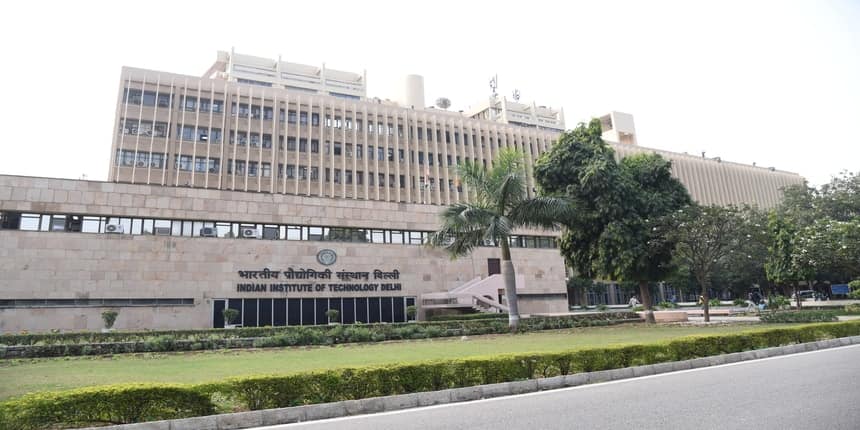
IIT Delhi: BTech student’s death on June 1 was by suicide


IIT Delhi: BTech student’s death on June 1 was by suicide

IIT Delhi administration confirmed to students in an email that the third-year BTech student’s death was by suicide.

IIT Delhi: BTech student’s death on June 1 was by suicide
Jun 7, 2021 - 3:23 p.m. IST

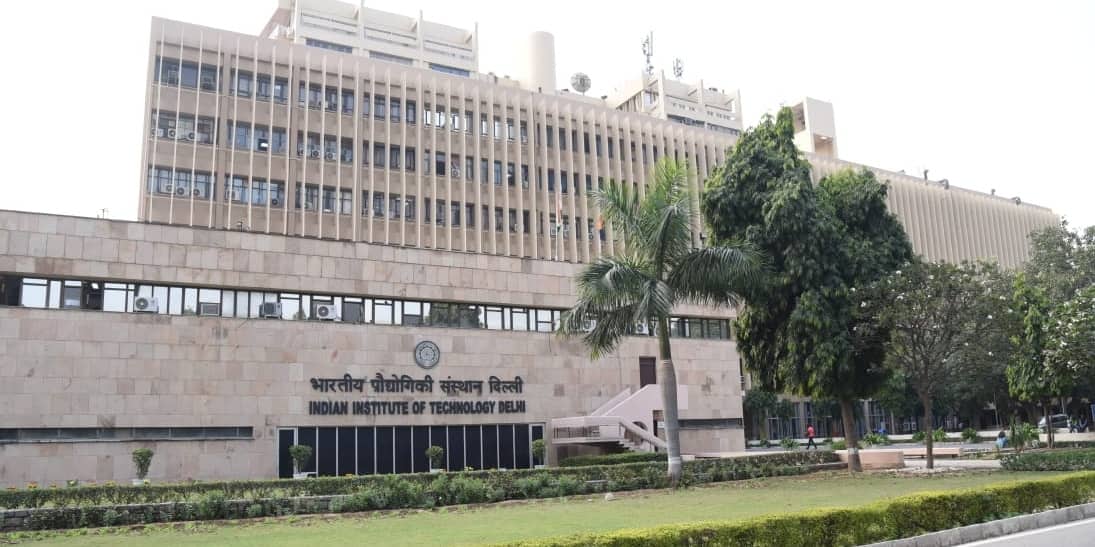
NEW DELHI: A third-year student of mechanical engineering at Indian Institute of Technology ( IIT) Delhi, Hari Prasath, died in his hostel on campus on June 1. 

The institute has confirmed in an email to the IIT community that it was death by suicide.

The email from dean students’ welfare, IIT Delhi, sent on June 4 said: "He was an introvert [student], His parents, friends and counsellors have confirmed that he was being treated for depression. A suicide note, handed over to the SHO confirms that this was death by suicide."

“He approached the hostel security guard after midnight, told him that he had poisoned himself and then fell unconscious. He was immediately rushed to the IIT Delhi hospital and from there to AIIMS but we were unable to save him,” said the email.

Prasath was undergoing treatment for depression on the campus. Until the end of the second year, Prasath was doing well at IIT Delhi. After that he began to struggle with studies, the letter said. Prasath had left all his class groups on messaging applications. He had also withdrawn from social media.

No ‘F’ during COVID-19

A section of students from the institute has issued a statement arguing that many reasons must have pushed him to take the drastic step. They statement says language barrier and cultural isolation is one of the major issues on campus. 

“The campus failed to become a place where our friend could feel a sense of belonging and was left with a very small circle of close friends with whom he could communicate,” it said.

The students had demanded a "fully empowered institute-level commission" with at least 50 percent members from students to investigate what happened to Hari Prasath. They demand that reports on past student suicides must be made accessible and all investigations into all suicides be thorough and time-bound.

"The efficacy of counselling services of IIT Delhi should be independently evaluated. Apart from targeted and general counselling sessions for students, the institute should also develop a mandatory sensitisation programme for faculty members," said the statement. They also demanded that "autonomous forums" be established for students from backward communities.

They also demanded a committee be formed to explore why a particular section of students belonging to a particular social and linguistic background remain absent from student clubs and bodies.

The students’ statement said that Prasath consistently received ‘F’ grades over the past and current semester. The students now demand the IITs do not award ‘F’ grade to any student during a pandemic.
‘Suicides can be prevented’

The letter from the institute finally said: “We would like to reiterate that suicides can be prevented. In Hari’s case, in spite of his own efforts (e.g., at seeking treatment on campus) we were unable to save him. But please know that there are other cases, where timely help – from the psychiatrist and counsellors, from friends, family and faculty – has been able to prevent such incidents. In order to prevent such losses in the future, we can all do more. Meanwhile, we hope that those who feel vulnerable will approach our counsellors on campus who are just a call/email away as well as YourDost who also offer chatbox sessions.”

The IITs have lost several students in the past few years. A first-year student of IIT Delhi died in hospital after a suicide bid on campus in 2019.

The IITs also lost a number of students to COVID. In April this year, a PhD student of IIT Delhi died of COVID-19 after going home. Also in April, an IIT Roorkee student in quarantine died after testing negative for the virus. In May, an IIT Kanpur student succumbed to the black fungus, an added complication brought on by COVID-19 treatment.

If you, or anyone you know, needs help, AASRA has a list of resources here: http://www.aasra.info/helpline.html

Write to us at news@careers360.com.

Wednesday, June 2, 2021

IIT Delhi: Third-year mechanical engineering student dies in hostel,


IIT Delhi: Third-year mechanical engineering student dies in hostel

The student was in B.Tech mechanical engineering. IIT Delhi director V Ramgopal Rao said it is not established yet how he died and investigations are on.


An IIT Delhi mechanical engineering student has died on campus. (Image: IIT Delhi)
Pritha Roy Choudhury 
| Jun 1, 2021 - 4:30 p.m. IST

NEW DELHI: A third-year student of mechanical engineering at Indian Institute of Technology (IIT) Delhi, Hari Prasath, died at his hostel after midnight, on June 1. IIT Delhi director, V Ramgopal Rao, confirming the death, told Careers360 that “It's still not established how he died. Investigations are on.” Students, however, believe it was suicide.

Other IIT Delhi students, asking not to be named, told Careers360 that he was from Chennai and staying in Satpura hostel on campus. IIT Delhi stopped the return of students to campus in late March due to the rise in cases of COVID-19 in the second wave of the coronavirus pandemic. It permitted students to go home in mid-April.

Students said Hari Prasath had been a bright student who had begun to struggle with his studies lately and to withdraw from others. He had left all his class groups on messaging applications and social media. He had been saying he “needed a break”. According to them, Rao, however, said: “Right now we can't say suicide. It's a death on the campus.”

'A difficult time'


In an email sent to students late afternoon on Tuesday, IIT Delhi's dean student affairs wrote: "With deep grief and sorrow, this is to inform you all about the sad and sudden demise of our student Mr. Hari Prasath, resident of Satpura Hostel. Last night his health condition suddenly deteriorated and was taken to AIIMS immediately, but unfortunately, he could not survive. His family has been informed about this and will soon be reaching here."

The letter further said: "We are all going through a very difficult time, and we hope that all IIT Delhi community members will do whatever is possible to support each other."

IIT Delhi has lost several students over the past few years. In November 2019, a first year student died in hospital after a suicide bid on campus. 

In December 2019, the education ministry had told Parliament that 50 IIT students had died by suicide over the previous five years and the large number in late 2019, had prompted much debate and discussion.

However, this year, IITs have lost students mainly to COVID-19. In April this year, a PhD student of IIT Delhi died of COVID-19 after going home. Also in April, an IIT Roorkee student in quarantine died after testing negative for the virus. In May, an IIT Kanpur student succumbed to the black fungus, an added complication brought on by COVID-19 treatment.

If you, or anyone you know, needs help, AASRA has a list of resources here: http://www.aasra.info/helpline.html

Write to us at news@careers360.com.

Tuesday, June 1, 2021

MERITOCRACY VS RESERVATION,

THE SO CALLED 

MERITOCRACY IN IIT'S IS LINKED TO AFFLUENCE 

AS DEPICTED BELOW


A CHILD FROM AN AFFLUENT FAMILY USING AN iPAD


RESERVATION IS LINKED TO ABJECT POVERTY 
GIVING HOPE TO THE ABOVE AVERAGE BUT POOR STUDENT


ATTENDING 
KOTA COACHING SCHOOLS 
PAYING LAKHS OF RUPEES 
AND 
SECURING A RANK IN THE 
IIT JEE ENTRANCE EXAM 
IS NOT WHAT I CALL 
"MERITOCRACY"

THEY ARE IN FACT NERDS WHO CRAM UP BOOKS AND REGURGITATE AT EXAMS

BELIEVE IT OR NOT IN MY IITM BATCH OF 1970 WITH ABOUT 45 STUDENTS OR SO THE BOTTOM 15 WERE MORE SUCCESSFUL IN LIFE THAN THE TOP 15 NERDS


Tamil Brahmins were the earliest to frame merit as a caste claim, and it showed in IITs by Ajanta Subramaniam


Tamil Brahmins were the earliest to frame merit as a caste claim, and it showed in IITs

Studies on the Indian diaspora in the US can lead one to conclude that caste largely vanishes beyond boundaries of India. The story of IIT students suggests otherwise.
18 January, 2020 3:50 pm IST


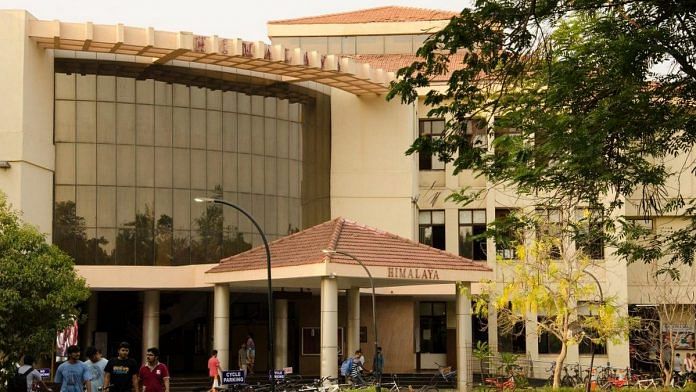
IIT Madras | Photo: Facebook

Mass coaching and reservations brought new groups into the IITs and radically transformed the demographic makeup of these institutions. As a result, the social profile of the IITian as part of an urban, upper-caste middle class has given way to a more diverse student body. In reaction to these trends, upper-caste IITians have attempted to shore up their representative status by claiming the mantle of meritocracy. This has involved a robust politics of distinction through which the coached are distinguished from the gifted, and the reserved category from the general category. In the process, a consolidated form of upper casteness has emerged and, in the context of Indian higher education, acquired unique salience. We have also seen the role of Tamil Nadu as an important precedent in the shift from a universalistic to a more identitarian expression of upper-caste identity.

As targets of Non-Brahminism and Dravidianism, Tamil Brahmins were the earliest to frame merit as a caste claim. Their marking as Brahmins produced forms of self-marking as a tactic of meritocratic claim-making. With the spread of Other Backward Class (OBC) politics across India, this shift to a more explicit caste politics of meritocracy has also spread. At IIT Madras and beyond, the assumption now is that the general category is an upper-caste collective.

Through all these challenges to and defenses of upper-caste meritocracy, mobility has remained a key mechanism of caste consolidation and capital accumulation. We have seen in previous chapters how mobility within India under the purview of the central government contributed to the making of an upper-caste intelligentsia. It was precisely the caste capital provided by this mobility that was threatened by the Mandal Commission recommendations and produced such a strong backlash. But spatial mobility was by no means limited to national borders. Migration outside India has also been a long-standing source of upper-caste social and economic capital. This was certainly the case for IITians.

As we saw in Chapter 4, IITians began to leave India from the late 1960s for what they perceived as greener pastures. In the very early years, these were brief forays for training in West Germany and other countries, after which they would return to work in Indian industry. But the pattern shifted once the United States came into view as the principal destination for IITians. The post-1960s waves of migration made up a more sizable, more permanent diaspora.

Also read: The IITs have a long history of systematically othering Dalit students


Migration from India predated independence. The late nineteenth century witnessed the first large wave of Indian migration to Burma, Ceylon, Malaya, Africa, the Caribbean, and the Pacific. The vast majority of these migrants were lower-caste indentured laborers. This was followed by a second wave of traders, clerks, bureaucrats, and professionals who went mostly to East and South Africa but also to the other British colonies where indentured laborers had preceded them. A third wave headed for the United States. There are clear differences between the experiences of lower-caste laborers and upper-caste professionals who began arriving in the United States from as early as the 1880s. But despite the fact that caste played a significant role in structuring migration and diasporic life, the scholarly literature on the Indian diaspora to the United States might lead one to conclude that caste largely vanishes as a social category beyond the boundaries of the Indian nation-state. Instead, the most salient forms of self-definition appear to be class, gender, language, religion, and nation.

The story of the IIT diaspora suggests otherwise.

The forms of accumulated caste capital detailed over the previous chapters were key factors in allowing for diasporic mobility. Moreover, the professional success of IITians in the United States has been hugely significant for reinforcing the link between meritocracy and caste. With geographical distance from India and from rising challenges to caste entitlement, IITian achievement abroad once again appears as just that—self-made success. Diasporic mobility has helped to once again force caste into the shadows. However, the absence of caste as a public identity in the diaspora does not preclude its structural and affective workings. If anything, the institutional kinship within the overwhelmingly upper-caste IIT diaspora has become an even more potent form of capital. Diasporic IITians have been at the forefront of efforts to sustain and consolidate their affective ties and to make the IIT pedigree into a globally recognized brand.

Much of this work of branding has been driven by IITians in Silicon Valley, for whom entrepreneurial success has further reinforced their sense of being self-made individuals. Entrepreneurialism—and that, too, being nonwhite entrepreneurial successes in a new industry— has deepened their investment in a narrative of humble middle-class origins in which the brain is elevated as the sole form of capital and histories of caste are strikingly absent. U.S.-based IITians work to advance this narrative, not only in the United States but also in India, where they have been vocal advocates of market deregulation and privatization. Moving between U.S. and Indian contexts has entailed a balancing act between the marking and unmarking of caste as the basis of achievement. As we have seen, ongoing challenges to upper- caste dominance in India have disrupted settled expectations and produced a more strident defense of merit as caste property. The diaspora, too, is an important weapon in this fight. By showcasing diasporic success as the arrival of the global Indian, upper-caste IITians render the struggle for caste rights into a parochial—even regressive—endeavor.

Understanding the transnationalization of caste is particularly important in the current moment, when the rise to political power of middle and lower castes has partially obscured the workings of upper- caste capital. Indeed, it is particularly productive to think about how and in which contexts such capital is reconstituted. While in some ways formal political arenas and the broader cultural sphere have witnessed the entry of lower castes, elite education and the expanding private sector both within and beyond India have serviced the reconstitution of caste privilege by other means. In this sense, we might think of elite and private domestic and transnational arenas as spaces of upper-caste flight and retrenchment away from the pressures of lower- caste politics.

Political scientist Devesh Kapur has argued that the immigration of Indian professionals to the United States was one of the “safety valves” of Indian democracy. Because they could immigrate, the fight over the distribution of political power and economic resources was less contentious than it might have otherwise been. Kapur argues further that the specific form of capital these elites possessed—advanced degrees as opposed to land—made for easy “exit,” first from state employment to the private sector and then abroad. Since this was a transferable form of capital, “exit” also contributed to the further accumulation of capital.

What is less evident is how moving from one system of social stratification to another influenced the world views and practices of diasporic elites. Specifically, what did it mean for Indian professionals to move from a society where enduring caste stratification intersected with democratic change to a society where racial stratification operated similarly? How did they respond to their own racialization as U.S. minorities, and how did this experience shape their forms of identification and strategies of accumulation?

Also read: IIT mania is costing students quality time at schools. But CBSE, other bodies still sleeping

In this chapter, I will build on existing literature on the Indian diaspora in the United States to understand the impact of transnational mobility on IITians and of diasporic IITians on India. How, I will ask, was upper-caste identity forged in the United States, where IITians were positioned as both class elites and racial minorities? IITian diasporic experiences have to be understood in relation to the longer U.S. history of race and immigration.

The 1965 U.S. Immigration and Nationality Act marked a key shift toward official multiculturalism and the representative power of Indian professionals. This shift is key to the status of IITians as an influential subset of Indian professionals whose self-fashioning is keenly attentive to the market for identities. As we will see, their self-fashioning as ethnic entrepreneurs, helped by the catalytic impact of the Silicon Valley boom and enduring forms of transnational institutional kinship, has found fullest expression in the marketing of Brand IIT. Moreover, diasporic IITians have leveraged their status as financially successful global moderns to push for legal changes, market deregulation, and privatization in India.

The success of Brand IIT has also transformed the meaning of meritocracy by shifting the emphasis from intellectualism to entrepreneurialism.

This excerpt from The Caste of Merit: Engineering Education in India by Ajantha Subramanian has been published with permission from Harper Collins India.

Monday, May 24, 2021

Nobody gets the IIT story right, 3 Idiots, TVF, to Netflix’s Alma Matters


Nobody gets the IIT story right, 3 Idiots, TVF, to Netflix’s Alma Matters

Alma Matters places students before you but forgets to critically contextualise what they are saying about toxic IIT culture, or more importantly, not saying.


23 May, 2021

IIT-Kharagpur | Screengrab from Alma Matters, Netflix

Alma matters, but so do real issues that never make it to India’s OTT platforms. Bollywood’s 3 Idiots may have been your introduction to the horrors of the Indian Institutes of Technology, but our YouTube generation is seeing a lot more campus content. If you’ve seen one, you have seen them all — whether it is TVF’s Kota Factory or the erstwhile AIB’s Honest Engineering Campus Placements or Netflix’s Mismatched. If Bollywood and YouTube managed to give viewers a glimpse into the dark secrets of suicides at IITs, a Netflix docu-series should have taken it one notch higher. But it ends up just adding to IIT nostalgia and the cult around the coveted institute.

Yes, Netflix’s Alma Matters, based on IIT Kharagpur, covered students’ mental health, suicides, the rat race — first to get in and then get to the top of your class — and competitive placement culture, but it felt more like a check-box attempt rather than a deep dive.

When will we talk about the undeniable casteism, deep-rooted patriarchy, and institutional destruction of mental health on India’s much-sought-after campuses?

Also read: Intense anxiety, burnout, entrance exams — education in India needs an overhaul
A hotbed of mental health issues

“Sir, our parents took good care of us for 20 years and sent us here thinking that we would come back home with a good degree. They could keep me alive for 20 years, but you can’t for 5 years? You’re blaming the parents who aren’t even present here! Is this not a failure of the system as well, sir?” said an impassioned student to loud applause during an open house in IIT Kharagpur to address a spike in student suicides in late 2017.

Made by two IIT alumni, Pratik Patra and Prashant Raj, Alma Matters places students before you but often forget to critically contextualise what they are saying, or more importantly, not saying.

The interviews lend themselves to bits and pieces of great moments that could have been expanded upon to truly skewer IIT Kharagpur for the flaws in the way it is run. Having a photo of Biswa Kalyan Rath on your show’s thumbnail may get you clicks, but the campuses have a lot more to say.

The greatest highlight of the series is the sincere, albeit brief, focus on students’ mental health, with multiple students directly criticising the university’s administration for its alleged inaction and apathy in providing the necessary medical facilities and support.

A Hindustan Times report from 2020 quotes a Mental Health Day survey, in which a massive 85 per cent of the respondent students at IIT Bombay considered mental health to be a common issue on campus. More alarmingly, 71.3 per cent cited academic pressure as a contributing factor to their mental health problems, while 52.2 per cent cited concerns over their professional future, which is tied to the outcome of campus placements.

Following the open house scenes in the Netflix series, a student named Srinidhi Moodalgiri mentions how unexpected it is to see students “hang a rope around the fan and just like…quit everything.” It is nonchalant explanations like these that showcase how commonplace desensitisation is in this ecosystem — but a self-preservation tactic for many students like Moodalgiri to help them survive the high-pressure environment. But wish I didn’t have to wait until the final episode to see that.

Also read: ‘Everything is abnormal’ at IIT Guwahati, students allege they’re being driven to suicide
IIT-driven content

There is much to be desired in the Netflix show’ foray into the issues that plague India’s most prestigious university. But Alma Matters is not the lone offender here. The spate of IIT-focused series may touch upon issues of mental health, alienation, loneliness, and pressure faced by students, but they are often reduced to tropes and catalyses to forward storylines.

Arguably at the forefront of the student-focused content trend has been the YouTube channel-turned production company The Viral Fever (TVF). In the years following the success of its 2015 comedy-drama TVF Pitchers, which satirised startup VC culture, the company produced a glut of series on student life as well as life after college, TVF Bachelors being a notably successful and comedic, take.

However, its first real attempt at providing a serious look into high-pressure education environments was the 2019 Kota Factory. The series focused on high school students taking coaching classes for JEE preparation. But much like Alma Matters, it was seen by viewers as a relatable take on the experiences of young students, made by IIT alumni. However, as the show went on, it appeared to be more interested in fulfilling contractual obligations with its sponsor Unacademy.

As a result, we got a highly contrived story bogged down by product placement that, in its attempt to find a happy or hopeful ending for its protagonists dealing with stress and pressure, ended up trivialising those issues.

What is more depressing is that this appeared to be a successful tactic for TVF financially, as the production company has repeated the same process with its latest iteration with the sponsor, this time on the UPSC exam.

From the trailer and hype created around Alma Matters, it appeared as if Netflix was trying to give us a new outlook on IITs. But what it ended up creating was only a gateway into these issues and some nostalgia.

On the similarly hot button issue of gender bias, for instance, the filmmakers introduce the problem in an insightful way by means of a student criticising the “inherent bias” behind the fact that IIT Kharagpur has had no female student Vice Presidents, and very few candidates, in its nearly 70-year history. However, except for a speech given by Spandana, a successful General Secretary candidate, and some light calling out of casual sexism, little is said about the university’s handling of any serious cases or allegations of sexual abuse.

There is also little connection made between the huge disparities in men and women on campus to the broader admissions process or governance of the university.

But Alma Matters, for all its flaws, is a more honest look into the issue of mental health, and takes a small step forward in painting a picture of what greater societal sensitivity towards such issues should look like.

One mainstream film that understood this, to an extent, was the Sushant Singh Rajput-starrer Chhichhore (2019), which was partly set in IIT Bombay and focused on interpersonal relationships, the high-pressure JEE coaching process, and briefly, on mental health issues. More need to go down this route.

Ultimately, the onus should not be on IITians-turned-filmmakers to find solutions or be the forerunners for the cause of mental health awareness, but it is their responsibility to not mislead viewers or trivialise issues. If only this was more widely understood.

Views are personal.

Tuesday, May 18, 2021

The Kota Model Of Cracking JEE: COVID Or Not, It’s Unhealthy For Students,


This post has been self-published on Youth Ki Awaaz by Prabhanu Kumar Das. Just like them, anyone can publish on Youth Ki Awaaz. Find out more

The Kota Model Of Cracking JEE: COVID Or Not, It’s Unhealthy For Students
By Prabhanu Kumar Das in Campus Watch, Education, Mental Health, News
17th May, 2021

More from Prabhanu Kumar Das

Trigger Warning: Mentions of suicide

An article on May 4th, 2021 by The Print spoke about how lockdown till 17th May in Rajasthan will adversely affect those running coaching centres and other allied businesses like hostels and PGs. One of the people that The Print spoke to said that Kota will become a “suicide hub” if these businesses aren’t allowed to resume. Of course, the livelihood of many will be affected, but hasn’t Kota always been a “suicide hub” for many students who go there, due to the stress and anxiety these institutes and the system puts on them?

Dialogue from the TVF Show ‘Kota Factory’. Translation: Children leave Kota after two years, but the effect of Kota on students stay for many years.

For those who are not aware, Kota is a city in Rajasthan where lakhs of students go every year to enrol and study in IIT-JEE coaching centres. JEE being the exam to crack into any engineering course in India, it has had a notorious history of being extremely hard to crack, and many engineering aspirants look at coaching centres as a way to get an edge. However, the entire culture around these coaching centres and the system that JEE represents leaves no space for the mental health of the student. Kota is no exception.

Kota became a hub for engineering and medical aspirants in the 80s, reinventing itself with the growth of many coaching centres promising a quality education. Pre-pandemic, there are usually around 1.5 lakh students in the city at any point of time preparing for the same.

Many of these students leave their homes and are thrown into an unknown, high-pressure environment without the love and nurturing children need at this age. Add to the fact that Indian parenting contains a lot of pressure towards material results for appreciation and care, one can see how the journey to Kota is daunting and extremely stressful to many students.

Add these high expectations to the fact that there are no fee refunds, up to 18-hour study shifts, and segregation based on ability. Fees are anywhere between 50,000 to a lakh annually, and with the no refund policies many Kota institutes employ, the pressure just becomes worse and worse for students coming from marginalized and economically weak backgrounds whose parents have had to borrow money to send their ward to Kota.

Since 2013, Kota has seen 85 suicides. The mental trauma that Kota inflicts on students is harrowing. In an article by Times Of India, parents of a Kota student explained the effect going there had on the student, saying “It started with a headache, fatigue, and bed-wetting. He now suffers from blackouts, partial memory loss, and occasional hallucinations.”

In December 2018, news of 3 student suicides in Kota shook the country. The city and many coaching institutes tried to rebrand their image, but the pervasive practices and pressures of Kota remain. A documentary by Hemant Gaba titled “An Engineered Dream” is a poignant story capturing the effect of Kota on the many aspirants that head there in the hopes of a better future.

This issue is not just restricted to Kota, with many coaching centres for the science field employing the same practices, and the students going there facing the same pressure. Kota is a symptom of a larger problem, and that is the current state of the Indian education system.

A student dies by suicide every hour in India, and a lot of it is due to the pressure that the system puts on students. Institutes like those in Kota arise out of the desperate need of struggling students to get that extra edge over their peers, whether they get an extra edge or not, I am not one to say. What I can say is that the system that makes students look at their peers as competitors that they need to beat, and the Indian attitude that places material success over well-being is a killer.

And it needs to change.
Also read: “Why Are Student Suicides On A Rise? The Answer May Lie In Unrealistic Academic Standards“

Like what you read? Recommend or share it ahead.

Saturday, May 15, 2021

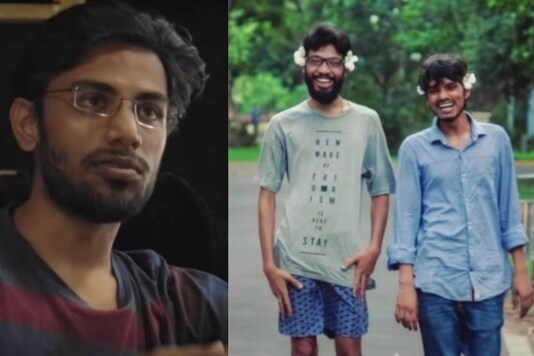
Alma Matters Review: Big Dreams Come at a Heavy Price
Alma Matters Review: Big Dreams Come at a Heavy Price


The docu-series Alma Matters is a look inside IIT Kharagpur, one of the most reputed engineering institutions of India.

NEWS18.COM
LAST UPDATED:MAY 14, 2021, 17:39 IST


Alma Matters
Creator: Prashant Raj
Directors: Prashant Raj, Pratik Patra


The New Netflix documentary Alma Matters is a look inside IIT Kharagpur, one of the most reputed engineering institutions of India. With three hour-long episodes, the documentary tries to break the stereotypes one often associates with the place.

At first glance Alma Matters looks like a documentary which talks about the pressure of studying in IIT Kharagpur. That’s how it starts, with students talking about the overwhelming rat race and the fact that most student chose the college over their stream. However, what this series tries to do, is celebrate the institution with all its flaws.

The first episode is divided into three parts. The first part is about how IITans are branded as the ‘cream’ of the nation and the repercussions associated with it. A lot of students don’t get the subjects or streams they want and end up losing the motivation to study. This leads to a cycle of disappointment. In the second half, we look at the heirarchies that exist within the campus, how a “chaggi" or a six pointer is different from the eight pointer. We see students take respite in the extra-curricular activities.

The third part of episode one is titled 1:9. It is about how women are overwhelmingly outnumbered by men in the institution. We see this from the point of view of the Vice President elections and how in the 60 years of its existence, there has never been a woman VP candidate. We meet the first ever Sports General Secretary Spandana, who talks about facing sexism and almost losing the will to contest.

While it is noble to call out sexism in IIT Kharagpur by devoting a slot to it, this is the only segment in the entire three-part series that women have a voice in. In fact more men are interviewed to talk about sexism in women. In the second and third episodes where the film talks about important issues, no female student is actually featured. Like they are not scared of placements, or have responsibilities towards their families. When you box women into just one slot and that too give them a quarter of space that you give to your male subjects, it is tokenism at best.

The second episode is all about placements. We see five to six boys prepare for different jobs. They talk about what their families and the society expect out of them. After an intense episode we see our protagonsists landing great placements. Here too, the non-existent role of women is jarring. Cigarette smoking and foul mouthed college boys are beneficial to the narrative, but imagine how interesting some of those stories could have been. IIT Kharagpur is a boys club, we get it.

The third episode is probably the best made. It starts with an IIT KGP tradition that the rest of the world did not even know existed. On every Diwali, the students get together and create a light show with diyas in an extavagant scale. Called ‘Illu’ (from illuminate) by the students, it is actually exhilarating to watch them build something out of scratch and it turning out so beautifully.

However, this feeling quickly dims down since days after this event, we find out that a student has died by suicide. It is also that year’s fifth suicide. This sparks a larger, more important conversation about how the system has failed so many students. When the authorities try to shift the blame, a student passionately says, “Our parents raised us for 20 years and nothing happened to us, you couldn’t keep up alive for five years?"

That moment is definitely goosebump inducing.

Since Alma Matters is a celebration of the institution, we quickly transition into the ‘last days of college’ phase. We see everyone at their most vulnerable, their dorm rooms, their relationship with each other, their relationship with strays who become pets. It is a sweet sentiment, one that makes us yearn for our college days. At the end of the day, the students say, it is an experience of a lifetime.

One thing that Alma Matters makes clear is that a student’s life is not easy. And in hindsight, keeping in mind the Covid-19 pandemic, it makes us realise how horribly we treat our students.

Alma Matters is a good documentary, however, some things feel incomplete. We get to know nothing about the female students. It might have been because the directors, who were men, were not really allowed to shoot in their dormitories. However, we get to know the guys very intimately, from their hopes and dreams , their personal life, down to where they stash their alcohol. Hence, it feels like a cop out, despite these protagonists being very interesting.

On the other hand, we don’t get to know about other important issues. For instance, about two days ago, an IIT KGP teacher was suspended for openly abusing ST and SC students. This lead to a movement in which students from the Dalit, Bahujan, Adivasi (DBA) community called out other casteist teachers. We do not get to see the rampant casteism, we also don’t get to see students with disabilities and those from underprivileged backgrounds.

Of course, Alma Matters sheds light to important topics. However, it doesn’t talk about every topic. Maybe that was the narrative they wanted to convey, maybe some topics were really uncomfortable to address. However, a lot of effort and passion has been put into Alma Matters and it shows.

Thursday, May 13, 2021

Assistant registrar at IIT Kanpur commits suicide


Assistant registrar at IIT Kanpur commits suicide after toddler tested COVID positive, police suspect depression


The deceased was reportedly depressed. His family said his younger son, who is just one and a half years old, had tested COVID positive and hence Surjeet's depression had deepened


Edex Live


IIT Kanpur

Surjeet Kumar Das, an assistant registrar at IIT Kanpur committed suicide at his official residence in Kanpur.

The deceased was reportedly depressed. His family said his younger son, who is just one and a half years old, had tested COVID positive and hence Surjeet's depression had deepened.

Kalyanpur police station's Inspector Veer Singh said, "As per an initial investigation, the deceased Surjeet Kumar Das was in a depressed state and was under the treatment from a doctor based in Delhi."

READ ALSO: More than 1000 IIT alumni write to IIT KGP calling for the termination of prof who abused students during lecture

Police said Das was found hanging from a ceiling fan in his residence on Tuesday evening. The body has been sent for post-mortem. "The deceased Surjeet was a native of Assam and lived with his wife Bulbul, mother-in-law and two sons. His elder son is eight years old while the younger one is one-and-a-half years old. Kumar was under treatment for depression since 2011," Inspector Veer Singh said.


Wednesday, May 5, 2021

Kota business owners say city will become ‘suicide hub’ as education industry is hit by lockdown - The Print


Kota business owners say city will become ‘suicide hub’ as education industry is hit by lockdown

Rajasthan is under a lockdown until 17 May. Kota’s coaching centres closed on 16 April. This has hit the city’s coaching industry, which was already damaged by the pandemic.

ANEESHA BEDI 4 May, 2021 4:03 pm IST

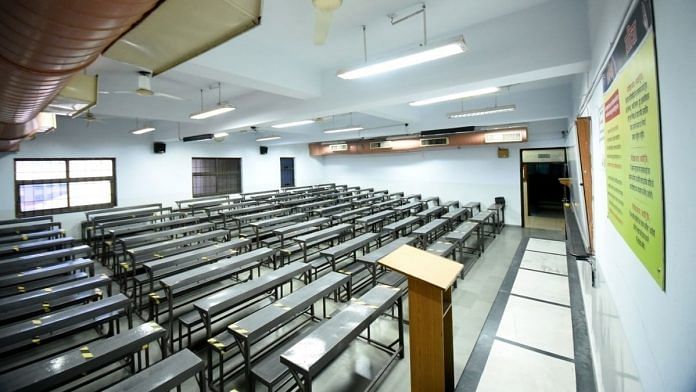
An empty classroom in a leading coaching centre in Kota. | Photo: Rohit Jain Paras/ThePrint
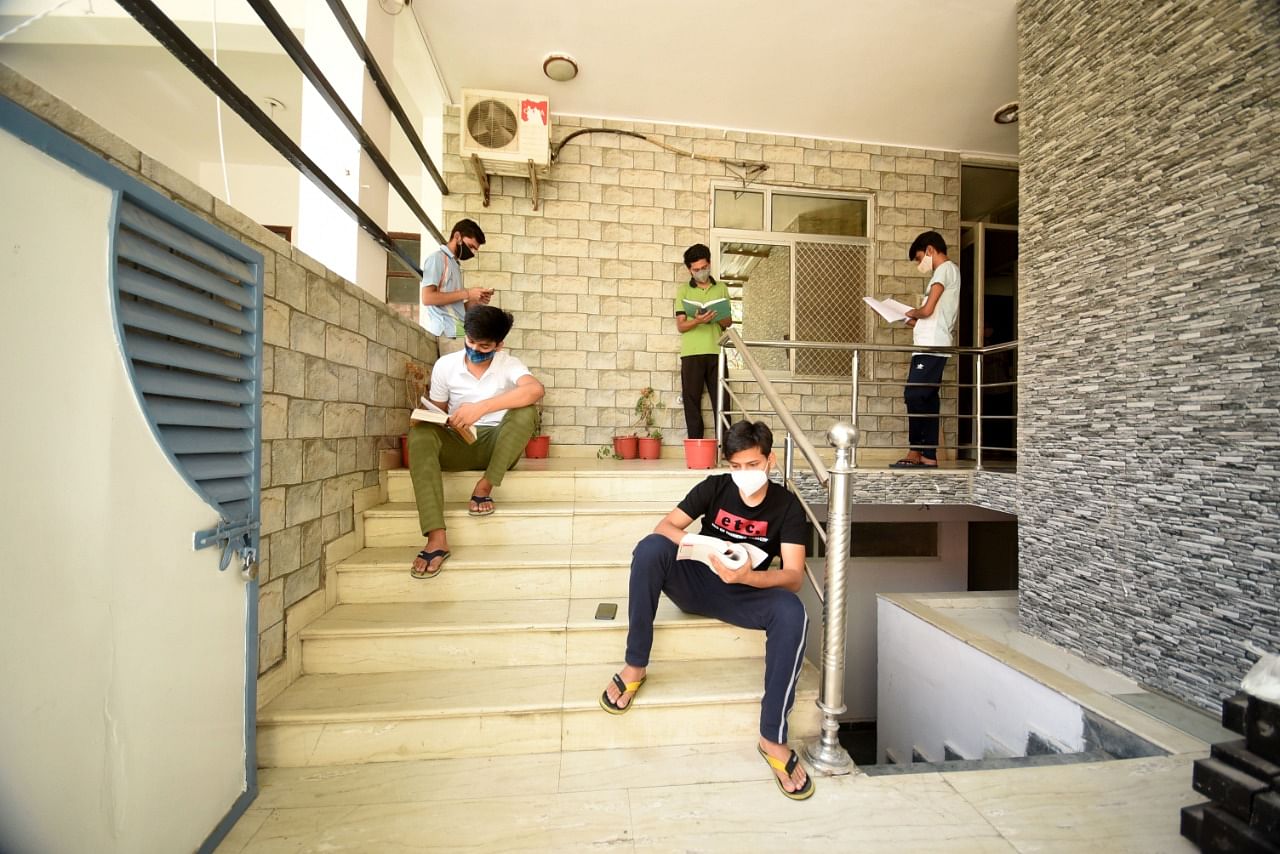
Kota: Ashutosh Yadav, a 17-year-old from Ghaziabad, is sitting on the terrace of his four-floor hostel building in Kota. He is in town to prepare for the IIT-JEE entrance examination. But Yadav is missing the comfort and ease physical classes offered.

A student of Allen Career Institute, which is located just a kilometre from his hostel, Yadav says, “We had returned only in January hoping things would get back to normal but this seems endless.”

With classes across the engineering and medical coaching hub in Rajasthan shut for an indefinite period, Yadav’s friend, Rishu Raj, 20, is also unable to decide what to do. Raj’s parents want him to return home in Bhopal at the earliest. “But I feel distracted at home, it’s easier to focus in this environment here,” he tells ThePrint.

Yadav and Raj are among the 13,000 students who are currently in Kota, data from the district administration shows.

A group of friends seen doing group studies while following Covid-appropriate behaviour in their hostel. | Photo: Rohit Jain Paras/ThePrint
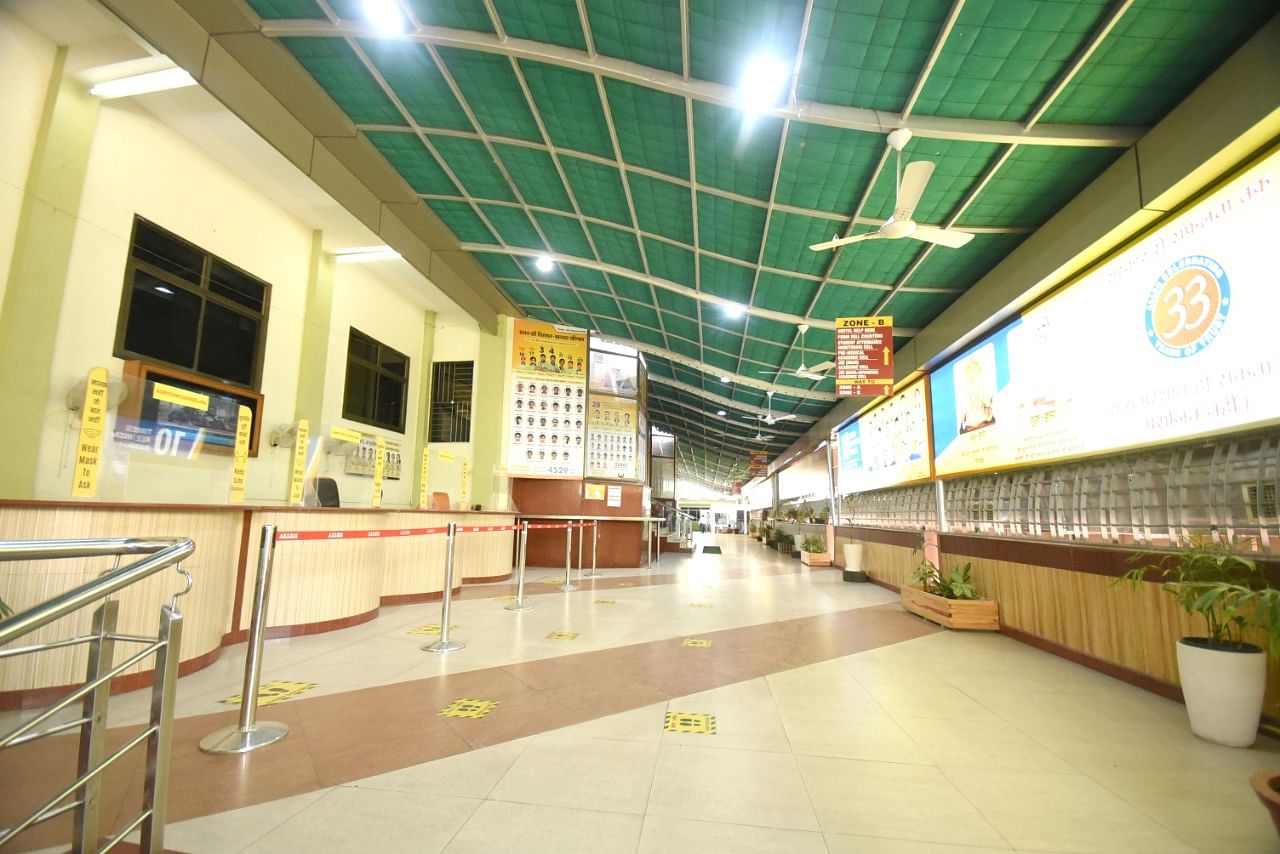
This is a significant fall from the 1.35 lakh students who took physical courses in 2019. At least 50,000 of them were evacuated in March 2020 ahead of the national lockdown in special trains, official records of Kota administration revealed. Around 10 per cent of them remain in the city.

Now, Rajasthan is under a lockdown until 17 May, which initially began as a weekend curfew in the middle of April. Kota’s coaching institutes closed on 16 April, and have remained shut since. The lockdown was extended by a fortnight.

This has hit the city’s coaching industry, affecting the livelihoods of many, who were already dealing with the costs of the first wave of the pandemic.

Also read: CM to sarpanch, how Rajasthan pulled together to beat vaccine fear, become top performer

The Kota industry

The coaching industry in Kota directly or indirectly impacts the livelihoods of at least 2 lakh people in the city, including its 3,000 hostel and 20,000 paying guest (PG) accommodation owners, local vendors, shopkeepers, mess staff, auto drivers, security guards and so on.

The closure of these institutes has impacted Kota’s economy dependent on them.

“Revenue worth Rs 3,000 crore was earned in 2019 through the coaching centres and the stakeholders dependent on them in Kota, which reduced to about Rs 1,500 crore in the past one year,” says Vinod Kumawat, senior vice president, Allen Career Institute, Kota. He has been in the coaching business for 33 years.

Many of these stakeholders are worried about the rising Covid cases in Rajasthan. On Monday, the state reported 17,296 cases and 154 deaths.

According to data obtained from the district magistrate (DM)’s office, Kota’s positivity rate rose from 11.12 per cent on 1 April to almost 38 per cent on 30 April.

While the state bulletin showed that Kota reported 762 Covid cases Friday on 30 April, the data for the day from the DM’s office showed 1,526 cases.

Explaining this discrepancy, DM Ujjval Rathore says: “The 1,526 figure is that from laboratories, includes repeat tests as well as those of outsiders.”

Owners of coaching centres have asked government officials to let them reopen with safety measures in place. Hostel owners argue that if by-elections could be held in April, coaching institutes must also be allowed to operate.

A deserted entrance to a coaching institute in Rajiv Gandhi Nagar, Kota. Staff and students are now operating from home and hold either live or pre-recorded sessions online. | Photo: Rohit Jain Paras/ThePrint
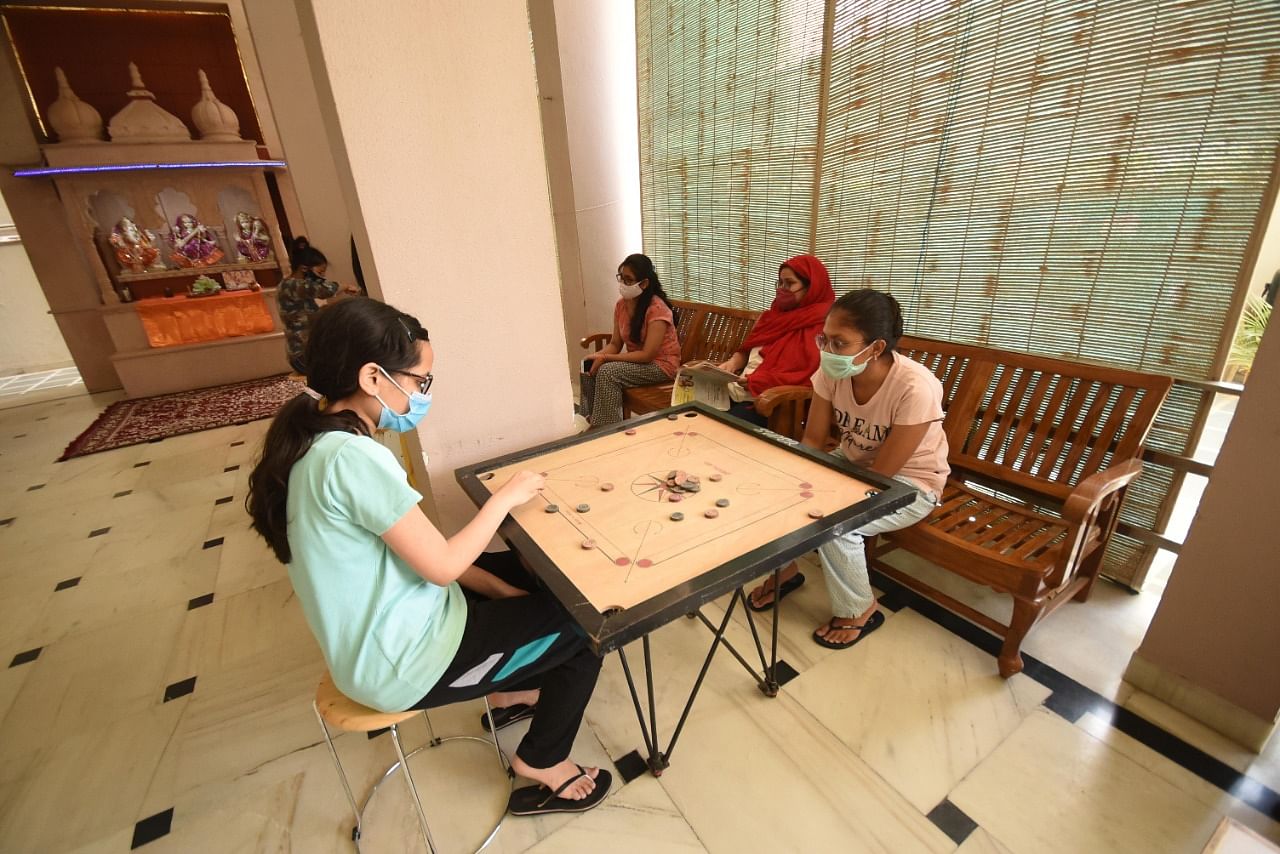
Kota will become ‘suicide hub’, say business owners

However, the empty, tall, brick campuses that welcome visitors to Kota are testimony to the gloom that has hit the city. From the usual heavy rush of students from all over the country, the hostels and PGs now lie deserted.

Sunil Agarwal, a hostel owner, says, “We have taken so many measures to ensure safety of students… why must the government not consider reopening centres once?”

From regular sanitisation to checking temperature of students daily to creating a separate isolation facility in the hostel, Agarwal lists them out.

“We have even provided pulse oximeter and kettles for steam to each of our students as we also care for their safety,” he says, adding desperately: “More than a coaching hub, Kota will soon be known as ‘suicide hub’ for us as we won’t survive this way.”

Naveen Mittal, chief of the local Kota Hostel Association, says, “We took loans last year as well. We haven’t been able to repay those and this year seems to be making it tougher for us.”

Some of the hostels have anyway been operating at 30 per cent capacity since students returned in January.

Teena Sharma, warden at Adarsh Boys Hostel in Kota, shares that out of a total of 110 rooms at her hostel, 59 were occupied as of 30 April. “But many boys want to leave with the lockdown extended in Rajasthan.”

The hostel has also converted its fourth floor into a quarantine floor where any student who shows symptoms is isolated.

Auto driver Monu Lal, a regular outside this hostel, is also suffering the consequences. “We used to earn at least Rs 700 to 800 a day when children were in the town. Now, we barely make Rs 80-100 on a good day,” Lal tells ThePrint, with his auto parked under a tree.

In another girls’ PG accommodation, four girls who learnt about the JEE-Advanced getting postponed, are packing their bags to leave.

“I don’t know when things will be back to normal so I’ve decided to be with my grandparents in Odisha till then,” says an engineering student of Career Point Coaching Institute.

An empty classroom in a leading coaching centre in Kota. Photo: Rohit Jain Paras/ThePrint
“Migration of students has started even though at least 30,000 students returned in November last year. We have advanced the summer vacation this year,” says Pramod Maheshwari, director, Career Point Coaching Institute.

Nearly 5,000 faculty members, including administrative staff, are also impacted. Salaries of faculty at various institutes have been reduced by 10-25 per cent, coaching centre owners confirm to ThePrint.

State Health Minister Raghu Sharma, however, tells ThePrint: “Loss of industrial resources can be made up for. But a lost life won’t come back. Kota is among our worst impacted districts and needs to remain under lockdown. At this point, saving lives is the government’s priority.”

Also read: How India’s high courts turned Covid warriors as Centre and states faltered
Turn to innovative modes for survival

Stationery shop owners in Kota claim lack of students is making them shut shop.

Rakesh Kumar Jain, president, General Merchants Association, Kota, says: “All kinds of businesses have been hit, stationery shops were a big business in this city, now some of the stationery shops owners have been coming to me saying they are shutting shop.”

Jain adds that they are now looking at alternate ways of doing business, including the online mode.

Such moves are being seen among others too.

Manoj Sharma, for example, took over as the CEO of Vibrant Academy, one of the better known coaching institutes in Kota, after working with rival group Resonance for over 18 years. The reason, he says, is his new employer’s tie-up with Unacademy, an education start-up backed by tech giant Facebook with a valuation of over $2 billion.

Speaking to ThePrint, Sharma says: “There is too much uncertainty since we thought things will improve with children returning in January but now things are worse than last year.” He adds that he was thinking of more tech driven solutions to retain student’s focus for exam preparation.

Similarly, Motion Education Pvt. Ltd is now thinking of ways to address each student’s needs separately. “Our content was the same based on the entrance examination but Covid has given us time and we’re thinking of offbeat solutions to look at each student’s need individually and address those though pre-recorded sessions through online platforms,” says Nitin Vijay, who is the director of the institute.

Also read: How Bhilwara is using lessons learnt from its 2020 ‘model’ to fight this Covid wave
Other industries hit too

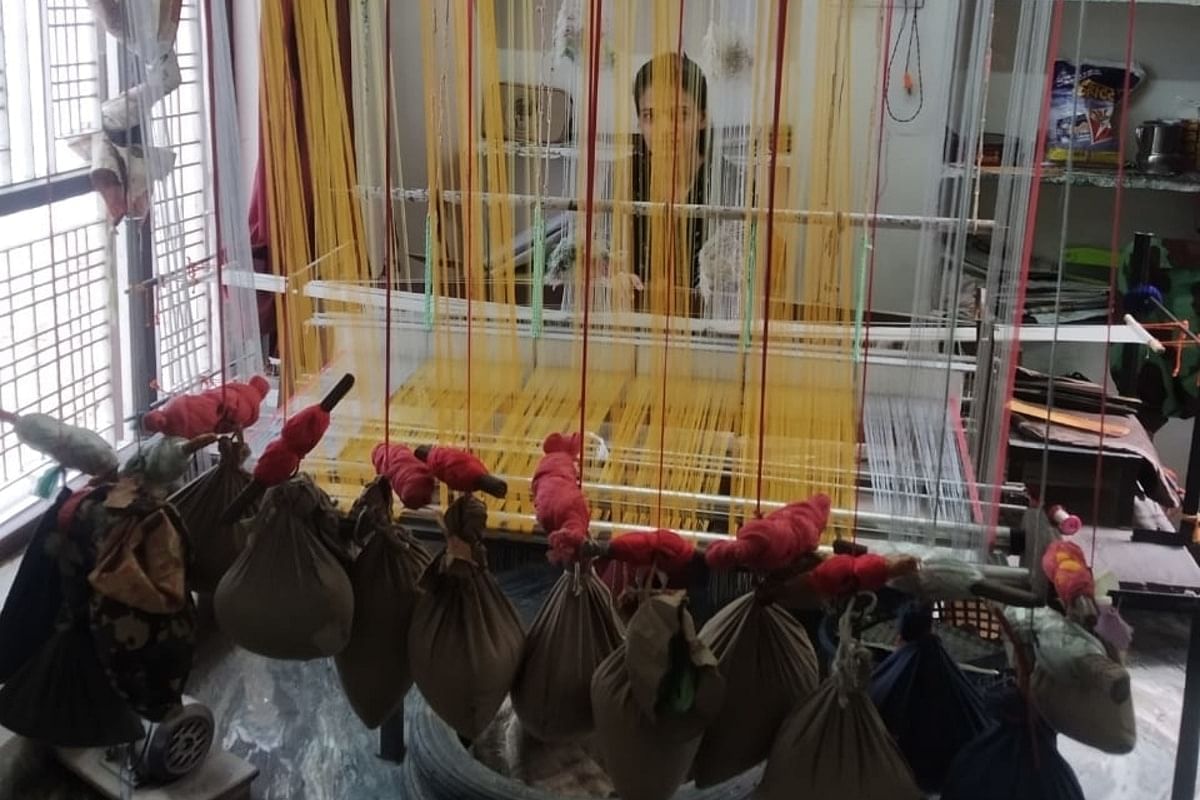
But the coaching industry isn’t the only sector that has been impacted in the city. Kota is also home to weavers. At least 3,000 looms in Kaithoon municipality, where the much talked about Kota Doria sarees are woven, have been severely hit.

With uncertainty over when there will be buyers again, Shabbir Hussain Ansari, owner of one such yarn business, says: “The production has been going on, but I haven’t had a single buyer in the past fortnight.”

A weaver seen at Shabbir Hussain’s shop amid the lockdown under which the Rajasthan government has allowed production in factories. | Photo by special arrangement

The curfew has also come at the peak sale season for the Kota Doria weavers, as these sarees are popular during the summer wedding season in parts of southern India.

The stone and fertiliser industry in Kota has also been badly hit as it is dependent on oxygen supply.

Govind Ram Mittal, a renowned industrialist in Kota and owner of Mittal Dhatu, one of India’s oldest and largest producers of metallic stearates, says the turnover of industrial output had reduced by 50 per cent amid the second wave.

“The industrial sector had incurred 75 per cent losses from original turnover of Rs 2,000 crore (before the pandemic hi). However, we managed to make up 25 per cent when the industrial production began,” he says, adding that with the latest surge in cases and curfew, it was down to Rs 1,000 crore once again.

Kota houses at least 14,500 MSMEs too. Achal Poddar, who is the owner of Chambal Stone Cluster Pvt. Ltd as well as the secretary of Rajasthan chapter of Laghu Udyog Bharati, says: “Each of these 14,000-15,000 MSMEs in Kota generate at least Rs 2 to 3 crore annually as revenue, but in 2020 this was impacted by at least 30 per cent.”

According to him, the uncertainty is even more this time. “Our stone industry involves construction work and hence labour is key, which we deprived off,” Poddar says, adding that grazing work in such industries requires oxygen supply.

“Here, people aren’t able to get oxygen, let alone us. So we would rather let the industry suffer then people’s lives. I can’t explain how it feels,” he adds.

(Edited by Amit Upadhyaya)

Also read: India’s vaccine shortage threatens to prolong its Covid crisis