I have a Solution that will reduce pressure on IIT aspirants but do not know how to get this across to HRD Minister of India. Suggestions are welcome. - Ram Krishnaswamy

Search This Blog

Thursday, August 26, 2021

How YourDOST has grown in the emotional wellbeing space -Richa Singh,

15 lakh+ counselling sessions, 900 experts, 300 institutional clients – how YourDOST has grown in the emotional wellbeing space

By Rekha Balakrishnan

August 25, 2021


Richa Singh, Co-founder and CEO of YourDOST, an emotional wellbeing platform, talks about the company’s growth, its three-pronged approach for corporate organisations, and initiatives during the pandemic.

The onset of the COVID-19 pandemic in early 2020 has led to several mental health issues compounded by stress, increased responsibilities, loss of jobs, fear of the virus, lifestyle changes, and adjusting to the “new normal”.

Despite the need for intervention, mental health remains a taboo. However, a disruption in offline mental health services has accelerated the demand for services online not just by individuals but also by corporates looking at their employees’ wellbeing.
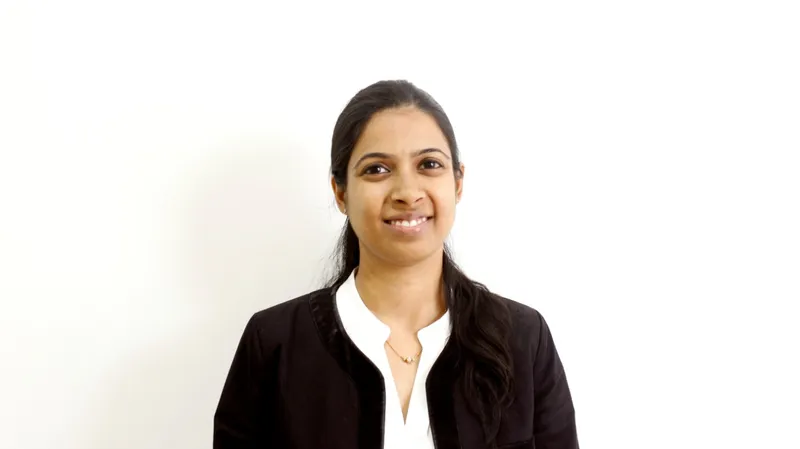


Richa Singh, Co-founder & CEO, YourDOST

Here’s where YourDOST, an emotional wellbeing platform, has made rapid advances in this space with its multi-pronged approach towards various problems.

The death of a classmate by suicide led Richa Singh, an IIT-Guwahati alumna and a few of her friends, to start Your DOST, an online mental and emotional wellbeing platform, in 2014.

Multi-pronged approach

Over the past seven years, YourDOST has helped individuals and corporates connect to experts, including psychologists, psychotherapists, counsellors, life coaches, and career guides.

Highlighting the impact so far, Richa says, “We have provided more than 15 lakh counselling sessions, have 300 institutional clients and have 900 experts on board. Our clientele includes corporate employees, students, and government projects.”

With corporate employees as its focus, YourDOST has a three-pronged approach to provide diverse solutions.

Richa explains the first step is to unlock an individual’s potential through one-on-one counselling sessions.

“We also offer several self-help programmes that promote self-care through mindfulness techniques, self-help models, self-reflective tools to develop resilience. These will help prevent inertia, burnout or disengagement.”

Curated programmes, for instance, around gratitude, or for women going on maternity leave, internet addiction, etc., also help individuals better themselves.

The second approach is to amplify team performance through communication interventions through training to build more emotionally resilient teams.

“The third approach is to help organisations establish an empathetic culture. If an individual seeks to support, but if the company is not aligned with the idea, it will not impact. We inspect the leadership, how it inspires teams, and what they can learn,” she adds.

YourDOST also works with the government on projects to support students from low-income backgrounds. It also assists the National Skill Development Council to enable young adults to be more emotionally resilient towards their careers.

ALSO READ

Increased engagement
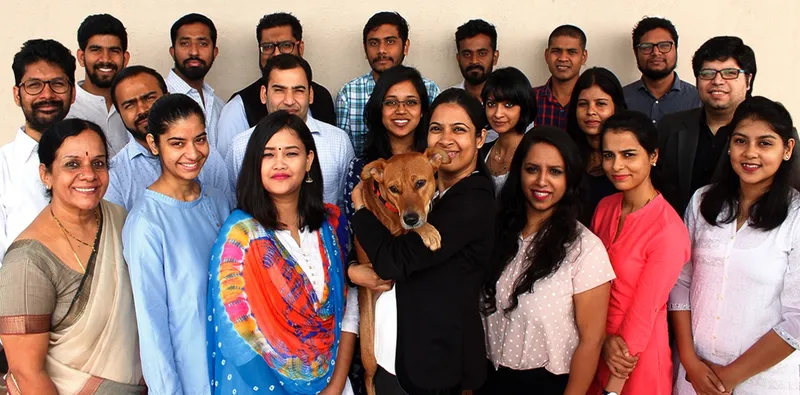


The YourDOST team

Richa believes the pandemic has helped mature the curve faster, with more people talking openly about emotional wellbeing.

According to her, corporate engagement has increased by 400 percent, and YourDOST has facilitated several specialised programmes during both waves of COVID-19.

She elaborates, “During the first wave, companies went through different challenges like layoffs and doing things entirely online. We helped them navigate these challenges. The second wave saw people handle grief, loss of team members, etc. We helped managers support their teams better, especially those impacted by the virus.”

For founders and entrepreneurs, too, the journey has not been easy. “We have seen a 100 percent increase in founders’ engagement because this is an emotionally challenging time for them. It’s lonely at the top. We have a special programme to support them on their journey with individual coaches and specific goals,” she adds.

During this period, YourDOST partnered with the Government of Haryana to run a special mental health helpline for people from low-income backgrounds. The team also trained people to become first responders to make them better equipped to handle dire situations.

Richa agrees that women have borne a large brunt of the pandemic, juggling work and home.

The platform introduced several programmes to support women with relationship issues, raising children, time management, prioritisation, and more.

Richa is happy that there is no more awareness on mental health, given that more people, especially film stars and cricketers, are talking about it.

But the situation is not optimistic. “India is first in depression, second in anxiety, and 36.6 percent of global suicides are in India. In a survey conducted during the pandemic, we found that 55 percent of Indians experienced a significant rise in stress levels, including anxiety and anger. Mental health needs to be addressed seriously.”

Richa is modest about YourDost’s achievements. “I think we have just scratched the surface with our numbers. There are a lot more people to be covered in India. We plan to work with more corporate organisations, startups, and others. We want to be at a place where we can take care of the emotional well being of the entire ecosystem of organisations in India and championing mental health and wellbeing,” she says.

YourStory’s flagship startup-tech and leadership conference will return virtually for its 13th edition on October 25-30, 2021. Sign up for updates on TechSparks or to express your interest in partnerships and speaker opportunities here.

For more on TechSparks 2021, click here.

Applications are now open for Tech30 2021, a list of 30 most promising tech startups from India. Apply or nominate an early-stage startup to become a Tech30 2021 startup here.

Edited by Megha Reddy

'There Is Nothing Meritorious about IITs - Wire


Interview | 

'There Is Nothing Meritorious about IITs,' Says Prof Who Resigned Over Casteism

Vipin P. Veetil speaks about his journey at IIT Madras and what really goes on inside India’s ‘Institute of National Importance'.


Professor Vipin P Veetil. Photo: By arrangement.
Manasi Pant

Last month, Vipin P. Veetil, resigned as an associate professor at IIT Madras, alleging that he faced caste-based discrimination. In his firmly worded resignation email, he stated that “the discrimination came from individuals in a position of power, irrespective of their claimed political affiliations and gender”. 

Snippets of his email were circulated widely on the Internet, throwing light on the issue of caste-based discrimination at IIT Madras.

Allegations have been made over time that casteism thrives in IITs. From the casteist and ableist remarks of professor Seema Singh at IIT Kharagpur to the violation of reservation for faculty recruitment across its campuses, Veetil’s is symptomatic of a much larger issue. 

In fact, as of 2019, IIT Madras was already under the heavy scrutiny of the National Commission for Scheduled Castes and the National Commission for Scheduled Tribes when the institute reported five alleged deaths by suicide within 11 months.

Also read: ‘Disgusted’: Over 1000 IIT Alumni Write to Kharagpur Director on Professor’s Casteist Abuse

While we hear considerable outrage against caste-based discrimination faced by students from the marginalised communities within IITs, faculty members are not exempt from such mistreatment either. RTI data from 22 of the 23 IIT campuses across India reveals that “none of the 22 IITs [in this study] have more than six teachers belonging to the Scheduled Tribes community, while 18 of them have ten or fewer candidates from the Scheduled Castes category. Seven IITs had ten or fewer faculty members from the other backward classes community”. 

Moreover, a Newslaundry article quotes the experience of Subrahmanyam Sadrela, an associate Professor at IIT Kanpur:

“…soon after Sadrela’s appointment, he says some of his colleagues said his appointment was “wrong”, that he didn’t deserve to be a faculty member at the institute, that he could not speak English perfectly and was mentally unfit…Sadrela was slapped with charges of plagiarism in his thesis and threatened with the revocation of his PhD degree, almost a year after he alleged caste-based discrimination in the campus.”

Obsession with ‘merit’

As India obsesses over the value of “merit”, it becomes increasingly important to hear the stories of those impacted by caste-based discrimination. Does the argument for merit truly make sense? How do caste dynamics play out in educational spaces? What does standing up for yourself yield in a predominantly upper-caste institution? I had the opportunity to hear directly from Veetil. He spoke about his journey at IIT Madras and what really goes on inside India’s ‘Institute of National Importance’.

When I first tried reaching out to Veetil, I was told categorically by a student that he did not wish to talk to the media. Weeks later, surprised by his response to my email, I asked him what made him change his mind.

“Now, since the media has lost interest, I have gained interest!” he laughs. “I started receiving calls from several prominent news platforms. But one of the things I did not want to do was just give news bytes because this kind of a case requires extensive, thorough treatment. Knee-jerk reactions don’t help. Only two of some 20 media outlets mentioned that they want to do long-form writing on the issue. I also felt like my mind needs to be a little distant from the issue to engage with the media. I took a break for 2-3 weeks and went to Kodaikanal. Now, I’m willing to speak at length about the events that have occurred.”

Recalling his early days at the institute, Veetil says that his experiences with caste started even before he had officially joined IIT Madras as an associate professor, some time in July 2018.

“As a postdoctoral fellow, I had been applying for several jobs at universities, and IIT Madras called me for an interview. I had my interview in the morning; no complaints about that process. But in the evening, I was sitting with another individual who had come to apply for the same position. A car drove in, and a man stepped out of the car, 60-65 years old perhaps. He was from the Brahmin caste; his janeu was falling out of his shirt. He picked a key from the guesthouse reception and returned almost within the next five minutes shouting furiously at the receptionist. The latter – I do not know which caste he was from – was shaking and shivering, must be around 25-26 years old.”

“The issue was as simple as this: someone accidentally gave him the key to a room that had not been cleaned. All he had to do was let them know that he requires the key to a cleaned room. The receptionist was profusely apologising, but this man kept shouting, ‘How dare you give me this key?'”

“I intervened by saying, ‘You can’t shout at him’. He had luggage and was probably coming in from the airport. I pointed out that if he tried this behaviour somewhere abroad, say, in the US, people would call the cops. He’s a violent man, and this would not be tolerated. The man kept his hand on my shoulder, sort of physically intimidating me, and asked me, ‘Who are you?'”

Veetil describes this as his first glimpse into the sense of ownership a man with such privilege can have at IIT. “I realised that the fellow being shouted at could not even do anything about it: he’s a contractual employee, his manager is also a Brahmin, the director of the institute is a Brahmin. And this receptionist has a family to take care of.”

He reports that there were also times when people at the institute openly asked for his last name to figure out his caste. “Sometimes, I’d be surprised that they’d ask my last name. Sometimes I would not tell them. And sometimes, people would ask me differently: ‘Are you a vegetarian?’ which is a proxy for finding out your caste. You would overhear certain women speak about how someone in their family is getting married to a Marathi Brahmin girl. So you would know those caste conversations are prominent on the campus.”

Contrary to what one may assume, Veetil’s resignation mail was not the first time he had written to the institute to address the problem of caste-based discrimination.

Also read: IIT Madras Faculty Member Resigns Citing Caste Discrimination at Institute

“I think one of the first emails I wrote was about six-seven months after I’d joined IIT Madras. It was sent to all 700-800 faculty members, including the director, IIT core members, everyone… I had asked about the caste composition of deans and directors at IITs. As far as I know, all the directors of IITs since its founding have been Brahmins, so have been the vast majority of deans.”

“All I asked for was some data in a one-line email. Suddenly, there was a surge of emails sent to me saying, ‘If you go down the line that Vipin is suggesting, this institute would be destroyed’. But I hadn’t even said anything! People may have assumed that I was pushing for more reservations, but I hadn’t said anything myself. One person said that statistics are a way to lie – and you should know that these are fairly intelligent people! They are professors at IIT with PhDs in very technical subjects. They were trying to insinuate that the hiring system must be just as the directors are hired by the Government of India, the deans by the Directors, so on and so forth.”

“In response, I wrote them a long email highlighting that in government organisations, there is little to no incentive to hire based on merit. If I am an employee with a fixed salary, I have no incentive to hire on the basis of merit. If anything, I have all the opportunity to hire based on my caste preferences, my ideological preferences, my gender preferences, or my regional preferences. I wrote an elaborate email explaining this, citing literature in economics to substantiate my argument. I presented this as an opportunity for the institute to recognise this lack of incentive and be self-reflective, observe how people of one caste or regional group tend to get hired or promoted. This email, again, got a fair amount of pushback.”


A class in session at the IIT Madras’s department of physics. Source: IIT Madras.

‘No redressal mechanism for casteist abuse’

.
Despite raising the issue of rampant casteism at IIT Madras multiple times, Veetil did not feel that there were adequate grievance redressal mechanisms in place that would truly offer a safe space for marginalised groups to be heard.

“I have now filed a complaint with the institute’s grievance committee. But I got to know this committee only after I worked here for two years and four months. And I got to know through personal efforts while I was trying to file a complaint with the OBC commission – which I have done now as well.”

“There is no orientation telling you that there are mechanisms in place if you are facing trouble, which parties you can approach – none of that. The one place where we do have some kind of functionality is sexual harassment. We do get some sort of training owing to the Government of India legislation. That gives you the details of who you can approach and what the protocol is, but there is no such thing for caste-related questions.”

“Again, how well these things function is another matter. But formally, you don’t even know that these protections exist. Besides, this grievance committee is not specific to caste. If you see the email that I’d written, I had said that the government should institute a panel to study the experiences of people from marginalised castes on campus. The larger idea is that there should be a specific SC/ST and OBC cell in the same way that sexual harassment complaints are dealt with in a specialised manner.”

When asked about the importance of caste-specific grievance redressal committees, he says, “All societies are societies in transition. You never step into the same river twice. But some societies are more in transition than others, right? India is particularly a transitional society. In the next 20-30 years, you would see many first-generation professors, first-generation judges, prime minister’s economic advisors, government council members. In the last 20 years, we have seen first-generation college-goers. Now, they will be seeking jobs in positions their parents simply did not have access to. As they get these positions, it is crucial to have systems in place where we don’t assume prior knowledge – because oppressed groups are not necessarily getting this prior knowledge from their parents and their grandparents.”

“This is something that the United States does well: they have this whole orientation at workplaces and universities. Because they have so many people from outside the country, they are very transparent about how their system works. This is something we need to do in India. It’s not that we don’t have it solely because of ignorance – withholding information is a way to maintain caste hegemonies.”

Veetil is not hesitant to call out the “people in power” who he accuses of discrimination. “In my case, there were four people who were primarily involved. And then, of course, some people are sitting on the fence. The ones who are quiet are also as liable as anyone else. They want to play the game on both sides.”

“One of the four people is the chair professor at the department. He’s been here for donkey’s years – did his PhD at IIT Madras, got a job at IIT Madras, and he’ll retire in three years. He’s well entrenched in the system – a very powerful man. Two others involved are the department heads – one was the head when I joined, and one who is the head currently. The last person is also a professor who has worked here for, I believe, more than two decades now.”

“These are all people who decide whether an assistant professor should be promoted, an associate professor to a complete one. They define which resources to float to whom, from housing to pay. They also ascertain who has access to certain facilities on the campus. Overall, they are people capable of creating hurdles in your academic and professional life.”

So, what were these hurdles? “One month after I joined, I mentioned that I want to teach a new course called Economic Network Analysis – nothing in the course content is offensive to anybody. In fact, it could be terribly boring for some. I want to point this out because the trouble that arose was not because of the course. It’s not like I was teaching Economics of Discrimination. A small committee makes important decisions in the department, the department consultative committee, which said in an email that I could not teach this course because I was on my probation period. This email was being passed around, and someone called S, who was upper caste but not a Brahmin, said that ‘this is the time to observe his behaviour’.”

“One or two associate professors pointed out that there was no such rule prohibiting one from starting a new course in the first year, and in fact, there had been people who had done the same within their first year. But you should know that lots of people in the department already know each other and there is a network of doing favours for each other back and forth. I did not come into this department knowing anybody. I do my work, and that should be good enough.”

“I asked them to give it to me in writing that I cannot start the course in my first year, and they refused to do so – it was just an arbitrary decision. Here is also where the question of merit comes in. There is no objective judge of merit in this system; there is a fair amount of arbitrariness at every level. I felt down, confused, didn’t know what was going on or whom to approach.”

Further elaborating on the fallacy of a “meritorious” institute, Veetil talks about a strange incident he allegedly caught at IIT Madras.

“Months go by, and I see the chair professor of the department doing something very strange in the recruitment process of PhD fellows. They’ve divided the entry into economics department into three: economics, technology in public policy and health. Usually, there is an entrance exam and then two interviews. The chair professor in the department had been writing and grading the questions for the entrance exams for the “technology and public policy” track for more than 10 years! There’s no other professor who’s written or graded the paper for years. So, we had a public institution admitting students without adequate checks and balances!”

As Veetil raised this issue, he made several suggestions to make the admission process more fair and inclusive. He reportedly encouraged that more than one person write the question paper and that more than one person, who had nothing to do with setting the questions, also grade each paper. He also reported that he suggested they stop recording the students’ names and simply note their role numbers instead.

“How is it that this institution has gone on for so long recording the names of students? The name will tell anyone the gender, religion, and caste of the person. This is not acceptable because nobody is beyond the deeply ingrained biases in India – I am not beyond it either!”

“Still, so far, there was no clear case of discrimination that I could make. But I was really upset about three months after that. 

In 2020, a new person joined the department by the name of A. He’s from the Brahmin caste. He floats two new courses in his first year, and both are approved! When this was happening, I explicitly asked the question, ‘Are the rules different for Brahmins?’”

“None of the four people who created trouble for me in starting a new course raised any issue in A’s case. Even the person who said my behaviour needs to be ‘observed did not say a word against A. 

Is it that if you’re from a backward caste, you are more animalistic and, I don’t know, you go around biting people, which is why you need to be ‘observed’? 

And if you’re from a privileged caste, your behaviour is naturally decent? 

The same associate professor who supported me when I was advocating for my course brought up the issue: 
‘You didn’t let Vipin teach.’ But nothing came of it, and they pushed through their agenda. I was very disappointed.”

‘Merit at IITs is a fallacy’

Once again, the system is made such that “merit” is constantly questioned in those coming from marginalised groups. “This also takes energy away from your research and your work. I hope you don’t face similar challenges, but you may face problems as you advance in your career in areas that a specific group dominates: this could be gender, religion, caste, among others. You have to prove yourself and advance in these spaces solely through your work! When you are forced to fight the opposition, your energy deviates from this work. Then they get the opportunity to say that your work is not ‘good enough’.”

“Again, this is where the question of merit and caste, merit and gender would come in – they are deeply interwoven with each other. Think of it as a carpet; you cannot just pick on one thread and separate it from the others. That would move other threads in the carpet as a whole.”

He mentions that those who stand against the system get implicitly punished: “Some associate professors have struggled quite a bit themselves in trying to get a promotion because once you start raising your voice, you are punished by the system. People can always come up with some arbitrary reason as to why they did not promote you.”

Also read: Caste and Meritocracy Keep India’s Top Institutions Running. At What Cost?

Veetil laughs at the IITs’ preoccupation with “merit” and how they used it to justify not filling in reserved seats in faculty recruitment. “Usually, the tone that I hear when I hear about reservations for women, someone from a backward caste or any under-represented community, is that ‘Oh, these people need extra support,’ you know? Even people who sympathise with the idea say things like, ‘Even though they are not as good in terms of merit, if we “support” them, they might perform better.’ At this moment, they think of it as a ‘compromise’ to enable the long-term ‘meritorious’ recruitment of people from these communities. But why do you presume that you are currently recruiting based on merit at all?”

“You see, there is no entrance exam to be a professor at IIT or to be in the prime minister’s economic advisory council. 

There are a series of judgments, in fact, based on a broad set of criteria that you can’t pin down. If you look at Indian society over the last thousand years or so, there is no reason to presume that people would not exhibit their preference for caste, gender, region, and others. There is no merit! This is what I pointed out in my long-ish email – and that didn’t go so well.”

He explains how his “merit” was disregarded during his time at IIT Madras:

“The currency within which we operate are journal publications, in scientific journals. These journals are ranked. One such ranking agency is the Australian Business Deans Council (ABDC), and they rank journals by A*, A, B, C and so on. I’ve had about 4-5 publications in journals, of which two are in A* ranked journals. And this man X, who created so much trouble for me, has only one A* publication! This is despite all the decades he has spent here, all the PhD students he has had and all the resources that have been allocated towards him! Even this one A* publication of his is co-authored with 21 people. In my publications, one is co-authored with two other people and the other with just one. So, it is fallacious to think that merit somehow is a determining factor of success here.”

Post his resignation, the conversation online was not just in support of Veeting; many opposed him and believed that his allegations were baseless. He reads out some of this opposition from Twitter. “One person has left a comment on my resignation: ‘What discrimination? He got admission to his degree and post-graduation studies through his caste quota. He had no fees for admission forms. Also, his job, he grabbed based on his reservation category. Till here, he did not find any discrimination between general and reserved category.’ This is one person. Another person says, ‘Reserved quota students expect students to respect their mediocre skills. They won’t get a job without a quota. Good that he quit.’ The general perception is that I was just not good enough.”

“Here’s the fact of the matter: My undergraduate degree is under the general category. My post-graduate studies and PhD studies are from outside India. I even got into IIT through the general category. I never used my OBC certificate. I only got it after I began to be discriminated against because I needed constitutional protection.”

“Now, I want you to note that it’s not that IITs do not follow reservations. They have implemented reservations very well for the last 50-60 years – reservations for Brahmins. That too, mostly for male Brahmins. And more recently, for female Brahmins, but in a limited way. But their implementation is great, right?”

“What we are talking about is counter-reservation. We want to remove this reservation system. We want a truly open and meritorious society. I shouldn’t even have to say this; it is so obvious.”

Biased system

Interestingly, soon after Veetil’s resignation, the IIT Madras administration held a meeting with Arun Halder, vice-chairman of the National Commission for Scheduled Castes. An article on The Hindu reported that the IIT Madras director “assured him [Arun Halder] that there was no discrimination”. I asked Veetil if he has any thoughts on this conclusion.


IIT Madras. Photo: IIT-M official website.

“I’m glad you asked! I do have some thoughts. The Tamil press had a go at the NCSC and asked the vice-chairman, ‘How did you find out that there is no discrimination?’ 

And this person essentially says that he had asked the administrators, who claimed that there is no such discrimination at IIT Madras!” he laughs.

“One of the questions which were asked was that if there is no caste-based discrimination, why is it that the SC/ST seats have not been filled?

 For instance, in my department, as far as I know, we have only one person from a Scheduled Caste of the three dozen or so faculty members. I could be wrong, but the number is not going to be very different. Of course, this is not the only metric – we also have to look at how one is treated once they come into the organisation. Nonetheless, it’s an important metric: why haven’t the seats been filled? This commission member responded to the Tamil media by parroting the line that the IIT administration has previously said: that they have not found people who qualify for these positions. I don’t know; this may be true. But how do you go about establishing this as the truth?”

Veetil describes an elaborate study that needs to be conducted to reach any conclusion about the presence of caste-based discrimination at IIT Madras or to determine whether these seats are left empty because of a genuine lack of talent.

According to him, it is not something one can conclude within a matter of hours in conversation with a biased administration that will naturally try to defend itself. “The whole point of the NCSC is to uphold the rights of the people from Scheduled Castes! It is not to simply believe the IIT Madras administration but to study whether their claims are true or false. Such a study would require at least six months, if not a year, with experts from various fields for it to be a thorough exploration. It needs massive amounts of resources to be pumped into this. I am baffled beyond imagination as to how this man was able to ‘figure this out’ within a matter of a few hours!”

In addition to the fact that the rules for reservation are already violated in IITs, a recent ministry of education panel actually advocated for IITs to be exempt from reservation in employment altogether. Education minister Dharmendra Pradhan also defended IIT Madras when asked about the caste-based discrimination within the institute.

“Also, note that the caste census in India has not been released, so the constitution of OBCs in the population is far larger than the current reservation percentage accounts for. So, when we talk about filling these seats, we are not talking about a proportionate representation – it is the minimal representation that is not fulfilled,” clarifies Veetil.

The fact that the NCSC and IIT Madras have both concluded that the institute is free from caste-based discrimination has severe implications for the study the grievance committee is still conducting on Veetil’s case.

IIT Madras has most recently even told Times Now that the institute does not allow any form of religious or caste-based discrimination to occur, and that proper grievance redressal mechanisms are in place. This stands in contrast to what Veetil had to say.

“If the administration has claimed that there is no discrimination at the same time that an inquiry into my case is still in progress, how objective can this investigation be? They already seem to have a conclusion! There are serious issues here.”

I asked him one final question: “Is there hope for change?”

“It’s essential to understand that no one person, government or ideology is going to ‘fix’ everything. I used to have these grand beliefs, and this is not how my life has turned out. I used to think, ‘If I get the best grades at the undergraduate level, life will be all good. If I get my PhD from this university, life will be great.’ Many of these things have indeed happened, but frankly, life has not been as great as I thought it would be! It is all an ongoing process. The more we look at day-to-day matters, the more we raise issues at small levels, the more we are likely to progress as a society without violence erupting in the process.”

“One thing I’d also want you to notice about India is that all this discussion about the Left and the Right is fallacious nonsense. What it always comes down to is caste. Whether it is a presumably communist person who is the head of a department or an RSS follower who is the head of a department, they’re always Brahmins. This is important to note because many people get used as cannon fodder for ideology in India, to initiate conflict or violence with an opposing group, whoever that may be. But ultimately, when it comes to these elite positions, these decision-making positions, marginalised groups get left out.”

Veetil explains how there is little to no incentive in the government to hire based on merit. “Quite honestly, I’d have to give you a somewhat disappointing answer. I think it’s good to push for reservations to be more actively pursued. I think it’s good to push for the study that I had asked to learn about the experiences of people under the SC/ST and OBC category in the institution. It’s good to have permanent representation through an SC/ST commission and an OBC commission. All this is good to do.”

“Nonetheless, at the end of the day, there is minimal incentive in the government system to hire based on merit. All we can do is put some pressure on the government to do better. Now, we cannot just look at IITs individually and focus on internal changes but must also look at the education system as a whole. The government regulations right now make it difficult to start a university for profit, which is one thing that would incentivise people to recruit on the basis of merit and not caste-based privileges. We need more freedom for women and backward castes.”

“For many years, we were not able to do this in the name of socialism. The Left felt that the Americans were imperialists. This may be true, but we (marginalised castes) have different problems. For us, Americans can be friends! We may find that people with a different colour of skin have been more friendly to us than the people who have the same colour of skin. More recently, the idea of allowing foreign universities in India is at times rejected in the name of nationalism. So this is the interesting thing: whether the ideology is socialism or nationalism, it’s the women, the backward castes, who bear the brunt of their ideals. We bear the cost of it. It is the group of elite who sit in air-conditioned offices which benefit from peddling these ideologies.”

As we acknowledge the mammoth task that is transforming India’s education system inside out, Veetil laughs, “We can only do as much as we can. It is all a social process.”

Manasi Pant is a gender and sexuality campaigner at Jhatkaa.org.

Thursday, August 12, 2021

Caste Discrimination at IIT-Madras? Asst Professor Complains to OBC Commission


Caste Discrimination at IIT-Madras? Asst Professor Complains to OBC Commission

Vipin P Veetil says he was prevented from teaching a course even as a Brahmin faculty member was allowed.


Updated: IST
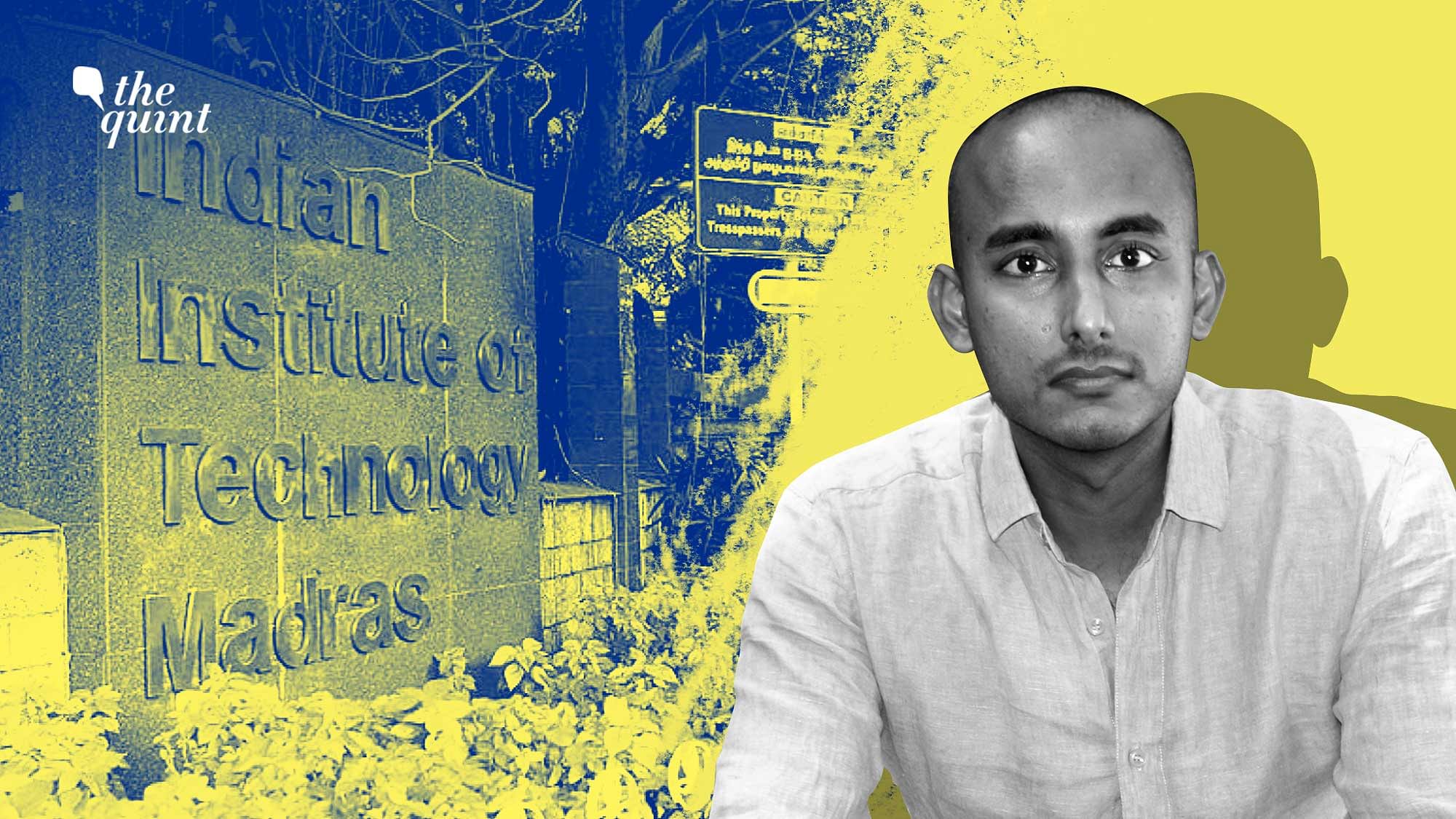
<div class="paragraphs"><p>Vipin P Veetil, assistant professor IIT-Madras had quit his job over alleged caste discrimination.</p></div>
i


At 22 years, Vipin P Veetil travelled across Europe on an Erasmus Mundus post graduate scholarship. At 31, he finished his PhD in economics from George Mason University, Virginia and by the age of 33, he was a post doctoral fellow at Sorbonne University in Paris.


Despite his impressive academic track record, the most difficult question Veetil faced within one month of joining IIT-Madras in 2019, as an assistant Professor in the department of Humanities and Social Sciences, was - 

“What is your caste?”

Veetil recalls that the question was put to him by a professor of economics who had taught at IIT-M for over 10 years.


This and other such incidents led the IIT-Madras faculty member, to resign on 1 July 2021. 


Alleging caste discrimination, Veetil told The Quint in an exclusive interview, “In IIT-M, you can be blind about your caste but others may not be blind about it. They will know or would want to know”.


Veetil has now withdrawn his resignation and is back at IIT- Madras to fight out the complaint he had lodged in July. The 36-year-old assistant professor who hails from Kerala belongs to the Maniyani (OBC) caste.


The faculty member's allegations about caste discrimination come at a time when the Centre is planning to introduce 27 percent OBC reservation in medical and dental courses across the country.


Complaint at OBC Commission

Veetil has also filed a fresh complaint (a copy of which is with The Quint) with the OBC Commission in New Delhi, requesting the body to investigate the reported case of caste discrimination. In the complaint dated 5 August, Veetil writes, “This letter does not capture all of the discrimination I have faced at the department or the caste dynamics which regulates and shapes our lives at the institute. These will hopefully come up in the course of our interaction during the investigation”.


The two-page complaint could possibly be first of its kind, as it is a faculty member of the institute who has raised an allegation of caste discrimination before the OBC commission.


Earlier, in 2015, a section of IIT-M’s students had accused the institute management of caste discrimination when the administration de-recognised Ambedkar Periyar Study Circle (APSC).


APSC now functions as an independent student body in IIT-Madras.


While Veetil is gearing up for a long legal battle, what stands out about his journey in IIT-Madras is that, it appears, caste continues to haunt individuals who hail from historically marginalised Dalit-Bahujan communities even when they do well, academically, without constitutional safeguards such as reservation.


Wednesday, August 4, 2021

Casteism In The IITs: A Thriving Culture Of Subordination And Hegemony,


Casteism In The IITs: A Thriving Culture Of Subordination And Hegemony

By Manasi Pant
-August 4, 2021


Trigger Warning: Caste-based discrimination, mention of death by suicide

Recently, former Assistant Professor at IIT Madras, Professor Vipin P Veetil, resigned from the institute with a firmly worded email, the reason being that he was subjected to caste-based discrimination ever since he joined in 2019.

The Professor from the Humanities and Social Sciences Department alleged that, “the discrimination came from individuals in a position of power, irrespective of their claimed political affiliations and gender.” Screenshots of his email were circulated widely on social media, bringing to light the issue of caste-based discrimination among faculty members at IIT Madras.

But is this an isolated issue?

A thriving casteist culture

The news of professor Veetil’s resignation comes soon after the IIT Kharagpur incident where a professor reportedly abused students verbally during an online class. This was in an English preparatory course for students from Scheduled Castes (SC), Scheduled Tribes (ST), and Other Backward Class (OBC), and Persons With Disability (PWD).

She reportedly dared the students to go to the Ministry of Minority Affairs if she had offended them. The impunity with which the professor allegedly made ableist and casteist remarks, suggests that a culture of rampant casteism is allowed to thrive in the IITs.

This incident triggered widespread resistance against the unnervingly high academic pressure exerted towards students in the IITs and the disastrous consequence it can have on their mental health. 

But is academic pressure the sole factor to blame? From a Muslim student allegedly being asked, ‘Are you Al-Qaeda?’ to a PhD scholar reportedly being treated as a ‘lower creature’, a culture of exclusion seems to be prevalent in the IITs


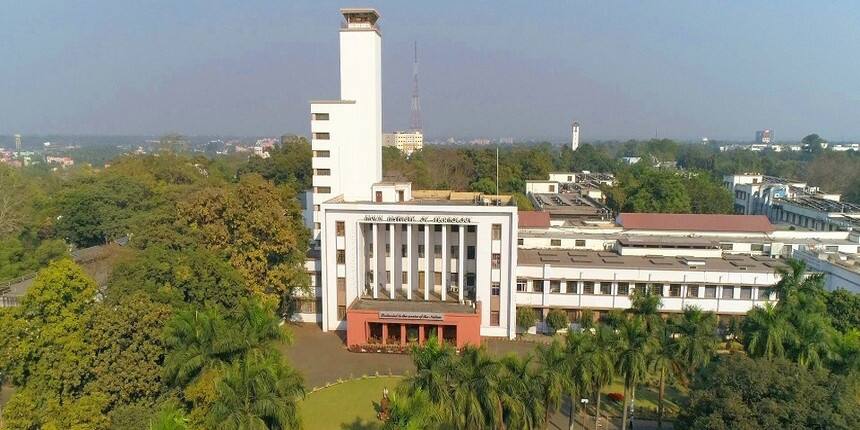
IIT Kharagpur Image: Hindustan Times

On November 9th, 2019, Fathima Latheef, a student at IIT Madras, reportedly died by suicide in her hostel room within the first year of her master’s in the humanities and development studies department. Her father, Abdul Latheef, informed that his daughter had left a suicide note allegedly holding a professor at the institution accountable for the step she took, and he also alleged that she faced religion-based discrimination.

This incident triggered widespread resistance against the unnervingly high academic pressure exerted towards students in the IITs and the disastrous consequence it can have on their mental health. But is academic pressure the sole factor to blame?

From 2006 to 2019, the reported number of suicides in the IIT Madras campus totalled up to 18—of which one person was a faculty member. A Newslaundry article shows us many more instances of alleged caste and religion-based discrimination across the IIT campuses.

From a Muslim student allegedly being asked, ‘Are you Al-Qaeda?’ to a PhD scholar reportedly being treated as a ‘lower creature’, a culture of exclusion seems to be prevalent in the IITs.


Image: Vimocafe

A survey cited in the Economic & Political Weekly studied how perceptions held of students at IIT-Banaras Hindu University were influenced by their caste. Thirteen percent of student respondents from the SC/ST category reported that they felt the teachers’ attitude towards them was hostile.

When asked about the perceived academic ability of students in the SC/ST category, 61 percent of the respondents in the general category felt that it was ‘less than others’. In comparison, 46 percent of SC/ST category students also thought it was ‘less than others’.

Mistreatment and unsolicited comments are not targeted only towards students from marginalised communities. While one may believe that a faculty member holds significantly more power than a student, the discrimination based on caste often trumps the occupational hierarchy in an institute

IIT Madras had, in 2019, already been under the radar of the National Commission for Scheduled Castes and the National Commission for Scheduled Tribes when it reported five alleged cases of death by suicide within 11 months. There were also concerns raised about the admission barriers faced by students from marginalised communities.

Also read: What IIT Kharagpur Professor’s Abusive Remarks Tell Us About Casteism In Educational Institutions

Between 2009 and 2019, only 47 SC students and six ST students were admitted to IIT Madras for the Master of Science programme, which has a total strength of 2,320. Within the same timeline, only 213 SC students and 21 ST students were awarded PhDs out of a total of 4,000 PhDs given out. We must view Professor Veetil’s resignation with this context in mind.

Casteism overshadows the ‘power’ of faculty members

Mistreatment and unsolicited comments are not targeted only towards students from marginalised communities. While one may believe that a faculty member holds significantly more power than a student, the discrimination based on caste often trumps the occupational hierarchy in an institute.

Such is the example of Subrahmanyam Sadrela, who joined IIT Kanpur as an associate professor in the Aerospace Engineering department in 2018. A Newslaundry article reports his experience as follows:

“…soon after Sadrela’s appointment, he says some of his colleagues said his appointment was “wrong”, that he didn’t deserve to be a faculty member at the institute, that he could not speak English perfectly and was mentally unfit…..Sadrela was slapped with charges of plagiarism in his thesis and threatened with the revocation of his PhD degree, almost a year after he alleged caste-based discrimination in the campus”


Image: Huff Post

With this context, it is no surprise that RTI data cited in a Hindustan Times article reveals that, even as of June 2021, “none of the 22 IITs [in this study] have more than six teachers belonging to the Scheduled Tribes community, while 18 of them have ten or fewer candidates from the Scheduled Castes category. Seven IITs had ten or fewer faculty members from the other backward classes community”.

Essentially, none of the 22 IITs were following the mandated reservation rules in faculty positions. Additionally, Professor Veetil also alleged that he faced discrimination from people in ‘positions of power’.

This illustrates how the IITs are enablers of an already casteist society. The caste system, which has been a long-standing form of systemic oppression, far overshadows the relative ‘power’ that a faculty member holds

Pawan Goenka, the chairperson of the board of governors of IIT Bombay and IIT Madras, said, “Currently, the IITs have a fairly large number of vacancies which they are trying to fill, but sufficient high-quality candidates have not been available across all categories”.


Image: Pinterest

Indeed, people in positions of power at the IITs have found themselves a ‘justification’ for violating reservation rules in faculty recruitment. As recently as in January 2021, a government panel suggested that all 23 IITs should be exempted from reservations in faculty positions altogether.

This illustrates how the IITs are enablers of an already casteist society. The caste system, which has been a long-standing form of systemic oppression, far overshadows the relative ‘power’ that a faculty member holds.

India’s ‘Institutes of National Importance’ can do better. They must.
Sensitisation, unlearning biases:
 

The way ahead

We can see how Professor Veetil’s resignation is a symptom of a much larger issue. Being discriminated against to the point that he was forced to resign is not only a consequence of caste-based discrimination but a win for caste hegemony. It serves to keep educational spaces exclusionary, intolerant, and inaccessible to the majority of the population.

Learning about anti-caste movements, the history of caste-based oppression and challenging the current notion of merit can help contextualise caste-based discrimination and allow privileged groups to understand that their power comes from the socio-cultural capital they extracted from the oppression of others

Education is always termed as the “magic bullet” for progress. It has the capacity to empower marginalised communities. However, so long as caste-based discrimination pervades educational institutes, this magic bullet holds little power. For education to maximise its potential of being transformative and liberating, several changes must be made at the structural level.


Image: Firstpost

An article on The Swaddle insists that, in order to be inclusive, education institutions must commit to “undoing the idea of merit as a random consequence of individual ability”. Staff and faculty must recognise their social position as a factor determining their ability.

Students and teachers alike should be shown that brahmanical hegemony still shapes our notion of capability and that it has more to do with denying communities opportunities for progress than with one’s personal talent.

Another important note in the article is that education is inherently political, and must be taught as such. If caste-based privilege still pervades education, this privilege must be named and critically analysed. This is necessary to give people the opportunity to “unlearn supremacist and oppressive ways of thinking and acting,”.

Learning about anti-caste movements, the history of caste-based oppression and challenging the current notion of merit can help contextualise caste-based discrimination and allow privileged groups to understand that their power comes from the socio-cultural capital they extracted from the oppression of others.


Image: The Conversation

Schools and colleges must also do away with the “hidden curriculum” that is taught in educational spaces. This refers to “the norms and values that are implicitly, but effectively taught in schools and that are not usually talked about in teachers’ statements of ends or goals.”

Examples of this include referring to students as “boys and girls”, thereby reinforcing the gender binary. A childhood studies scholar, Sarada Balagopalan, reports that during her fieldwork, many teachers spoke about Dalit and Adivasi students demeaningly with statements like, “these children are slow”.

Such implicit notions are internalised by students and staff of educational institutions. The hidden curriculum must be done away with through sensitisation training and teaching of the history of caste-based oppression. The Ministry of Social Justice and Empowerment must mandate such core courses and training workshops for education to be truly accessible, inclusive, and prejudice-free.

Also read: The Impact Of Social Disadvantage & Implicit Bias On Intellectual Performance

In his email, Professor Veetil has asked that the institute set up a committee consisting of representatives from SC, ST, and OBC communities, and psychologists to study the experience of SC, ST, and OBC faculty members. ChintaBAR, an independent student organisation at IIT Madras, has further demanded the setting up of functioning SC, ST, and OBC cells for specifically addressing grievances related to caste-based discrimination.

These are just starting points for a long battle against casteism in India’s ‘prestigious’ institutions. They are extremely necessary to take. If you wish to join the fight against casteism at IIT Madras, you may look through and sign our petition.


Monday, July 19, 2021

Caste and the IITs: What ‘quota students’ experience on campus,


Caste and the IITs: What ‘quota students’ experience on campus

IIT students from marginalised sections face derogatory remarks, ‘subtle discrimination’. Activists say IITs need robust student organisations.


IIT Kharagpur
Atul Krishna 
| Jul 18, 2021 - 12:05 p.m. IST

NEW DELHI: India’s most hallowed engineering institutions, the Indian Institutes of Technology (IITs), are known for high-quality teaching, research and enviable placements. But that’s not the only face Swaminathan K saw. He was a research scholar at IIT Madras till 2018 and a founding member of the Ambedkar Periyar Study Circle at IIT Madras.
Recommended : Get important details about IIT Madras. Download Brochure

According to him, IIT staff and students who labelled reserved category students had scant understanding of the historical marginalisation they’ve had to overcome to get to an IIT.

The IITs have a problem of caste discrimination which is being thrown into sharp relief with increasing frequency. In July, a resignation letter emerged from IIT Madras’ humanities and social science department alleging caste discrimination by senior faculty and administration. The letter suggests that the IIT set up “a committee to study the experiences of SC and OBC faculty”.

In April, Seema Singh, a teacher in the humanities and social science department of IIT Kharagpur, was heard hurling abuses at a class composed mainly of students from Scheduled Castes and Scheduled Tribes in an English class in a video that soon became viral. IIT Kharagpur eventually suspended Singh but only after massive public outcry.
Also Read | How IIT Madras’ ‘happiness course’ helps students cope with stress

“You won’t see it in day-to-day interactions. When something happens it will be visible. There is a saying in Tamil, you will only see it once you scratch the surface,” said Swaminathan K.

‘Quota students’ at the IITs

The most pernicious form of discrimination students experience at the IITs is the subtle but oft-repeated suggestion that they are less capable than others.

“Students have told me that teachers have called students “quota students” to berate them,” said a student at
IIT Madras.

Central policy mandates reservation of seats or “quotas” for the historically-marginalised communities in all public institutions – 15% for Scheduled Castes (SC), 7.5% for Scheduled Tribes (ST) and 27% for Other Backward Classes (OBC) and from 2019, 10% for the upper caste poor, or Economically Weaker Sections (EWS). Apart from fee waivers or concessions, these groups are admitted at scores lower than those of “general category” applicants in the highly competitive entrance tests for engineering, Joint Entrance Examination Main (JEE Main) and JEE Advanced.

Students said that many students and faculty oppose reservation without understanding the historical marginalisation faced by these communities.

“A research scholar who graduated from a government school and did his postgraduate studies from IIT Madras came back to do research there and the board remarked in surprise that a government school student was making it to the IITs and then applying for research,” said a former student requesting not to be named. “That is the kind of attitude that is prevalent.”

Also Read | Engineering Colleges: 1,500 teachers in backward areas may lose jobs

It is equally prevalent among upper caste students admitted to the open seats. “Many people would ask about my caste because, unlike in north India, in Tamil Nadu, you cannot identify one’s caste by name,” said Swaminathan.

Students said that caste-related discrimination in the IITs is a deep-rooted problem that cannot be solved just by setting up anti-discrimination
committees.

IIT Preparatory classes

The IITs have offered academic support mainly in the form of preparatory classes for Dalit and Adivasi students. Opinion is divided on these.

“The faculty says that there are differences in the level of understanding. Even if you ask the students, some might say that the course is actually helpful. But the other side of this issue is that it promotes the idea that students from lower castes are not up to the mark. That mindset is there,” said a former student.

“We are unsure about those courses,” added another student. “Some students have found them really helpful but there is this perspective that it is only being provided to students of these communities based on a certain mindset,” said a student. That the possible learning deficit is itself a result of marginalisation from education over generations is not well understood.

Also Read | AICTE reduces PM scholarship amount; Jammu and Kashmir students struggle

However, after classes moved online due to the COVID-19 pandemic, IITs were some of the first institutions to make efforts to close the digital divide between students. Funds were marshalled from alumni and other donations and students were provided digital devices and loans, even for paying rent.

“The administration did take proactive steps by providing smartphones and loaning money, even for paying rent, to the students. It is hard to say whether all students were provided, for there are some 8,000 students here but they did take steps in this regard,” said a student.

Caste controversies on campus

IIT Madras has had its share of caste controversies. In 2006, when the government proposed reservation for OBCs, thousands of IIT Madras students protested, arguing that the quota would “affect merit” in the IITs, students recalled.

Swaminathan and some others formed APSC in 2014 in response to what they saw as growing “polarisation” on campus before the 2014 Lok Sabha elections. The group’s stand on caste was clear from the presence of BR Ambedkar, Dalit leader who shaped the Indian Constitution, in its name. IIT Madras promptly banned the group following an “anonymous complaint” that alleged that it was instigating “hatred” and criticising Prime Minister Narendra Modi. The ban was revoked following public criticism. Subsequently, many IIT campuses started their own iterations of the cell.

Four years later, in 2019, IIT Madras again drew national attention when an undergraduate student Fathima Latheef died by suicide on campus. Latheef’s parents had alleged that their daughter took her own life due to constant casteist remarks from one of the professors.

Also Read | ‘It’s a meat-grinder’: Stress and despair at the IITs

In addition to a narrow, decontextualized view of “merit”, the IITs also harbour a paternalistic view of the student community. In 2016, following the attack on Jawaharlal Nehru University that led to the arrest of several student leaders, including Kanhaiya Kumar and Umar Khalid, 56 professors of IIT Madras wrote to the President saying that “young, simple-minded, (many-a-times) poor students entering the campus are seen as fodder for the ideological war of their mentors”.

“This is the kind of attitude they carry, said Swaminathan. “They think students should not protest, or be political. They think that students from poor households are more prone to this
[such activism].”

In December 2020, a government panel consisting of several IIT directors recommended that IITs be exempt from faculty reservation. The government is yet to take a decision.

Complaints and committees

As with many other central institutions, the IITs have committees to investigate complaints or allegations of discrimination. Students Careers360 spoke to were not sure about their work.

“There is an SC/ST liaison officer and a faculty adjunct that students can approach,” said a student wishing not to be named. “These have been there for years but I don’t think students are aware of the activities of these committees. We don’t know what kind of work they do or whether they are even supposed to do something proactively or are there just to address issues.”

However, some believe that the issue of discrimination is too deep-rooted to be solved by a functioning grievance redress mechanism. “We can come up with various measures such as setting up discrimination cells and spreading awareness, but these problems are part of the Indian culture. Every Indian university is dominated by upper castes. It is the historical background of the country. The socio-cultural situation is such,” said a former student.

Also Read | ‘Be strong’: IIT Delhi’s COVID-positive students make video on life in isolation

Other students and alumni pointed out that even if students faced discrimination, they wouldn’t feel empowered enough to complain. They would be too afraid of the consequences of displeasing the administration. “The IIT Kharagpur incident came out because there was strong evidence, otherwise it would have been brushed under the carpet,” said the same student. Since the IIT Kharagpur class was online, the teacher could be recorded.

What is needed urgently, said the students, is a student organisation that’s independent of the administration. They said: “Even if a committee is effective in its functioning, unless a student organisation is there, this cannot
be addressed.”


Write to us at news@careers360.com.

Saturday, July 17, 2021

IIT-K May Revoke Thesis of Prof Who Had Flagged Caste-based Discrimination,


IIT-K May Revoke Thesis of Prof Who Had Flagged Caste-based Discrimination

The decision comes days after the Academic Ethics Cell found no significant reason to revoke the thesis and recommended rewriting of a few paras.

Ravi Kaushal
01 Apr 2019


Image for representational use only.Image Courtesy : NDTV

Indian Institute of Technology, Kanpur may revoke the Ph.D thesis of Dalit teacher Subrahmanyam Saderla, who had complained about the discriminatory treatment from four senior professors last year. The latest move by senate committee – the highest decision-making committee on academic affairs comprising all faculty members of the institute – comes days after the Academic Ethics Cell found no significant reason to revoke the thesis and recommended rewriting of a few paras.

Saderla had made it to news last year when he had complained that he was meted out with discriminatory treatment from four senior professors: Ishan Sharma, Sanjay Mittal, Rajeev Shekhar and Chandra Shekhar Upadhyay from the institute. He had alleged that they were fanning misinformation and were raising questions on his credentials.

In his complaint, Saderla had alleged that the accused professors not only passed casteist remarks about him, but also questioned his mental fitness to be an assistant professor at the “prestigious” institute. The complaint added that he was continuously ridiculed and humiliated at the conferences organised by the department.

The recommendations of the senate are likely to be placed before the Board of Governors for further action soon. The complaint about plagiarism in Saderla's Ph.D thesis was made to several professors and officials in an anonymous email on October 15 last year, months after an inquiry committee headed by a retired Allahabad High Court Judge found allegations levelled by Saderla to be true. Following inquiry, Mittal, Sekhar and Upadhyay were demoted, whereas Sharma was given a strict warning.

Also read: IIT Kanpur Case Tip of the Iceberg: Dalits Missing from Campus in Absence Support System

If the Board of Governors give nod to the recommendation, Saderla may also lose his job.

He has completed his B.Tech from the Institute of Aeronautical Engineering affiliated to Jawaharlal Nehru Technological University in Hyderabad. He later enrolled in IIT Kanpur to complete his M.Tech and Ph.D. Following allegations of plagiarism, IIT director Abhay Karandikar had referred the matter to Academic Ethics Cell which found that complaint was prima facie correct.

The committee noted that while there was no complaint regarding original research work, there were some similarities in the introductory passages of some chapters. The committee, in its report, found that it was not proper to revoke the thesis, but Saderla should rewrite the passages in question and tender an apology to the institute director. However, the senate, in its meeting, on March 14 voted to revoke the thesis.

Talking to Newsclick, Saderla claimed that he did not copy any literature from other people's work. He said," There was some similarity in the introductory literature and I had shown my work to my seniors who had said that my work was entirely different from theirs. Secondly, I have eight publications to my credit in international journals related to my thesis only. Can journals publish them if they carried any plagiarism? I have got national fellowships from South Korean Universities which in turn are also related to my thesis. Had they not evaluated it before granting me such fellowships?"

He added, "The senate has relied on an anonymous complaint. Why did not complainant come to testify his claims. It's a serious charge. I repeat that the latest proceedings are connected with my complaint regarding four professors. I was the sole SC candidate who was selected through a special recruitment drive and that's why I am being targetted."

Despite repeated attempts, IIT Director could not be reached for his comment.

Also read: IIT Kanpur Case Sheds Light on Discrimination Faced by Dalit Professors and Students in IITs

IIT Madras: Social Justice Down the Drain, Nobody Held Accountable,


IIT Madras: Social Justice Down the Drain, Nobody Held Accountable

Two weeks back, NCSC sent a notice to IIT Madras based on a complaint by an activist that reservation policies were not followed during faculty recruitment conducted last year.

Sruti MD
16 Jul 2021


Ten days after an Assistant Professor resigned from the Indian Institute of Technology (IIT) Madras citing caste discrmination, the National Commission for Scheduled Castes (NCSC) visited IIT Madras on July 12. 

Two weeks back, NCSC sent a notice to IIT Madras based on a complaint by an activist that reservation policies were not followed during faculty recruitment conducted last year.

However, representatives of NCSC said that their visit to IIT Madras was part of their routine and not specific to any recent happenings.

These are not the first instances of IIT Madras making news for alleged discrimination and for accusations of scuttling reservations.

In May 2017, a student was brutally attacked on campus allegedly for consuming beef, and the institute took no stance condemning the violence. 

After Fathima Lateef, a first year student died by suicide in November 2019, fingers were pointed at faculty members for alleged discrimination based on her religion. The institute yet again took no measures to mete out justice or prevent such incidents in future.

IIT Madras has been repeatedly criticised for being an exclusively elitist academic space. The Scheduled Caste/Scheduled Tribe and Other Backward Classes Cell meant to overlook the reservation process for student, faculty and staff recruitment is missing on campus; the case is similar with other IITs and nobody is held accountable for it.

BLATANT DISCRIMINATION DURING INTAKE

Members of ChintaBar, a student group at IIT Madras, say that reservations are more or less fulfilled in the Bachelors courses, but not in the Masters and research programmes.

Sai Chandan, a member of ChintaBar said, “Intake for the B Tech programme is through the centralised admission process of IIT-JEE, but for MS and PhD it is department specific and the departments are not transparent. They have the space for overriding reservations and they do it.” Students allege that for masters and research programmes, faculty members and authorities are directly involved and that influences the implementation of reservations.

Also read: Centre-Appointed Panel’s Proposal to Exempt IITs From Reservation in Faculty Posts is Faulty

Chandan further added, “The institute does not declare the number of available and category-wise division of seats for MS and PhD programmes and the admission criteria is also not fully revealed.”

Elaborating on how the discrimination takes place during admission, Kiran Kumar Gowd, president of the All India OBC Students’ Association, said, “Wherever there is an interview followed by exams, SC, ST and OBC students are clearing without category in the exams, but they are bracketed off in category during the interview or not provided admissions.” This apparently reveals the disparity in Bachelors, and Masters and research programmes.

FACULTY REMAINS ALOOF

A recent RTI has revealed that SC students numbered only 7.6% and STs were just 1.2% between 2015 and 2019 in IIT Madras. The reservation policy requires that 15% of seats be allocated to SCs and 7.5% to STs. However, only 167 of the 5,855 SC applicants and 27 of the 991 ST applicants were selected.

A PhD scholar from IIT Madras, who wanted to remain anonymous said, “When we ask for explanations for why reservations are not implemented, the authorities give an easy excuse of lack of applicants, but the RTI clearly shows the bias.”

Only student groups have raised the issue, but there has been silence from the side of the faculty members of IIT Madras regarding the laxity in implementing reservations in the admission process.

Also watch: 'IITs, IIMs and Central Universities Dominated by Upper Castes'

The PhD scholar also said, “There are few faculty members who stand by the cause, but they hesitate to come out openly and fight the administration. The majority of them are with the authorities or remain aloof.”

But, not implementing caste-based reservations is not only with student admissions, it is the norm with the teaching and non-teaching staff recruitment as well.

A recent RTI revealed that none of the 22 IITs have more than six teachers belonging to the Scheduled Tribes (ST) community, while 18 of them have 10 or less candidates from the Scheduled Castes (SC) category on their faculty rolls. In July 2019, former Education Minister Ramesh Pokhriyal said that the sanctioned strength of faculty in all the 23 IITs was 8,856, of which 2,813 positions were vacant.

PRESSURE TO SET UP SC, ST AND OBC CELL

PhD scholars from IIT Delhi carried out an online petition through Change.org demanding the setting up of permanent SC, ST, and OBC committees in IITs across the country.

In the report submitted by members of ChintaBar to NCSC representatives as well, they strongly demanded for the setting up of the SC, ST and OBC Cell.

The Cell is to overlook the reservation process at all levels of the institute - student, teaching and non-teaching staff.

As per the UGC, every institute of higher education must have a SC,ST and OBC Cell, and the objectives of the Cell are to implement the reservation policy in the universities and colleges, and continuously monitor and evaluate the reservation policy.

Kiran Kumar said, “Authorities are in-charge of ensuring proper admissions with reservations, but they do not set up the Cell that is meant for ensuring reservations. There is no punishment for Vice Chancellors and Chairmans who violate it.”

He added, “The Modi-government is saying that it has incorporated so many SCs and STs in the cabinet, but on ground nothing is being implemented. What is the point?”

Also read: IIT-K May Revoke Thesis of Prof Who Had Flagged Caste-based Discrimination