Monday, June 27, 2022
Sunday, June 5, 2022
It Is Time We Acknowledge Student Suicides as a Grave Crisis - The Wire,
It Is Time We Acknowledge Student Suicides as a Grave Crisis
03/06/2022


SIPOY SARVESWAR AND JOHNS THOMAS
Illustration: Pariplab ChakrabortyAccording to the NCRB’s Accidental Deaths and Suicides in India report, 2020, students account for around 8.2% of deaths by suicide in the country.
A host of causes are attributed to the problem, including agricultural distress, social and climatic conditions and government policy failure – but not in the case of students.
Civil society needs to look at students’ suicides as an indicator of a grave crisis of the country’s educational structure – including the institutional structure and curriculum.
People below the age of 25 account for 53.7% of the Indian population. Yet, most of these youngsters are not employable as they lack the requisite skills.
Another pressing concern for India’s youth population is a high number of suicides. According to the National Crime Record Bureau (NCRB), in 2020, a student took their own life every 42 minutes; that is, every day, more than 34 students died by suicide.
It is alarming that this is not being recognised as a grave crisis.
Rising number of student suicides
In India, the phenomenon of suicide is constantly individualised or personalised, allowing society to escape accountability. According to the NCRB’s Accidental Deaths and Suicides in India (ADSI) report, 2020, students account for around 8.2% of deaths by suicide in the country. The report also notes that 64,114 people under the age of 30 took their own lives in 2020.
Vijaykumar (2007) estimates one in 60 persons is affected by suicide in India, including people who attempted suicide and those affected by the death of a close family member or friend by suicide. Therefore, suicide should be viewed as a multidimensional public and mental health issue, having complex interactions with the economic, social, cultural, psychological and biological realms of individual and collective existence.
Scholars have long linked farmers’ suicides to India’s agrarian crisis; it is time that civil society starts looking at students’ suicides as an indicator of a grave crisis of the country’s educational structure – including the institutional structure, curriculum, and the like.
Farmers comprise 7% of people who committed suicide in 2020 and farmers’ suicides are recognised as a problem. A host of causes are attributed to the problem, including agricultural distress, social and climatic conditions and government policy failure. But a similar discussion is lacking when it comes to student suicides.
A cursory glance at the graph below shows the alarming rate at which students are being pushed to take their own lives in the country.

 Note: The NCRB only began including data on student’s suicides in the report in 1997.
In all probability, the actual number of suicides in the country is higher still, as there is widespread under-reporting of the phenomenon due to social stigma and the accompanying legal consequences.
The Lancet, reported that, on average, suicide rates reported by the NCRB were 37% lower than the rates reported by the Global Burden of Disease. This means that for every 100 suicides in the country, only 63 are reported by the NCRB.
Academic distress
Societies use education as a tool to prepare the next generation to become citizens. States use it to perpetuate their ideology. Social reformers, such as Savitribai and Jyotirao Phule, Bhimrao Ramji Ambedkar, Periyar and Narayan Guru used it to free the masses from oppression.
However, the process of education may also lead to unexpected social catastrophe, in the form of academic distress.
Education in India has been viewed as a gateway to employment and livelihood rather than to knowledge. Many students and their families dream of the coveted ‘sarkari naukri’ (government job) to escape the precarious social, caste and class predicaments they find themselves in.
Post the economic liberalisation of 1991, the rise of the private sector also paved way for the withdrawal of the state from various spheres of economic activity, which meant that the share of public sector jobs in India’s organised sector started to dwindle. Formal jobs in the private sector came to be equated with government jobs in terms of status.
Also read: 9 Million Jobs Lost in 6 Years, a First in Indian History
The few publicly-funded educational institutions in the country, such as Indian Institutes of Technology (IITs) and medical colleges, see huge numbers of applications as students compete for a limited number of seats; those who can afford it either go to foreign countries to study or join private universities in India.
The failure of the Union government to improve the country’s educational infrastructure means that exam-oriented coaching had become the norm. Cashing in on the ‘hope for a better future,’ coaching centres emerged as one of the predominant industries in the education sector.
However, these centres are now being seen as prisons for the many youngsters who join them; where their bodies, souls and dreams are tamed.
What’s more, students from marginalised sections are pushed further to the margins through a number of factors, such as the lack of English-medium education; private institutions charging high fees; poor quality education in government-run schools and institutes; ever-growing economic inequality; graduates not having the adequate skills to secure jobs; and caste discrimination.
The rise of neoliberalism as an economic and social ideology has pushed the youth to blame themselves for their failure to secure their ‘dream job’ while the government continues to shirk its basic responsibility. The neo-liberal agenda keeps propagating the belief that it is not that hard to find success if one works hard enough, normalising the notion that the youth should blame themselves for their ‘failures’.
Also read: A Student’s Death by Suicide Is the Cost of Inequality
The need for the societal accountability
The myth of the Indian family being supportive also need to be called out. Family, being the primary social unit of the society, shapes the aspirations and dreams of the youth. The rising number of student suicides makes us question how supportive our family structures really are and whether or not they are one of the primary contributors to the rising number of student suicides.
Secondly, students are alienated from the educational process itself. A complete lack of practical or activity-based learning makes them unable to relate to education or apply it to their lived reality.
Contrary to what education should do, students are made to experience exploitation, gender differences, caste inequalities, unemployment, rising levels of poverty and inequality, all of which further marginalise already marginalised students.
Thirdly, instead of trying to address this crisis, market forces prey upon the dreams and aspirations of the people. Horlicks came up with an advertisement camouflaged as a social awareness campaign in its ‘Fearless Kota’ campaign, which showed mothers visiting their children (who were fighting depression and chasing socially-imbibed aspirations as their ‘dreams’) to provide ‘Emotional Nutrition‘.
In another related campaign, ‘Bottle of Love,’ Horlicks asked mothers to pack what their children love in old Horlicks bottles, to be delivered to the students at Kota. This shows how the marketing industry benefits from evoking the mother-child sentiment amidst the children in Kota dying by suicide.
Fourth, neo-liberal ‘development’ and the cost we pay has to be critically examined. Many reports suggest that India’s southern states fare better in terms of various social and economic parameters, however, while total population share of southern states is 22%, 42% of men and 40% of women committing suicide also come from

03/06/2022
SIPOY SARVESWAR AND JOHNS THOMAS
Illustration: Pariplab ChakrabortyAccording to the NCRB’s Accidental Deaths and Suicides in India report, 2020, students account for around 8.2% of deaths by suicide in the country.
A host of causes are attributed to the problem, including agricultural distress, social and climatic conditions and government policy failure – but not in the case of students.
Civil society needs to look at students’ suicides as an indicator of a grave crisis of the country’s educational structure – including the institutional structure and curriculum.
People below the age of 25 account for 53.7% of the Indian population. Yet, most of these youngsters are not employable as they lack the requisite skills.
Another pressing concern for India’s youth population is a high number of suicides. According to the National Crime Record Bureau (NCRB), in 2020, a student took their own life every 42 minutes; that is, every day, more than 34 students died by suicide.
It is alarming that this is not being recognised as a grave crisis.
Rising number of student suicides
In India, the phenomenon of suicide is constantly individualised or personalised, allowing society to escape accountability. According to the NCRB’s Accidental Deaths and Suicides in India (ADSI) report, 2020, students account for around 8.2% of deaths by suicide in the country. The report also notes that 64,114 people under the age of 30 took their own lives in 2020.
Vijaykumar (2007) estimates one in 60 persons is affected by suicide in India, including people who attempted suicide and those affected by the death of a close family member or friend by suicide. Therefore, suicide should be viewed as a multidimensional public and mental health issue, having complex interactions with the economic, social, cultural, psychological and biological realms of individual and collective existence.
Scholars have long linked farmers’ suicides to India’s agrarian crisis; it is time that civil society starts looking at students’ suicides as an indicator of a grave crisis of the country’s educational structure – including the institutional structure, curriculum, and the like.
Farmers comprise 7% of people who committed suicide in 2020 and farmers’ suicides are recognised as a problem. A host of causes are attributed to the problem, including agricultural distress, social and climatic conditions and government policy failure. But a similar discussion is lacking when it comes to student suicides.
A cursory glance at the graph below shows the alarming rate at which students are being pushed to take their own lives in the country.
Note: The NCRB only began including data on student’s suicides in the report in 1997.In all probability, the actual number of suicides in the country is higher still, as there is widespread under-reporting of the phenomenon due to social stigma and the accompanying legal consequences.
The Lancet, reported that, on average, suicide rates reported by the NCRB were 37% lower than the rates reported by the Global Burden of Disease. This means that for every 100 suicides in the country, only 63 are reported by the NCRB.
Academic distress
Societies use education as a tool to prepare the next generation to become citizens. States use it to perpetuate their ideology. Social reformers, such as Savitribai and Jyotirao Phule, Bhimrao Ramji Ambedkar, Periyar and Narayan Guru used it to free the masses from oppression.
However, the process of education may also lead to unexpected social catastrophe, in the form of academic distress.
Education in India has been viewed as a gateway to employment and livelihood rather than to knowledge. Many students and their families dream of the coveted ‘sarkari naukri’ (government job) to escape the precarious social, caste and class predicaments they find themselves in.
Post the economic liberalisation of 1991, the rise of the private sector also paved way for the withdrawal of the state from various spheres of economic activity, which meant that the share of public sector jobs in India’s organised sector started to dwindle. Formal jobs in the private sector came to be equated with government jobs in terms of status.
Also read: 9 Million Jobs Lost in 6 Years, a First in Indian History
The few publicly-funded educational institutions in the country, such as Indian Institutes of Technology (IITs) and medical colleges, see huge numbers of applications as students compete for a limited number of seats; those who can afford it either go to foreign countries to study or join private universities in India.
The failure of the Union government to improve the country’s educational infrastructure means that exam-oriented coaching had become the norm. Cashing in on the ‘hope for a better future,’ coaching centres emerged as one of the predominant industries in the education sector.
However, these centres are now being seen as prisons for the many youngsters who join them; where their bodies, souls and dreams are tamed.
What’s more, students from marginalised sections are pushed further to the margins through a number of factors, such as the lack of English-medium education; private institutions charging high fees; poor quality education in government-run schools and institutes; ever-growing economic inequality; graduates not having the adequate skills to secure jobs; and caste discrimination.
The rise of neoliberalism as an economic and social ideology has pushed the youth to blame themselves for their failure to secure their ‘dream job’ while the government continues to shirk its basic responsibility. The neo-liberal agenda keeps propagating the belief that it is not that hard to find success if one works hard enough, normalising the notion that the youth should blame themselves for their ‘failures’.
Also read: A Student’s Death by Suicide Is the Cost of Inequality
The need for the societal accountability
The myth of the Indian family being supportive also need to be called out. Family, being the primary social unit of the society, shapes the aspirations and dreams of the youth. The rising number of student suicides makes us question how supportive our family structures really are and whether or not they are one of the primary contributors to the rising number of student suicides.
Secondly, students are alienated from the educational process itself. A complete lack of practical or activity-based learning makes them unable to relate to education or apply it to their lived reality.
Contrary to what education should do, students are made to experience exploitation, gender differences, caste inequalities, unemployment, rising levels of poverty and inequality, all of which further marginalise already marginalised students.
Thirdly, instead of trying to address this crisis, market forces prey upon the dreams and aspirations of the people. Horlicks came up with an advertisement camouflaged as a social awareness campaign in its ‘Fearless Kota’ campaign, which showed mothers visiting their children (who were fighting depression and chasing socially-imbibed aspirations as their ‘dreams’) to provide ‘Emotional Nutrition‘.
In another related campaign, ‘Bottle of Love,’ Horlicks asked mothers to pack what their children love in old Horlicks bottles, to be delivered to the students at Kota. This shows how the marketing industry benefits from evoking the mother-child sentiment amidst the children in Kota dying by suicide.
Fourth, neo-liberal ‘development’ and the cost we pay has to be critically examined. Many reports suggest that India’s southern states fare better in terms of various social and economic parameters, however, while total population share of southern states is 22%, 42% of men and 40% of women committing suicide also come from
southern states.
Amrita Tripathi, Abhijit Nadkarni, Soumitra Pathare Life, Interrupted Simon and Schuster, 2022.
In Life, Interrupted (2022), the authors looked at data from the Million Death Survey (MDS) and confirmed the most counter-intuitive trend observed in the NCRB data for several years – that there is nearly a tenfold higher suicide rate in the southern states compared to northern states.
In our time with the University of Hyderabad (one of the premier institutes that receives students from across India) from 2008-2016, nine students died by suicide, all of whom were from South India. The connection between the rise in the GDP of a state and the aspirations of the youth there in catching up with the process of ‘development’, and the link between those and the rising suicides among students, deserves to be investigated academically.
Fifth, government policy impacts our lived reality. The proposed National Educational Policy (2020), fashioned mostly after the US education system, allows students to exit and enter education at multiple points. The rising cost of quality education and the concerns of poverty and unemployment might be a factor for students dropping out of education.
The NEP has a provision to give different degrees/diplomas to the students that choose to exit. The government will also claim that they have arrested the dropout rate of the students effectively, whereas in reality, the policy merely sanctifies the dropout. The NEP also stresses making students ‘skilled’ in the industry. Without addressing the issues of students or reforming the educational structure, this will only contribute to the academic distress the country is already grappling with.
Also read: The NEP Goes Against the Existing Constitutional Mandate of the RTE
Sixth, deeper introspection on structural aspects of the education system is the need of the hour. Instead, we take pride in coming up with Jugaad (makeshift solutions) to manage affairs peripherally, without dealing with the root of problem.
The same approach can be found while dealing with student suicides. Premier institutions and coaching centres came up with what they believe to be an ‘ingenious solution’ – installing table fans or ceiling fans that cannot hold more than 40 kg of weight – to deal with the issue of students hanging themselves in their hostels.
With this, educational institutions are essentially saying, not in so many words, that ‘We don’t mind you dying, but please don’t die at our institution’.
A way out?
At the University of Hyderabad, our friends from performing arts and activity-based disciplines were happy and enjoying their lives. We, in the social sciences, always question career prospects and how to connect our education with real-life. Though arts are not considered market-oriented subjects, students seemed to enjoy their disciplines. A possible reason for this could be that they are not alienated from their education process.
This remains a hypothesis, as we don’t have enough data to support our argument. Still, it would be a good socio-psychological study to see the correlation between subjects studied and the rate of suicides among the students. This hypothesis leads us to ponder a question many philosophers, across centuries, have tried to answer: ‘What is the purpose of life?’ While there is an infinite number of possible answers to this question, many agree on one: happiness.
How can one achieve happiness? Epicurus believed that by doing what we desire the most, we can truly be happy. Rabindranath Tagore, who was against conventional schools and the education system in his childhood, started Visva Bharati in Santiniketan, advocating teaching students in unconventional ways.
One of Visva Bharati’s most famous students, Mahasweta Devi, recollects how Santiniketan taught them that no activity is worthless, which is a testimony to Tagore’s experiment.
Also read: Mahasweta Devi, Champion of the Underdog Who Took on the Left Front in Bengal
Even if we can’t make educational institutions like heaven for our children, at least we can try and not make them death centres. Acknowledging that students’ suicides is a crisis and taking measures to address the issue should be our collective responsibility. Failing to do so, we are building this nation on the dead bodies of students, with their memories pushed into the abyss, as Indian society and its education system failed them, and continues to do so.
Sipoy Sarveswar teaches Anthropology at Visva-Bharati, Santiniketan, West Bengal. He tweets at @SSarveswar.
Johns Thomas is a PhD student with the Department of Sociology, South Asian University. He tweets at @johnsthomas49.
If you know someone – friend or family member – at risk of suicide, please reach out to them. The Suicide Prevention India Foundation maintains a list of telephone numbers they can call to speak in confidence. Icall, a counselling service run by TISS, has maintained a crowdsourced list of therapists across the country. You could also take them to the nearest hospital.
In Life, Interrupted (2022), the authors looked at data from the Million Death Survey (MDS) and confirmed the most counter-intuitive trend observed in the NCRB data for several years – that there is nearly a tenfold higher suicide rate in the southern states compared to northern states.
In our time with the University of Hyderabad (one of the premier institutes that receives students from across India) from 2008-2016, nine students died by suicide, all of whom were from South India. The connection between the rise in the GDP of a state and the aspirations of the youth there in catching up with the process of ‘development’, and the link between those and the rising suicides among students, deserves to be investigated academically.
Fifth, government policy impacts our lived reality. The proposed National Educational Policy (2020), fashioned mostly after the US education system, allows students to exit and enter education at multiple points. The rising cost of quality education and the concerns of poverty and unemployment might be a factor for students dropping out of education.
The NEP has a provision to give different degrees/diplomas to the students that choose to exit. The government will also claim that they have arrested the dropout rate of the students effectively, whereas in reality, the policy merely sanctifies the dropout. The NEP also stresses making students ‘skilled’ in the industry. Without addressing the issues of students or reforming the educational structure, this will only contribute to the academic distress the country is already grappling with.
Also read: The NEP Goes Against the Existing Constitutional Mandate of the RTE
Sixth, deeper introspection on structural aspects of the education system is the need of the hour. Instead, we take pride in coming up with Jugaad (makeshift solutions) to manage affairs peripherally, without dealing with the root of problem.
The same approach can be found while dealing with student suicides. Premier institutions and coaching centres came up with what they believe to be an ‘ingenious solution’ – installing table fans or ceiling fans that cannot hold more than 40 kg of weight – to deal with the issue of students hanging themselves in their hostels.
With this, educational institutions are essentially saying, not in so many words, that ‘We don’t mind you dying, but please don’t die at our institution’.
A way out?
At the University of Hyderabad, our friends from performing arts and activity-based disciplines were happy and enjoying their lives. We, in the social sciences, always question career prospects and how to connect our education with real-life. Though arts are not considered market-oriented subjects, students seemed to enjoy their disciplines. A possible reason for this could be that they are not alienated from their education process.
This remains a hypothesis, as we don’t have enough data to support our argument. Still, it would be a good socio-psychological study to see the correlation between subjects studied and the rate of suicides among the students. This hypothesis leads us to ponder a question many philosophers, across centuries, have tried to answer: ‘What is the purpose of life?’ While there is an infinite number of possible answers to this question, many agree on one: happiness.
How can one achieve happiness? Epicurus believed that by doing what we desire the most, we can truly be happy. Rabindranath Tagore, who was against conventional schools and the education system in his childhood, started Visva Bharati in Santiniketan, advocating teaching students in unconventional ways.
One of Visva Bharati’s most famous students, Mahasweta Devi, recollects how Santiniketan taught them that no activity is worthless, which is a testimony to Tagore’s experiment.
Also read: Mahasweta Devi, Champion of the Underdog Who Took on the Left Front in Bengal
Even if we can’t make educational institutions like heaven for our children, at least we can try and not make them death centres. Acknowledging that students’ suicides is a crisis and taking measures to address the issue should be our collective responsibility. Failing to do so, we are building this nation on the dead bodies of students, with their memories pushed into the abyss, as Indian society and its education system failed them, and continues to do so.
Sipoy Sarveswar teaches Anthropology at Visva-Bharati, Santiniketan, West Bengal. He tweets at @SSarveswar.
Johns Thomas is a PhD student with the Department of Sociology, South Asian University. He tweets at @johnsthomas49.
If you know someone – friend or family member – at risk of suicide, please reach out to them. The Suicide Prevention India Foundation maintains a list of telephone numbers they can call to speak in confidence. Icall, a counselling service run by TISS, has maintained a crowdsourced list of therapists across the country. You could also take them to the nearest hospital.

Sunday, May 22, 2022
IIT Madras professors get anticipatory bail in sexual assault case,
April 20th 2022
IIT Madras professors get anticipatory bail in sexual assault case
Two IIT Madras professors accused in a sexual assault case were granted anticipatory bail by the Madras High Court. A case was registered against seven after a Dalit scholar alleged sexual assault by fellow scholars.

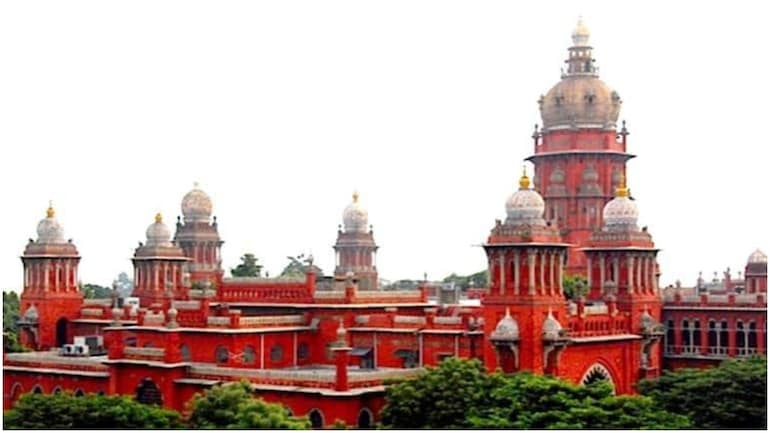
File Image of Madras High Court
Madras High Court on Wednesday granted conditional anticipatory bail to Indian Institute of Technology Madras (IIT) professors Edamana Prasad and Ramesh Gardas.
A case was registered against Kingshuk Debsharma and seven of his friends, including Prasad and Gardas for sexually assaulting a Dalit scholar from 2016 to 2020.
The student joined IIT Madras on July 14, 2016 and got acquainted with Kingshuk. He allegedly sexually abused her, took pictures of her and used them to blackmail her for four years.
According to the FIR, Prasad and Gardas are the fifth and sixth accused in the case. The survivor, after undergoing nearly four years of torture, had attempted suicide but was rescued by her friends. She then raised the issue with IIT Madras officials and an Internal Committee was constituted.
The findings of the committee against sexual harassment recorded that the survivor had undergone verbal abuse and was physically abused twice by Kingshuk. The committee recommended that all students involved in the issue should not be permitted to enter the campus until the survivor completes her thesis.
However, due to the pandemic, classes were conducted online but the accused were allowed to attend them along with the survivor, causing her more trauma.
The survivor then sought the help of Suganthi, State General Secretary of All India Democratic Women’s Association (AIDWA). A complaint was registered with Mylapore All Women Police Station on March 29 2021, but the FIR had only registered a complaint under sections 354, 354B, 354C and 506 (1) and omitted rape charges as she didn’t explicitly mention the word rape. Furthermore, no charges under Prevention of Atrocities against SC/ST were filed.
The prime accused Kingshuk Debsharma is currently out on anticipatory bail.
Live TV
IIT Madras professors get anticipatory bail in sexual assault case
Two IIT Madras professors accused in a sexual assault case were granted anticipatory bail by the Madras High Court. A case was registered against seven after a Dalit scholar alleged sexual assault by fellow scholars.
ChennaiApril 20, 2022
File Image of Madras High Court
Madras High Court on Wednesday granted conditional anticipatory bail to Indian Institute of Technology Madras (IIT) professors Edamana Prasad and Ramesh Gardas.
A case was registered against Kingshuk Debsharma and seven of his friends, including Prasad and Gardas for sexually assaulting a Dalit scholar from 2016 to 2020.
The student joined IIT Madras on July 14, 2016 and got acquainted with Kingshuk. He allegedly sexually abused her, took pictures of her and used them to blackmail her for four years.
According to the FIR, Prasad and Gardas are the fifth and sixth accused in the case. The survivor, after undergoing nearly four years of torture, had attempted suicide but was rescued by her friends. She then raised the issue with IIT Madras officials and an Internal Committee was constituted.
The findings of the committee against sexual harassment recorded that the survivor had undergone verbal abuse and was physically abused twice by Kingshuk. The committee recommended that all students involved in the issue should not be permitted to enter the campus until the survivor completes her thesis.
However, due to the pandemic, classes were conducted online but the accused were allowed to attend them along with the survivor, causing her more trauma.
The survivor then sought the help of Suganthi, State General Secretary of All India Democratic Women’s Association (AIDWA). A complaint was registered with Mylapore All Women Police Station on March 29 2021, but the FIR had only registered a complaint under sections 354, 354B, 354C and 506 (1) and omitted rape charges as she didn’t explicitly mention the word rape. Furthermore, no charges under Prevention of Atrocities against SC/ST were filed.
The prime accused Kingshuk Debsharma is currently out on anticipatory bail.
Live TV
Thursday, April 14, 2022
How to deal with student suicides?
How to deal with student suicides?
Thursday, 14 April 2022 |
Brijender Singh Panwar
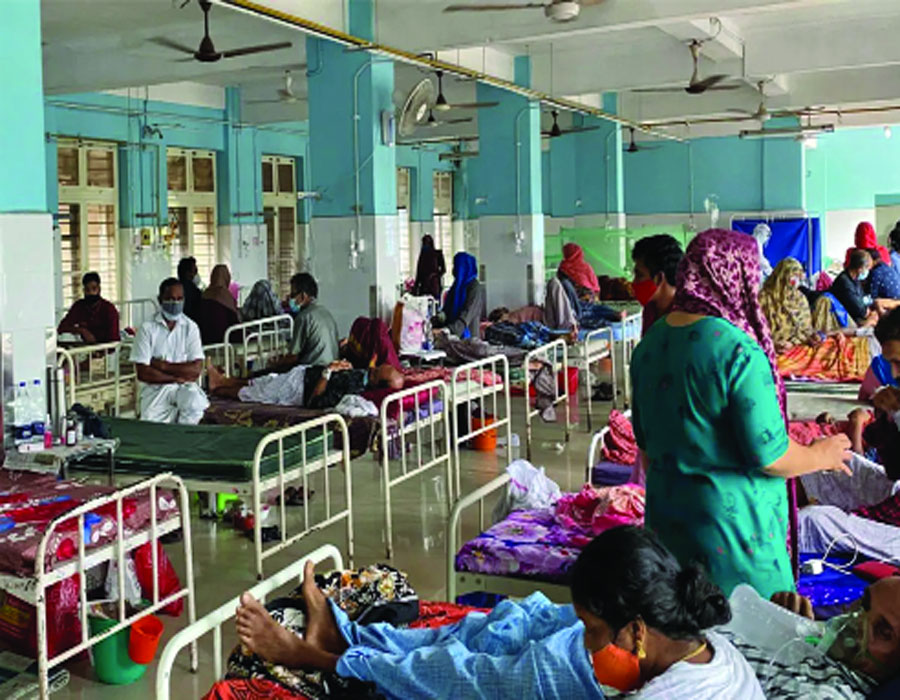
Need to remove stigma associated with mental health problems
As per the National Crime Records Bureau (NCRB),suicides in India rose to an all-time high of over 1.5 lakh in 2020. The trend seems to have picked up during the last two stressful and anxiety filled years of the COVID pandemic. Murder and suicide rates are similar throughout the world, conflict zones and drug-mafia-ridden Latin America being exceptions.
Need to remove stigma associated with mental health problems
As per the National Crime Records Bureau (NCRB),suicides in India rose to an all-time high of over 1.5 lakh in 2020. The trend seems to have picked up during the last two stressful and anxiety filled years of the COVID pandemic. Murder and suicide rates are similar throughout the world, conflict zones and drug-mafia-ridden Latin America being exceptions.
In India, people are five times more likely to take their own lives than be murdered.
While systems are in place in the form of law enforcement agencies, prisons and judiciary to prevent heinous crimes, lack of resources and willpower hamper effective mechanisms to deal with the problem of suicides.
The issue of suicide, especially amongst the youth, was highlighted in the recent session of Parliament when Bhujan Samaj Paty (BSP) MP Danish Ali raised the issue of suicide committed by three students of Teerthankar Mahaveeer Private University, Moradabad, Uttar Pradesh. The Education Ministry said the UGC had informed that Central Universities had reported 24 suicide cases of students from 2017 to 2022. Records are not up to date and so the reasons remain unknown.The government was not willing to commit itself to rectifying the situation.
Minister of State for Education RajkumarRajan Singh said: “We take every case of students death seriously. However, education being in the concurrent list, the state has to also share the responsibility.”
The pertinent question is why so many student suicides are reported from reputed institutions like IITs and Central Universities?
The answer lies in the mental and emotional pressure being faced by the students today. They have to face intense competition at an early stage of life. The expectations of the parents are too high. The trauma starts from seeking admission to nursery class, scoring high marks, topping board examinations, securing admission in professional courses and competing for highly paid jobs. Although the Government is spending lot of money on education, the concept of career counselling is virtually absent.
Either the students are clueless about their career choices or their preferences are rarely considered by parents. Often, parents impose their choices on their wards. There is a rat race to get their children admitted to IITs and Medical Colleges.
The business of coaching classes is thriving across the country. Hordes of children join them. When they fail to get admission, they fall into depression and that leads some of them to take the extreme step of committing suicide. Even those who get admission in premier institutions are so drained out that at times they fail to cope with the rigorous schedule of studies and commit suicide out of frustration. The positive side is that the problem of suicide is getting attention at present and statistics on suicides are being generated on a regular basis to understand the gravity of the situation.
The first commendable step which the government has taken was decriminalisation of suicide through the Mental Healthcare Act,2017.
The second positive step was recognizing its responsibility of providing medical care and rehabilitation to persons with suicidal tendencies.
However, in India, the awareness about psychiatric issues is low. The social stigma attached to psychiatric fallouts like depression and substance abuse remains high and prevents the patients from accessing medical care. There is acute shortage of psychiatrists and counsellors to cater to the demand of the suffering people.
The health facilities required for huge the patient load are also insufficient. There is a need to spread awareness amongst the parents and students by providing career counselling and family therapy.
(The writer is a senior journalist and Chairman, Panwar Group of Institutions, Solan, Himachal Pradesh. The views expressed are personal.)
(The writer is a senior journalist and Chairman, Panwar Group of Institutions, Solan, Himachal Pradesh. The views expressed are personal.)
Tuesday, March 29, 2022
Inspired by Jai Bhim movie, IIT Madras scholar takes up legal battle against co-scholar, others in sexual assault case
Inspired by Jai Bhim movie, IIT Madras scholar takes up legal battle against co-scholar, others in sexual assault case
A 30-year-old research scholar in Tamil Nadu decided to pursue a legal battle against a co-scholar, seven others for sexually assaulting, abusing her, after drawing inspiration from the movie Jai Bhim.
Chennai March 28, 2022
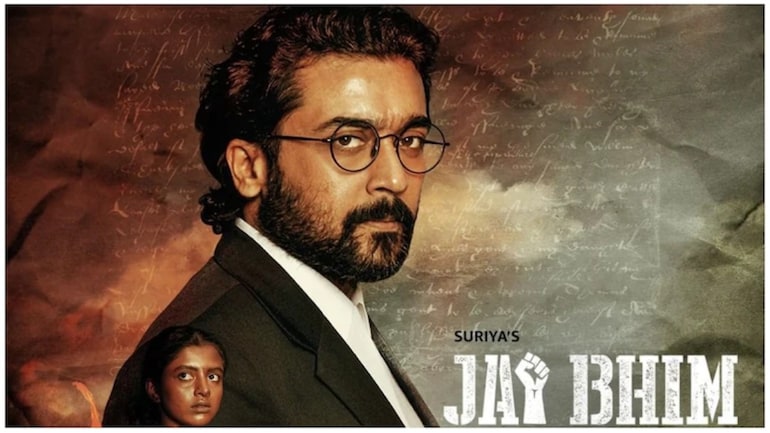
The survivor, who underwent nearly four years of torture, decided to take up legal battle after drawing inspiration from movie Jai Bhim.
A 30-year-old student who was allegedly sexually abused by her fellow scholar and seven other students has taken up a legal battle for justice, after reportedly drawing inspiration from the movie Jai Bhim.
The film Jai Bhim was a talking point for depicting the systemic injustice and cruelties faced by marginalised communities in Tamil Nadu.
The student has mentioned in the FIR the heart-wrenching manner in which she was abused by her fellow scholar Kingshuk Debsharma and seven of his friends.
The student had joined IIT Madras on July 14, 2016 and got acquainted with Kingshuk. She felt comfortable with Kingshuk, as they spoke the same native language, which he took advantage of by sexually assaulting her.
The accused had caused hindrance to the survivor by not allowing her to freely use equipment that forced her to speak with him. In the FIR, the survivor mentioned that using this as a chance, he had called her to the lab on the pretext of resolving the issue. The accused then allegedly sexually abused her, took pictures of her and used them to blackmail her for a period between 2016 and 2020.
The survivor, after undergoing nearly four years of torture, had attempted suicide but was rescued by her friends. The student reportedly did get the full support from her family and had complained to the IIT Madras officials and an Internal Committee was constituted.
The findings of the committee against sexual harassment recorded that the survivor had undergone verbal abuse and was physically abused twice by Kingshuk.
ALSO READ | Suriya's hard-hitting tale about caste injustice and police brutality is a must-watch
The committee findings also reported that Kingshuk’s friends Malay Krishna, Subhadeep Bannerjee, Dr E Ravindran also harassed her. And as an interim recommendation stated that the above-mentioned students should not be permitted to enter the campus, until the survivor completes her thesis.
However, due to the pandemic, classes were conducted online but the accused were not barred from attending it along with the survivor, causing her more trauma.
In a strange turn of events, the survivor then sought the help of Suganthi, State General Secretary of All India Democratic Women’s Association (AIDWA) who stated that the survivor and her friends had watched Jai Bhim movie and had attained hope that they still had a chance to get justice.
A complaint was registered with Mylapore All Women Police Station on March 29 2021 but the FIR had only registered a complaint under sections 354, 354B, 354C and 506 (1) and omitted rape charges as she didn’t explicitly mention the word rape. Furthermore, no charges under Prevention of Atrocities against SC/ST were filed.
"Justice Chandru informed us and also called a senior police official. The survivor then spoke to us and we were shocked to know that no rape charges or POA against SC/ST were filed in the FIR. We were even shocked that the accused had attended online classes along with the survivor even after the Internal Committee had given interim recommendations the other way", stated Suganthi.
After AIDWA took the case, these factors were highlighted and Kingshuk was arrested by Tamil Nadu Police Special Team and is in Diamond Harbour Police station in West Bengal, awaiting a transit warrant.
The survivor, who underwent nearly four years of torture, decided to take up legal battle after drawing inspiration from movie Jai Bhim.
A 30-year-old student who was allegedly sexually abused by her fellow scholar and seven other students has taken up a legal battle for justice, after reportedly drawing inspiration from the movie Jai Bhim.
The film Jai Bhim was a talking point for depicting the systemic injustice and cruelties faced by marginalised communities in Tamil Nadu.
The student has mentioned in the FIR the heart-wrenching manner in which she was abused by her fellow scholar Kingshuk Debsharma and seven of his friends.
The student had joined IIT Madras on July 14, 2016 and got acquainted with Kingshuk. She felt comfortable with Kingshuk, as they spoke the same native language, which he took advantage of by sexually assaulting her.
The accused had caused hindrance to the survivor by not allowing her to freely use equipment that forced her to speak with him. In the FIR, the survivor mentioned that using this as a chance, he had called her to the lab on the pretext of resolving the issue. The accused then allegedly sexually abused her, took pictures of her and used them to blackmail her for a period between 2016 and 2020.
The survivor, after undergoing nearly four years of torture, had attempted suicide but was rescued by her friends. The student reportedly did get the full support from her family and had complained to the IIT Madras officials and an Internal Committee was constituted.
The findings of the committee against sexual harassment recorded that the survivor had undergone verbal abuse and was physically abused twice by Kingshuk.
ALSO READ | Suriya's hard-hitting tale about caste injustice and police brutality is a must-watch
The committee findings also reported that Kingshuk’s friends Malay Krishna, Subhadeep Bannerjee, Dr E Ravindran also harassed her. And as an interim recommendation stated that the above-mentioned students should not be permitted to enter the campus, until the survivor completes her thesis.
However, due to the pandemic, classes were conducted online but the accused were not barred from attending it along with the survivor, causing her more trauma.
In a strange turn of events, the survivor then sought the help of Suganthi, State General Secretary of All India Democratic Women’s Association (AIDWA) who stated that the survivor and her friends had watched Jai Bhim movie and had attained hope that they still had a chance to get justice.
A complaint was registered with Mylapore All Women Police Station on March 29 2021 but the FIR had only registered a complaint under sections 354, 354B, 354C and 506 (1) and omitted rape charges as she didn’t explicitly mention the word rape. Furthermore, no charges under Prevention of Atrocities against SC/ST were filed.
"Justice Chandru informed us and also called a senior police official. The survivor then spoke to us and we were shocked to know that no rape charges or POA against SC/ST were filed in the FIR. We were even shocked that the accused had attended online classes along with the survivor even after the Internal Committee had given interim recommendations the other way", stated Suganthi.
After AIDWA took the case, these factors were highlighted and Kingshuk was arrested by Tamil Nadu Police Special Team and is in Diamond Harbour Police station in West Bengal, awaiting a transit warrant.
Thursday, March 10, 2022
No Efforts To Stop Harassment, Suicides: IIT Madras Students
No Efforts To Stop Harassment, Suicides: IIT Madras Students
IITs have become a den of institutional murders, a study by APSC IIT Bombay has claimed.
Sruti M.D.
08 Mar 2022
The death of Indian Institute of Technology (IIT) Madras student Fathima Latheef in November 2019 caused tremors on the campus and galvanised students into demanding structural changes in the institute’s administration to prevent such deaths and a more inclusive atmosphere.
The student group ChintaBAR made a three-point demand: studying the mental health of IIT Madras students, expanding the scope of the departmental grievance redressal cell to incorporate harassment and drafting a standard operating procedure to enquire into all deaths on the campus.
Ambedkar Periyar Study Circle (APSC), another student group at IIT Madras, demanded “an active cell containing students, faculty members and employees to address the issues of discrimination against SC, ST, OBC and minority communities”.
Although the institute’s administration promised to work towards fulfilling these demands, another IIT Madras student committed suicide in June 2021.
‘DEN OF INSTITUTIONAL MURDERS’
Two deaths by suicide at the institute have been reported in the last 10 months alone—a project staff who was found dead inside the campus and a second-year student committed suicide at home.
Student suicides have been reported at other IITs in Delhi, Bombay and Kharagpur. In January, a 26-year-old postgraduate student of IIT Bombay died after allegedly jumping from the terrace of his hostel. In his suicide note, he had written that no one was responsible for his death.
“IITs have become a den of institutional murders. In 2019 alone, there were 16 institutional murders. These are systematic killings,” claims APSC IIT Bombay.
The IIT campuses have been repeatedly accused of not being inclusive and being elitist dens for upper castes while the marginalised and minorities are sidelined. RTI data shows that none of the IITs allow reservations in faculty positions.
IITs have become a den of institutional murders, a study by APSC IIT Bombay has claimed.
Sruti M.D.
08 Mar 2022
The death of Indian Institute of Technology (IIT) Madras student Fathima Latheef in November 2019 caused tremors on the campus and galvanised students into demanding structural changes in the institute’s administration to prevent such deaths and a more inclusive atmosphere.
The student group ChintaBAR made a three-point demand: studying the mental health of IIT Madras students, expanding the scope of the departmental grievance redressal cell to incorporate harassment and drafting a standard operating procedure to enquire into all deaths on the campus.
Ambedkar Periyar Study Circle (APSC), another student group at IIT Madras, demanded “an active cell containing students, faculty members and employees to address the issues of discrimination against SC, ST, OBC and minority communities”.
Although the institute’s administration promised to work towards fulfilling these demands, another IIT Madras student committed suicide in June 2021.
Shubhankar Dhiman, a 21-year-old aerospace student, committed suicide by hanging himself at his home in Sunder Nagar, Himachal Pradesh, when the campus was shut because of the pandemic and classes were online.
NO EFFORTS MADE BY ADMINISTRATION
Following Latheef’s death, IIT Madras students launched an indefinite fast to ensure that their demands were met. The fast was called off following an assurance by the dean of students that a complaint-and-redressal system will be set up in every department at the earliest and the issues faced by them would be looked into.
Some of the departments already have a grievance redressal cell which functions arbitrarily. “We demanded that the scope of the grievance redressal cell be expanded to include mental harassment and discrimination. It is unclear how these cells function and whether they consist of student representatives,” IIT Madras student Aswin Chadayan told Newsclick.
As for the study on mental health, the ChintaBAR statement read: “A study on the mental health of the students on campus would be conducted by a committee comprising psychologists, educationists, sociologists, etc. as was demanded by the student legislative council.”
Notably, Dhiman’s friends expressed doubts that academic issues could have led to his death as he wasn’t attending classes and could not write the end-of-semester examinations.
Referring to Dhiman’s suicide, Chadayan said, “When an IIT Madras student committed suicide in June last year, we reiterated the study on mental health. We sent out emails to the director and the dean of students. We have not received any reply to the mail till date. We had written to the administration to enquire about the progress of its promises and also sought information on the specific measures taken by the administration to address the issues faced by the students in the context of the COVID-19 pandemic.”
CLEAN CHIT DESPITE ACCUSATIONS
A couple of weeks ago, the Central Bureau of Investigation (CBI) had submitted its final report on the investigation into Latheef’s death concluding that she committed suicide and ruling out the possibility of mental harassment.
According to the report, Latheef had some psychological issues and took the extreme step due to homesickness. However, her father had alleged that she was subjected to mental torture and harassment which pushed her to commit suicide and pointed out discrepancies in the report.
Similar to the Latheef case, the committee set up to probe Vipin P Veetil’s allegation of discrimination against fellow faculty members found “no evidence of caste bias”. Veetil was an assistant professor at IIT Madras who belongs to a community from Other Backward Classes.
NO EFFORTS MADE BY ADMINISTRATION
Following Latheef’s death, IIT Madras students launched an indefinite fast to ensure that their demands were met. The fast was called off following an assurance by the dean of students that a complaint-and-redressal system will be set up in every department at the earliest and the issues faced by them would be looked into.
Some of the departments already have a grievance redressal cell which functions arbitrarily. “We demanded that the scope of the grievance redressal cell be expanded to include mental harassment and discrimination. It is unclear how these cells function and whether they consist of student representatives,” IIT Madras student Aswin Chadayan told Newsclick.
As for the study on mental health, the ChintaBAR statement read: “A study on the mental health of the students on campus would be conducted by a committee comprising psychologists, educationists, sociologists, etc. as was demanded by the student legislative council.”
Notably, Dhiman’s friends expressed doubts that academic issues could have led to his death as he wasn’t attending classes and could not write the end-of-semester examinations.
Referring to Dhiman’s suicide, Chadayan said, “When an IIT Madras student committed suicide in June last year, we reiterated the study on mental health. We sent out emails to the director and the dean of students. We have not received any reply to the mail till date. We had written to the administration to enquire about the progress of its promises and also sought information on the specific measures taken by the administration to address the issues faced by the students in the context of the COVID-19 pandemic.”
CLEAN CHIT DESPITE ACCUSATIONS
A couple of weeks ago, the Central Bureau of Investigation (CBI) had submitted its final report on the investigation into Latheef’s death concluding that she committed suicide and ruling out the possibility of mental harassment.
According to the report, Latheef had some psychological issues and took the extreme step due to homesickness. However, her father had alleged that she was subjected to mental torture and harassment which pushed her to commit suicide and pointed out discrepancies in the report.
Similar to the Latheef case, the committee set up to probe Vipin P Veetil’s allegation of discrimination against fellow faculty members found “no evidence of caste bias”. Veetil was an assistant professor at IIT Madras who belongs to a community from Other Backward Classes.
He rejected the findings alleging caste bias and procedural lapses, and said that key evidence was not considered in the inquiry.
‘DEN OF INSTITUTIONAL MURDERS’
Two deaths by suicide at the institute have been reported in the last 10 months alone—a project staff who was found dead inside the campus and a second-year student committed suicide at home.
Student suicides have been reported at other IITs in Delhi, Bombay and Kharagpur. In January, a 26-year-old postgraduate student of IIT Bombay died after allegedly jumping from the terrace of his hostel. In his suicide note, he had written that no one was responsible for his death.
“IITs have become a den of institutional murders. In 2019 alone, there were 16 institutional murders. These are systematic killings,” claims APSC IIT Bombay.
The IIT campuses have been repeatedly accused of not being inclusive and being elitist dens for upper castes while the marginalised and minorities are sidelined. RTI data shows that none of the IITs allow reservations in faculty positions.
Saturday, February 26, 2022
West Bengal: Decomposed body of 52-year-old IIT-Kharagpur professor found at campus quarters
West Bengal: Decomposed body of 52-year-old IIT-Kharagpur professor found at campus quarters
The mechanical engineering professor identified as Sati Nath Bhattacharayya was missing for several days and was found dead at his quarters.
Updated Feb 26, 2022 | 04:30 AM IST
West Bengal: Decomposed body of 52-year-old IIT-Kharagpur professor found at campus quarters
The 52-year-old was a mechanical engineering professor at IIT-Kharagpur.
A missing complaint was filed by IIT authorities after professor went missing around 10 days ago.
Kharagpur: A missing IIT-Kharagpur professor has been found dead at his campus quarters in Paschim Medinipur district of West Bengal. The 52-year-old was a mechanical engineering professor at IIT-Kharagpur.
The victim has been identified as Sati Nath Bhattacharayya. He was missing for over a week. Police suspect the professor died some days back.
A missing complaint was filed by IIT authorities after professor went missing around 10 days ago. The body was recovered by Hijli police from his B-58 quarters. The body was later sent for autopsy, according to a report in Times of India.
"This is a very shocking case. We were unable to trace the professor for several days. Later, we informed police about the matter. We are trying to reach out to his friends and family members," the report quoted Tamal Nath, IIT-Kharagpur registrar, as saying.
Tamal said police are looking into his death and IIT authorities are cooperating with police.
The deceased had joined IIT-Kharagpur as assistant professor in the mechanical engineering department in 2000.
Kharagpur: A missing IIT-Kharagpur professor has been found dead at his campus quarters in Paschim Medinipur district of West Bengal. The 52-year-old was a mechanical engineering professor at IIT-Kharagpur.
The victim has been identified as Sati Nath Bhattacharayya. He was missing for over a week. Police suspect the professor died some days back.
A missing complaint was filed by IIT authorities after professor went missing around 10 days ago. The body was recovered by Hijli police from his B-58 quarters. The body was later sent for autopsy, according to a report in Times of India.
"This is a very shocking case. We were unable to trace the professor for several days. Later, we informed police about the matter. We are trying to reach out to his friends and family members," the report quoted Tamal Nath, IIT-Kharagpur registrar, as saying.
Tamal said police are looking into his death and IIT authorities are cooperating with police.
The deceased had joined IIT-Kharagpur as assistant professor in the mechanical engineering department in 2000.
Bhattacharyya later became professor and specialised in fluid mechanics.
Thursday, February 24, 2022
Dharmendra Pradhan asks IITs, NITs, central institutions to stop de-reservation of seats:
Dharmendra Pradhan asks IITs, NITs, central institutions to stop de-reservation of seats: Report
The Union education minister has asked all central institutions to stop transferring unfilled reserved seats to the general category immediately.
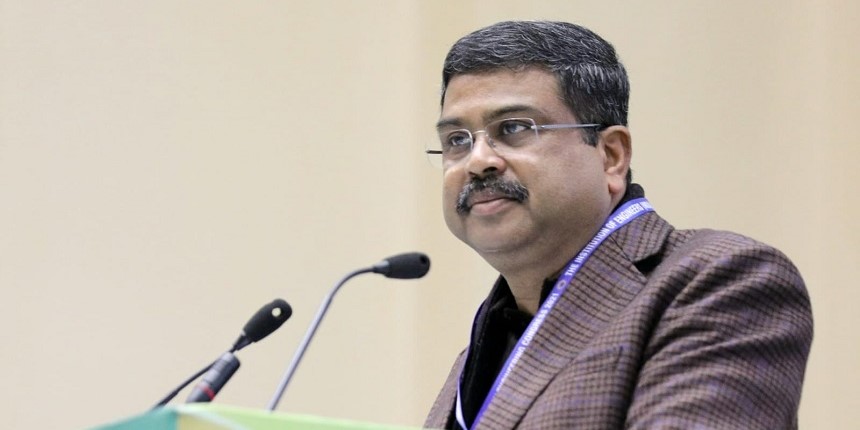
Dharmendra Pradhan asks IITs, NITs, central institutions to stop transferring reserved seats to open category: Report
Vagisha Kaushik | Feb 23, 2022 - 1:37 p.m. IST
NEW DELHI: Union education minister Dharmendra Pradhan, has asked the Indian Institutes of Technology (IITs), National Institutes of Technology (NIT) and central universities to stop transferring unfilled reserved seats to open category immediately, the Times of India reported. The education minister has asked the institutions to strictly follow the reservation policy, the report said.
Also Read | More than 10,000 seats across courses in IITs remained vacant in last 2 years, 8,700 in NITs
The education minister has reportedly sought a compliance report from the institutions at the earliest. Pradhan has also asked colleges to reduce the cutoffs for the reserved category if required and provide them with additional year of study, as per the report.
Also Read | IIT PhD scholar protests against ‘discrimination’ in IITs in front of education ministry
A senior official of the education ministry told TOI, “It has come to the notice of the ministry that some central educational institutions or agencies have been carrying out de-reservation of unfilled General-EWS and OBC (non-creamy layer) seats by transferring them to the open or general category during admissions. We have also received a number of verbal and written intimations of such practices in recent times.”
Also Read | 58% student suicides in IITs, NITs, central institutions from SC, ST, OBC, minority communities
The official added that the education minister instructed central institutions including IITs and NITs to stop the de-reservation immediately and to follow the reservation-related provisions in letter and spirit, the report said.
Further, Pradhan asked the institutions to ensure that the reserved seats are filled and to provide coaching and supplementary year of study to disadvantaged students if required along with support for exams, counselling and admissions.
Vagisha Kaushik | Feb 23, 2022 - 1:37 p.m. IST
NEW DELHI: Union education minister Dharmendra Pradhan, has asked the Indian Institutes of Technology (IITs), National Institutes of Technology (NIT) and central universities to stop transferring unfilled reserved seats to open category immediately, the Times of India reported. The education minister has asked the institutions to strictly follow the reservation policy, the report said.
Also Read | More than 10,000 seats across courses in IITs remained vacant in last 2 years, 8,700 in NITs
The education minister has reportedly sought a compliance report from the institutions at the earliest. Pradhan has also asked colleges to reduce the cutoffs for the reserved category if required and provide them with additional year of study, as per the report.
Also Read | IIT PhD scholar protests against ‘discrimination’ in IITs in front of education ministry
A senior official of the education ministry told TOI, “It has come to the notice of the ministry that some central educational institutions or agencies have been carrying out de-reservation of unfilled General-EWS and OBC (non-creamy layer) seats by transferring them to the open or general category during admissions. We have also received a number of verbal and written intimations of such practices in recent times.”
Also Read | 58% student suicides in IITs, NITs, central institutions from SC, ST, OBC, minority communities
The official added that the education minister instructed central institutions including IITs and NITs to stop the de-reservation immediately and to follow the reservation-related provisions in letter and spirit, the report said.
Further, Pradhan asked the institutions to ensure that the reserved seats are filled and to provide coaching and supplementary year of study to disadvantaged students if required along with support for exams, counselling and admissions.
Saturday, February 19, 2022
FATIMA LATHEEF CBI ENQUIRY,
Suicide IIT, suicide, iit
Daily update ⋅ 19 February 2022
CBI says IIT-M student Fathima died by suicide, rules out mental harassment | The News Minute
The News Minute
A special investigation team of the Tamil Nadu police was constituted to probe her death after her family alleged that she was driven to suicide. The ...
IIT-M student Fathima committed suicide, concludes CBI - Free Press Journal
Free Press Journal
Chennai: Fathima Latheef, an IIT-Madras student, committed suicide, according to the Central Bureau of Investigation (CBI), which probed her death ...
CBI winds up IIT-Madras student Fathima committed suicide | NewsTrack English 1
NewsTrack English - News Track Live, NewsTrack
CHENNAI: The investigation into the death of IIT-Madras student Fathima Latheef by the Central Bureau of Investigation (CBI) has found that .
The Central Bureau of Investigation That Probed the Death of IIT-Madras - Latestly
Latestly
The latest Tweet by IANS India states, 'The Central Bureau of Investigation that probed the death of IIT-Madras student #FathimaLatheef has ...
Friday, February 18, 2022
CBI concludes probe into death of IIT-M student Fathima,
CHENNAI
CBI concludes probe into death of IIT-M student Fathima

FEBRUARY 17, 2022 22:01 IST
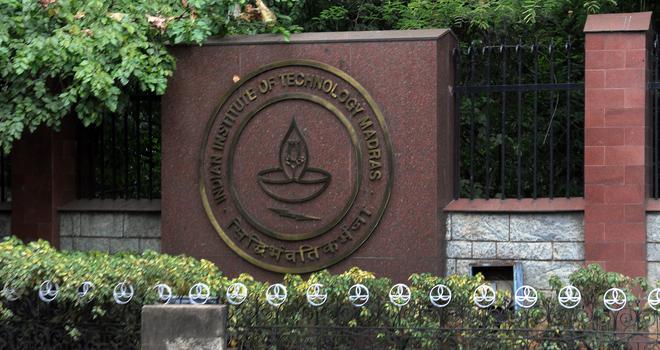
The Indian Institute of Technology Madras. Photo Credit: K. PICHUMANI
The Central agency reportedly found no evidence of harassment
The Central Bureau of Investigation (CBI) has filed a final report closing the investigation into the death of 19-year-old Fathima Latheef at IIT-Madras hostel, concluding that it was a case of death by suicide due to homesickness and recording that the student had psychological issues, said sources. In its conclusions, the report matches with the one already submitted by the special investigation team headed by the then Additional Commissioner of Police, Central Crime Branch, C. Eswaramoorthy in 2019.
Fathima, 19, from Kollam, had joined IIT-M in July 2019 and was a first year student of M.A. Humanities. She was found dead in her Room No, 349 at Sarayu Hostel on the campus on November 9.
Initially the case was investigated by Kotturpuram police under Section 174 of the Criminal Procedure Code for unnatural death. After retrieving a suicide note from her phone, her father Latheef alleged that she had been facing harassment forcing her to take the extreme step. He met the Chief Ministers of Tamil Nadu and Kerala and demanded a thorough probe, besides raising serious allegations against a professor.
The death of the student had sparked protests from political parties and student organisations. The case was transferred to a special team, led by then Additional Commissioner of Police, Central Crime Branch (CCB), and it submitted a report that there was no prima facie evidence of the three professors she had named abetting the suicide. Later, the case was transferred to the CBI in December 2019.
Now, the CBI, after completing the investigation, has filed a final report containing 2,000 pages in a special court for the CBI cases recently. It has concluded that Fathima ended her life because she had been homesick and had some psychological issues. It ruled out the probability of any mental harassment.
Mohammed Shah P. A., advocate for Mr. Latheef, said, “The CBI has now filed a final report stating that was a suicide — we have serious objections with this. Now, the court has issued notices to the parents of the victim. On Wednesday, we got the chargesheet. The matter was posted to February 28. We are going to file objections pointing out certain serious lapses on investigation.”
Mr. Shah said, “The enthusiasm of the warden to explain that homesickness is the reason for her death is suspect. Now, the CBI concluded that Fathima committed suicide due to homesickness. The CBI has no answer as to why she specifically mentioned the name of a professor immediately before her death and why she has not opted to write names of any other persons. Even when the CBI concludes that Fathima is having psychological issues the above question is necessarily to be answered.”
Role of teachers
He said the role of the teachers is highly important and no investigation with respect to their involvement was carried out by CBI. He said the CBI conducted the investigation by taking statements of the persons in a pick and choose method to conclude that Fathima committed suicide due to homesickness.
One of the student bodies, Chinta Bar had staged a protest on the campus demanding an internal probe. A student who participated in the protest and has since graduated said: “Initially the institute said it was cooperating. We sat on hunger strike and one of the demands was that there should be an internal investigation. The other demand was for student fraternity as a whole to tackle the issue of mental health of the students,” the student said.
The institute had declined to conduct an internal inquiry citing the ongoing police investigation. “The institute said the investigation was delayed because of COVID. Recently, the family had got to know unofficially that the CBI had not charged anyone. The family was looking to take this up legally but I don’t know what happened,” the graduate added.
With the institute yet to open, there has not been much interaction among students either, he added. “The incident happened when she had barely been in the institute for less than three months. The students were just beginning to get accustomed to college life. Soon afterwards with COVID breaking out the college hasn’t been opened,” he pointed out.
( Assistance for overcoming suicidal thoughts is available on the State’s health helpline 104 and Sneha’s suicide prevention helpline 044-24640050).
Friday, February 11, 2022
10k seats remained vacant across IITs in 2 years
10k seats remained vacant across IITs in 2 years
By Oneindia Correspondent | Published: Thursday, February 10, 2022,
Over 10,000 seats across different courses remained vacant in various Indian Institutes of Technology (IITs) during the last two years, while over 8,700 seats were vacant in National Institutes of Technology (NITs), Union Education Minister Dharmendra Pradhan said on Wednesday. Pradhan gave the information in a written response to a question in the Rajya Sabha, PTI said in a report.
According to the data, 5,484 seats remained unfilled in IITs in 2020-21.
Of them, 476 seats were vacant in undergraduate courses (BTech), 3,229 seats in postgraduate courses, and 1,779 in PhD courses.
In 2021-22, the number of vacant seats in IITs were 5,296, slightly lower than the previous year.
Of them, 361 seats remained vacant in BTech courses, 3,083 in postgraduate courses and 1,852 in PhD courses.
In NITs, the data showed, while 3,741 seats across various courses were vacant in 2020-21, the number further increased to 5,012 in 2021-22. Of them, maximum seats remain unfilled in postgraduate courses i.e. 2,487 in 2020-21 and 3, 413 in 2021-22.
How Taran Singh An Ex-IITian helps aspiring engineering students prepare better "The premier engineering colleges like IITs, NITs and IIITs impart education and research in science and technology subjects and are categorised as Institutions of National Importance. The admission to various programmes in these institutions are strictly offered only to deserving candidates based on the ranking/ other parameters, who fulfil the required eligibility criteria," the minister said. (PTI)
Thursday, January 27, 2022
IIT Guwahati student mysteriously found dead in hostel room,
IIT Guwahati student mysteriously found dead in hostel room
In the mysterious turn of events, a student from the Indian Institute of Technology, Guwahati (IIT) was found dead in the hostel.
IIT Guwahati student mysteriously found dead in hostel room - Cities News - India Today
India Today
The body of the deceased has been sent to Gauhati Medical College and Hospital for postmortem and a case of death due to the unidentified cause has ...
PhD Scholar Found Dead in IIT Guwahati Hostel Room - Sentinelassam
The Sentinel Assam
According to the data, 122 students died by suicide in IITs, IIMs, IISc, IISERs, IIITs, Central Universities, NITs, and CFTIs between 2014 and ...
Assam: PhD scholar found dead in IIT Guwahati - Northeast Now
Northeast Now
The police further said that the people on the campus will be interrogated to figure out if the act was a murder, a suicide or an accident. Related.
PhD scholar found dead at IIT-Guwahati - EastMojo
EastMojo
According to police, security officials at IIT-G had to break into his room on ... Suicide? Japanese student found dead at IIT Guwahati in Assam.
Blackmailed on Instagram, man commits suicide in K'taka - National Herald
National Herald
However, according to a study, by IIT Madras it has predicted that the national peak of the third wave of covid is expected to come in the next ...
In the mysterious turn of events, a student from the Indian Institute of Technology, Guwahati (IIT) was found dead in the hostel.

GuwahatiJanuary 26, 2022
The student’s dead body was found inside the hostel room of Kapili Hostel, IIT Guwahati. (Representational Image)
In a bizarre case, a PhD student at the Indian Institute of Technology, Guwahati, was found dead inside his hostel room under mysterious circumstances.
As per the media report, the deceased student has been identified as Prashanta Kumar Arukha. He was pursuing his PhD from the social science and human resources department of the institute. As per reports, he was last seen by hostel members two days ago.
The security personnel at Kapili Hostel, on suspicion of something being wrong, broke open his room, after which the lifeless body of the student was discovered. The university authorities have informed Amingaon Police of the incident.
The body of the deceased has been sent to Gauhati Medical College and Hospital for postmortem and a case of death due to the unidentified cause has been registered by the police.
xxxxxxxxx
The student’s dead body was found inside the hostel room of Kapili Hostel, IIT Guwahati. (Representational Image)
In a bizarre case, a PhD student at the Indian Institute of Technology, Guwahati, was found dead inside his hostel room under mysterious circumstances.
As per the media report, the deceased student has been identified as Prashanta Kumar Arukha. He was pursuing his PhD from the social science and human resources department of the institute. As per reports, he was last seen by hostel members two days ago.
The security personnel at Kapili Hostel, on suspicion of something being wrong, broke open his room, after which the lifeless body of the student was discovered. The university authorities have informed Amingaon Police of the incident.
The body of the deceased has been sent to Gauhati Medical College and Hospital for postmortem and a case of death due to the unidentified cause has been registered by the police.
xxxxxxxxx
IIT Guwahati student mysteriously found dead in hostel room - Cities News - India Today
India Today
The body of the deceased has been sent to Gauhati Medical College and Hospital for postmortem and a case of death due to the unidentified cause has ...
PhD Scholar Found Dead in IIT Guwahati Hostel Room - Sentinelassam
The Sentinel Assam
According to the data, 122 students died by suicide in IITs, IIMs, IISc, IISERs, IIITs, Central Universities, NITs, and CFTIs between 2014 and ...
Assam: PhD scholar found dead in IIT Guwahati - Northeast Now
Northeast Now
The police further said that the people on the campus will be interrogated to figure out if the act was a murder, a suicide or an accident. Related.
PhD scholar found dead at IIT-Guwahati - EastMojo
EastMojo
According to police, security officials at IIT-G had to break into his room on ... Suicide? Japanese student found dead at IIT Guwahati in Assam.
Blackmailed on Instagram, man commits suicide in K'taka - National Herald
National Herald
However, according to a study, by IIT Madras it has predicted that the national peak of the third wave of covid is expected to come in the next ...
Tuesday, January 25, 2022
58% student suicides in IITs, NITs, central institutions from SC, ST, OBC, minority communities
58% student suicides in IITs, NITs, central institutions from SC, ST, OBC, minority communities
122 students from IITs, NITs, central universities, other central institutions died by suicide over 2014-21, education ministry told Parliament
R. Radhika | Dec 20, 2021
NEW DELHI: In the past eight years, premier technical institutions and central universities witnessed 58 percent of student suicides from the Scheduled Caste, Scheduled Tribe, and minority communities.
Government data presented in Lok Sabha on Monday showed that educational institutions like Indian Institutes of Technology (IITs), National Institutes of Technology (NITs), Indian Institute of Science, Indian Institute of Science Education and Research (IISER) along with central universities saw a total of 122 suicide cases.
A majority of suicides were reported from the Other Backward Castes (OBC), especially in Central Universities, the data presented by the education minister Dharmendra Pradhan showed. A total of 41 students from the OBC community died by suicide between 2014 and 2021. A total of 14 such cases were reported in Central Universities; followed by IITs and NITs with 14 and 11 cases respectively. NITs alone reported a total of 30 student suicides in the same period.
Meanwhile, 37 students died by suicide in Central Universities across India of whom 24 students belonged to the SC community. Other prominent institutions like, IISc Bengaluru and IISER witnessed a total of nine suicide deaths among which four were reserved category students.
Also Read| Over 33% of SC, ST, OBC students drop out in Class 10: UDISE+ Report
Indian Institute of Management or IIMs and other centrally funded institutions recorded five and four such cases respectively.
Suicide cases in education institutions between 2014 to 2021
122 students from IITs, NITs, central universities, other central institutions died by suicide over 2014-21, education ministry told Parliament
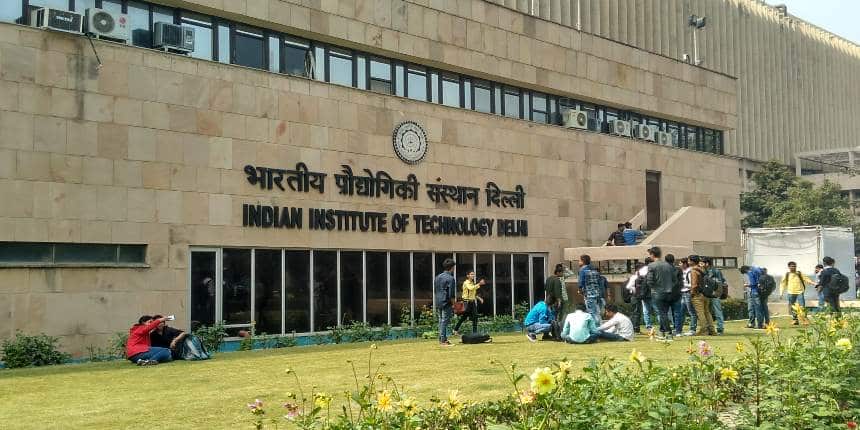
In October, a fourth-year student of engineering physics died at his hostel at IIT Delhi. (Picture source: Wikimedia Commons)
R. Radhika | Dec 20, 2021
NEW DELHI: In the past eight years, premier technical institutions and central universities witnessed 58 percent of student suicides from the Scheduled Caste, Scheduled Tribe, and minority communities.
Government data presented in Lok Sabha on Monday showed that educational institutions like Indian Institutes of Technology (IITs), National Institutes of Technology (NITs), Indian Institute of Science, Indian Institute of Science Education and Research (IISER) along with central universities saw a total of 122 suicide cases.
A majority of suicides were reported from the Other Backward Castes (OBC), especially in Central Universities, the data presented by the education minister Dharmendra Pradhan showed. A total of 41 students from the OBC community died by suicide between 2014 and 2021. A total of 14 such cases were reported in Central Universities; followed by IITs and NITs with 14 and 11 cases respectively. NITs alone reported a total of 30 student suicides in the same period.
Meanwhile, 37 students died by suicide in Central Universities across India of whom 24 students belonged to the SC community. Other prominent institutions like, IISc Bengaluru and IISER witnessed a total of nine suicide deaths among which four were reserved category students.
Also Read| Over 33% of SC, ST, OBC students drop out in Class 10: UDISE+ Report
Indian Institute of Management or IIMs and other centrally funded institutions recorded five and four such cases respectively.
Suicide cases in education institutions between 2014 to 2021
Click on Caption above to see Table of Suicides
IIT suicide case
According to the ministry of education data, the IITs recorded 34 death by suicides of which 18 were from SC and OBC communities. The IITs have repeatedly come under heavy criticism for caste discrimination with several incidents surfacing in the past few months. Several students in engineering students have reported cases of institutional discrimination and explicit threats from teachers in the recent past.
In April, Seema Singh, a teacher in the humanities and social science department of IIT Kharagpur, was heard hurling abuses at an English preparatory class for Dalit and Adivasi students. IIT Kharagpur eventually suspended Singh but only after a massive public outcry.
Earlier in June, a mechanical engineering student, Hari Prasath, studying in the third year at IIT Delhi died by suicide in his hostel. In October, another fourth-year student of engineering physics died at his hostel in IIT Delhi.
In 2016, the suicide case of Rohith Vemula, a 26-year-old PhD student at Hyderabad Central University emerged as the symbol of protest against caste oppression on campus. Vemula died by suicide after being expelled from the university's housing facility.
If you, or anyone you know, needs help, AASRA has a list of resources here: http://www.aasra.info/helpline.html
Follow us for the latest education news on colleges and universities, admission, courses, exams, schools, research, NEP and education policies and more..
To get in touch, write to us at news@careers360.com.
IIT suicide case
According to the ministry of education data, the IITs recorded 34 death by suicides of which 18 were from SC and OBC communities. The IITs have repeatedly come under heavy criticism for caste discrimination with several incidents surfacing in the past few months. Several students in engineering students have reported cases of institutional discrimination and explicit threats from teachers in the recent past.
In April, Seema Singh, a teacher in the humanities and social science department of IIT Kharagpur, was heard hurling abuses at an English preparatory class for Dalit and Adivasi students. IIT Kharagpur eventually suspended Singh but only after a massive public outcry.
Earlier in June, a mechanical engineering student, Hari Prasath, studying in the third year at IIT Delhi died by suicide in his hostel. In October, another fourth-year student of engineering physics died at his hostel in IIT Delhi.
In 2016, the suicide case of Rohith Vemula, a 26-year-old PhD student at Hyderabad Central University emerged as the symbol of protest against caste oppression on campus. Vemula died by suicide after being expelled from the university's housing facility.
If you, or anyone you know, needs help, AASRA has a list of resources here: http://www.aasra.info/helpline.html
Follow us for the latest education news on colleges and universities, admission, courses, exams, schools, research, NEP and education policies and more..
To get in touch, write to us at news@careers360.com.
Thursday, January 20, 2022
'Stop Mental Torture':
'Stop Mental Torture':
IIT Madras PhD Scholar Protests Against Harassment At Ministry Of Education, Demands Strict Action
Writer: Akanksha Saxena
(Digital Journalist) India, 20 Jan 2022 Editor : Snehadri Sarkar
| Creatives : Akanksha Saxena
Dr Sachida Nand Pandey has been protesting in front of the Ministry of Education for over a week. He holds a PhD degree from IIT Madras and filed a PIL to the Supreme Court, asking for transparency in the faculty recruitment process. India is slowly heading towards becoming an educational hub. Many aspirants around the country aim to get admission in the creme de la creme of colleges that provide the best opportunities. However, their circumstances make it difficult.
Our country's deeply entrenched caste system is unfortunate in denying students excellent opportunities in such institutions. Not only that, several face communal and regional discrimination that wreak havoc on their studies.
Recently, a student at IIT Bombay took his own life as he went through mental turmoil. The incident raises many uncomfortable questions about the harassment students to face in premier Indian colleges.
In light of this, a PhD holder named Dr Sachida Nand Pandey has been protesting in front of the Ministry of Education in New Delhi, demanding some answers and stringent actions against such treatment meted to students in IITs across the country.
Demanding Transparency In Faculty Recruitment Since the last week, Dr Pandey has been standing in front of the Ministry, with a placard saying 'Stop Mental Torture, Stop Harassment'. He filed a Public Interest Litigation (PIL) to the Supreme Court, where he asked for reservations in IIT faculty placement and to stop mental harassment a student goes through.
He claims no transparency in the institute's faculty hiring process. "If anyone applies to teach at IIT, they should have a PhD degree. They are needed for several research projects, sometimes urgently. However, many have been hired for useless reasons that leave out those who truly deserve the position," Pandey tells
The Logical Indian. According to him, the IITs across the country have recruited less than 10% of people from reserved categories for the faculty position, which is lesser than the mandated percentage.
"The IIT Council tells us that they have recruited a certain number of people to maintain quality. However, the council reveals over 50% of non-performing faculty. They would not have had this problem if they had taken in skilled people for the positions," Dr Pandey explains.
Discrimination And Mental Harassment
Another important aspect of his agitation is discrimination and harassment. Students do not have it as caste, regional and religious discrimination occurs in these institutes. "A North Indian harasses a South Indian, and vice-versa, this goes both ways. Ultimately, a student is in the middle of all this. All they want is a capable professor to teach them; their religion, caste or region does not matter," Dr Pandey adds.
Protesting at the Ministry of Education. Apart from this, many students are suffering from mental health problems. Pandey says, "Many people in IIT campuses are struggling with issues like anxiety and depression. It is a stressful and toxic environment. If a student does excellent research, the professors will take all the credit, and if it is the opposite, you will not be employed anywhere. In such circumstances, a young aspirant will always be scared."
An alumnus from IIT Bombay and Madras, Pandey has also suffered his share of discrimination. He alleged that his name was removed from his projects, and his fellowship was terminated for a year.
Why Is Supreme Court And Education Ministry Silent?
Dr Sachida Nand Pandey has been protesting in front of the Education Ministry building since January 7. He filed the PIL to the Supreme Court last year but has not received an answer yet.
"I took all of these up to the apex court. While they accepted my plea for recruitment transparency, they have not responded to the discrimination bit," he said. Not just Dr Pandey, everybody wonders why are the Supreme Court and the Education Ministry silent on such grave matters.
The IIT and other premier institutes have steadily increased student suicide cases.
Not only that, over 7000 students and scholars have dropped out in the last five years. Therefore, the protest goes on with more enthusiasm.
Dr Sachida Nand Pandey's agitation will go on until he receives concrete answers from the authorities in the form of stern action taken against rampant discrimination and harassment.
Late IIT-B student was in love with nature, had an artistic side to him
FPJ-Ed: Late IIT-B student was in love with nature, had an artistic side to him
Abhishek Nair

IIT Bombay | iit.ac.in
The 26-year old student, who died by suicide at the IIT Bombay campus, appreciated nature and involved himself in gardening as he was passionate about it.
The student also made a resolution to plant a seed or a sapling last year as he wanted to make every day count.
The boy, who hails from Indore, also had an artistic side to him according to his friends, and loved making sketches, paintings, illustrations, and much more, showcasing vividity in his creations. His attachment with the craft also led him to create fan art influenced by the popular media franchise of Pokemon, which was admired by his peers.
The student, who was completing his Masters in Design from a reputed institute, also had a liking for architecture and frequently created professional building models for a firm.
The postgraduate, who reportedly sought help for mental health issues, allegedly jumped from a balcony on the seventh floor of the hostel situated near the campus's Gymkhana ground, the area has thus been restricted.
Abhishek Nair
IIT Bombay | iit.ac.in
The 26-year old student, who died by suicide at the IIT Bombay campus, appreciated nature and involved himself in gardening as he was passionate about it.
The student also made a resolution to plant a seed or a sapling last year as he wanted to make every day count.
The boy, who hails from Indore, also had an artistic side to him according to his friends, and loved making sketches, paintings, illustrations, and much more, showcasing vividity in his creations. His attachment with the craft also led him to create fan art influenced by the popular media franchise of Pokemon, which was admired by his peers.
The student, who was completing his Masters in Design from a reputed institute, also had a liking for architecture and frequently created professional building models for a firm.
The postgraduate, who reportedly sought help for mental health issues, allegedly jumped from a balcony on the seventh floor of the hostel situated near the campus's Gymkhana ground, the area has thus been restricted.
The incident, which happened around 4:30 AM on Monday, led to the arrival of police on the campus and a note was recovered through which he instructed his friend to hand over his phone to brother.
The boy's brother and father reached Mumbai on Monday, while acquaintances of the student who were called up for questioning by police post the incident have been released apparently.
Free Press Journal reached out to IIT-B but no statement has been issued by the institute yet.
(To receive our E-paper on whatsapp daily, please click here. We permit sharing of the paper's PDF on WhatsApp and other social media platforms.)Published on: Wednesday, January 19, 2022, 11:15 PM IST
The boy's brother and father reached Mumbai on Monday, while acquaintances of the student who were called up for questioning by police post the incident have been released apparently.
Free Press Journal reached out to IIT-B but no statement has been issued by the institute yet.
(To receive our E-paper on whatsapp daily, please click here. We permit sharing of the paper's PDF on WhatsApp and other social media platforms.)Published on: Wednesday, January 19, 2022, 11:15 PM IST
Wednesday, January 19, 2022
Student Suicides On A All Time Rise - Warns NCRB Data - Logical Indian,
The Logical Indian Crew
Student Suicides On A All-Time Rise, Warns NCRB Data
Writer:
Simran Sharma India, 18 Jan 2022 9:32 PM Editor : Snehadri Sarkar |
Creatives : Snehadri Sarkar
According to the latest National Crime Records Bureau data, India recorded a new high of 12,526 suicides by students.
The percentage has sharply risen by 21.19 per cent since 2019. According to the latest National Crime Records Bureau data, India recorded a new high of 12,526 suicides by students. The percentage has sharply risen by 21.19 per cent since 2019. The data collected since 1995 reveals that more than 1.8 lakh students have committed suicide, of which 2020 has recorded the highest number. The problem of student suicides has been a serious one. With cases increasing every year, finding reasons for it is becoming crucial.
What Are Experts Saying?
Out of the 12,526 suicides, nearly 53 per cent (6,598) were from Maharashtra, Odisha, Madhya Pradesh, Tamil Nadu, Jharkhand and Karnataka. The trends show that between 1995 and 1999, student suicides accounted for 5.2 per cent of the total suicides, and this percentage increased to 8.2 per cent in 2020.
A study reveals that India's large proportion of suicides occurs between the ages of 15 to 29 years. Failure in exams, parental expectations, substance abuse, unemployment, and poverty are common reasons for these suicides. Covid -19 had further worsened the situation.
Psychologists have pointed out the issue of mental health due to Covid lockdown, staying indoors, and emotional isolation is considered potential reasons.
Roshni, an NGO helping people with suicidal thoughts, told the Hindu that the number of calls they received saw a big jump in the lockdown time. They received maximum calls from people within the age group of 20 to 45. Past Student Suicides Over the last seven years, a total of 122 students have committed suicide. Roughly half of them belonged to the marginalised castes or tribes.
Out of the 24 were SC and ST, 41 were OBC's. Many of these students were from IITs and IIMs, Hindustan Times reported. Another such incident happened in Tamil Nadu in 2021. A day after a 19-year-old boy committed suicide before the National Eligibility Entrance Test( NEET), an 18-year-old aspirant also did the same. The police said that the girl was fearful of not clearing the entrance test.
In a statement, MK Stalin, Tamil Nadu's Chief Minister told that their government would not compromise in any manner in the legal struggle for scrapping NEET, Hindustan Times reported.
In a recent incident, an IIT Bombay post-graduate student committed suicide by jumping off from the hostel building. As of now, depression is seen as the primary reason for suicide, Times Now reported.
Tuesday, January 18, 2022
26-year-old IIT Bombay student dies by suicide: Police - Darshan Malviya,
26-yr-old IIT Bombay student dies by suicide: Police
The police said that the deceased had written a suicide note on the white board in his room, stating that no one was responsible for his death.
By: Express News Service | Mumbai |
Updated: January 18, 2022 1:47:37 am
IIT Bombay (File Photo)
A 26-year-old student, who was pursuing post-graduation in the Indian Institute of Technology, Bombay, died after he allegedly jumped from the terrace of his hostel. The police said that the deceased had written a suicide note on the white board in his room, stating that no one was responsible for his death.
According to police officials, the incident took place at around 4.30 am on Monday, when he allegedly went to the terrace of the hostel to end his life.
“He was accommodated in a room on the fourth floor and he was staying alone in the room, so nobody came to know when he left the room,” said a police officer.
“Activity on campus is not as usual due to the pandemic restrictions. The number of students is lower due to the restrictions,” shared a resident of the same hostel.
The incident came to light when a watchman saw his body. “When he fell on the ground, the watchman heard the sound, after which he rushed to the spot and alerted everyone,” said the officer.
IIT officials, along with other students, rushed him to Rajawadi Hospital, where he was declared dead.
“He had written a note on the white board that was in his room. He wrote that nobody should be held responsible for his death and he has had enough trouble since his childhood,” said an officer.
The police said that the deceased, who was a second-year student of M. Tech, hailed from Indore.
“We have come to know that he was seeking treatment from a psychiatrist since the last three months and we are trying to find out whether he was going through depression since a long time, as his suicide note suggests,” said the officer.
He had joined IIT-Bombay in the middle of the pandemic last year.
He had completed Bachelor in Architecture in Indore, his hometown, before he joined IDC School of Design at IIT Bombay. He was pursuing ‘Communication Design Program’ – a post-graduation course with two-year tenure.
“He was a person with extraordinary talents in design, photography, architecture,” shared an old friend of his.
Powai police said that they have registered a case of accidental death and are investigating to ascertain whether there was any foul play. They said his family has been informed about the incident and they have come to Mumbai.
“A postmortem was conducted and the remains were handed over to the family of the student,” said another officer.
After the incident came to light, a special counselling session was held for residents of this hostel by the Students’ Welfare Centre at the institute.
One of the hostel residents shared, “Even though everybody may not know him personally, living in the same hostel means you know the faces of fellow residents. It definitely is difficult to accept that one of us is no more, and such a tragic incident. It was good to see that the institute took this into account and after a group session for all, students were informed that they could talk to counselors on campus if required.”
While IIT Bombay did not issue an official statement, the PRO stated, “Very unfortunate incident took place at IIT Bombay today morning and we have lost a second-year Masters student. We condole the death of our student.”
A 26-year-old student, who was pursuing post-graduation in the Indian Institute of Technology, Bombay, died after he allegedly jumped from the terrace of his hostel. The police said that the deceased had written a suicide note on the white board in his room, stating that no one was responsible for his death.
According to police officials, the incident took place at around 4.30 am on Monday, when he allegedly went to the terrace of the hostel to end his life.
“He was accommodated in a room on the fourth floor and he was staying alone in the room, so nobody came to know when he left the room,” said a police officer.
“Activity on campus is not as usual due to the pandemic restrictions. The number of students is lower due to the restrictions,” shared a resident of the same hostel.
The incident came to light when a watchman saw his body. “When he fell on the ground, the watchman heard the sound, after which he rushed to the spot and alerted everyone,” said the officer.
IIT officials, along with other students, rushed him to Rajawadi Hospital, where he was declared dead.
“He had written a note on the white board that was in his room. He wrote that nobody should be held responsible for his death and he has had enough trouble since his childhood,” said an officer.
The police said that the deceased, who was a second-year student of M. Tech, hailed from Indore.
“We have come to know that he was seeking treatment from a psychiatrist since the last three months and we are trying to find out whether he was going through depression since a long time, as his suicide note suggests,” said the officer.
He had joined IIT-Bombay in the middle of the pandemic last year.
He had completed Bachelor in Architecture in Indore, his hometown, before he joined IDC School of Design at IIT Bombay. He was pursuing ‘Communication Design Program’ – a post-graduation course with two-year tenure.
“He was a person with extraordinary talents in design, photography, architecture,” shared an old friend of his.
Powai police said that they have registered a case of accidental death and are investigating to ascertain whether there was any foul play. They said his family has been informed about the incident and they have come to Mumbai.
“A postmortem was conducted and the remains were handed over to the family of the student,” said another officer.
After the incident came to light, a special counselling session was held for residents of this hostel by the Students’ Welfare Centre at the institute.
One of the hostel residents shared, “Even though everybody may not know him personally, living in the same hostel means you know the faces of fellow residents. It definitely is difficult to accept that one of us is no more, and such a tragic incident. It was good to see that the institute took this into account and after a group session for all, students were informed that they could talk to counselors on campus if required.”
While IIT Bombay did not issue an official statement, the PRO stated, “Very unfortunate incident took place at IIT Bombay today morning and we have lost a second-year Masters student. We condole the death of our student.”
According to data shared by Minister of Education Dharmendra Pradhan in the Lok Sabha in December 2021, between 2014 to 2021, a total of 34 cases of suicide were reported in various IITs.
xxxxxxxxxxxxxxxxxxxx
IIT Bombay Student Dies by Suicide, Blames Depression in Note Recovered From Hostel Room
News18
A student of Indian Institute of Technology (IIT) Bombay allegedly died by suicide on campus early Monday morning. According to the police, ...
Yet Another Death Rocks IIT; Depressed IIT Bombay Student Dies By Suicide - Indiatimes.com
Indiatimes.com
In a shocking incident, a postgraduate student of IIT Bombay died of suicide on Monday on the campus. The student identified as Darshan Malviya ...
IIT Bombay Student Jumps From 7th Floor, Kills Self - News18
News18
A second-year master's student at the prestigious IIT Bombay has allegedly committed suicide. The student jumped off from the 7th floor of the ...
Mumbai: IIT Bombay PG student jumps off from hostel roof in Powai; suicide note recovered
Free Press Journal
A 26-year-old post-graduate student at IIT-Bombay died by suicide after jumping from the terrace of his hostel in Powai in the early hours of ...
IIT-Bombay Student Jumps To Death From Hostel Building: Police - NDTV.com
NDTV.com
A 26-year-old student of IIT Bombay has died by suicide in the early hours of Monday, the police said, adding that the student jumped off the ...
IIT Bombay student commits suicide, leaves note on hostel room's notice board - Times Now
Times Now
IIT Bombay's post-graduate student commits suicide by jumping off from the hostel building located in Powai campus. · The incident took place at early ...
IIT Bombay student found dead, suicide suspected | Mumbai news - Hindustan Times
Hindustan Times
IIT Bombay student found dead, suicide suspected. Police said the student's body was spotted by a watchman outside his seven-storey hostel ...
IIT Bombay student dies by suicide, was suffering from depression; probe underway
Latest News Headlines
IIT Bombay student dies by suicide, was suffering from depression; probe underway ... The student, who was pursuing a post-graduate course at the ...
IIT Bombay student dies by suicide | Mumbai news - Hindustan Times
Hindustan Times
IIT Bombay student dies by suicide. Powai police recovered a suicide note from the deceased's hostel room wherein he said that he was suffering ...
Another IIT Bombay Student Dies By Suicide, Leaves Behind Note - The Logical Indian
The Logical Indian
The ministry of education statistics also showed that the IITs witnessed 34 death by suicides of which 18 were from OBC and SC communities. The ITTs ...
IIT-Bombay Student Jumps To Death From Hostel Building, Cites Depression In 'Suicide Note'
ABP LIVE - ABP News
New Delhi: A 26-year-old student of IIT Bombay died by suicide as he jumped off the terrace of his hostel located on the Powai campus in Mumbai in ...
IIT Bombay PG student jumps from 7th floor, dies; probe underway - News by careers360
News by careers360
In the suicide note, the IIT Bombay engineering student said he had depression and didn't hold anyone responsible.
IIT-Bombay student jumps to death from hostel building - Tribune India
Tribune India
Mumbai, January 17A 26-year-old student of IIT Bombay committed suicide by jumping off the terrace of his hostel located on the Powai campus here ...
IIT Bombay Student Jumps From 7th Floor, Dies; Probe Underway | LatestLY
Latestly
A 26-year-old Post Graduation student of the Indian Institute of Technology (IIT) Bombay died by suicide on Monday morning.
Battling Depression IIT Bombay Student Jumps From 7th Floor Of Hostel Building Dies - India.com
India.com
New Delhi: In a tragic incident, a 26-year-old PG student of IIT Bombay died by suicide by jumping from the seventh floor of the campus building.
IIT Bombay student ends life by jumping off from 7th floor, suicide note cites depression
Asianet Newsable
The number of students dying by suicide is high in central universities and colleges including IITs and IIMS. Over 100 students had died by suicide in ...
Mumbai: Depressed IIT Bombay student from MP jumps to death from hostel | India News – India TV
India TV News
The deceased student had written a message on the board in his hostel room, stating that no one should be held responsible for his death, a Powai ...
Maharashtra: IIT Bombay student kills self by jumping from hostel roof, leaves note - Republic TV
Republic TV
A 26-year-old student from the Indian Institutes of Technology (IIT) Bombay committed suicide by jumping from the rooftop of his hostel on the ...
Subscribe to:
Posts (Atom)